 Brands
Porsche Says the 911 Will Not Go Electric — Not Until 2030 at the Earliest

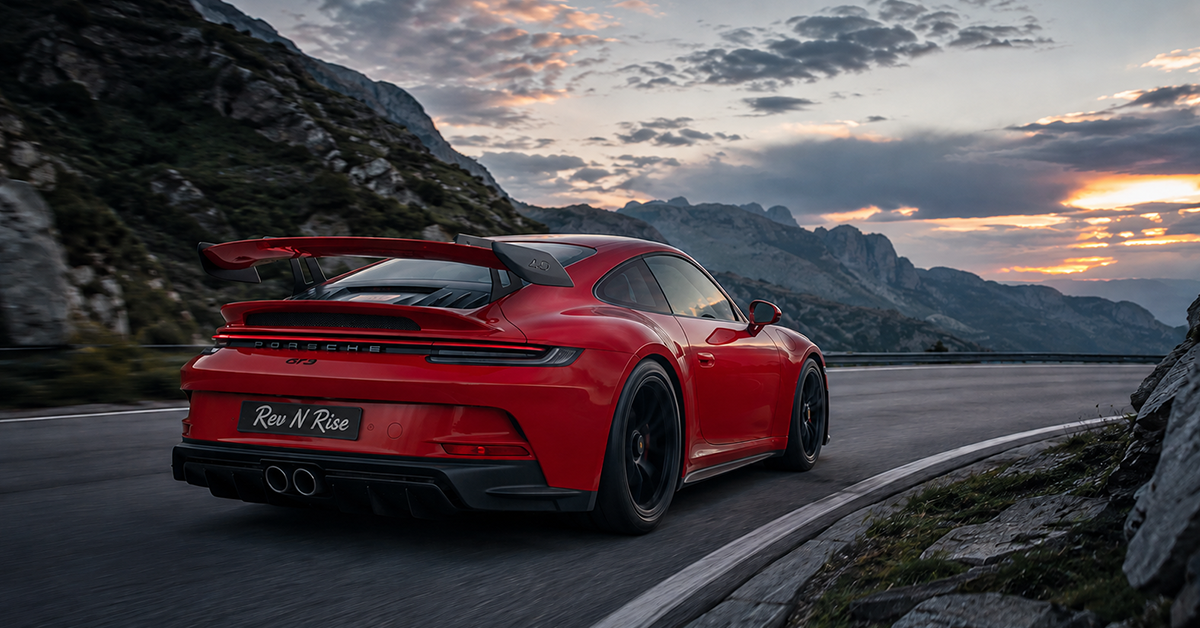
AI-generated concept illustration of the Porsche 911 — not an official Porsche image. | Rev N Rise
Ferrari revealed the Luce on May 25. By May 26, Porsche had a message for 911 owners: relax. The 911 will not go electric. Not this decade. Not until 2030 at the earliest. While Ferrari bets its future on a 1,113hp electric grand tourer, Porsche is taking the opposite direction — keeping the flat-six alive, adopting hybrid technology to enhance the experience rather than replace it, and leaving full electrification to the 718 Cayman and Boxster. Two legendary sports car brands. Two completely different bets. One week that changed the conversation.
Porsche's confirmation that the 911 will remain petrol-powered until at least the end of the decade was not a coincidence in terms of timing. It came directly in the wake of Ferrari's Luce reveal on May 25 — a launch that divided the automotive world and sent Ferrari's share price down 7.8 percent on the day. The market's reaction to Ferrari going electric reflected a genuine anxiety among luxury sports car buyers and investors alike: that electrification of iconic petrol cars risks destroying the very thing that makes them valuable.
Porsche read that anxiety clearly — and responded. The reassurance was deliberate and direct. The 911, Porsche confirmed, will adopt the T-Hybrid system — a 48-volt mild hybrid with an electric turbocharger — to improve performance and efficiency while preserving the flat-six engine that defines the car's character. It will not adopt a full battery-electric drivetrain. It will not lose the engine note, the throttle response or the mechanical connection that 911 buyers have always paid premium money to experience.
Porsche's approach to electrifying the 911 is the opposite of Ferrari's approach to the Luce. Rather than replacing the combustion engine entirely, the T-Hybrid system adds a small electric motor to the exhaust turbocharger — eliminating turbo lag by spinning the turbine electrically before exhaust gases build sufficient pressure. A 48-volt mild hybrid system recovers energy under braking and can deploy small amounts of electric power to supplement the flat-six in certain driving conditions.
The result is a 911 that is faster, more efficient and more responsive than the car it replaces — but one that still sounds, smells and feels like a 911. The flat-six remains. The rear-engine layout remains. The mechanical character remains. Electrification here is an enhancement tool, not a replacement strategy. It is the most technically honest answer to the question of how to make a 911 better without making it something else entirely.
While the 911 stays combustion-powered, Porsche has confirmed that the next-generation 718 Cayman and Boxster will go fully electric. The decision to electrify the 718 first — a car with a smaller, more passionate but less commercially critical fan base than the 911 — allows Porsche to develop and refine its electric sports car technology without risking the brand's most important model. If the electric 718 succeeds, the lessons learned will inform whatever electric 911 eventually arrives after 2030. If it struggles, the 911's petrol character remains intact and uncompromised.
It is a pragmatic and commercially sensible approach. The 718 Cayman GTS 4.0 is one of the most celebrated driver's cars of the modern era — a naturally aspirated flat-six mid-engined sports car that routinely tops enthusiast polls. Its buyers will mourn the loss of the engine. But the 911's buyers — more numerous, more commercially significant, more conservative in their expectations — will be reassured that the car they have bought and loved for decades has not been fundamentally changed.
The contrast between Porsche and Ferrari's strategies in May 2026 is one of the most revealing moments in recent automotive history. Ferrari — which has always positioned itself as a technology leader — took the boldest possible step: a fully electric flagship priced at €550,000 with 1,113 horsepower and a Jony Ive interior. Ferrari's share price fell 7.8 percent on the day. The design divided opinion. The decision to make the Luce a family grand tourer rather than a sports car surprised many observers who expected Ferrari's first EV to be a performance-focused two-seater.
Porsche took the opposite approach — confirming that its most iconic model will not go electric this decade, and framing electrification as a supporting technology rather than a replacement strategy. Porsche already has fully electric versions of the Macan and Cayenne. The Taycan has been on sale since 2019. The brand's EV credentials are not in question. But the 911 is different — and Porsche's leadership clearly judged that the risk of electrifying it prematurely outweighs any first-mover advantage. Given Ferrari's share price reaction on the day of the Luce reveal, that judgment looks increasingly well-calibrated.
In a moment of unusual candour, Porsche's CEO in Australia acknowledged that the electric Macan has struggled compared to its petrol predecessor. The admission reflects a broader pattern across the industry — pure electric luxury vehicles have performed below initial expectations in several key markets, while hybrid and petrol alternatives continue to sell strongly. Porsche's response to this reality is not to retreat from electrification but to pace it more carefully — offering every technology option across its range rather than forcing customers toward a single powertrain choice.
The philosophy, in the CEO's own words: "It's not a decision against the car — it's a decision against not being ready for electric. Everyone needs to choose the technology they're comfortable with." It is a notably customer-centric framing in an industry that has spent the past five years telling buyers that electric is the future whether they want it or not.
| Porsche 911 EV | Not before 2030 — confirmed |
| 911 electrification strategy | T-Hybrid only — 48V mild hybrid + electric turbo |
| 718 Cayman / Boxster | Goes fully electric — next generation |
| Macan EV | Sales below petrol predecessor — CEO admitted |
| Porsche strategy | "Offer everything" — no forced electrification |
| Ferrari Luce share impact | Ferrari shares fell 7.8% on reveal day |
| Lamborghini | Scaling back EV ambitions — hybrid focus |
| McLaren | No EV timeline confirmed |
| Aston Martin | Delaying electrification — combustion priority |
| Confirmed by | Porsche — official communications, May 2026 |
"It's not a decision against the car — it's a decision against not being ready for electric. Everyone needs to choose the technology they're comfortable with."
— Porsche Australia CEO — May 2026Porsche's confirmation that the 911 stays petrol until at least 2030 is the right decision — and the timing of that confirmation, 24 hours after Ferrari's Luce divided the automotive world, makes it one of the most strategically astute communications moves of the year. Ferrari took the brave path. Porsche took the commercially sensible one. Both approaches have merit. Ferrari's Luce is genuine and historic. Porsche's 911 will remain the benchmark driver's car that its customers have paid for. The automotive industry in 2026 has room for both philosophies — and the market will decide which bet was correct over the next decade. Right now, with Ferrari shares down 7.8 percent and 911 waiting lists as long as ever, Porsche's hand looks strong.