 Brands
MINI — History, Models and Everything You Need to Know
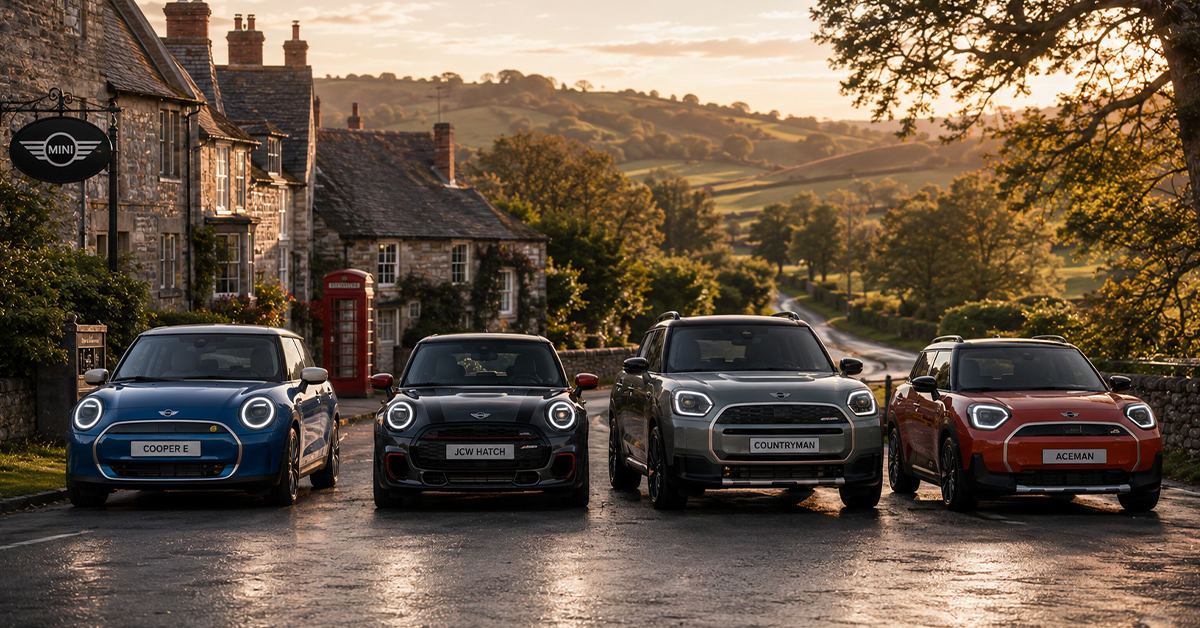
AI-generated concept illustration — MINI brand overview. | Rev N Rise
MINI is one of the most iconic names in automotive history — a British design classic that revolutionised small car engineering in 1959, won the Monte Carlo Rally three times and became a cultural symbol of the Swinging Sixties. Revived by BMW in 2001, the modern MINI has grown into a premium small car brand sold in over 100 countries, now transitioning fully to electric power while keeping the go-kart handling that has always been its greatest gift.
The original Mini was the product of a crisis. In 1956 the Suez Canal crisis caused fuel shortages across Britain, making small, efficient cars suddenly essential rather than merely practical. The British Motor Corporation commissioned engineer Sir Alec Issigonis to design the most space-efficient small car possible. His solution was revolutionary: mount the engine transversely — sideways across the engine bay — with the gearbox in the sump below it, and drive the front wheels. This packaging breakthrough meant that 80 percent of the car's 3.05-metre length was usable cabin and boot space. Nothing like it had ever been built for mass production.
The Mini launched on August 26 1959 selling for £496 — less than a Volkswagen Beetle. It was immediately acclaimed for its handling — the combination of a low centre of gravity, short wheelbase and precise rack-and-pinion steering gave it cornering ability that shamed cars twice its size. Racing driver John Cooper recognised the Mini's potential and persuaded BMC to develop a performance version. The Mini Cooper won the Monte Carlo Rally in 1964, 1965 and 1967 — the 1966 win was controversially disqualified. The Mini became the car of the Swinging Sixties — driven by celebrities, racing drivers and ordinary people alike. Over 5.3 million were produced before production ended in 2000.
BMW acquired the Rover Group in 1994 and inherited the Mini brand. When Rover was broken up in 2000, BMW retained Mini — its most valuable asset — and invested heavily in a new plant at Cowley, Oxford. The modern MINI Cooper launched in 2001 to widespread acclaim: a premium small car that referenced the original's proportions and character while delivering modern quality, safety and performance. MINI has expanded into a family of models and is now transitioning to become a fully electric brand.
John Cooper Works — JCW — is MINI's performance division, directly named after the racing engineer who transformed the original Mini into a motorsport legend. John Cooper's relationship with the Mini began in 1961 when he convinced BMC to build a performance version. The Cooper S variants dominated rallying and saloon car racing for years. John Cooper Works today produces the highest-performance versions of all MINI models — the JCW Hatch produces 231 horsepower from a 2.0-litre turbocharged engine and remains one of the most driver-focused hot hatches available. The JCW identity — black roof, aggressive bodykit, sport suspension — is the clearest expression of what made the original Mini special: performance from a small package.
MINI's competitive advantage is its emotional appeal — no other mainstream small car brand generates the loyalty, personal attachment and fashion following that MINI does. The go-kart handling — sharp, immediate, playful — that the original Mini established in 1959 has been preserved through every generation of the modern MINI. Buyers choose MINI not because it is the most practical city car or the most efficient commuter but because driving one is genuinely fun in a way that a Volkswagen Polo or a Ford Fiesta cannot replicate. The transition to electric power — with the new Cooper E and Aceman — is the most important test of whether that character can survive without a combustion engine providing the noise and vibration that has always amplified the MINI experience. Early reviews of the electric Cooper suggest the fun has been preserved. The go-kart lives on in battery form.