 Brands
Cupra — History, Models and Everything You Need to Know
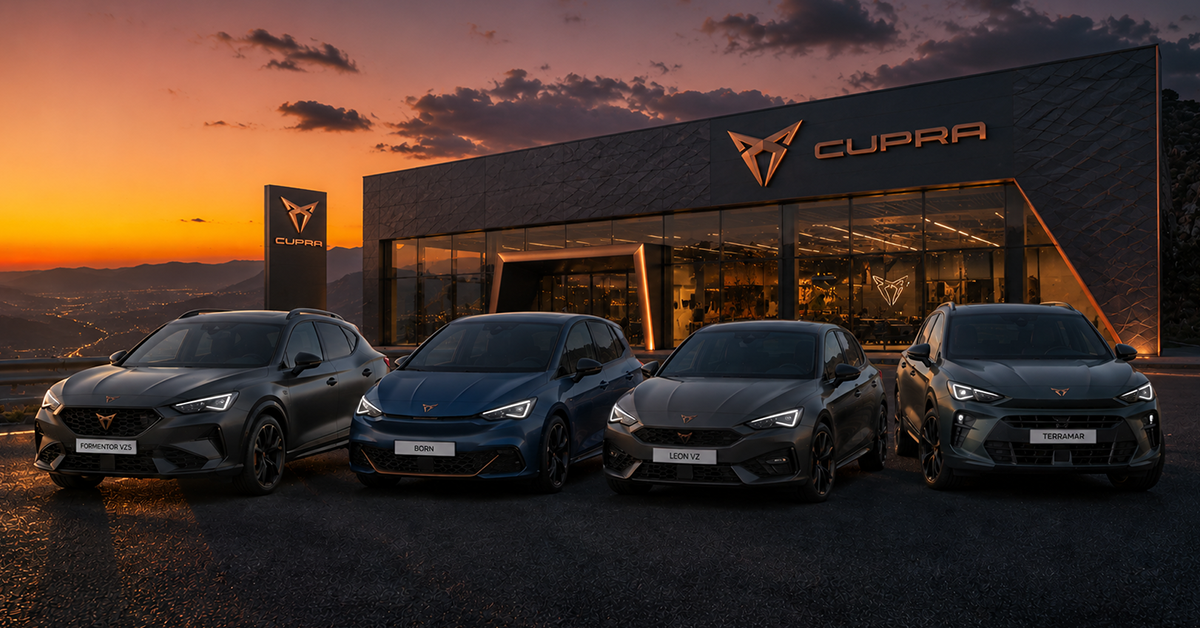
AI-generated concept illustration — Cupra brand overview. | Rev N Rise
Cupra is one of the most exciting new automotive brands of the past decade — a Spanish performance marque born from SEAT's racing DNA that has grown from a badge on a hot hatchback into a fully standalone brand with its own design language, its own dealerships and some of the most compelling performance and electric vehicles in Europe. Launched in 2018, Cupra has achieved in seven years what takes most manufacturers decades.
The Cupra name has motorsport origins — it first appeared on SEAT's racing programme in the 1990s, derived from Cup Racing. SEAT used the Cupra badge on high-performance variants of the Ibiza from 1996 onwards — the Ibiza Cupra became a respected hot hatch in European motorsport circles, winning multiple SEAT Cupra Cup championships. The Leon Cupra followed, and by the mid-2010s the Cupra badge had accumulated enough performance credibility and customer recognition to support a standalone brand.
In February 2018, SEAT S.A. officially launched Cupra as a standalone brand — the first new automotive brand launched by the Volkswagen Group in decades. The decision was bold. Creating a new brand from scratch requires enormous investment in identity, dealership networks, marketing and product development. VW Group's calculation was that Cupra could reach premium performance buyers who found SEAT too mainstream and BMW or Audi too expensive — a gap in the market that the Formentor, Leon VZ and Born subsequently proved was real and commercially significant.
Cupra's growth has been extraordinary. From zero to over 230,000 vehicles per year in seven years. From a single model — the Leon Cupra — to a full lineup of crossovers, hatchbacks and electric vehicles. And from a Spanish-only performance niche to a global brand sold across Europe, Australia, the Middle East and increasingly beyond.
The Cupra Formentor is the model that established Cupra as a genuine brand rather than a badge exercise. It was the first Cupra designed and developed exclusively for the Cupra brand — not a performance version of an existing SEAT — and its distinctly dramatic styling, with aggressive front end, sculpted flanks and wide stance, gave Cupra a visual identity that was unmistakably its own. The Formentor is available with a range of powertrains from a 150hp 1.5 TSI through a 245hp 2.0 TSI to a 333hp VZ5 — the latter using a five-cylinder engine from the Audi RS3 that gives the Formentor an exhaust note unlike anything else in its class. The Formentor has been Cupra's best-selling model since launch and is the car most responsible for the brand's rapid growth.
Cupra occupies a unique position in the European market — premium enough to justify higher prices than SEAT, accessible enough to undercut BMW and Audi significantly, and distinctive enough in design and character to stand on its own rather than being perceived as a rebadged mainstream product. The copper-coloured brake callipers, the triangular logo, the motorsport-derived interior details and the aggressive exterior styling give every Cupra an identity that is genuinely coherent rather than assembled from generic premium cues. The Born electric proves that Cupra can bring performance character to EV products. The upcoming Raval — a small, affordable electric city car — will test whether Cupra can maintain its performance brand identity at entry-level prices. If it can, Cupra will become one of the most important new brands of the 2020s.