 Brands
XPeng — History, Models and Everything You Need to Know
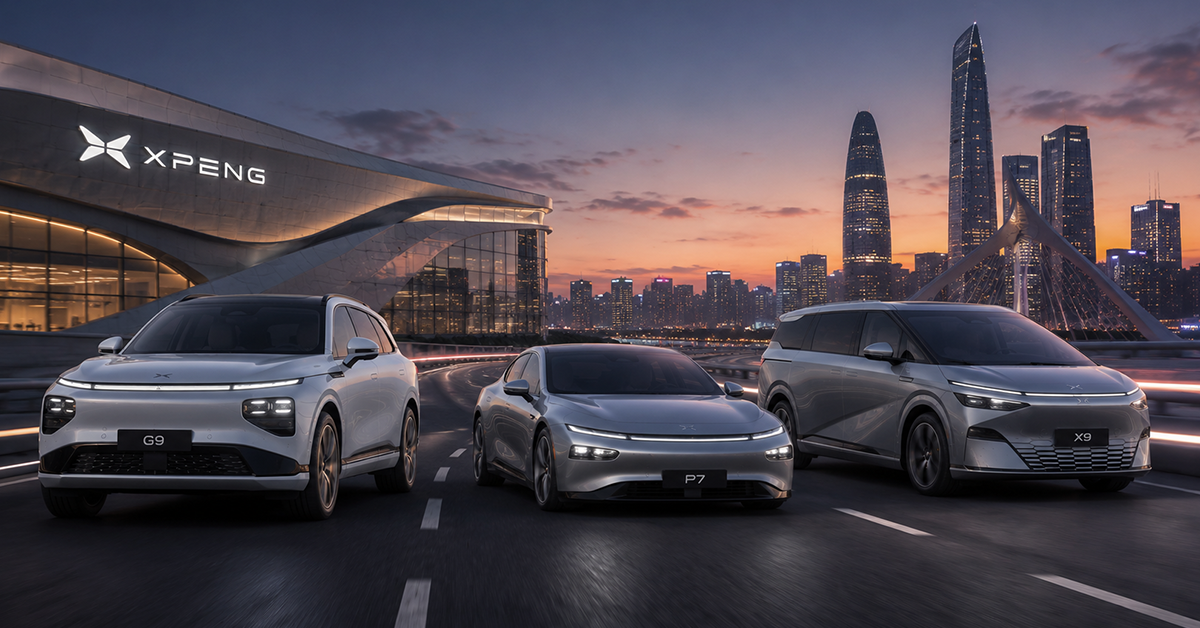
AI-generated concept illustration — XPeng brand overview. | Rev N Rise
XPeng is the Chinese electric vehicle brand built on software and autonomous driving technology as much as the cars themselves — founded by a tech entrepreneur who previously sold his mobile browser company to Alibaba, XPeng has become one of the most technically ambitious EV makers in China, developing its own AI chips, its own advanced driver assistance system and even an electric flying car. Now backed by a significant Volkswagen Group partnership, XPeng represents the genuine technology-first wing of China's EV industry.
He Xiaopeng founded XPeng in 2014 in Guangzhou, bringing a background distinctly different from most automotive entrepreneurs. He had previously founded UC Web, a mobile browser company that became one of the most widely used in China, and sold it to Alibaba in 2014 in a deal reportedly worth around $4 billion. This technology industry background, rather than automotive engineering experience, shaped XPeng's foundational philosophy: that the most important differentiator in the emerging electric vehicle market would be software and intelligence rather than purely mechanical engineering.
XPeng received significant early investment from major Chinese technology companies including Alibaba and Xiaomi, reflecting the close interconnections between China's technology and automotive sectors during this period. The company went public on the New York Stock Exchange in 2020, and has since pursued additional listings to broaden its investor base and capital access.
The most significant development in XPeng's recent history came in 2023, when Volkswagen Group announced a substantial strategic investment and technology partnership with XPeng, agreeing to co-develop electric vehicle platforms specifically for the Chinese market using XPeng's software and electrical architecture expertise. This represented a remarkable reversal of the traditional technology transfer relationship between established Western manufacturers and Chinese EV companies — rather than Volkswagen exporting technology to China, the world's largest legacy automaker was explicitly seeking to license cutting-edge software capability from a Chinese EV startup.
XPeng's advanced driver assistance system, called XNGP, represents one of the most ambitious autonomous driving programmes among Chinese EV manufacturers. The system combines cameras, radar and, in newer vehicles, lidar sensors, processed through self-developed AI chips and proprietary software to provide both highway and increasingly sophisticated urban driving assistance — a particularly challenging engineering problem given the complexity and unpredictability of Chinese urban traffic conditions. XPeng's decision to develop its own AI chips in-house, rather than relying entirely on third-party suppliers like Nvidia, reflects the company's conviction that controlling the full software and hardware stack is essential to achieving genuine autonomous driving capability rather than incremental driver assistance features.
Perhaps XPeng's most ambitious and unusual venture is XPeng AeroHT, a subsidiary dedicated to developing electric vertical takeoff and landing (eVTOL) flying vehicles. The company has unveiled a striking modular concept that combines a conventional ground vehicle with a detachable flying module that can separate from the car and take off independently. While still in development and far from mass-market commercial reality, the programme demonstrates He Xiaopeng's broader ambition for XPeng to be understood as a comprehensive future mobility company rather than purely a conventional car manufacturer.
XPeng's identity is built around the conviction that software, AI and autonomous driving capability — rather than purely mechanical engineering or battery chemistry — will ultimately determine which EV manufacturers succeed. This positions XPeng closer to a technology company that happens to build cars than a traditional automaker that has added electric powertrains. The Volkswagen Group partnership is a remarkable validation of this approach, with one of the world's most established automotive manufacturers explicitly seeking to license XPeng's software platform rather than developing equivalent capability independently. The XPeng AeroHT flying car division, while commercially speculative, signals an ambition that extends beyond conventional automotive categories entirely. For XPeng, the central strategic question is whether its software and AI leadership can be sustained and monetised at scale as competition from both domestic Chinese rivals and increasingly software-capable Western manufacturers intensifies.