 Brands
Isuzu — History, Models and Everything You Need to Know
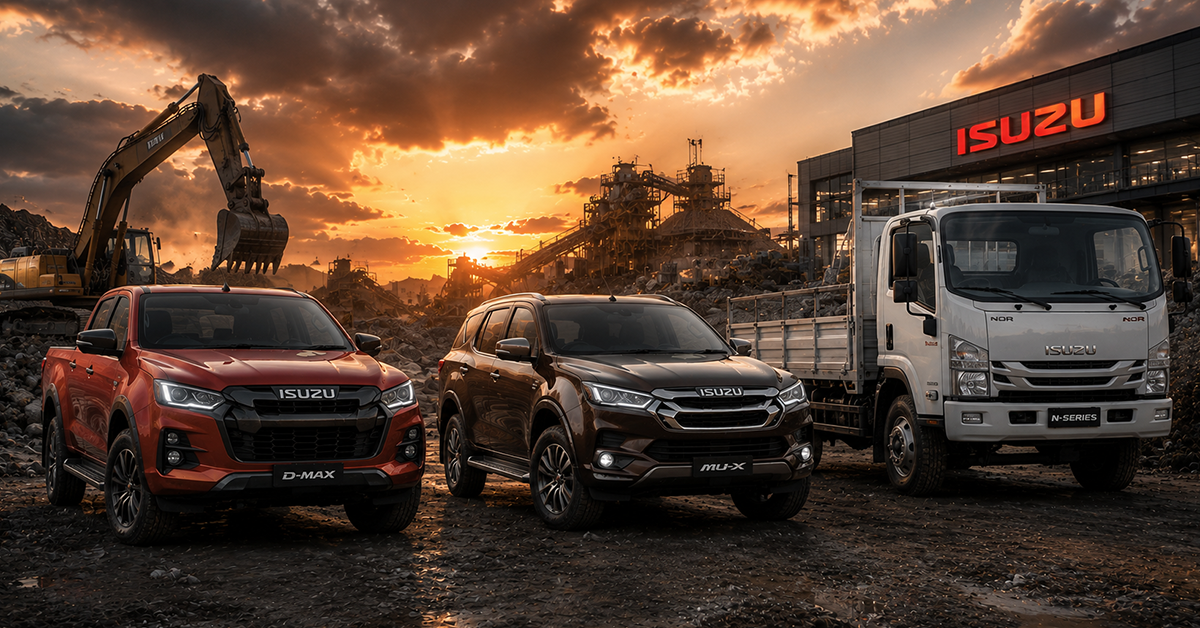
AI-generated concept illustration — Isuzu brand overview. | Rev N Rise
Isuzu is one of Japan's oldest and most respected manufacturers of diesel engines, pickup trucks and commercial vehicles — a company with over a century of engineering heritage that made the deliberate strategic decision decades ago to step away from mainstream passenger cars and focus entirely on the workhorse vehicles that businesses, farmers and tradespeople across the world depend on every single day. Though far less visible to ordinary consumers than its diesel engines and trucks deserve, Isuzu remains one of the most globally significant commercial vehicle manufacturers.
Isuzu's origins trace back to 1916 in Tokyo, through the Tokyo Ishikawajima Shipbuilding company, which began producing automobiles in addition to its core shipbuilding business. The company's automotive operations went through various corporate structures and partnerships over subsequent decades, including a significant relationship with Wolseley Motors of Britain in the early years, before the Isuzu name was officially adopted in 1949, derived from the Isuzu River in Japan, a name chosen for its connotations of purity and strength.
Through the postwar decades, Isuzu built a strong reputation in both passenger cars and commercial vehicles, producing models that found success in both Japanese domestic and international export markets. The company developed a particularly strong international partnership with General Motors, which took a significant equity stake in Isuzu starting in 1971, leading to extensive platform sharing, technology transfer and even Isuzu diesel engines being used in various General Motors trucks sold across North America for many years.
The most significant strategic shift in Isuzu's recent history came in the early 2000s, when the company made the deliberate decision to withdraw from the North American passenger car and SUV market entirely, recognising that competing directly against the dominant Japanese, American and Korean passenger vehicle manufacturers in that segment was no longer a sustainable path to profitability. Instead, Isuzu refocused its global strategy almost entirely on commercial vehicles, pickup trucks and diesel engine technology, areas where its engineering reputation and manufacturing scale provided genuinely durable competitive advantages.
Isuzu's reputation for diesel engine engineering excellence is one of the most consistently respected in the global automotive and commercial vehicle industry. The company has supplied diesel engines to numerous other manufacturers over the decades, with its engines used in General Motors trucks across North America for an extended period, reflecting genuine third-party validation of Isuzu's engineering quality beyond simply its own branded vehicles. This diesel expertise extends across applications ranging from light commercial vehicles and pickup trucks through to heavier commercial trucks and industrial equipment, with Isuzu's diesel engines particularly prized in markets and applications where long-term reliability, fuel efficiency and durability under demanding working conditions matter more than the performance or refinement characteristics that dominate passenger car marketing.
Isuzu's deliberate strategic focus on commercial vehicles and pickup trucks rather than mainstream passenger cars has given the company a distinctive and genuinely durable competitive position, built on decades of accumulated diesel engineering expertise and a reputation for reliability that resonates particularly strongly with commercial fleet operators, farmers and tradespeople whose livelihoods depend on vehicle dependability rather than styling or technology features. The D-Max pickup's global success across markets as diverse as Thailand, Australia, the United Kingdom and numerous African and Latin American countries reflects this focused strategy's effectiveness, allowing Isuzu to compete successfully against far larger, more diversified manufacturers within its chosen commercial vehicle niche. While less visible to mainstream Western consumers than passenger car brands, Isuzu's continued global commercial significance demonstrates how a manufacturer can thrive by deliberately choosing depth and focus within a specific market segment rather than attempting to compete across the entire automotive spectrum.