 Brands
REO Returns With a $21,500 Gas Truck to Rival Slate

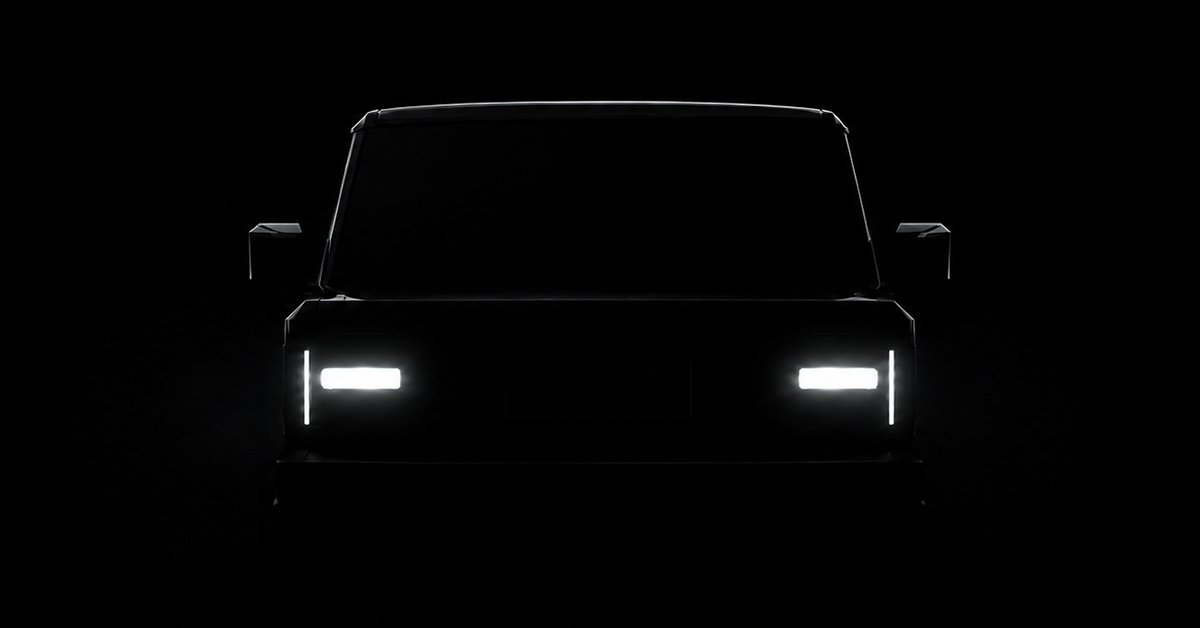
Official teaser image of the REO Runabout. | © REO Industries, Inc.
A truck brand that died in the 1960s wants to come back from the grave to fight Slate at its own game — except this time, with a gas engine instead of a battery. A Texas startup called REO Industries has revived the historic REO name and opened $25 reservations for a deliberately basic pickup it calls the Runabout, targeting a starting price of just $21,500. There's no factory, no engine supplier, and no actual prototype yet — but the pitch has already struck a nerve with exactly the audience Slate spent the last year courting.
REO isn't a made-up badge. It stands for Ransom Eli Olds — the same man who founded Oldsmobile in 1897 before being pushed out of his own company less than a decade later. Olds responded by founding the rival REO Motor Car Company in 1905, which went on to build the Speed Wagon in 1915, one of the direct ancestors of the modern pickup truck. The original REO stayed in business for nearly 40 years before folding in the late 1960s. REO Industries, the new startup behind the Runabout, has filed an intent-to-use trademark application with the USPTO to revive the name for motor vehicles — though that filing is still pending, and the original REO and White Motor Corporation registrations appear to be dead or expired.
The company is the creation of Zach De Bernardi, a Texas real estate agent better known in Dallas property circles than automotive manufacturing, who says he sold his real estate company to a business partner over a year ago to focus on REO full-time. He's also a self-described enthusiast with a personal collection heavy on classic Toyotas, which he says is shaping the philosophy behind the truck.
The plan centers on a shared body-on-frame platform supporting three versions: the T4X, a two-seat single-cab work truck with a steel drop-side flatbed; the T4C, a crew-cab pickup; and the S4C, a compact SUV. Unlike Slate's all-electric approach, REO is going gas-only for now — a naturally-aspirated four-cylinder engine, deliberately skipping the direct injection found in most modern engines, paired with either a six-speed manual or six-speed automatic transmission and mechanical four-wheel drive.
De Bernardi describes the category as "Ameri-Kei" — borrowing the simplicity and utility philosophy of Japan's kei trucks, scaled up to suit American roads and regulations. Preliminary target figures include 4,500 lbs of maximum towing capacity (500 lbs ahead of the Ford Maverick, 3,500 lbs ahead of Slate's electric truck) and a 1,200 lb payload, with the T4X measuring 180 inches long — six inches longer than Slate's truck, but 20 inches shorter than a Maverick. REO is targeting more than 600 miles of range per tank, a five-minute refuel anywhere, and a design goal of lasting 500,000 miles.
| Target Starting Price | $21,500 |
| Body Styles | T4X (single cab), T4C (crew cab), S4C (SUV) |
| Engine | 4-cylinder gas, no direct injection (unconfirmed supplier) |
| Transmission | 6-speed manual or 6-speed automatic |
| Drive | Mechanical 4WD |
| Max Towing | ~4,500 lbs (target) |
| Max Payload | ~1,200 lbs (target) |
| Length (T4X) | 180 inches |
| Range | 600+ miles per tank (claimed) |
| Durability Goal | 500,000 miles |
| Reservation Deposit | $25, fully refundable |
| Planned Build Location | Texas (no factory site confirmed) |
| Pre-Production Target | 2027 |
Every panel off in under five minutes with common tools. Plain-English diagnostics on a $30 scanner. A 20-year public parts catalog at fair prices.
— REO Industries, company websiteBeyond the powertrain, REO's strongest hook is its right-to-repair messaging. The company promises every panel can be removed in under five minutes with common tools, diagnostics readable on a basic $30 scanner rather than proprietary dealer equipment, and a publicly available parts catalog guaranteed for 20 years with no parts-pairing restrictions. Trucks would be sold direct to consumers online, skipping dealer markups entirely, with REO also promising the truck can be flat-towed — all four tires on the ground, no extra equipment — a feature increasingly rare on modern vehicles and specifically useful for RV owners.
In an interview about the project, De Bernardi connected the idea directly to Slate's own success: watching the enthusiast community's reaction to Slate's electric truck, he said the consistent response was that the concept would be even better with a simple four-cylinder engine instead of a battery. He's also said the Trump administration's relaxation of CAFE fuel-economy enforcement penalties was part of what convinced him a gas-powered version of this idea was newly viable.
It's important to be clear about what currently exists: a website, a $25 reservation system, some silhouette sketches of the truck's profile, and a pending trademark application — not a running prototype, a confirmed factory location, an engine supplier, or any crash-test or emissions-compliance data. REO says it plans to begin pre-production assembly in Texas in 2027, but has not announced a specific factory site. Public reaction across the coverage so far has been split — some commenters are cautiously optimistic about the repairability pitch, while others have drawn comparisons to historical vaporware automotive startups, noting the company has no manufacturing track record and significant regulatory and engineering hurdles ahead, including EPA emissions certification for the engine.
For comparison, REO's own website publishes a head-to-head chart against Slate and the Ford Maverick, claiming the Runabout undercuts Slate's roughly $25,000-plus starting price while delivering a longer claimed range per tank than either rival offers per charge or fill-up. Whether REO can actually deliver on regulatory compliance, supplier relationships and manufacturing capacity at that price point remains entirely unproven.
There's a real, identifiable gap in the market that REO is pointing at — the exact "what if Slate, but gas" reaction the company says drove its founding genuinely does reflect a lot of online sentiment after Slate's reveal. The repairability and no-dealer pitch is a smart, increasingly resonant message in an era of locked-down, software-gated vehicles. But the honest comparison right now is to a concept with a website and a deposit form, not a company with an engineering team, a factory, or a finished design. Slate, by contrast, has a real factory under construction, real specifications, and is taking deliveries within months. REO's idea is genuinely appealing — whether it becomes a real truck is a question that will take years, not months, to answer.