 Brands
8 Rarest Cars on the Planet — One-of-One Machines Money Can’t Always Buy


AI-generated concept illustration — 8 Rarest Cars on the Planet. | Rev N Rise
Some cars are rare because only a few hundred were built. These are not those cars. The eight machines on this list exist in quantities of exactly one — or in the case of the Jaguar XJ13, one surviving example of what was always a solitary prototype. They were commissioned by royalty, built for billionaires, designed by legends, or created because no manufacturer anywhere had ever produced anything like them before. This is the list of cars that genuinely cannot be bought, because they will never be for sale again — or if they are, the price is whatever the seller decides it should be.
Ferrari SP38 Deborah
1 unit — Ferrari Special Projects, 2018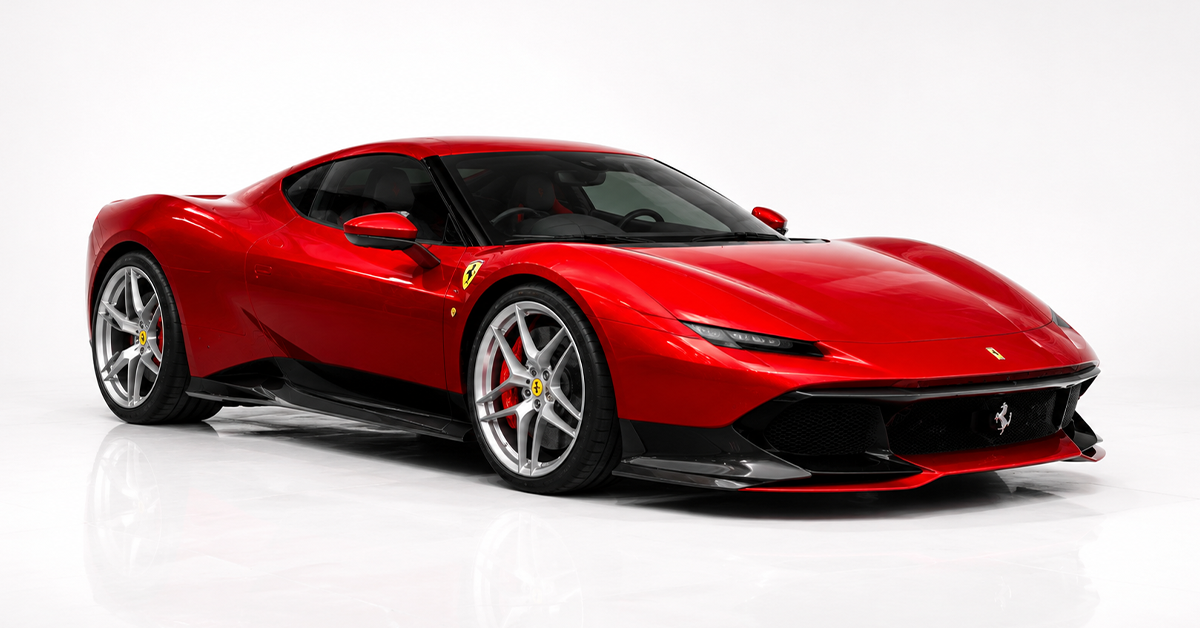
AI-generated concept illustration of the Ferrari SP38 Deborah. | Rev N Rise
The Ferrari SP38 was commissioned by a long-standing Ferrari client whose collection includes some of the most important cars in the brand’s history — among them a 1967 Ferrari 330 P4 race car. That single detail explains everything about the SP38’s design.
The pointed nose, the long front overhang, the way the rear haunches swell above the wheels — all of it is a deliberate homage to the 330 P4, widely considered one of the most beautiful racing machines Ferrari ever built. Ferrari’s Styling Centre under Flavio Manzoni led the design, and the result reads unmistakably as a road car shaped by the memory of a race car.
Mechanically, the SP38 sits on the 488 GTB’s platform — but the engine is not the 488’s twin-turbo V8. The owner requested the naturally aspirated 6.5-litre V12 from the F12 Berlinetta instead, and Ferrari obliged. The sound that V12 makes in a car this light and this focused is unlike anything in Ferrari’s current production range.
The name Deborah is the owner’s wife’s name. Ferrari debuted the car at the 2018 Concorso d’Eleganza Villa d’Este, where it generated more conversation than almost anything else on the lawn. It has not been publicly seen since.
Pagani Zonda Uno
1 unit — Pagani Automobili, 2023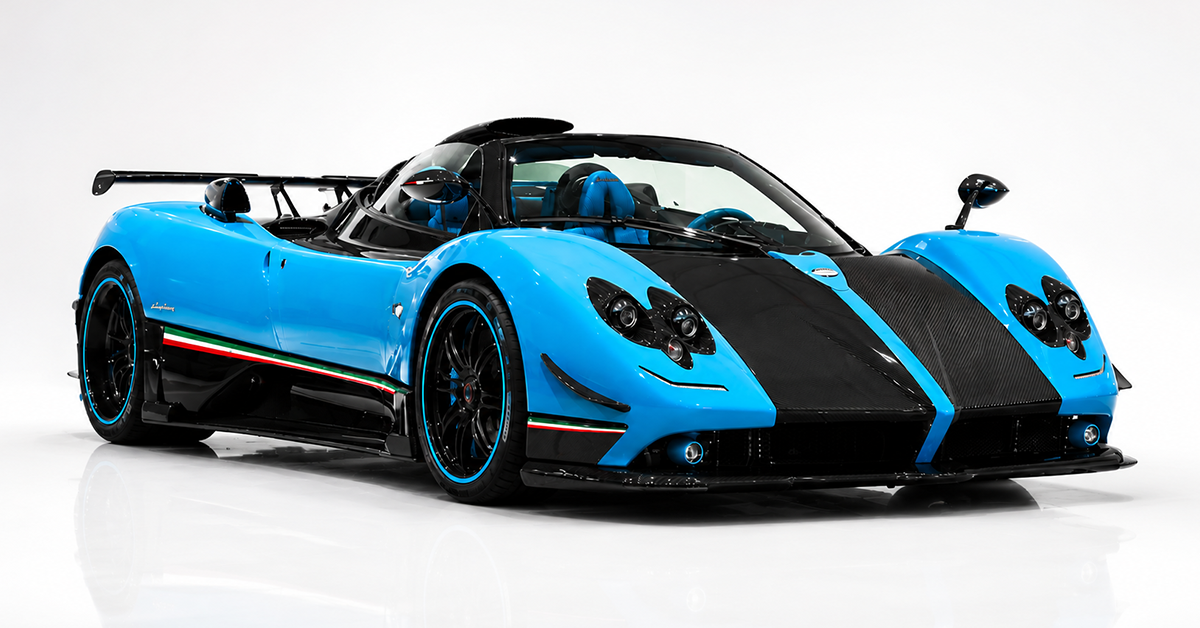
AI-generated concept illustration of the Pagani Zonda Uno. | Rev N Rise
The Pagani Zonda has been in various forms of continuous production for over two decades. It should have ended with the Zonda Revolucion in 2014. Then it ended again with the Zonda HP Barchetta in 2017. And again with subsequent special commissions. Every time Pagani declares the Zonda chapter closed, a sufficiently wealthy and sufficiently persuasive client reopens it.
The Zonda Uno is the latest and, Horacio Pagani insists, the truly final chapter. Built for a single client in 2023, it wears a radical one-piece carbon fibre body that shares almost nothing with any previous Zonda in production form. Power comes from a developed twin-turbocharged 7.3-litre AMG V12 — estimated at around 900 horsepower, though Pagani has not officially confirmed a figure.
What makes the Zonda Uno genuinely extraordinary is the engineering behind it. Pagani re-engineered significant parts of the original Zonda’s carbon fibre monocoque just to accommodate the twin-turbo engine’s cooling requirements. All of that work, for exactly one car. The cost is, politely, enormous.
Lamborghini Aventador J
1 unit — Lamborghini, 2012
AI-generated concept illustration of the Lamborghini Aventador J. | Rev N Rise
Lamborghini revealed the Aventador J at the 2012 Geneva Motor Show with a selling price of approximately €2.1 million and one firm rule: exactly one would ever be built. It had already been sold before the doors opened to the public.
The Aventador J is essentially an Aventador stripped of everything above the waistline — roof, windscreen, side windows, rollover hoops, all weather protection gone. Two small transparent deflectors behind the headrests manage airflow at speed. That is the full extent of the protection from the elements.
The 6.5-litre V12 is unchanged at 700 horsepower. Weight drops by roughly 40 kilograms. The exposed carbon fibre monocoque tub — normally hidden beneath body panels — becomes a design feature. Lamborghini’s designer Filippo Perini called it a “concept car that can be driven.” The buyer was never publicly identified. They reportedly drove it on track the same day the Geneva show closed.
Rolls-Royce Sweptail
1 unit — Rolls-Royce Bespoke, 2017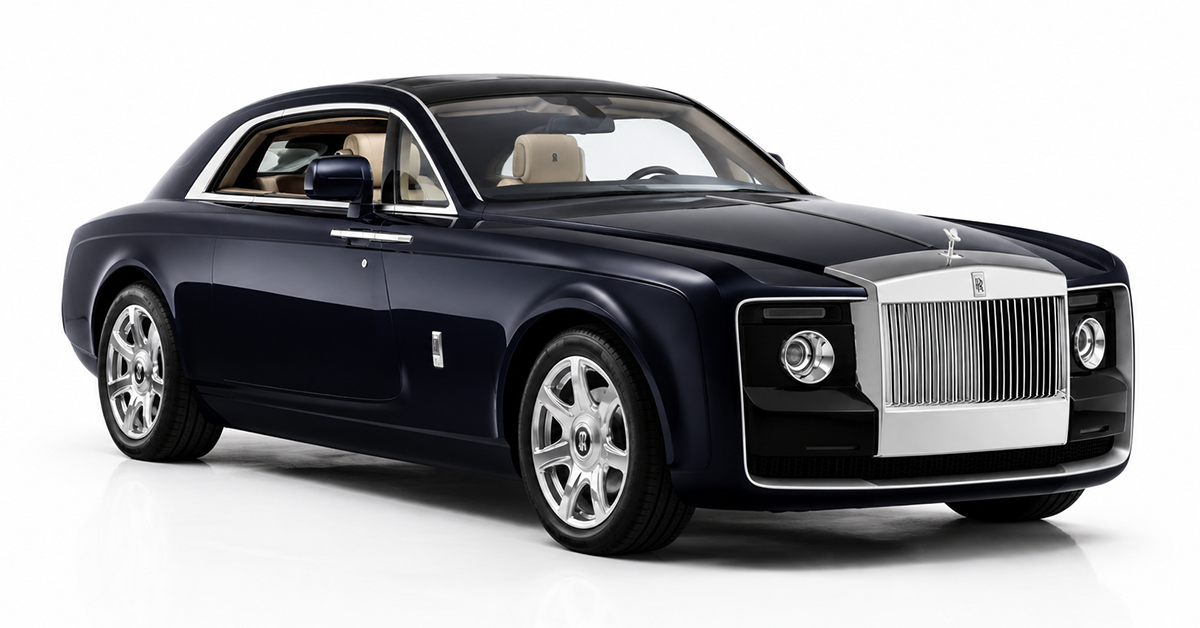
AI-generated concept illustration of the Rolls-Royce Sweptail. | Rev N Rise
The Rolls-Royce Sweptail took four years to design and build for a single client — a yacht and aircraft collector who wanted a car that echoed the design language of his other possessions. Unveiled at the 2017 Concorso d’Eleganza Villa d’Este, it is widely considered the most expensive new car ever sold at the time of its delivery. Rolls-Royce has never disclosed the price. Estimates place it at approximately $13 million.
The design draws on the coachbuilt Rolls-Royce drophead models of the 1920s and 1930s — specifically the long sweeping tail and the panoramic glass roof that runs the full length of the car. There is no B-pillar. The roof is one continuous piece of glass.
The dashboard’s open-pore wood veneer required 17 woodworking specialists over several months to complete. A bespoke Rolls-Royce clock — itself a one-of-one creation — is embedded into it. The client has never been publicly named.
Ferrari Testarossa Spider
1 official factory unit — Pininfarina for Ferrari, 1986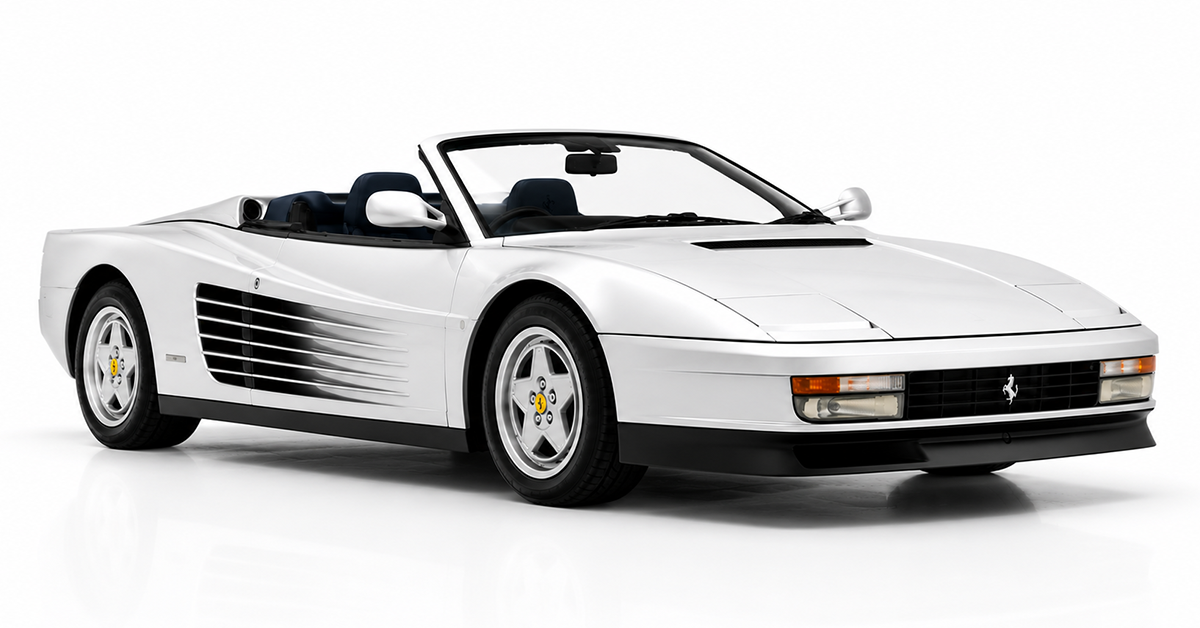
AI-generated concept illustration of the Ferrari Testarossa Spider. | Rev N Rise
Ferrari built 7,177 Testarossas between 1984 and 1991 and refused every customer request for a Spider version. The structural complexity of removing the roof from a mid-mounted flat-12 was the official reason. There was one exception: Gianni Agnelli, chairman of Fiat, which owned fifty percent of Ferrari.
To mark the twentieth anniversary of his chairmanship, Pininfarina built him a single factory-official Testarossa Spider in 1986. Work began on 27 February. The finished car was delivered four months later. The silver paint carries the chemical symbol AG — the abbreviation for silver, and Agnelli’s initials.
The car features a unique Valeo transmission allowing the driver to switch between a three-pedal manual and automatic at the push of a button — developed specifically because Agnelli had suffered a chronic leg injury. The same concept later appeared on his personal F40. He kept the Testarossa Spider until his death in 2003. It sold at auction in 2016 for €1,210,080. At that point it had covered just 23,000 kilometres.
Jaguar XJ13
1 unit — Jaguar, 1966 (prototype, never raced)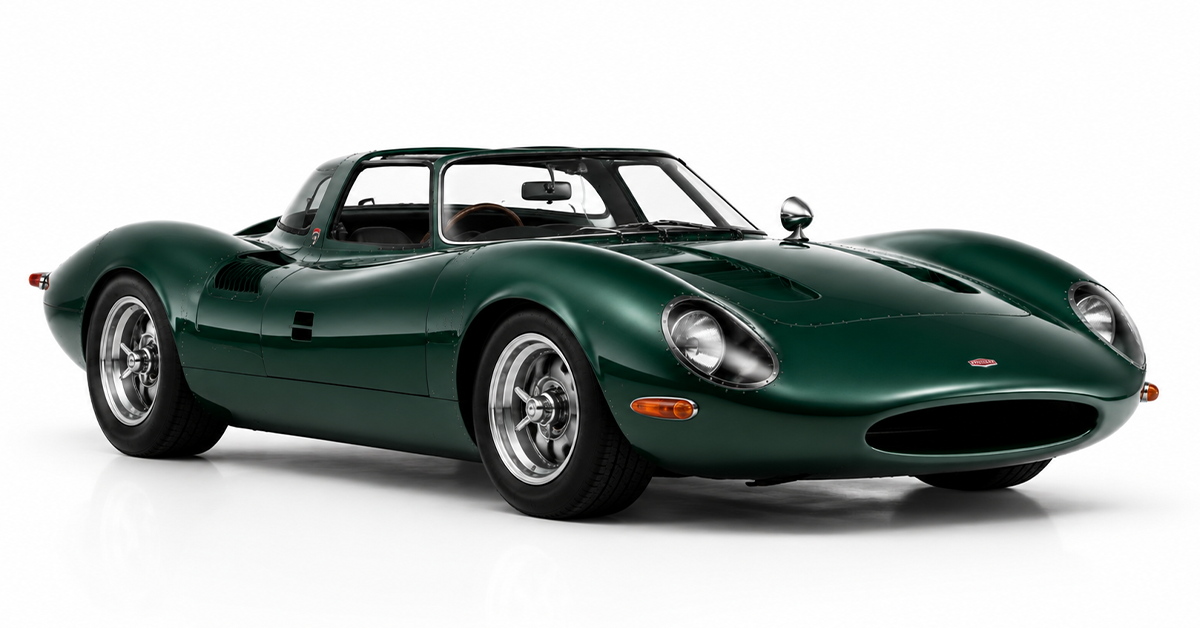
AI-generated concept illustration of the Jaguar XJ13. | Rev N Rise
The Jaguar XJ13 is the only car on this list that was never a customer car and was never intended to be one. It is a genuine works prototype — built in secret between 1964 and 1966 to return Jaguar to Le Mans after a decade away, using the brand’s first-ever V12 engine. Only one was built. It never raced.
By the time development was complete, Le Mans regulations had changed in ways that made the XJ13 ineligible. The project was quietly shelved. The car sat in a Jaguar warehouse for years, largely forgotten.
It was retrieved in 1971 for a promotional film shoot. During that shoot, a tyre failure at high speed caused a crash that destroyed much of the original bodywork. Jaguar rebuilt it from period photographs and what remained of the original panels. The rebuilt XJ13 has lived in Jaguar’s Heritage Collection in Coventry ever since. It is not for sale. It has never been for sale.
Bugatti La Voiture Noire
1 unit — Bugatti, delivered 2024
AI-generated concept illustration of the Bugatti La Voiture Noire. | Rev N Rise
Bugatti unveiled La Voiture Noire at the 2019 Geneva Motor Show at a base price of €11 million before taxes. It had already been sold before it was shown publicly. The name means “The Black Car” in French — a direct reference to the Bugatti Type 57 SC Atlantic of 1936, specifically the single black example that belonged to Jean Bugatti, Ettore’s son, which disappeared during World War II and has never been found.
The entire body is carbon fibre, finished in a deep gloss black that Bugatti’s paint team spent considerable time developing for the right depth and reflectivity. Under the skin: an 8.0-litre quad-turbocharged W16 producing 1,479 horsepower. Six exhaust pipes emerge from the rear. Six.
The buyer was confirmed in 2021 to be Cristiano Ronaldo. Delivery reportedly took until 2024 due to the extended development timeline.
Ken Okuyama Kode 0
1 unit — Ken Okuyama Design, 2017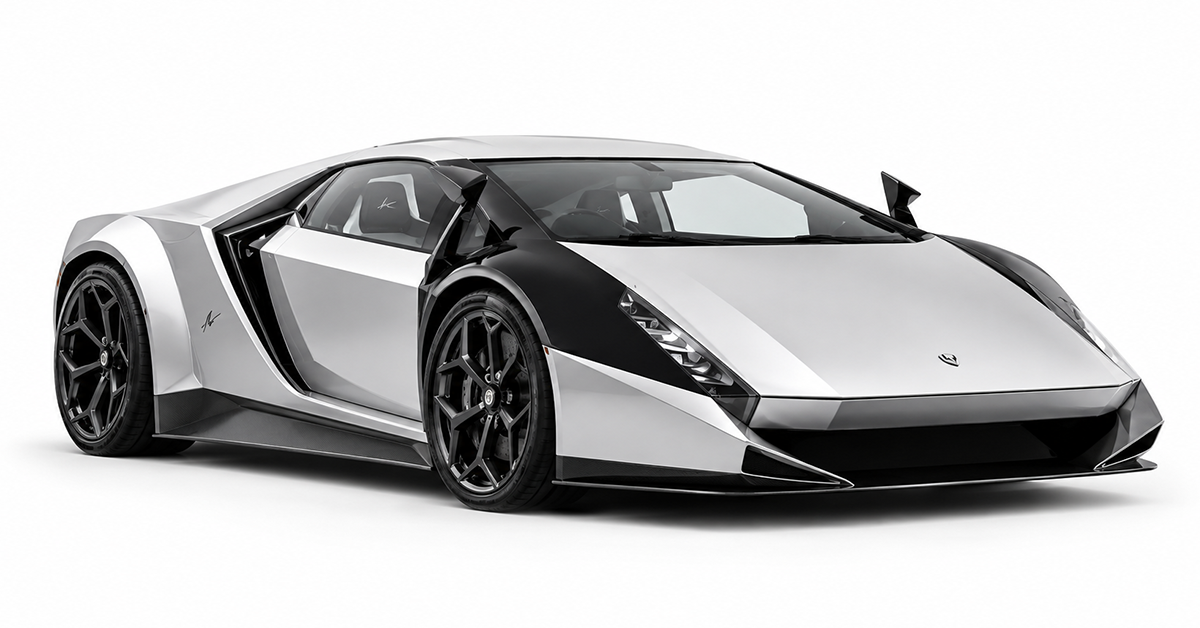
AI-generated concept illustration of the Ken Okuyama Kode 0. | Rev N Rise
Ken Okuyama is a Japanese designer who spent much of his career at Pininfarina, supervising the Ferrari Enzo, Ferrari P4/5 and Maserati Birdcage 75th concept. After leaving Pininfarina in 2006, he established Ken Okuyama Design and began producing small runs of his own coachbuilt cars under the Kode name.
The Kode 0 is the rarest of them all — one single car, commissioned by a private client, built on a Lamborghini Aventador donor platform and unveiled at Pebble Beach in 2017. The carbon fibre body was designed around a “one motion” philosophy: the entire car reads as a single continuous gesture rather than a collection of individual surfaces. The inspiration was the 1970 Lancia Stratos Zero — one of the lowest, most extreme wedge designs in history. The Kode 0 stands just 1,050mm tall.
The client paid $1.5 million for the body and design work, on top of the Aventador donor car. It appeared on Jay Leno’s Garage shortly after debut, then was listed for sale in 2018 with just 2,201 kilometres on the clock. The final selling price was never disclosed.
The eight cars on this list were created for different reasons, but they all share the same underlying logic: the person who wanted them wanted something that had never existed before, was willing to pay whatever it cost to have it built, and had a relationship with a manufacturer capable of delivering it. In the case of the Rolls-Royce Sweptail and the Ferrari SP38, those relationships were built over decades of loyal patronage. In the case of the Lamborghini Aventador J, Lamborghini itself initiated the project as a design and engineering statement, then found a buyer for the result. In the case of the Jaguar XJ13, no commercial transaction ever took place — it was built, crashed, rebuilt and retained.
What they represent collectively is something increasingly rare in the automotive industry: the idea that a car can be built for one specific person rather than for a demographic, a segment or a spreadsheet. The economics of that proposition are only available to the wealthiest individuals and the most exclusive manufacturers. But the cars themselves, once made, belong to history in a way that no limited-production run of 500 or even 50 can replicate. There is exactly one Ferrari SP38 Deborah. When it moves, nothing quite like it exists anywhere else on the road.