 Brands
Nilu27’s 1,070hp V12 Fires for the First Time — and It Exceeded Every Target

Official press image of the Nilu27 NILU hypercar V12 engine. | © Nilu27
In Palmerston North, New Zealand, on June 17, 2026, a brand-new 6.5-litre naturally aspirated V12 engine fired for the first time. It was built by Hartley Engines for a small hypercar company from Germany called Nilu27. The target was 1,070 horsepower. The engine exceeded that on its very first dyno run. It revs to 11,000rpm. It has no turbochargers. It will drive only the rear wheels through a seven-speed gated manual gearbox. There will be 54 of them, priced at approximately $3.5 million each.
Nilu27 is not yet a household name, but its founder is well-known to anyone who follows hypercar design closely. Sasha Selipanov is the designer responsible for the exterior of the Bugatti Chiron, the Lamborghini Huracán and the Koenigsegg Gemera — three of the most recognisable hypercars of the last decade. He founded Nilu27 with his wife Inna Selipanov with a specific and explicitly stated goal: to build the hypercar he wanted to own, because he could not find it anywhere in the market. That car, he decided, would have no electric motors, no turbochargers, no traction control, no active suspension, no driving modes, no navigation system and no radio. It would have a naturally aspirated V12, a gated manual gearbox and a cockpit oriented entirely around the driver.
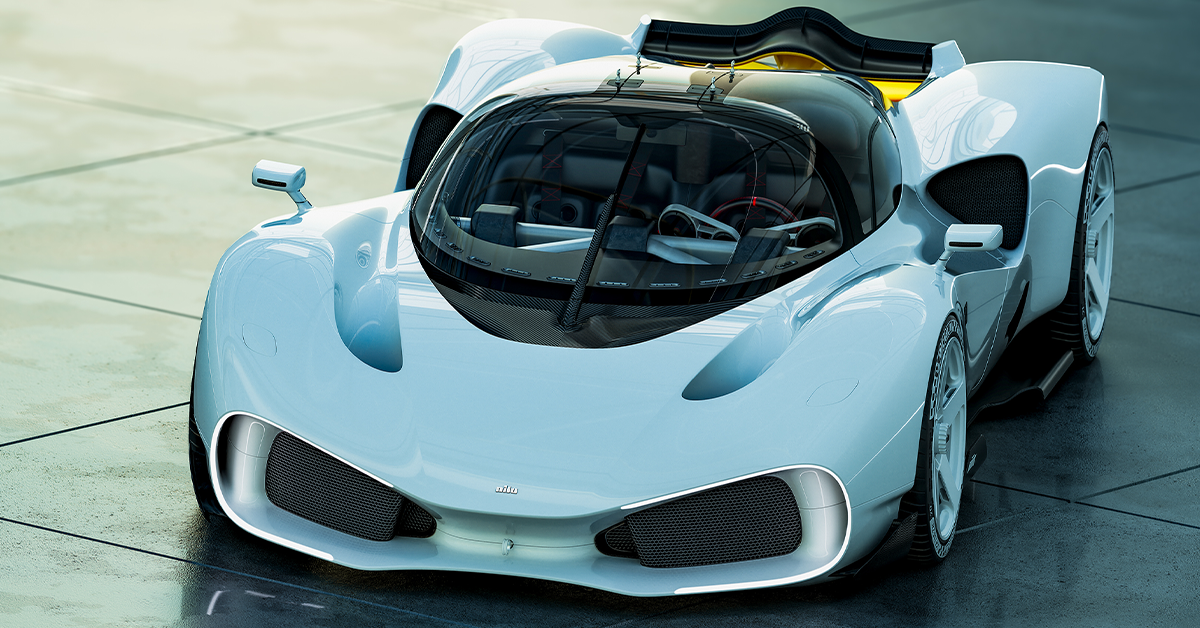
The company first presented the NILU hypercar in 2024. The design is extreme — a tightly packaged carbon-clad body with an exposed mechanical rear end that puts the engine and exhaust architecture on deliberate display rather than concealing them under bodywork. Selipanov said at the time that the design was partly inspired by wanting people to see and understand the mechanical complexity of what they were looking at, rather than experiencing it through a layer of smooth carbon fibre shaped to hide everything underneath.
The 6.5-litre V12 at the heart of the NILU is a joint development between Nilu27 and Hartley Engines, a specialist high-performance engine developer based in Palmerston North, New Zealand. It is not an engine from any existing manufacturer adapted for the purpose — it is a completely bespoke unit designed from the outset for this specific car and nothing else.
The engine uses a Hot V configuration — meaning the exhaust headers are mounted between the cylinder banks rather than on the outside. This places the sculptural 12-into-1 exhaust manifold — nicknamed the Snakepit by Hartley — at the very centre of the engine bay, visible through the NILU’s exposed rear glass. The exhaust system is fabricated entirely from 3D-printed Inconel — a nickel-chromium superalloy used in jet engine components — which allows for geometries impossible to achieve with conventional manufacturing. The intake and exhaust positions have been swapped from conventional layout, with the intakes positioned inside the V and the exhausts emerging between the cylinder heads, allowing the airflow paths and the exhaust manifold to be optimised simultaneously.
The 80-degree V12 features individual throttle bodies for each cylinder, a large-bore short-stroke architecture optimised for high-rpm output rather than low-end torque, and gear-driven camshafts that eliminate the potential for belt or chain stretch at extreme revs. The engine is capable of running beyond 15,000rpm mechanically, but an 11,000rpm redline was chosen as the right balance between performance and long-term reliability in a car that buyers will actually drive.
By firing-up this stunning V12 we didn’t only prove our engineering capabilities, we delivered the soul of the NILU. As most of the automotive world embraces digital and electric sterility, we’ve doubled down on the raw, visceral drama of high RPM, naturally aspirated internal combustion.
— Sasha Selipanov, Founder, Nilu27 — official press release, July 13, 2026The engine fired for the first time on June 17, 2026, at Hartley Engines’ facility in Palmerston North. Both Sasha and Inna Selipanov travelled to New Zealand to witness the first run in person. According to Nilu27’s official announcement, the engine not only started cleanly on its first attempt — an outcome the company describes as genuinely unusual for a brand-new engine configuration — but immediately exceeded the 1,070 horsepower target in initial dyno testing. The exact figure achieved above that threshold has not been disclosed, as final calibration and refinement cycles are still ongoing, but Nilu27 confirmed the excess is meaningful rather than marginal.
Simon Waegner, Nilu27’s CTO and COO, stated it was the smoothest first fire-up of a new engine configuration he had witnessed in 25 years in the automotive and hypercar industry. Nelson Hartley, founder of Hartley Engines, described the result as exceeding expectations from the very first dyno session — a benchmark he credited to the precision of the engineering collaboration between the two companies and the tolerances achieved in the Inconel exhaust fabrication.
| Car Name | NILU (by Nilu27) |
| Company | Nilu27, Inc. — founded by Sasha & Inna Selipanov |
| HQ | Lahr, Germany |
| Engine | 6.5L naturally aspirated V12 — 80-degree bank angle |
| Configuration | Hot V — exhausts between cylinder heads |
| Exhaust | 3D-printed Inconel — 12-into-1 "Snakepit" manifold |
| Forced Induction | None — fully naturally aspirated |
| Induction | Individual throttle bodies per cylinder |
| Power (target) | 1,070 hp |
| Power (achieved) | Exceeded 1,070 hp on first dyno run — exact figure TBC |
| Redline | 11,000 rpm (mechanically capable of 15,000+) |
| Transmission | 7-speed open-gate manual — longitudinally mounted |
| Drive | Rear-wheel drive only |
| Chassis | Carbon fibre monocoque + aluminium-alloy tubular subframes |
| Suspension | Double wishbone + pushrod |
| Kerb Weight | ~1,200 kg (2,645 lbs) |
| Top Speed | 248 mph (400 km/h) — restricted |
| Driver Aids | None — no traction control, stability control, ABS, active aero |
| Infotainment | None — no navigation, no radio |
| Production Limit | 54 units |
| Price (est.) | ~$3.5 million per car |
| Built by | Aria Group — Irvine, California (3D printing specialists) |
| Engine built by | Hartley Engines — Palmerston North, New Zealand |
| First fire date | June 17, 2026 — Palmerston North, NZ |
| Next step | Engine moves to Lahr, Germany — integration into first driving prototype |
| Expected customer deliveries | 2027 |
Following the completion of final calibration and durability testing in Palmerston North, the V12 engine will be shipped to Nilu27’s research and production facility in Lahr, Germany. There it will be installed in the first fully driving prototype of the NILU — the next significant development milestone before the car progresses towards customer deliveries, currently expected to begin in 2027.
The first fire-up has also accelerated a broader commercial development. Nilu27 and Hartley Engines are in the process of finalising a joint venture to design and produce high-performance, road-certified engines for third-party clients — a direct result of multiple enquiries from other automotive manufacturers who have expressed interest in access to a bespoke naturally aspirated V12 at this specification and performance level. No client names have been disclosed. The decision to formalise that arrangement alongside the NILU’s own development suggests Sasha Selipanov’s ambitions extend beyond the 54-car production run itself.
The Nilu27 NILU is one of the most genuinely interesting hypercars announced in recent years — not because of any single specification, but because of the coherence and honesty of its position. In a market where every other hypercar either offers some form of hybrid assistance, electric torque fill or active electronic intervention, the NILU offers none of those things. No turbos, no hybrid, no driver aids, no radio. Just 1,070 naturally aspirated horsepower screaming through twelve individual throttle bodies to an 11,000rpm redline, connected to the rear wheels through a gated manual gearbox. The engine exceeding its targets on the very first dyno run is exactly the kind of milestone that separates a credible new manufacturer from the dozens of hypercar startups that announce ambitious specifications and never reach the prototype stage. Nilu27 now has a running, tested engine. The prototype is next. At $3.5 million for 54 cars, this will not be for everyone. But for the 54 people who buy one, there is genuinely nothing else like it in production.