 Brands
Toyota Fortuner — The Hilux-Based SUV America Never Gets to Buy
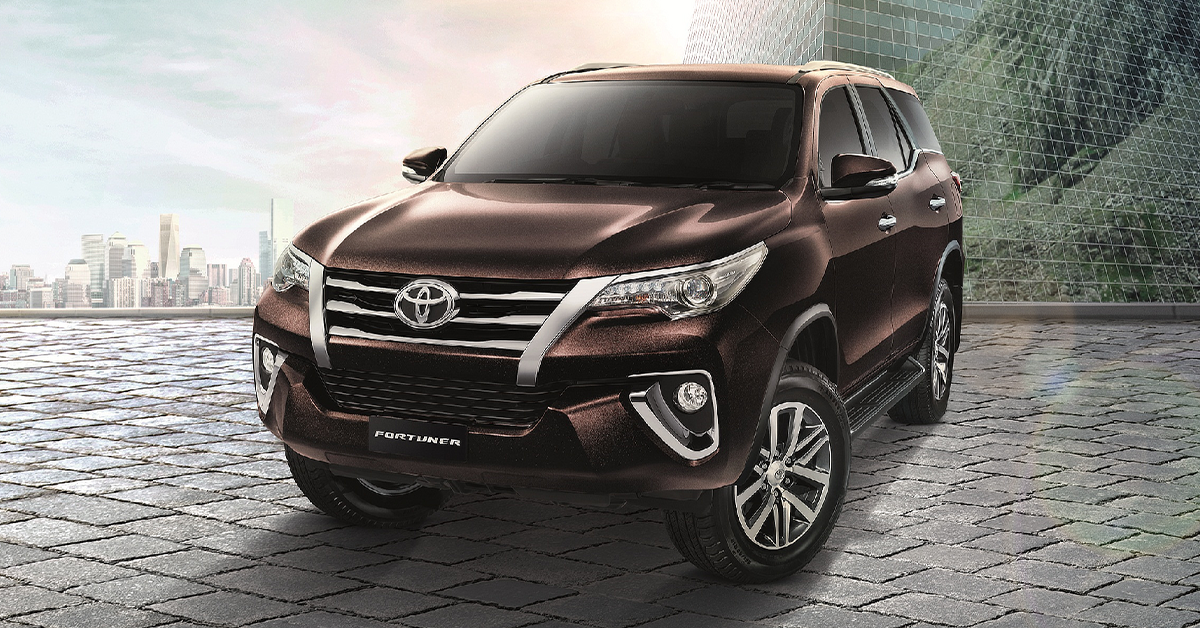
Official press image of the Toyota Fortuner. | © Toyota Motor Corporation
The Toyota Fortuner has never been sold in America, has never chased the kind of global headline attention Toyota reserves for its Land Cruiser or Supra, and yet across two decades it has become one of the most dominant full-size SUVs in markets stretching from India to Indonesia to Australia. Its secret is refreshingly simple: it takes the mechanical toughness that made the Hilux famous, wraps it in a seven-seat body, and sells it at a price the segment’s established players have never quite managed to undercut.
The Fortuner did not launch as a standalone project — it launched as part of a genuinely ambitious Toyota strategy called the Innovative International Multi-purpose Vehicle (IMV) project. Rather than developing separate architectures for separate vehicle types, Toyota engineered a single ladder-frame platform to underpin five distinct models simultaneously: three variants of the Hilux pickup, one minivan (the Innova), and one sports utility vehicle — the Fortuner. The goal was genuinely practical: deliver more appealing products at more affordable prices by sharing engineering, production tooling and supply chains across a global manufacturing network, rather than treating each model as a bespoke regional project.
The first-generation Fortuner launched in 2004, built initially in Indonesia before Thailand joined as a second production base, and targeted primarily at Asian and Australian buyers. Its Hilux-derived underpinnings gave it genuine off-road credibility and mechanical simplicity from day one, offered with 2.7-litre and 4.0-litre petrol engines paired with a standard six-speed manual, or optional four or five-speed automatic transmissions. Two trim levels defined the early range: the G for rear-wheel-drive buyers, and the V for those wanting genuine four-wheel-drive capability. The first generation received facelifts in 2008 and 2011, both aimed at improving ride comfort and handling without disturbing the fundamental formula.
Toyota launched the second-generation Fortuner in the summer of 2015, revealed simultaneously in Australia and Thailand — a genuinely significant expansion of the model’s ambitions beyond its original Southeast Asian core markets. This generation introduced Toyota’s 2.8-litre 1GD-FTV turbodiesel engine, part of the newer GD-series family offering meaningfully more torque, better efficiency and lower emissions than the older KD-series units it replaced. Styling adopted Toyota’s “Keen Look” design language, with a prominent chrome-trimmed upper grille and swept-back projector headlamps giving the Fortuner a considerably more distinct road presence than its predecessor.
Crucially, this generation was also the point where the Fortuner stopped sharing its interior design directly with the Hilux — a deliberate decision to give the SUV a genuinely distinct character from the pickup truck it was mechanically related to. The cabin adopted a proper three-row, seven-passenger layout in a 2-3-2 configuration, moving the Fortuner further from its work-truck origins toward a genuine family SUV proposition. In several markets, ownership of a Fortuner has carried genuine social status — in Indonesia specifically, the model gained added prestige from being owned by the country’s then-president, Susilo Bambang Yudhoyono.
Toyota introduced the Fortuner Legender in 2021 as a considerably more aggressively styled variant sold alongside the standard, pre-facelift Fortuner — sharper front-end design, slimmer LED lighting and additional standard features, offered exclusively with diesel power. Sitting above even the Legender is the GR-S — Toyota’s Gazoo Racing-badged, sportier-tuned range-topper, using the same 2.8-litre diesel engine producing approximately 201 bhp and 500 Nm of torque, paired with sportier styling elements and a tuned suspension setup aimed at buyers wanting improved road presence without stepping outside the diesel-first Fortuner formula.
Toyota has also begun introducing genuine efficiency-focused updates to the ageing platform. A 48V mild-hybrid variant of the 2.8-litre diesel engine is now available in markets including India, delivering improved fuel efficiency and a useful torque boost at low speeds — a modest but genuine step toward electrification without abandoning the diesel character that has defined the Fortuner’s appeal since launch.
As of 2026, Indian pricing for the standard Fortuner lineup spans approximately ₹34.76 lakh to ₹52.34 lakh ex-showroom, with the Legender trim starting around ₹44.51 lakh and climbing to roughly ₹50.09 lakh. The 48V mild-hybrid variants command a genuine premium, starting from approximately ₹44.72 lakh for the standard Fortuner and ₹50.09 lakh for the Legender. In Indonesia, the current lineup spans nine variants across three engine options, priced between approximately Rp583.7 million and Rp789.6 million.
Spy shots and industry reporting through early 2026 point toward a genuinely significant next-generation Fortuner — internally codenamed 582D — expected to retain the current model’s 2.8-litre diesel engine while adopting Hilux-inspired exterior design, a new cabin, expanded ADAS safety features and continued mild-hybrid diesel technology. An official global debut had not been confirmed at the time of writing, though Toyota has continued making incremental pricing and specification adjustments to the current generation through 2026 while the next generation completes development.