 Brands
Honda Jazz — UK Prices, e:HEV Specs and the Fit in Japan
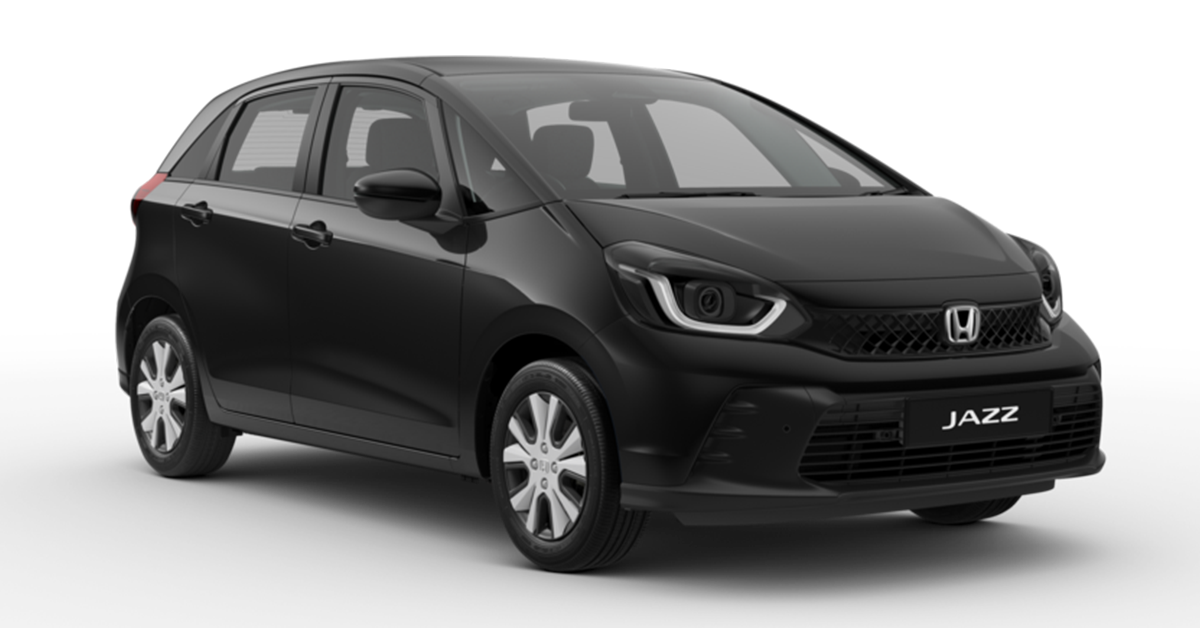
Official press image of the Honda Jazz e:HEV. | © Honda Motor Europe Ltd.
The Jazz is Honda's small hybrid hatchback, sold as the Fit in Japan. Here are Honda's own UK grades and prices, e:HEV specs and economy, boot space, Honda SENSING safety kit, the 2026 Fit update in Japan and the history since 2001.
The Honda Jazz is a small five-door hatchback that Honda sells as the Fit in Japan and some other markets (reported). In the UK, Honda’s own pages list it as the Jazz e:HEV full hybrid, in four grades called Elegance, Advance, Crosstar Advance and Advance Sport, with prices from £28,475 on Honda’s specification page (Honda). Honda’s 2020 European release said the fourth-generation Jazz was available exclusively with the e:HEV two-motor hybrid powertrain, a first for Europe (Honda). We built this article from Honda’s own pages first and used reports only where those pages are silent.
| UK entry price, Elegance | £28,475 on Honda spec page (Honda) |
| UK grades | Elegance, Advance, Crosstar Advance, Advance Sport (Honda) |
| Powertrain | 1.5L petrol with electric motor, eCVT (Honda) |
| Combined economy | 58.9 to 62.8 mpg (Honda) |
| Claimed range | Up to 550 miles (Honda) |
| Boot, seat up | 304 liters (Honda) |
| Seats | Five (Honda) |
| Europe powertrain since 2020 | e:HEV only (Honda) |
| Japan update on sale | 10 July 2026 (Honda) |
| Japan grades | X, Z, RS, Crosstar (reported) |
Every UK Jazz uses a 1.5-liter petrol engine rated at 107 PS and 131 Nm, plus an electric motor rated at 122 PS and 253 Nm, with an eCVT (Honda). Honda lists combined fuel economy of 58.9 to 62.8 mpg depending on the grade, and says the Jazz can cover up to 550 miles on a full tank (Honda). That claim fits the 40-liter tank and the Elegance’s 62.8 mpg, which works out to about 553 miles (our calculation). Real-world economy will be lower than any claimed figure.
The Jazz is small outside and tall inside. Honda lists a length of 4,089 mm for most grades, a boot of 304 liters with the rear seat up and 1,205 liters with the seat folded to the roof, and Magic Seats as standard on the Elegance (Honda). The page does not describe how the seats move in the text we read. It does list five seats and a 40-liter fuel tank (Honda). We cover the space and equipment in detail in a later section, grade by grade.
The Fit is still on sale and was updated in Japan this year. Honda’s Japanese news release says it made a minor model change to the Fit with sales starting on 10 July 2026, adding a new Z grade and upgrading the RS (Honda). Reports say the release came on 9 July and that the grades are now X, Z, RS and Crosstar (reported). Reports describe the update as marking the car’s 25th anniversary (reported). We cover the Japanese car, its prices and its engines in its own section.
Not every market gets the car. Reports say Honda stopped selling the Fit in the US after the 2020 model year, ended Australian Jazz sales in 2021 and discontinued the Jazz in India about three years before July 2026 (reported). A report says Honda has no plan to relaunch the Jazz in India (reported). We found no Honda page that lists these withdrawals, so every one is a report. Our Honda Models article covers the cars Honda sells in the US today, which do not include a Fit.
The sections that follow cover the car’s history from 2001, the UK grades and prices, the e:HEV powertrain, size and equipment, safety and ownership costs, the Japanese Fit, and what we could not confirm. Where Honda’s pages disagree with each other or with reports, we give both figures and tag each one. Anything we could not confirm is listed at the end of the article instead of being guessed, so readers can see where Honda has published a fact and where only a report has.
Reports say the Fit launched in Japan on 21 June 2001, replacing the Logo, and reached Europe a year later as the Jazz (reported). A report says it beat the Toyota Corolla in Japanese sales by December 2001 and far exceeded its original monthly target of 8,000 units (reported). Honda’s own pages in the text we read do not describe the 2001 launch, so these are reports. A report also traces the Jazz name in Europe back to the 1983 City, which was sold as the Jazz in the UK (reported).
| First Fit launch in Japan | 21 June 2001 (reported) |
| Jazz in the UK since | 2002 (reported) |
| Sales by mid-2013 | Almost 5 million (reported) |
| First hybrid Fit, Japan | October 2010 (reported) |
| First hybrid Jazz, Europe | Early 2011 (reported) |
| Jazz production at Swindon | From about 2009 (reported) |
| Swindon vehicle production ended | July 2021 (reported) |
| Fourth generation shown | 2019 Tokyo Motor Show (reported) |
| Europe sales of fourth generation | From mid-2020 (Honda) |
| Fit series sales in Japan | More than 3.25 million (reported) |
Reports describe four generations. The first ran from 2001 to 2008, the second from about 2007 to 2014, the third from 2013 to 2020 and the fourth from 2019 to the present (reported). Reports say the second generation arrived in Japan in late 2007 and reached the UK and the Philippines shortly after, and that a hybrid Fit launched in Japan in October 2010 and in Europe in early 2011 (reported). Honda’s pages do not number the generations in the text we read, so the numbering is a report’s.
Names differ by region. A report says Honda uses Jazz in Europe, Oceania, the Middle East, Africa, Hong Kong, Macau, Southeast Asia and India, and Fit in Japan, Sri Lanka, China, Taiwan and the Americas (reported). The same report says sales reached almost 5 million by mid-2013 across ten plants in eight countries (reported). That is a report’s figure for the first two generations and the start of the third, and we did not find a Honda page that gives a lifetime total for the Jazz and Fit together.
Europe built some of its Jazzes locally. A report says production for Europe moved from Japan to Honda’s Swindon plant in the UK in 2009, with a plan for 20,000 units to March 2010 (reported). Reports say Swindon ended vehicle production in July 2021 (reported). Honda said in 2019, as reported, that its new hybrids for Europe were being built in Japan (reported). We did not find a Honda page that says where the current UK-market Jazz is built, so we give no factory.
The fourth generation changed the car. A report says it was uncovered at the 2019 Tokyo Motor Show, with the e:HEV hybrid system as its highlight (reported). Honda’s 2020 European release said Europe would get the Jazz exclusively with e:HEV technology, that it was the first model to wear the e:HEV badge in Europe, and that it was the first of six electrified Honda models planned for Europe by 2022 (Honda). Reports add that the Crosstar, with SUV-style cues and roof rails, arrived with this generation (reported).
The fourth generation has been updated. Reports say Europe received a facelift in 2023, while another report says a modest facelift came in 2022, mainly for Japan and Europe (reported). We give both years. A report says Honda’s Fit series has sold more than 3.25 million units in Japan, a count that includes related models such as the Fit Aria and Fit Shuttle (reported). Our Honda history article covers the wider company timeline, and we do not repeat it here.
Honda’s UK specification page lists four grades. The Elegance is £28,475, the Advance £29,715, the Crosstar Advance £30,795 and the Advance Sport £30,995, all on-the-road prices (Honda). The Elegance has 15-inch wheels, a 9-inch Honda CONNECT system with navigation, Magic Seats, a rear-view camera and front and rear parking sensors (Honda). The Advance and above add 16-inch alloys, keyless entry and start, heated front seats, a heated leather steering wheel and privacy glass (Honda). The Advance Sport is the dearest at £30,995, which is £2,520 above the Elegance (our calculation).
| Elegance on spec page | £28,475 (Honda) |
| Advance on spec page | £29,715 (Honda) |
| Crosstar Advance on spec page | £30,795 (Honda) |
| Advance Sport on spec page | £30,995 (Honda) |
| Elegance on offers page | £29,475 (Honda) |
| Advance on offers page | £30,715 (Honda) |
| Crosstar Advance on offers page | £31,470 (Honda) |
| Advance Sport on offers page | £31,670 (Honda) |
| Crosstar Advance, October 2023 list | £29,175 (Honda) |
| Deposit contribution | £2,000 on PCP or HP (Honda) |
The other two grades add styling. Honda says the Crosstar Advance adds water-repellent upholstery, roof rails and front fog lights, and the Advance Sport adds sports pedals, black mirrors, a tailgate spoiler and gloss black bumper styling (Honda). Honda’s page does not describe the Crosstar’s raised ride height in the text we read, but it does list different dimensions for it: a length of 4,105 mm, a width of 1,725 mm and a wheelbase of 2,520 mm (Honda). The Advance Sport and Crosstar Advance are therefore only £200 apart on Honda’s specification page (our calculation), so the choice between them is about style and not cost.
Honda’s own pages give more than one price. Honda’s Jazz offers page, for orders from 1 November 2026 to 31 March 2027, lists on-the-road prices of £29,475 for the Elegance, £30,715 for the Advance, £31,470 for the Crosstar Advance and £31,670 for the Advance Sport (Honda). Those are £1,000 or £675 above the specification page, which matches the premium-paint amounts the offers page lists (Honda, our calculation). We do not know why, so we give both sets.
Honda’s price lists show the trend. An October 2023 price list shows the Crosstar Advance at £29,175 on the road, and an April 2026 list shows it at £31,470, with a recommended retail price of £30,105 including VAT (Honda). That is £2,295 more over the period, or about 7.9 percent (our calculation). Honda’s offers page also says prices may change because of tariffs, duties, taxes or other costs, and that prices were correct when published (Honda).
Finance offers are Honda’s own. The offers page lists a £2,000 Honda Deposit Contribution on new retail Jazz bought through Honda PCP or HP, a representative APR of 5.9 percent over a 49-month PCP with a 35 percent maximum deposit, and monthly payments from £279 for the Elegance to £309 for the Advance Sport (Honda). Honda notes that the figures are for standard paint, and premium paint costs £1,000 on the Elegance and Advance and £675 on the other two (Honda). These offers expire.
Older prices show how far the Jazz has moved. A report from 2019 said the then-new hybrid Jazz would start from a shade under £19,000, and another listing shows the original SE at £21,800 (reported). Those were different grades in a different year from today’s Elegance, so we do not calculate a percentage. A buyer should always confirm the on-the-road price, delivery charge and any paint cost with a Honda retailer, because Honda’s pages show different totals on different dates.
Honda’s UK specification page lists one powertrain for every grade: a 1.5-liter e:HEV with 1,498 cc, Intelligent Multi Mode Drive, an engine output of 79 kW or 107 PS and 131 Nm, plus an electric motor of 90 kW or 122 PS and 253 Nm (Honda). The transmission is an automatic eCVT and the top speed is 108 mph (Honda). Honda’s page does not give a combined system output, so we do not add the engine and motor figures together.
| Engine | 1.5L e:HEV, 1,498 cc (Honda) |
| Engine output | 107 PS, 79 kW (Honda) |
| Engine torque | 131 Nm (Honda) |
| Electric motor output | 122 PS, 90 kW (Honda) |
| Electric motor torque | 253 Nm (Honda) |
| Transmission | eCVT automatic (Honda) |
| Top speed | 108 mph (Honda) |
| 0 to 62 mph | 9.4 to 9.7 seconds by grade (Honda) |
| Combined economy | 58.9 to 62.8 mpg by grade (Honda) |
| Claimed range | Up to 550 miles (Honda) |
Honda describes how the system works. Its Jazz page says the e:HEV pairs a responsive 1.5-liter petrol engine with two electric motors and a lithium-ion battery, that the Jazz can run solely on electric power, and that the system switches between electric, hybrid and petrol power automatically (Honda). It also says the hybrid charges its battery while you drive (Honda). A report describes extremely limited electric-only range (reported). Honda’s page does not give a battery capacity or an electric range figure in the text we read.
Performance is modest and varies by grade. Honda lists 0 to 62 mph in 9.4 seconds for the Elegance, 9.6 for the Advance, 9.7 for the Crosstar Advance and 9.6 for the Advance Sport (Honda). The Crosstar’s time is 0.3 seconds slower than the Elegance’s (our calculation). Honda also lists a higher kerb weight of 1,248 to 1,253 kg for it, against 1,230 to 1,247 kg for the Elegance (Honda). We found no Honda figure for in-gear acceleration. Honda’s page does not give a 0 to 60 mph time, so we use only the 0 to 62 mph figures it lists.
Economy also varies by grade. Honda lists combined economy of 62.8 mpg and 102 g/km CO2 for the Elegance, 61.4 mpg and 104 g/km for the Advance, 61.4 mpg and 108 g/km for the Crosstar Advance, and 58.9 mpg and 105 g/km for the Advance Sport (Honda). Wheel and tire size differ between grades, from 15-inch wheels on the Elegance to 16-inch on the others (Honda). Honda’s footer says the figures are for comparison and may not match real-world driving (Honda).
The claimed range follows from the tank. Honda says the Jazz can go up to 550 miles on a full tank (Honda). Its tank is 40 liters, and at 62.8 mpg that is about 553 miles, while the 58.9 mpg Advance Sport would manage about 518 miles (our calculation). A report puts the Jazz’s servicing interval at 12,500 miles or 12 months (reported). Honda’s wider shift toward hybrids is covered in our EV article.
There are limits to what Honda published. We found no battery capacity, no electric-only range, no system output, no 50 to 75 mph time and no official towing figure on the pages we read. A report says the hybrid engine is noisy when pushed hard and that the car is expensive for its size (reported). We do not give a verdict on driving feel, because we found no test from Honda, and the choice between grades is mainly equipment, as the performance gap is small.
Honda lists the Elegance, Advance and Advance Sport at 4,089 mm long, 1,694 mm wide and 1,526 mm high on a 2,517 mm wheelbase (Honda). The Crosstar Advance is longer and wider at 4,105 mm by 1,725 mm, with the same height and a 2,520 mm wheelbase (Honda). That makes the Crosstar 16 mm longer and 31 mm wider than the other grades (our calculation). Honda’s page does not list a turning circle or ground clearance in the text we read, so we give neither.
| Length, most grades | 4,089 mm (Honda) |
| Length, Crosstar Advance | 4,105 mm (Honda) |
| Width, most grades | 1,694 mm (Honda) |
| Width, Crosstar Advance | 1,725 mm (Honda) |
| Height | 1,526 mm (Honda) |
| Wheelbase | 2,517 mm; Crosstar 2,520 mm (Honda) |
| Boot, seat up | 304 liters (Honda) |
| Boot, seat down to window | 844 liters (Honda) |
| Boot, seat down to roof | 1,205 liters (Honda) |
| Kerb weight range | 1,230 to 1,253 kg (Honda) |
Boot space is the same on every grade. Honda lists 304 liters with the rear seat up, 844 liters with the seat folded to the window line and 1,205 liters with it folded to the roof, all in the VDA measure (Honda). The fold-flat figure is 3.96 times the seat-up figure (our calculation). Honda’s page lists five seats on all grades (Honda). It does not give a load-floor height or a boot width, so we cannot compare it with rivals on those terms. We also did not find a Honda statement on the Jazz’s towing capacity or roof load, so we leave those out.
Magic Seats are the Jazz’s signature. Honda lists them as standard from the Elegance up, and its Jazz page calls them a smart way to make the car ideal for city life together with a spacious boot and a flexible interior (Honda). Honda’s pages in the text we read do not describe how many positions the rear seat has, so we do not. A report says the car has a class-leading boot and the most spacious interior of any supermini thanks to its tall roof, and that is a reviewer’s view (reported).
Equipment steps up with the grade. Honda lists a 9-inch Honda CONNECT screen with navigation, wireless Apple CarPlay, My Honda+ compatibility, an ECON mode and Adaptive Cruise Control among the features (Honda). The Advance and above add smart keyless entry and start, heated front seats, a heated leather steering wheel and privacy glass, with 16-inch alloys (Honda). A report says a 9.0-inch touchscreen was added to all models after the mid-life update, which agrees with Honda’s 9-inch screen (reported).
Kerb weights differ slightly. Honda lists 1,230 to 1,247 kg for the Elegance and Advance, 1,242 to 1,244 kg for the Advance Sport and 1,248 to 1,253 kg for the Crosstar Advance (Honda). Honda does not explain the ranges, so we do not claim a reason. The Jazz weighs about 1.2 tonnes (our calculation). Honda’s page lists tire sizes of 185/60 R15 on the Elegance and 185/55 R16 or 185/60 R16 on the others, depending on the grade (Honda).
Some comparisons are not possible from Honda’s pages. We found no Honda statement on rear legroom, headroom, cabin width or the car’s turning circle, and we did not compare the Jazz with the Toyota Yaris or other rivals. A report names the Yaris and MG3 hybrid as rivals in markets where the Jazz is sold (reported). For readers deciding between grades, the Crosstar’s extra size and its roof rails are its main differences, and the Advance adds comfort items at £1,240 over the Elegance (Honda, our calculation).
Honda’s UK specification page lists nine Honda SENSING items on every grade: Collision Mitigation Braking System, Forward Collision Warning, Lane Departure Warning, Lane Keeping Assist System, Low Speed Following, Road Departure Mitigation, Traffic Sign Recognition System, High Beam Support System and Adaptive Cruise Control (Honda). The Advance and Advance Sport add Blind Spot Information with Cross Traffic Monitor, which the page does not list for the Elegance or the Crosstar Advance (Honda). Honda says Honda SENSING and My Honda+ come standard (Honda).
| Honda SENSING items on all grades | Nine listed (Honda) |
| Blind Spot Information | Advance and Advance Sport only (Honda) |
| Adaptive Cruise Control | All grades (Honda) |
| My Honda+ | Standard (Honda) |
| Infotainment on Elegance | 9-inch Honda CONNECT with navigation (Honda) |
| Wireless Apple CarPlay | Listed (Honda) |
| Crosstar first-year tax, April 2026 list | £405 (Honda) |
| Crosstar first-year tax, October 2023 list | £175 (Honda) |
| Standard warranty | 3 years or 90,000 miles (reported) |
| Crash rating | Not found on a Honda page (our finding) |
Honda’s page does not give a crash-test rating in the text we read. We searched for a Euro NCAP result for the current Jazz and did not find one on a Honda page, so we give none and do not infer one from older cars. Honda’s page does list the full set of Honda SENSING items, which is the safety evidence we can tag to Honda. A buyer comparing small hatchbacks should look up the current rating from the testing body and check which equipment the tested car had, because ratings apply to a specific variant under a specific protocol.
Warranty and running costs come from reports. A report says the Jazz carries a three-year, 90,000-mile warranty as standard, with options to extend (reported). The same report puts road tax at £195 a year and CO2 emissions at 102 to 108 g/km across grades, which matches Honda’s per-grade figures for the Elegance and Crosstar (reported). Honda’s page does not list a warranty in the text we read, so the warranty is a report’s, and so is the tax figure.
Price lists show the first-year tax. Honda’s April 2026 price list for the Crosstar Advance shows a first-year tax rate of £405 and a CO2 figure of 108 g/km, against £175 and 109 g/km in October 2023 (Honda). The first-year rate rose by £230 (our calculation). Honda’s list also shows insurance group 22A for the 2026 car and 19A for the 2023 car. We give those as published, without explaining the cause (Honda). Honda’s price lists carry an insurance group for each grade, but we did not find a current insurance quote, so we do not estimate premiums.
Connected services come with the car. Honda lists wireless Apple CarPlay and the My Honda+ app as compatible features, and says My Honda+ comes standard for connectivity on every drive (Honda). The Elegance has a 9-inch Honda CONNECT system with navigation (Honda). We found no Honda statement about over-the-air updates, subscription fees or how long the connected services are free. If those matter to your decision, ask a Honda retailer for the terms in writing before signing.
Service intervals and costs are not on Honda’s page. A report says servicing is every 12,500 miles or 12 months, with fixed-price service plans and extended warranties offered (reported). We found no Honda figure for service cost, insurance or resale value. A report says the Jazz has an exceptional reliability record (reported), but that is a reviewer’s view and not a Honda claim, and we do not repeat it as fact. Ownership cost depends on mileage, grade and finance terms.
Honda’s Japanese news release says Honda made a minor model change to the Fit, with sales starting on 10 July 2026 (Honda). It says the update adds a new grade called Z, which aims to combine sportiness with comfort, and raises the RS’s interior and exterior quality and equipment, while changing the type variations so each stands out more (Honda). Reports say the announcement was on 9 July 2026 and that the Fit marks its 25th year in 2026 (reported). We did not find an English Honda release for it.
| Update on sale in Japan | 10 July 2026 (Honda) |
| New grade | Z (Honda) |
| Upgraded grade | RS (Honda) |
| Grades after update | X, Z, RS, Crosstar (reported) |
| Hybrid-only grades | RS and Crosstar (reported) |
| X price | ¥1,806,200 (reported) |
| Z price | ¥2,145,000 (reported) |
| Top Crosstar e:HEV 4WD price | ¥2,955,700 or ¥2,957,500 (reported) |
| Petrol output | 87 kW, 142 Nm (reported) |
| Fit series sales in Japan | More than 3.25 million (reported) |
The grades were simplified. Reports say the old line-up of Basic, Home, RS and Crosstar, with several sub-variants, became four types: X, Z, RS and Crosstar (reported). They say the Basic became the X and the Home became the Z (reported). The RS and Crosstar are now hybrid-only, according to reports (reported). A report says the previous range had more than six variants and that Honda wanted to avoid buyer confusion (reported). Honda’s release mentions the changed type variations without listing them in the text we read (Honda).
Japanese prices are reported. A report puts the X at ¥1,806,200 and the Z at ¥2,145,000 for the gasoline versions (reported). Reports give the top Crosstar e:HEV 4WD as ¥2,955,700 or ¥2,957,500, and we give both (reported). A report converts the entry price to about $11,100 and another to about Rs 10.64 lakh, and we do not use conversions, because exchange rates move (reported). Honda’s release in the text we read gives no price.
Powertrains are two. A report says the Japanese Fit has a 1.5-liter dual-motor hybrid, with an electric motor rated at 90 kW and 253 Nm, or a 1.5-liter petrol rated at 87 kW and 142 Nm, with a CVT (reported). The hybrid’s motor figures match the 90 kW and 253 Nm that Honda lists for the UK Jazz (Honda). A report says the Japanese Fit can have front- or all-wheel drive in any grade, while the UK car is front-wheel drive only (reported).
Equipment changes are small. Reports say the Z takes the RS’s sporty styling with a black interior, a leather three-spoke steering wheel and seat heaters, and that UV and IR-cut glass is standard on it (reported). Reports say the RS gets Honda CONNECT, a wireless charger and a heated steering wheel as standard, and a new high-gloss clear coat improves the paint finish (reported). The base X keeps its simple equipment, according to a report (reported). Honda’s release in the text we read does not list these items.
Welfare versions are also part of the update. Honda’s release says its Tech-Matic and Franz driving aids for drivers with limited use of their limbs are available on the Z and Crosstar, with the Franz system due to go on sale this autumn (Honda). A report says the Fit series has sold more than 3.25 million units in Japan, including related models (reported). We did not find a Honda page for the Fit’s export plans, so we give none, and we do not suggest that this update will reach Europe.
The Jazz and Fit are not on sale everywhere. Reports say Honda discontinued the Fit in the US after the 2020 model year and has no active plans to bring it back, though executives have left the door open (reported). A report says the Jazz was discontinued in Australia in 2021, when it was one of the cheapest new cars there, and that Honda has since cited shrinking hatchback share and a higher entry price for the new model (reported). Honda’s own US pages, covered in our Honda Models article, do not list a Fit.
| US Fit status | Discontinued after 2020 model year (reported) |
| India Jazz status | Discontinued, no relaunch plan (reported) |
| Australia Jazz status | Discontinued in 2021 (reported) |
| Indonesia Jazz status | Production stopped (reported) |
| China Fit run-out | 3,000 units, 66,800 yuan (reported) |
| China Fit length | 4,169 mm (reported) |
| Southeast Asia successor | City hatchback (reported) |
| Europe powertrain | e:HEV only (Honda) |
| Next-generation Jazz | Not announced (our finding) |
| Euro NCAP result on Honda page | Not found (our finding) |
India and Southeast Asia have their own stories. A report says Honda discontinued the Jazz in India about three years before July 2026 and has no plan to relaunch it (reported). A report says the Fit’s successor in Southeast Asia and South America is the City hatchback (reported), and our Honda City article covers the City sedan and its hatchback in Thailand. A report says Honda stopped producing the Jazz in Indonesia after about 20 years on sale (reported). We did not find Honda pages for those withdrawals.
China has a run-out model. A report says a refreshed Fit was launched there in January 2026 at 66,800 yuan, with production capped at 3,000 units and a lifetime engine and transmission warranty (reported). The same report says that Fit is 4,169 mm long with a 2,530 mm wheelbase, and that it is unclear whether its new styling will reach the European Jazz or the Japanese Fit (reported). Those figures are for the Chinese model and should not be applied to the UK car.
The next Jazz is not announced. A report says there is no all-new fifth-generation Jazz for 2026 and that the current car carries on with minor changes in Europe (reported). We found no Honda page that names a successor or gives a date. Honda’s Japanese release describes only a minor model change for the Fit (Honda). A report says Honda is focusing on expanding its hybrid line-up instead of reviving the Fit in America (reported). That is a report’s reading and not a Honda statement.
Some facts in this article differ by source. Honda’s UK pages show the Elegance at £28,475 on the specification page, £29,475 on the offers page and £28,060 on an older overview page (Honda). Reports give the Japanese top price as ¥2,955,700 or ¥2,957,500 (reported). The facelift year is 2022 or 2023 depending on the report (reported). We kept every value and its tag, so readers can choose the source that suits them.
To sum up what we could not confirm: a Euro NCAP rating for the current Jazz, the battery capacity and electric-only range, a combined system output, the UK warranty on a Honda page, where the UK-market Jazz is built, why the offers page prices differ from the specification page, the next Jazz, and Honda pages for the US, India, Australia and Indonesia withdrawals. Everything else in this article is tagged to Honda’s pages or to reports. We will update the sections when Honda publishes more details.