 Brands
Hyundai ix35 — Europe, China, Fuel Cell, Specs and Sales
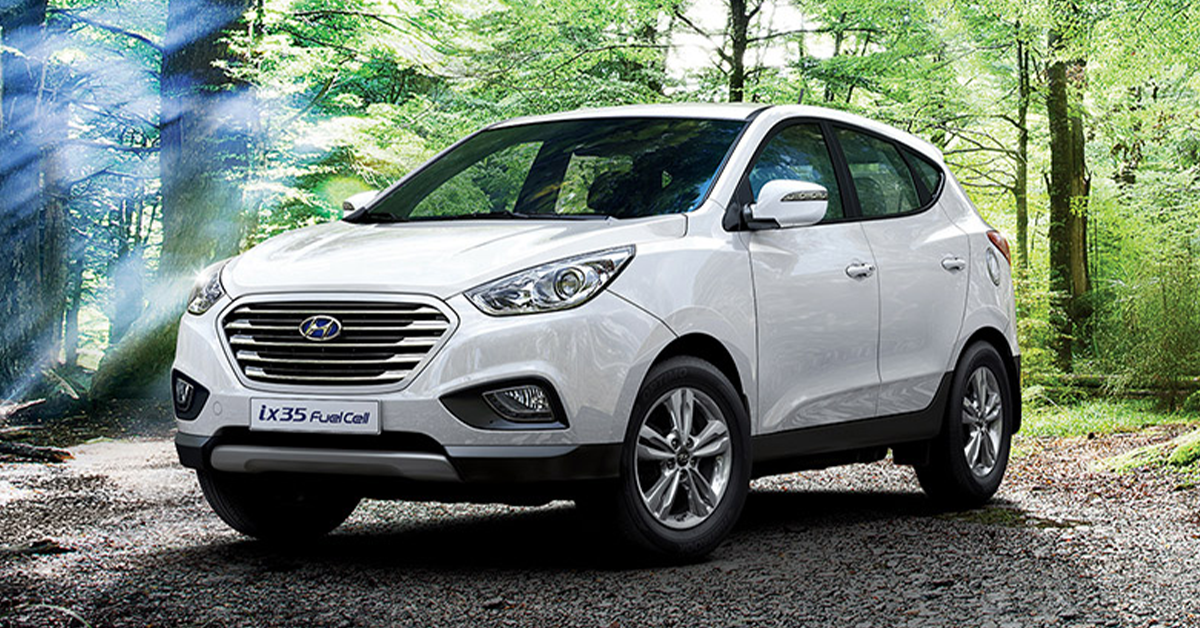
Official image of the Hyundai ix35. | © Hyundai Motor Company
The Hyundai ix35 is the name Hyundai gave its second-generation Tucson in Europe, China and other markets, unveiled at the 2009 Frankfurt show and sold in Europe from 2010 until 2015, with a 2013 facelift. It earned five Euro NCAP stars in 2010, gained a hydrogen Fuel Cell version in 2013 and was built in the Czech Republic. A separate Chinese ix35 stayed in production until 2023. This guide covers the specs, facelift, safety, sales and the open questions.
The ix35 is the name Hyundai used for its second-generation Tucson in Europe, China, Australia and other markets outside South Korea and North America. Hyundai’s Slovak archive page says the SUV received the ix35 name with its second generation, introduced in 2009 in Frankfurt, and went back to the Tucson name with the generation unveiled in 2015 at the New York Auto Show (Hyundai). Hyundai’s Dutch page says the petrol and diesel ix35 was produced in Europe from 2010 to 2015 (Hyundai). The name is the main source of confusion, because the same car is a Tucson in some markets and an ix35 in others.
| Class | Compact SUV (reported) |
| Name introduced | 2009, Frankfurt (Hyundai) |
| Petrol and diesel years, Europe | 2010 to 2015 (Hyundai) |
| Returned to Tucson name | 2015 generation (Hyundai) |
| Engine range | 99 kW to 135 kW (Hyundai) |
| Euro NCAP | 5 stars, August 2010 (reported) |
| Fuel Cell motor | 100 kW (136 PS), 300 Nm (Hyundai) |
| Europe sales, 2010 | 47,578 units (reported) |
| Europe sales, 2014 | 93,540 units (reported) |
| Chinese ix35 production | 2010 to 2023 (reported) |
We read Hyundai’s own pages first. They were the Dutch ix35 page, the Slovak archive page and the worldwide heritage entry for the ix35 Fuel Cell. Reprinted Hyundai releases, Euro NCAP, motoring reports and sales databases fill the gaps and carry the reported tag. Hyundai’s pages hold few specifications, so most numbers below are reported. Prices and availability may have changed since publication, and exchange rates are not applied. Where two sources give different numbers for the same point, we print both and say which source gave which. Calculations are ours and are marked as such, and each figure is checked before it is printed.
Hyundai’s Dutch page gives the petrol and diesel range as running from 99 kW (135 PS) to 135 kW (184 PS), with a 1.6-liter direct-injection petrol at the bottom, 2.0-liter petrols above it and 1.7 CRDi and 2.0 CRDi diesels (Hyundai). It says manual and automatic transmissions were offered depending on the engine, and that the strongest 2.0 CRDi came with all-wheel drive in some versions (Hyundai). We do not convert PS to horsepower.
The ix35 had three lives. The first was the European petrol and diesel car, unveiled in Frankfurt in 2009 and facelifted in 2013 (reported). The second was the ix35 Fuel Cell, which Hyundai describes as the world’s first successful mass production of its kind (Hyundai). The third was a separate Chinese ix35 line, which reports say Beijing Hyundai kept alongside the Tucson until 2023 (reported).
Euro NCAP gave the ix35 five stars in a result released on August 25, 2010 (reported). Reports give 5 stars with 90 percent for adult occupants, 88 percent for children and 54 percent for pedestrians (reported). Europe sales in a sales database ran from 47,578 units in 2010 to 93,540 in 2014 (reported). We found no Hyundai page that gives the ix35’s European sales in full.
This guide covers the ix35’s history, launch specifications, the 2013 facelift, safety, the Fuel Cell, the Chinese cars, sales and the points where sources disagree. Our Hyundai Tucson article covers the current Tucson, our Hyundai Mufasa article covers the Chinese SUV that reports link to the ix35’s replacement, our Hyundai Models article lists the range and our Hyundai history article covers the company. No currency conversion is given. The sections run in order: history, launch specifications, the 2013 facelift, safety, the Fuel Cell, China, and sales with open questions. The tables repeat the key figures so that a reader can scan them without reading every paragraph.
Reports say the ix35’s styling came from the ix-onic concept shown at the Geneva motor show in March 2009, which Hyundai’s European design team in Russelsheim described as an urban nomad (reported). The same reports say the ix35 was the first production Hyundai with the hexagonal family grille, and that it was conceived and engineered at Hyundai’s Frankfurt-based design and technical centres (reported). Hyundai called the design language fluidic sculpture (reported). The concept and the production car are linked by the same reports, but the Hyundai pages we read do not describe the concept, so those details are reported and not Hyundai statements.
| ix-onic concept | March 2009, Geneva (reported) |
| Hyundai UK announcement | August 18, 2009 (reported) |
| Frankfurt media day | September 15, 2009 (reported) |
| Production start | First quarter 2010 (reported) |
| Lower-power engines | November 2010 (reported) |
| Euro NCAP result | August 25, 2010 (reported) |
| Facelift | 2013, Geneva (Hyundai, reported) |
| European plant | Nosovice, Czech Republic (reported) |
| Name change | Tucson from 2015 (Hyundai) |
| Fuel Cell production | From 2013, Ulsan (reported) |
A Hyundai UK release of August 18, 2009 announced the ix35 as an all-new addition for the Frankfurt motor show (reported). Official pictures followed in late August, and the ix35 was shown in production form at the Frankfurt show, whose media day was September 15, 2009 (reported). A report says it replaced the Tucson in Europe, and another says the car debuted in Korea earlier that month as the Tucson (reported).
Hyundai’s Slovak page says the SUV received the ix35 name with its second generation, introduced in 2009 in Frankfurt (Hyundai). The same page says the new generation was unveiled in 2015 at the New York Auto Show and that the SUV returned to the Tucson name (Hyundai). The page also says the ix35 was launched in 2005 under the name Tucson, which refers to the first-generation car and not to the ix35 (Hyundai).
Reports said production would begin in the first quarter of 2010 and that the lower-powered petrol and diesel engines would arrive in November 2010 (reported). A UK report said sales would start the following spring at around 16,000 pounds, and another report said the car would reach UK showrooms in spring 2010 (reported). A Dutch report said it would reach dealers from April 2010 (reported). These dates came from reports published before and around launch, so they describe plans and not confirmed deliveries, and we found no Hyundai page that gives an exact first-delivery date for any market.
Hyundai’s Dutch page says a facelift in 2013 updated the lights, technical systems, dashboard and engines (Hyundai). A reprinted Hyundai release says the New ix35 debuted at the 2013 Geneva Motor Show, was designed and developed at the Hyundai Motor Europe Technical Centre in Russelsheim and is produced in Nosovice in the Czech Republic (reported). We cover its changes in the facelift section.
In 2015 the ix35 name changed role. Hyundai’s Dutch page says that year Hyundai stopped selling petrol and diesel ix35 versions and introduced the fuel-cell car, and that the regular ix35 was succeeded by the Tucson (Hyundai). A report says the name returned to Tucson in Europe in 2015 (reported). Our Hyundai Tucson article covers the successor, and our Hyundai Models article lists the rest of the range. The change of name was therefore a change of branding and not of the vehicle line, since the Tucson name had been used before the ix35 and was used again afterwards.
Reports on the 2009 launch give the ix35 as 4,410 mm long, 1,820 mm wide and 1,660 mm tall on a 2,640 mm wheelbase (reported). A UK report says that was 85 mm longer than the Tucson, 20 mm wider and 10 mm longer in the wheelbase, with the roof 20 mm lower and no loss of headroom (reported). The same report puts the predecessor at 4,325 mm long and 1,800 mm wide by subtraction (reported, our calculation). Height therefore fell from 1,680 mm to 1,660 mm by the same subtraction, which matches the lower roof the report describes (reported, our calculation).
| Length | 4,410 mm (reported) |
| Width | 1,820 mm (reported) |
| Height | 1,660 mm (reported) |
| Wheelbase | 2,640 mm (reported) |
| 2.0 petrol, launch | 164 bhp (reported) |
| 1.6 petrol, launch | 138 bhp, November 2010 (reported) |
| 2.0 diesel, launch | 181 or 134 bhp (reported) |
| 1.7 diesel, launch | 113 bhp (reported) |
| Strongest engine, Hyundai | 135 kW, 184 PS (Hyundai) |
| Standard wheels | 16 inch (reported) |
The UK report lists a 2.0-liter petrol of 164 bhp, a 1.6-liter petrol of 138 bhp from November 2010, a 2.0-liter diesel in two tunes of 181 and 134 bhp, and a 1.7-liter diesel of 113 bhp (reported). A Czech report gives the same engines in kilowatts, with a 1.6 GDI of 103 kW, a 2.0 petrol of 122 kW, a 1.7 diesel of 85 kW and a 2.0 diesel of 135 kW or 100 kW (reported). We do not convert between bhp, PS and kW.
The UK report says the six-speed manual was standard with the diesels, a six-speed automatic was available with the 2.0 diesel, and CO2 was 178 g/km for the 2.0 petrol, 158 g/km for the 1.6 petrol and 149 g/km with stop-start (reported). The Czech report says both 2.0-liter engines would be available with all-wheel drive (reported). Hyundai’s Dutch page confirms all-wheel drive on the strongest 2.0 CRDi in some versions (Hyundai).
The suspension is MacPherson struts at the front and a multi-link layout at the rear, with 16-inch wheels on low-resistance tyres as standard and 255/55 R18 wheels as an option (reported). The equipment list includes hill assist control, downhill brake control, push-button start, a cooled glove box, integrated navigation and a 3.5-inch screen in the rear-view mirror for reversing (reported). Reports describe an eco indicator that shows driving economy with green, white or red LEDs (reported). These are launch-era details, and the 2013 facelift changed several of them, so the facelift section should be read with this one.
Reports said the ix35 would be built at three plants on two continents, in Beijing, in Ulsan and, for Europe, at the Kia plant in Zilina, with production starting in the first quarter of 2010 (reported). A later reprinted Hyundai release says the European ix35 is manufactured at Hyundai Motor Manufacturing Czech in Nosovice (reported). Plants are one of the points where early and later reports differ.
Hyundai’s Dutch page gives the engine range as 99 kW (135 PS) for the entry 1.6 petrol up to 135 kW (184 PS) for the strongest diesel (Hyundai). The entry 1.6 petrol is therefore 138 bhp in the UK report, 103 kW in the Czech report and 99 kW (135 PS) on Hyundai’s page, and these figures do not agree, so we print all three and do not pick one (Hyundai, reported). Our Hyundai Models article lists the current range. Our Hyundai Tucson article covers the later generations.
A Hyundai release reprinted on a news site, dated March 5, 2013 from Offenbach, says the New ix35 was presented at the 2013 Geneva Motor Show (reported). It says the car keeps the fluidic sculpture design language first used on the original ix35, launched at the 2009 Frankfurt Motor Show (reported). It says the car is built at Hyundai Motor Manufacturing Czech in Nosovice (reported). The release is a Hyundai release reprinted by a news distribution site, which is why we tag it as reported and not as a Hyundai page.
| Facelift unveiled | March 2013, Geneva (reported) |
| New petrol engine | 2.0 Nu GDI, 166 PS, 205 Nm (reported) |
| Automatic added | Six-speed, 2.0 R diesel 136 PS 4WD (reported) |
| Steering | Flex Steer, three modes (reported) |
| Headlamps | LED daytime lights, optional Bi-Xenon (reported) |
| Cluster option | 4.2-inch TFT (reported) |
| Navigation display | 7-inch, optional (reported) |
| Wheels | 16, 17 and 18 inch (reported) |
| Warranty package | Five Year Triple Care (reported) |
| Europe sales to March 2013 | Over 220,000 units (reported) |
The release says a new 2.0-liter Nu GDI petrol engine replaces the 2.0-liter Theta II, making 166 PS and 205 Nm (20.9 kgm) and meeting Euro 5 (reported). It says two engines get a low-pressure exhaust gas recirculation system and that a six-speed automatic is added for the 2.0-liter 136 PS four-wheel-drive R diesel (reported). The release does not give new diesel power or torque figures (reported). It gives no CO2 or consumption figure for any engine, so we give none.
New features listed are FLEX STEER, offered on the C-SUV for the first time with normal, comfort and sport modes, a heated steering wheel and front parking sensors (reported). An optional 4.2-inch TFT cluster and an optional 7-inch navigation display appear, as do standard LED headlamps with daytime running lights and optional Bi-Xenon headlamps, a first for the model (reported). A UK site headline of August 23, 2013 says price and specification for the new ix35 were revealed, but we did not read that article and give no UK price (reported).
The release lists 16-, 17- and 18-inch alloy wheels, with the 17- and 18-inch designs in metal grey, and a better interior with improved seats and upper door trims, chrome-ringed vents, illuminated front cup holders and a windscreen shade band (reported). It says electronic stability control gained a trailer-towing safety function (reported). Hyundai’s Dutch page also says the 2013 facelift updated the lights, technical systems, dashboard and engines (Hyundai).
Every European ix35 included the Five Year Triple Care package, which the release describes as a five-year warranty with no mileage limit, five years of roadside assistance and five years of vehicle health checks (reported). It says the ix35 had sold over 220,000 units in Europe by March 2013, with 87,000 in 2012, up 15 percent on 2011 (reported). It calls the ix35 the fastest-selling model in Hyundai’s European history and its second best-selling car in Europe (reported). Taken together, the claims show how Hyundai positioned the car in 2013: a European-designed, European-built volume model, since a March 1, 2013 release says it was designed and developed in Russelsheim and produced in Nosovice (reported).
The sales claim can be checked against the sales database. That database gives 74,662 for 2011 and 87,963 for 2012, which is growth of 17.8 percent, not 15 percent, and a three-year total of 210,203 units from 2010 to 2012 (reported, our calculation). The database total to the end of 2012 is below the 220,000 figure for March 2013, and we found no Hyundai monthly figures to explain the gap.
Euro NCAP released the ix35’s crash-test result on August 25, 2010, with the Honda CR-Z, the Suzuki Swift and the Citroen C4, and all four cars received the maximum five stars (reported). Euro NCAP tested a 2.0 diesel Style left-hand-drive car with a kerb weight of 1,610 kg, and its datasheet says the rating applies to all ix35s of the specification tested (reported). Its results page lists the class as small MPV (reported).
| Euro NCAP result released | August 25, 2010 (reported) |
| Euro NCAP overall | 5 stars (reported) |
| Adult occupant | 90 percent (reported) |
| Child occupant | 88 percent (reported) |
| Pedestrian | 54 percent (reported) |
| Tested car | 2.0 diesel Style, LHD (reported) |
| Kerb weight tested | 1,610 kg (reported) |
| Airbags | Six (reported) |
| ANCAP page | Applies from August 2010 (reported) |
| China NCAP result | None found |
Motoring reports quote the ix35’s scores as 90 percent for adult occupant protection, 88 percent for child protection and 54 percent for pedestrian protection (reported). A Czech report headline refers to five stars and a problem with a head airbag in the test (reported). A report also says the ix35 was the third Hyundai in a row, after the i30 and the i20, to earn the maximum Euro NCAP score (reported).
Before the test, Hyundai predicted a five-star rating based on its own crash tests, and the UK launch report said so too (reported). That prediction held, which we can state because Euro NCAP’s own results confirm it (reported). The ix35 had six airbags, active front headrests, electronic stability control and ISOFIX mounts in the rear, according to a long-term road test (reported). A note on the ANCAP data sheet says ANCAP required electronic stability control for a five-star rating from 2008 (reported).
Australia’s ANCAP has an ix35 rating page that says the tested model was introduced in Australia in 2010 and that the rating applies to all 4x4 and 4x2 variants built from August 2010, when an upgraded steering column and other changes were introduced (reported). It lists build and on-sale dates from August 2010 to 2016, and says the 4x4 left-hand-drive European model was tested by Euro NCAP (reported). We did not read the star count on that page. The page gives the price bracket as under 35,000 dollars and the vehicle type as small SUV (reported).
The Fuel Cell and the 2013 facelift were not separately rated in the sources we read. Euro NCAP’s datasheet says its rating applies to the specification tested, so we draw no conclusion for the facelift or the Chinese cars (reported). The Chinese ix35 is a different line built in a different plant, and we found no China NCAP result for it. Anyone comparing the ix35 with a rival should use the rival’s result from the same year, or compare equipment lists, and not rely on star counts alone. The Euro NCAP datasheet lists front seatbelt pretensioners and load limiters among the safety equipment of the tested car, and gives 2010 as the year of publication (reported).
A rating from 2010 uses an older Euro NCAP scheme than today’s. A 2010 report on the 2010 results said Euro NCAP had introduced a new rating scheme that year, and that 65 percent of 29 cars tested reached five stars in 2010 against 90 percent in 2009 (reported). The ix35’s five stars should therefore be read as a 2010 result, and not compared with a rating from a later scheme.
Hyundai’s worldwide heritage page for the ix35 Fuel Cell is dated 2012 onward and describes it as the world’s first successful mass production of its kind, a milestone at a time when attention was shifting to renewable energy and lower emissions (Hyundai). It says the car’s quick charge time and long driving range benefit customers directly (Hyundai). The page gives no figures, and its URL places the entry under 2010 while its label says 2012 (Hyundai). The four images on the page are labeled ix35-fuel-cell 01 to 04, and the page carries no technical table (Hyundai).
| Fuel Cell production start | January 2013, Ulsan (reported) |
| First car off the line | February 26, 2013 (reported) |
| Motor | 100 kW (136 PS), 300 Nm (Hyundai) |
| Top speed | 160 km/h (reported) |
| 0 to 100 km/h | 12.5 seconds (reported) |
| Range | 594 km or 588 km (reported) |
| Hydrogen tank | 5.64 kg, 700 bar (reported) |
| Hydrogen use | 0.95 or 0.96 kg per 100 km (reported) |
| Planned volume | 1,000 by 2015, then 10,000 (reported) |
| Netherlands sales | 2015 to 2018 (Hyundai) |
Hyundai’s Dutch page says the fuel-cell ix35 has a 100 kW (136 PS) electric motor and 300 Nm of torque, no large traction battery, and a tank that can be filled within a few minutes (Hyundai). It says the car was on sale in the Netherlands between 2015 and 2018 (Hyundai). It says the NEXO succeeded it, and its FAQ gives 2015 as the NEXO’s introduction, a date we could not confirm from the pages we read (Hyundai).
A Hyundai release reprinted on a news site says production of the ix35 Fuel Cell began at the Ulsan plant in Korea in January 2013 and the first car rolled off the line on February 26, 2013 (reported). It says Hyundai planned up to 1,000 units by 2015, mostly for public and private fleets, with limited mass production of 10,000 units after 2015 (reported). It says the first cars were for municipal fleets in Copenhagen and Skane (reported). A trade report adds that the first 1,000 units built at Plant 5 in Ulsan were lease only, with retail sales to begin in 2015, and that Hyundai had put more than 2 million combined miles on test units (reported).
Reprinted Hyundai data gives the motor as 100 kW (136 hp) with 300 Nm from zero rpm, a top speed of 160 km/h, 0 to 100 km/h in 12.5 seconds and a driving range of 594 km (reported). It gives hydrogen use of 0.95 kg per 100 km, a hydrogen tank of 5.64 kg at 700 bar and a 24 kW lithium polymer battery (reported). Luggage space is 465 to 1,436 liters (reported).
The data differ between releases. An earlier release gave a range of 588 km and 0.96 kg per 100 km, and a later one gave 594 km and 0.95 kg, and one report quotes 134 horsepower where others quote 136 (reported). Hyundai’s 2013 length, width and height for the Fuel Cell are given as 4,410 mm, 1,820 mm and 1,655 mm, which makes it 5 mm lower than the 1,660 mm height reported for the petrol car (reported, our calculation).
A UK report says the ix35 Fuel Cell’s UK retail price was announced in May 2015 as starting at around 53,000 pounds (reported). The Fuel Cell is the one ix35 life that continued past 2015, until its successor, the NEXO. A first Canadian delivery in January 2015 is also reported (reported). Our Hyundai Models article lists Hyundai’s current range, and our Hyundai history article covers the company.
A report says the first Chinese ix35 was the same car as the European model, known by the project name LM, unveiled at the 2009 Frankfurt Motor Show and put into production by Beijing Hyundai in April 2010 (reported). The report says it kept the name when the Tucson name returned elsewhere in 2015, because of high demand, and that the Tucson was sold beside it in China (reported). The same report lists the Chinese ix35 as a compact crossover with a front-engine, front-wheel-drive layout (reported).
| Chinese production start | April 2010 (reported) |
| Price before 2013 facelift | 169,800 to 242,800 yuan (reported) |
| Price in 2017 | 149,800 to 222,800 yuan (reported) |
| New ix35 shown | April 2017, Shanghai (reported) |
| New ix35 size | 4,435 x 1,850 x 1,715 mm (reported) |
| 2017 outgoing sales | 19,887 units (reported) |
| Nov and Dec 2017 new car | 14,474 units (reported) |
| Facelift launch | December 13, 2020 (reported) |
| Price in 2020 | 129,800 to 155,800 yuan (reported) |
| China production years | 2010 to 2023 (reported) |
Reports give the pre-facelift ix35 a price of 169,800 to 242,800 yuan with 2.0-liter engines of 165 hp and 174 hp, and say a facelift was expected before the end of 2013 (reported). A later report gives the car’s price in 2017 as 149,800 to 222,800 yuan with engines of 160 hp 2.0 and 170 hp 2.4 (reported). The gap between the two ranges is 20,000 yuan at the bottom and 20,000 yuan at the top (reported, our calculation).
Beijing Hyundai launched a new ix35 at the Shanghai Auto Show in April 2017, with sales planned for the third quarter (reported). Chinese coverage gives the new car as 4,435 mm long, 1,850 mm wide and 1,715 mm tall on an unchanged 2,640 mm wheelbase, larger than the previous model (reported). A report says it went on sale in China just before the Guangzhou show in November 2017 (reported). The 2017 car is described as based on the original ix35 and keeping a 160 hp engine (reported).
A sales report gives 19,887 units for the outgoing model in 2017 and 14,474 for the new version in November and December 2017, a total of 34,361 (reported, our calculation). A separate monthly table gives the same 34,361 as the year to April 2017, with 1,080 units in April, so the two figures do not describe the same period (reported). We therefore give no full-year Chinese total for 2017.
A facelifted ix35 launched on December 13, 2020, priced from 129,800 to 155,800 yuan, a spread of 26,000 yuan (reported, our calculation). A sales database gives Chinese ix35 sales of 63,278 in 2010 and 103,023 in 2011, a rise of 62.8 percent and a two-year total of 166,301 units (reported, our calculation). Production is given as running from 2010 to 2023 (reported). One report puts the facelift on sale in China by the end of 2013, while another says it launched in August 2013 with the design sold in South Korea, so the month is not settled (reported). The Hyundai pages we read do not cover the Chinese ix35, so every Chinese figure in this section is reported and none is a Hyundai statement.
In January 2023 a Chinese report said an all-new ix35 would reach the market in mid-2023 (reported). A reference site lists the Mufasa, launched in China in June 2023, as the Chinese ix35’s successor, and none of the sources we read is a Hyundai statement on the point (reported). Our Hyundai Mufasa article covers that car, and our Hyundai Tucson article covers the Tucson sold beside it. A trade report says the Mufasa drew orders above 10,000 units after its June 2023 launch (reported).
A sales database gives Europe sales of 47,578 units in 2010, 74,662 in 2011, 87,963 in 2012, 88,831 in 2013, 93,540 in 2014 and 84,264 in 2015 (reported). The six-year total is 476,838 units, and 2014 was 1.97 times 2010 (reported, our calculation). In 2016, after the Tucson name returned, the same database shows 11,041 units, a fall of 73,223 from 2015 (reported, our calculation). The sharpest fall was therefore in the year the Tucson name returned, which fits Hyundai’s own account of the name change (reported, Hyundai). The same database lists 772 units in 2017 and 55 in 2018, small residual figures (reported). It gives Chinese sales of 63,278 in 2010, which is 15,700 more cars than Europe that year (reported, our calculation).
| Europe sales, 2010 to 2015 | 476,838 units (reported, our calculation) |
| Peak year in Europe | 2014, 93,540 units (reported) |
| Europe sales, 2016 | 11,041 units (reported) |
| 2.0 petrol, sources | 164 bhp, 166 PS (reported, Hyundai) |
| 1.6 petrol, sources | 138 bhp, 140 PS, 135 PS (reported, Hyundai) |
| Fuel Cell range | 594 or 588 km (reported) |
| European plant | Zilina or Nosovice (reported) |
| 2012 growth | 15 or 17.8 percent (reported, our calculation) |
| Hyundai European sales table | Not found |
| China NCAP result | Not found |
Several figures conflict. The 2.0-liter petrol is 164 bhp in one launch report, 166 PS in a Czech report and a Hyundai release for the 2013 engine, and the 1.6 petrol is 138 bhp, 140 PS or 135 PS (reported, Hyundai). The Fuel Cell range is 594 km or 588 km, its power 136 hp or 134 hp, and the production plant is Zilina or Nosovice depending on the date and source (reported). Where Hyundai gives a figure we use it first, and where reports disagree we print both.
Hyundai’s own pages contain inconsistencies. The Slovak page says the ix35 was launched in 2005 under the Tucson name, which is the first generation, and the Dutch page gives the NEXO’s introduction as 2015 (Hyundai). The worldwide heritage entry is labeled 2012 but filed under 2010 (Hyundai). We use each page for the facts it states clearly and flag the rest.
Hyundai’s 2012 growth claim of 15 percent does not match the database’s 17.8 percent, and the database total to the end of 2012 of 210,203 units is below Hyundai’s over 220,000 by March 2013 (reported, our calculation). The difference may come from a first quarter of 2013 or from different counting, and we cannot say which. A sales database is also not a Hyundai source. Its figures are a reference and not an official count. Treat each figure as approximate and check it against a Hyundai source where one exists.
Several items are not confirmed. We found no Hyundai page with the ix35’s full European specifications, no Hyundai European sales table, no star count from ANCAP that we could read, no China NCAP result and no Hyundai statement on what replaced the Chinese ix35. We also found no UK price list for the Fuel Cell beyond one report, and no Hyundai figure for ix35 production in total.
To check this guide, begin with Hyundai’s Dutch ix35 page, its Slovak archive page and its worldwide heritage entry, then compare dates before comparing numbers. Our Hyundai Tucson article covers the successor, our Hyundai Mufasa article covers the Chinese SUV, our Hyundai Models article lists the range and our Hyundai history article covers the company. We will update this guide if Hyundai publishes new ix35 information. If a figure we did not find is needed, the places to check are Hyundai’s European and Korean press sites and the Euro NCAP datasheet.