 Brands
Corvette ZR1X Is the 2026 Indy 500 Pace Car — 1,250HP and 233mph

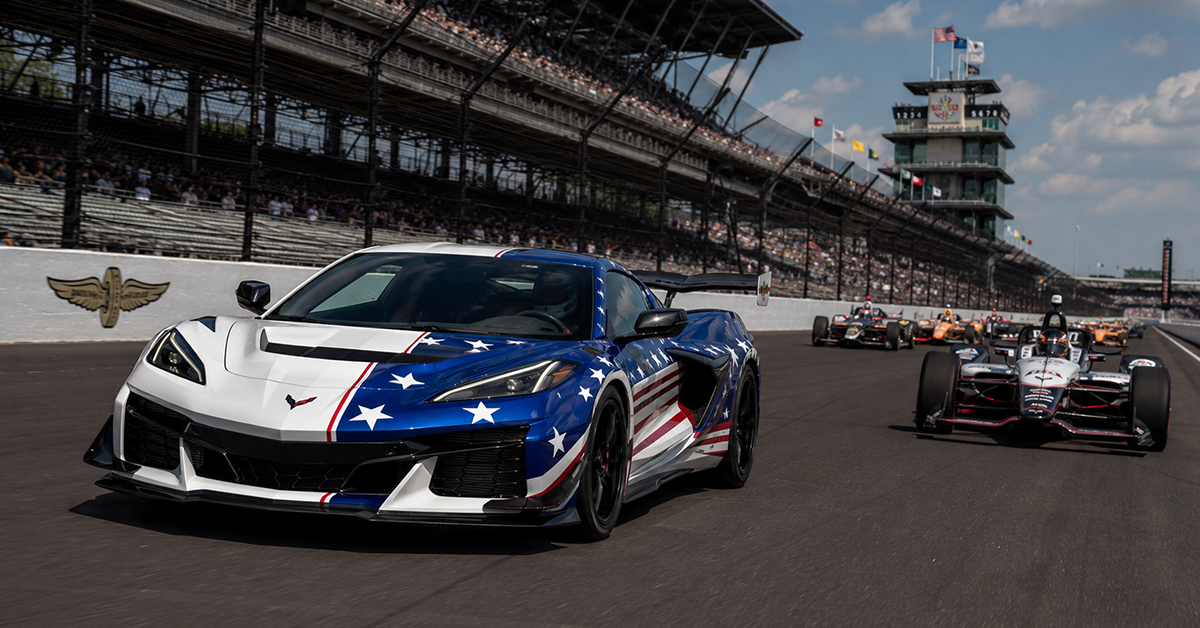
AI-generated concept illustration of the Corvette ZR1X Indy 500 Pace Car — not an official Chevrolet image. | Rev N Rise
The 110th Indianapolis 500 is today — May 24, 2026. And the car leading 33 of the world's fastest racing cars to the green flag is a production Chevrolet Corvette capable of 233mph, 1,250 combined horsepower and a 0-60mph time under two seconds. The gap between pace car and race car has never been smaller. America's greatest race deserves America's greatest car — and this year it has exactly that.
The Corvette ZR1X is the most powerful production Corvette ever built — and one of the most powerful production cars America has ever produced. It combines a 5.5-litre twin-turbocharged V8 LT7 engine producing 1,064 horsepower at the rear wheels with a 186-horsepower front-mounted electric motor for a combined output of 1,250 horsepower across all four wheels. The result is a car that accelerates from 0-60mph in under two seconds, hits a top speed of 233mph and generates over 1,200 pounds of downforce at speed through its Carbon Aero package.
That top speed figure is the one that makes the ZR1X's role as an Indy 500 pace car genuinely extraordinary. IndyCar drivers typically reach speeds of 230-240mph during qualifying laps at Indianapolis Motor Speedway. The gap between the pace car and the cars it is pacing is — for the first time in Indy 500 history — measured in single digits. At full speed, the ZR1X would be fighting to stay ahead of the field rather than cruising away from it.
The 2026 Indianapolis 500 falls in the year of America's 250th anniversary — the semi-quincentennial of the United States Declaration of Independence. Chevrolet has made that milestone central to the ZR1X pace car's identity. The car wears a unique two-tone livery that splits the body almost perfectly down the centre line: Arctic White on the driver's side and Admiral Blue on the passenger side. Stars-and-stripes graphics run the full length of the car, with a painted stripe running down the carbon fibre spine of the rear hatch.
Inside, the patriotic theme continues with Santorini Blue seats, red seat belts and red-stitched floor mats. The overall effect — a split-personality Corvette wearing the colours of the American flag — is one of the most visually striking pace car liveries in the race's history. Chevrolet's Global Executive Design Director Phil Zak described it as deliberately crafted to honour the 250th milestone while projecting Chevrolet's forward-looking design vision.
For pace car duty, the Corvette ZR1X wears its full Carbon Aero package — the most aggressive aerodynamic configuration available on the production car. This includes dive planes on the front bumper, underbody aerodynamic strakes and a rear wing that generates more than 1,200 pounds of downforce at top speed. The Carbon Aero package is not decorative — every element generates measurable aerodynamic force that changes the car's dynamics at high speed.
The rear wing alone — visible from the grandstands as the ZR1X leads the field — generates enough downforce to push the rear tyres harder into the tarmac than the car's own weight would achieve without it. At 233mph, that downforce is not a luxury. It is what keeps the car stable and controllable at speeds that would overwhelm a lesser chassis. The fact that this level of aerodynamic performance is available on a production car — not a race car, not a prototype, a car you can buy at a Chevrolet dealer — is the real story of the ZR1X.
The LT7 5.5-litre twin-turbocharged V8 at the heart of the ZR1X is a flat-plane crankshaft engine — the same fundamental architecture as Chevrolet's racing powerplants — producing 1,064 horsepower and sending that power through the rear wheels via an eight-speed dual-clutch transmission. The flat-plane crank allows the engine to rev higher and respond faster than a conventional cross-plane V8 — the same reason Ferrari and McLaren use flat-plane cranks in their road cars.
The front-mounted 186-horsepower electric motor provides the additional traction from the front axle that transforms the ZR1X from a rear-wheel-drive supercar into a genuinely all-weather, all-conditions hypercar. In normal driving, the electric motor provides torque fill at low speeds and additional traction on slippery surfaces. At full throttle on a dry track, all 1,250 combined horsepower are available simultaneously — the electric motor and V8 working in concert rather than in sequence.
The honorary pace car driver for the 110th Indianapolis 500 is Curt Cignetti — the head football coach of the Indiana University Hoosiers, who led IU to their first undefeated season in program history and a national championship in 2025-26. His selection as pace car driver connects Indiana's most celebrated sporting achievement of recent years with its most storied annual sporting event. For a state that takes both football and motorsport seriously, the symbolism is appropriate.
Cignetti will drive the ZR1X around the 2.5-mile oval at Indianapolis Motor Speedway in front of over 250,000 spectators — the largest single-day crowd of any sporting event in the world. At the moment he brings the field to the green flag, the ZR1X will be travelling at approximately 100mph — a fraction of its 233mph top speed, but fast enough that driving it requires skill, focus and a certain comfort with the extraordinary.
The 2026 race marks the 23rd time a Corvette has paced the Indianapolis 500 — every one since 1978, and the 37th time overall for Chevrolet, dating back to 1948. No other car manufacturer has the Corvette's unbroken association with "The Greatest Spectacle in Racing." The relationship between Corvette and the Indy 500 is one of the longest and most consistent partnerships in American motorsport — a connection that has survived recessions, energy crises, the electric vehicle revolution and every other disruption the automotive industry has faced.
Each generation of pace car has represented what Corvette was at that moment — the fastest, most powerful, most technologically ambitious production car in America's arsenal. In 2026, that is the ZR1X. A 1,250-horsepower hybrid hypercar that could, in theory, keep pace with the race cars it is leading. The Corvette's relationship with Indianapolis has never been more literal.
| Race | 110th Indianapolis 500 — May 24 2026 |
| Car | 2026 Chevrolet Corvette ZR1X |
| Engine | 5.5L twin-turbo V8 LT7 — flat-plane crank |
| V8 Output | 1,064 hp — rear wheels |
| Electric Motor | 186 hp — front axle |
| Combined Output | 1,250 hp — AWD |
| 0-60 mph | Under 2 seconds |
| Top Speed | 233 mph |
| Downforce | 1,200+ lbs at top speed |
| Aero Package | Carbon Aero — dive planes, underbody strakes, rear wing |
| Livery | Arctic White (driver side) + Admiral Blue (passenger side) |
| Interior | Santorini Blue seats — red seat belts — red-stitched floor mats |
| Graphics | Stars-and-stripes — America's 250th anniversary |
| Pace Car Driver | Curt Cignetti — IU Head Football Coach — National Champion |
| Chevrolet at Indy | 37th time pacing — dating to 1948 |
| Corvette at Indy | 23rd time — every race since 1978 |
| IndyCar qualifying speed | 230-240 mph — ZR1X top speed: 233 mph |
| Design Director quote | Phil Zak — Chevrolet Global Executive Design Director |
The question that every Corvette enthusiast has been asking since the ZR1X pace car was announced is the obvious one: could it actually keep up with the field if it had to? The honest answer — at least at the speeds used for the pace laps — is yes, probably. The Indy pace laps are conducted at approximately 100mph as the field forms up behind the pace car. At that speed, the ZR1X's 1,250 horsepower is almost entirely unused. The car is being driven well below its capability.
But that is not really the point. The point is that for the first time in Indy 500 history, the production car leading the field to the green flag is genuinely capable of competing with the race cars it is pacing — at least at full speed on a straight. That says something remarkable about where Chevrolet has taken the Corvette. In 1978, when the Corvette first paced the Indy 500, a production car doing 233mph would have been science fiction. In 2026, it is available at your local Chevrolet dealer. The greatest show in racing could not ask for a more fitting car to open it.
"America's hypercar will be front and centre at the Indianapolis 500, and it has the speed to stay there."
— Tony Roma, Executive Chief Engineer, Global Corvette — Chevrolet Press Release, April 2026The Corvette ZR1X as the 2026 Indy 500 pace car is one of those rare moments where the symbolism and the substance are perfectly matched. 1,250 horsepower. 233mph. A top speed within touching distance of the race cars it leads. A patriotic livery for America's 250th anniversary. And a Corvette badge — the same badge that has opened the Indianapolis 500 every year since 1978. The ZR1X does not merely represent what American performance cars can do. It is what they can do. And today, in front of 250,000 spectators, it gets to show it.