 Brands
2026 Dodge Charger SIXPACK — The New Muscle Car Without a V8

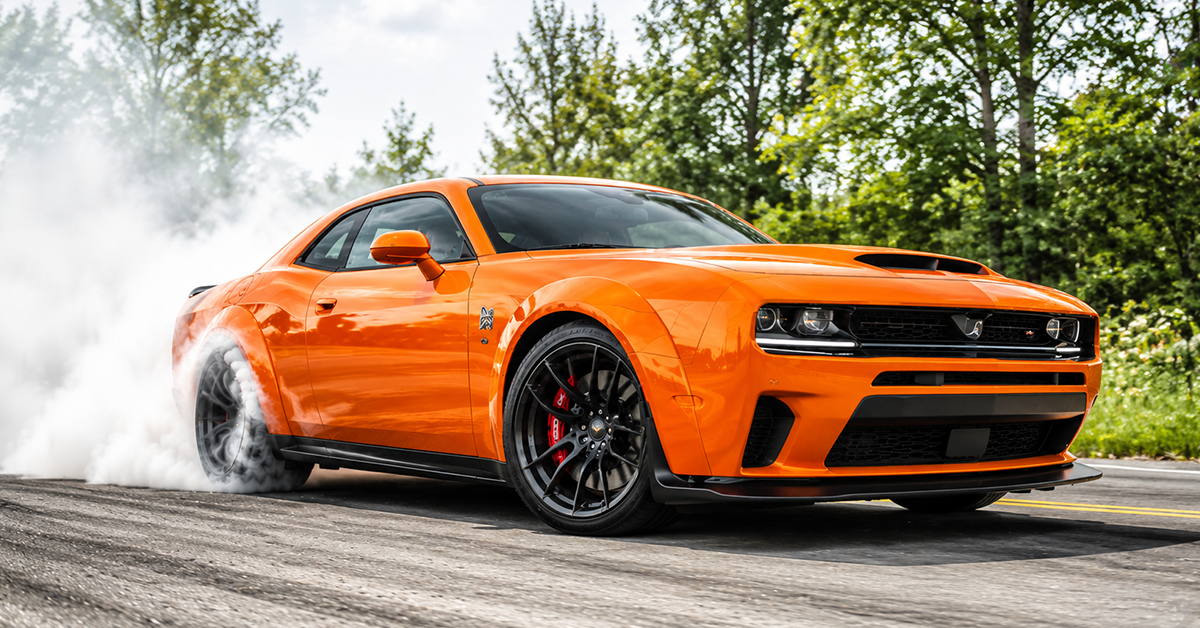
AI-generated concept illustration of the 2026 Dodge Charger SIXPACK — not an official Dodge image. | Rev N Rise
The Dodge Charger is back with a petrol engine — and it does not have a V8. For a brand that built its entire identity on the thundering HEMI V8, the decision to power the 2026 Charger SIXPACK with a twin-turbocharged inline-six is genuinely controversial. But here are the numbers: 550 horsepower, 531 lb-ft of torque, 3.9 seconds to 60mph and 177mph flat out. The SIXPACK is faster than the old HEMI Charger in every measurable way. Whether it feels as good is the question Dodge is betting the brand on.
The HEMI V8 was not just an engine. For three generations of Dodge Charger buyers — stretching back to the original 5.7-litre HEMI's return in 2003 — it was the entire reason to choose a Charger over everything else. The sound at idle. The surge at wide-open throttle. The way it pulled from 2,000rpm to the redline in one continuous, intoxicating wave of torque. Dodge built a brand around that engine. And then it stopped making it — for the Charger at least.
The decision to power the 2026 Charger SIXPACK with a 3.0-litre twin-turbocharged inline-six — derived from the Hurricane engine family also used in the Ram 1500 and Jeep Grand Wagoneer — is the most significant product decision Dodge has made since the original Charger was discontinued in 1978. It is the decision that defines whether Dodge's muscle car legacy survives the transition to a new era, or whether the Charger becomes something different — faster, more capable, but stripped of the V8 soul that made it legendary.
Dodge has not replaced the HEMI with a lesser engine. The numbers make that clear. But numbers have never been the whole story with the Charger. The verdict from the press and from first owners — and there are now thousands of SIXPACK Chargers on American roads — is more nuanced than the spec sheet suggests. This article gives you everything you need to form your own view.
The SIXPACK name is Dodge's branding for its 3.0-litre twin-turbocharged inline-six engine in Charger-specific tune. The base architecture is the Hurricane inline-six — a unit that Stellantis developed as a platform engine across multiple brands. In the Ram 1500, a version of this engine produces 420 horsepower. In the Jeep Grand Wagoneer, a higher-output version produces 510 horsepower. For the Charger, Dodge's engineers went further — fitting larger turbochargers, a new intake system designed to flow more air, a valved exhaust with quiet and loud modes and an upgraded cooling system.
The result is two distinct states of tune. The standard-output SIXPACK — fitted to the R/T — produces 420 horsepower and 468 lb-ft of torque. The high-output SIXPACK — fitted to the Scat Pack — produces 550 horsepower and 531 lb-ft of torque. Both versions drive through an eight-speed automatic transmission to a standard all-wheel drive system. A button on the centre console activates rear-wheel-drive mode — disengaging the front axle for traditional muscle car oversteer, Line Lock burnouts and the driving character that Charger buyers expect. The AWD is there for everyday grip and performance. The RWD mode is there for when you want to remind yourself what a Dodge is for.
The 2026 Charger SIXPACK is available in four petrol-powered variants — all sharing the same fundamental architecture but differing in power output, equipment level and price. The R/T is the entry point at $49,995 — the first time in years that a new Charger has been available under $50,000. It uses the standard-output 420hp SIXPACK, standard AWD with RWD mode and a 12.3-inch touchscreen. The R/T Plus adds leather seats, a 16-inch digital cluster and a head-up display for $54,990.
The Scat Pack at $56,990 upgrades to the high-output 550hp SIXPACK and adds Brembo brakes, launch control, Line Lock and a performance suspension as standard. The Scat Pack Plus at $61,985 adds the larger 16-inch cluster, performance pages, wireless charging, navigation and an available 18-speaker Alpine audio system. All four variants are available as either a two-door coupe or a four-door sedan — the four-door costs an additional $2,000 in every trim. Both body styles share virtually identical specification.
Early press and owner reports from the Scat Pack are consistent on two points. First: the SIXPACK is genuinely fast. 3.9 seconds to 60mph is not a claimed figure padded for marketing — drivers have confirmed it at test tracks. The turbo inline-six delivers its power differently from the HEMI V8 — building boost progressively from around 2,000rpm and then unleashing a flat, sustained wave of torque that holds right through to the redline. There is no torque peak to chase. The power is simply there, whenever you ask for it, from almost any speed.
Second: the sound is different. The HEMI V8 had one of the most distinctive engine notes of any mass-market performance car — a deep, rolling bark at idle that turned into a mechanical roar at full throttle. The SIXPACK inline-six does not sound like that. With the valved exhaust in its louder mode, it produces a harder, sharper, more turbocharged character — not unpleasant, but unmistakably different from what Charger owners are accustomed to. For buyers who are converting from an older Charger, this is the adjustment that requires the most mental recalibration.
In RWD mode with the stability control relaxed, the Scat Pack will break its rear tyres loose with the same ease as its HEMI predecessor. Line Lock — which locks the front brakes while allowing the rears to spin — makes proper burnouts straightforward. The Scat Pack's suspension has been calibrated specifically for the Charger's character rather than simply carried over from the Ram application — and the result is a car that communicates well on a challenging road, with less body roll than the previous generation and a more immediate steering response.
| Engine | 3.0L twin-turbo SIXPACK inline-six — two outputs |
| R/T Output (SO) | 420hp / 468 lb-ft torque |
| Scat Pack Output (HO) | 550hp / 531 lb-ft torque |
| Transmission | 8-speed automatic |
| Drive | AWD standard — RWD mode button |
| R/T 0-60mph | 4.6 seconds |
| Scat Pack 0-60mph | 3.9 seconds |
| Scat Pack Top Speed | 177mph |
| Body Styles | 2-door coupe + 4-door sedan |
| Brakes (Scat Pack) | Brembo — standard |
| Line Lock | Standard on Scat Pack — burnout mode |
| Launch Control | Standard on Scat Pack |
| Exhaust | Valved — quiet + loud modes |
| Infotainment | 12.3-inch standard — 16-inch on Plus trims |
| R/T Price (2-door) | $49,995 incl. destination |
| R/T Plus Price | $54,990 incl. destination |
| Scat Pack Price | $56,990 incl. destination |
| Scat Pack Plus Price | $61,985 incl. destination |
| 4-door premium | +$2,000 — all trims |
| Production | Brampton Assembly Plant, Ontario, Canada |
| Available Now | Scat Pack 2-door + 4-door — R/T arriving mid-2026 |
| EV Option | Charger Daytona Scat Pack — from $61,990 — separate model |
The most-asked question about the 2026 Charger SIXPACK is whether a HEMI V8 version will follow. Dodge has neither confirmed nor denied this — and the rumour mill has been running at full speed since the first SIXPACK was revealed. The HEMI V8 has returned to the Ram 1500 lineup. It is available in the Ram 1500 Rumble Bee. Dodge's own CEO has suggested that V8-powered Charger variants are not ruled out for future model years.
The commercial logic for a V8 Charger is strong. There is a significant segment of Dodge buyers who will not purchase a turbo six-cylinder Charger regardless of the performance figures — buyers for whom the V8 is non-negotiable and who will wait for it or walk away. Dodge is aware of this segment. Whether it decides to serve them with a HEMI Charger variant in 2027 or 2028 — in addition to the SIXPACK range rather than replacing it — is one of the most closely watched product decisions in the American automotive industry right now.
The SIXPACK Charger's pricing is higher than the previous generation's entry points — the R/T starts at $49,995, where comparable previous-gen Chargers were available from $35,000. Dodge has moved the Charger decisively upmarket. Whether that represents good value depends on which trim you are considering. The Scat Pack at $56,990 — with 550 horsepower, Brembo brakes, AWD with RWD mode, Line Lock and launch control — is genuinely competitive against any rear-wheel-drive or AWD performance car at that price. The BMW M340i starts at $57,500. The Audi S4 starts at $55,500. At 550 horsepower with a burnout mode, the Scat Pack makes both of those feel conservative.
"This isn't the same engine you'll find in the Jeep or Ram. It was developed specifically for the Charger — and the results speak for themselves."
— Dodge, Official Communications, 2026The 2026 Dodge Charger SIXPACK is a faster, more technically capable car than the HEMI Charger it replaces — and a more controversial one. 550 horsepower from a twin-turbo inline-six, 3.9 seconds to 60mph, 177mph top speed, AWD with RWD mode, Brembo brakes and Line Lock from $56,990. On paper, it is exceptional. In practice, it is excellent — quick, capable and characterful in its own turbocharged way. What it is not is a HEMI. Whether that matters to you depends on why you were buying a Charger in the first place. If it was for the performance — the SIXPACK delivers. If it was for the sound and the V8 soul — you may be waiting for a future variant that Dodge has not yet confirmed. Either way, the Charger is back with a petrol engine. And it is very, very fast.