 Brands
2026 Hyundai Ioniq 5 Review — The Best Electric SUV Under $40,000

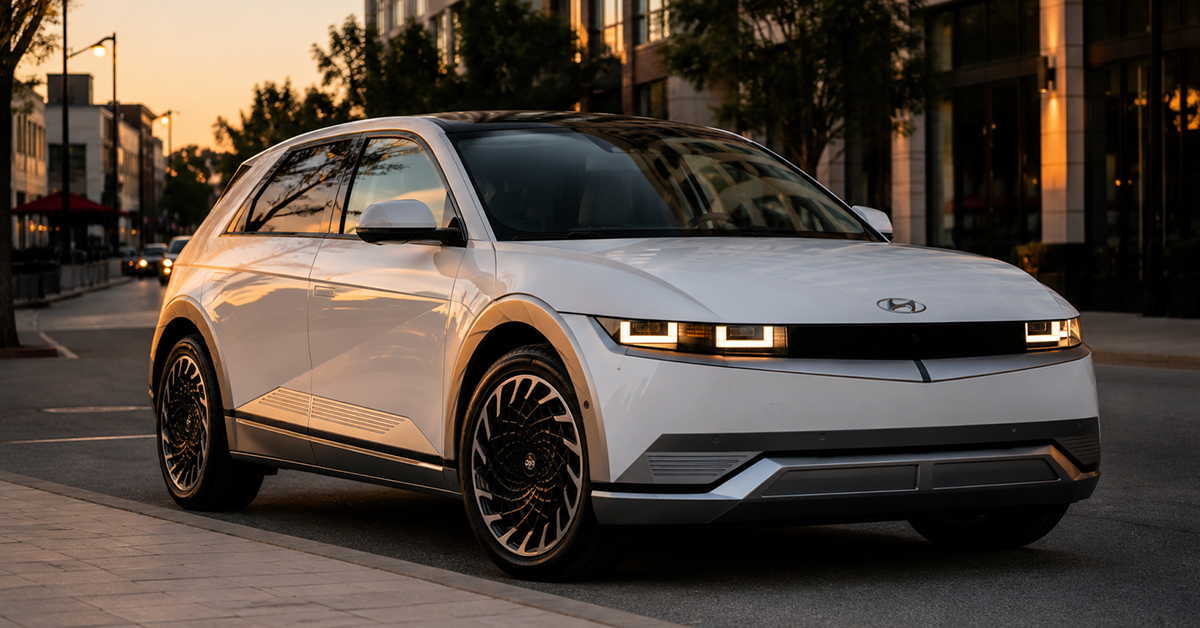
AI-generated concept illustration of the 2026 Hyundai Ioniq 5 — not an official Hyundai image. | Rev N Rise
Hyundai did something brave for 2026 — it cut the Ioniq 5's price by up to $9,800, dropped it below the $40,000 threshold and dared buyers to find a better electric SUV at the money. Having spent considerable time analysing every aspect of this car — its specs, its real-world performance data, its ownership costs and how it compares against every rival in this segment — I can tell you that finding something better is genuinely difficult. The 2026 Ioniq 5 is the most complete electric SUV package under $40,000 available right now. Here is why.
The 2026 Hyundai Ioniq 5 is for the family buyer who wants an electric SUV that does everything well without compromise. It is for the long-distance driver who needs rapid charging and maximum range for the money. It is for the first-time EV buyer who wants a 10-year warranty, a flat floor, a spacious cabin and a starting price under $40,000 — and does not want to sacrifice any of those things to get the others. It is not for the buyer who prioritises driving dynamics and wants a sporty, engaging experience behind the wheel. For that, the Kia EV6 is the better answer. But for everyone else, the Ioniq 5 is the most compelling electric SUV under $45,000 available today.
The single most important thing about the 2026 Hyundai Ioniq 5 is not a new feature or a technology upgrade. It is a number: $9,800. That is how much Hyundai cut the price of the SEL trim — the most popular Ioniq 5 configuration — for 2026. The SE Standard Range now starts at $36,600, down from $44,200. The SE long-range drops to $39,100. The SEL — the trim that represents the best value in the lineup — starts at $41,400, down nearly $10,000 from 2025.
This price cut was Hyundai's direct response to the expiration of the US federal $7,500 EV tax credit. Rather than asking buyers to absorb the loss of that credit, Hyundai chose to absorb it themselves — and then some. The result is that the 2026 Ioniq 5 now costs less than qualifying 2025 buyers paid after the tax credit. That is a genuinely extraordinary position for Hyundai to take, and it repositions the Ioniq 5 from a strong choice to an almost undeniable one for buyers in the $36,000–$45,000 price range.
The Ioniq 5's design has been on sale since 2022 and it still stops people in car parks. The angular, pixel-inspired exterior — referencing Hyundai's original Pony concept from the 1970s — uses clean, flat surfaces, flush door handles, pop-out charging flap and a distinctive square-pixel LED light signature front and rear. Nothing about it looks conventional. Nothing about it looks dated. For a car that has now been on sale for four years, that is a significant achievement.
At 182.5 inches long and 63 inches tall — relatively low for an SUV — the Ioniq 5 has a crossover stance that prioritises aerodynamic efficiency without the boxy upright proportions of a family SUV. The 116-inch wheelbase — longer than many full-size SUVs — is made possible by the dedicated EV platform with no transmission tunnel and no engine bay intrusion. It is why the interior feels so genuinely spacious despite the exterior dimensions being those of a compact car.
The Ioniq 5's interior is one of the best in any electric car at this price point — and one of the best in any car full stop when it comes to practical usability. The completely flat floor — made possible by Hyundai's E-GMP dedicated EV platform — runs from front to rear without any transmission tunnel interrupting it, giving rear passengers the kind of foot space that was previously only available in full-size luxury cars. The rear bench slides fore and aft by up to 6 inches to balance cargo space and legroom to suit every journey.
The front seats on SEL and above are relaxation seats — they extend at the front to support the driver's legs fully reclined, converting the Ioniq 5's front compartment into something approaching a first-class aircraft seat while charging. The dashboard features a dual 12.3-inch curved display spanning the full width of the instrument and infotainment panel — clean, well-organised and genuinely intuitive to use. Physical climate controls are retained alongside the touchscreen — a decision that every driver who has tried to adjust the temperature at motorway speed will appreciate.
Materials quality on the SEL and Limited trims is excellent for the price — sustainable materials including recycled PET fabric on the seats and door cards, combined with piano black trim and brushed aluminium accents. It does not feel like a $40,000 car. It feels like a $55,000 car that has been made more accessible.
The Ioniq 5 offers three powertrain configurations depending on trim. The SE Standard Range uses a single 168-horsepower rear motor and a 63kWh battery for 245 miles of EPA range. The SE and SEL long-range RWD variants use a more powerful 225-horsepower rear motor and an 84kWh battery for the maximum 318 miles of EPA range. The AWD variants add a front motor for a combined 320 horsepower and sharper off-the-line acceleration — 0-60mph in approximately 5.1 seconds for the long-range AWD.
The Ioniq 5 N — the high-performance flagship with 641 horsepower — is available as a separate product and represents a different proposition entirely. For this review, the relevant variants are the SE, SEL and Limited — the cars that most buyers will actually choose. In those configurations, the Ioniq 5 feels genuinely quick without being theatrical about it. The power delivery is smooth and progressive, the steering is weighted appropriately for a family SUV and the suspension — while on the softer side — manages bumps and imperfections with a composure that makes it genuinely comfortable over long distances.
The Ioniq 5's strongest competitive advantage is not its design or its price — it is its 800-volt electrical architecture and the 250kW DC fast charging capability that comes with it. At a compatible 350kW charger — increasingly common across the US, UK and Europe — the Ioniq 5 can add approximately 68 miles of range in just 5 minutes and complete a 10-to-80 percent charge in 18 minutes. That is twice as fast as most competing electric SUVs in this price range, which typically charge at 100-150kW maximum.
The 800-volt architecture also means the Ioniq 5 supports Vehicle-to-Load (V2L) on Limited and XRT trims — a 3.6kW output socket that allows the car to power external devices, camping equipment, tools or even other electric vehicles. It is one of the most practically useful features in any electric car, and it is largely absent from competing products at this price point.
The maximum 318 miles of EPA range — achieved with the long-range RWD SE or SEL trim — is competitive with the best in the segment. Real-world range at motorway speeds is typically 10-15 percent below EPA figures — meaning approximately 270-285 real miles at 70mph on a US interstate or 60-65mph on a UK motorway. Combined with the rapid charging, that gives the Ioniq 5 a practical motorway range and charging time combination that rivals cars costing twice as much.
The 2026 Ioniq 5 uses the North American Charging Standard (NACS) port — the same connector used by Tesla's Supercharger network — as standard across all US variants. This gives Ioniq 5 owners access to over 25,000 Tesla Superchargers across North America without any adapter. In practical terms, this means the already rapid charging capability of the Ioniq 5 is now available at the most extensive fast-charging network on the continent. The combination of 250kW charging capability and native Supercharger access makes the Ioniq 5 one of the best-prepared cars for long-distance EV travel available at any price.
| Starting Price | $36,600 (SE Standard Range) |
| Best Value Trim | SEL — $41,400 |
| Platform | Hyundai E-GMP — dedicated EV architecture |
| Battery Options | 63kWh (Standard) / 84kWh (Long Range) |
| Architecture | 800V |
| Max EPA Range | 318 miles — SE / SEL Long Range RWD |
| Max Output (AWD) | 320hp / 446 Nm |
| 0-60 mph (AWD LR) | ~5.1 seconds |
| Max DC Charging | 250kW |
| 10-80% Charge Time | ~18 minutes |
| Charge Port | NACS — native Tesla Supercharger access |
| V2L Output | 3.6kW — Limited and XRT |
| Length | 182.5 inches |
| Wheelbase | 116 inches |
| Cargo Space | 27.2 cu.ft. (rear) + 1.2 cu.ft. frunk |
| Towing (XRT) | 2,700 lbs |
| Infotainment | Dual 12.3-inch curved display |
| Driver Assist | Highway Driving Assist 2 — SEL and above |
| Warranty | 10-year / 100,000-mile powertrain |
| Reliability Score | 4.4/5.0 — KBB consumer rating |
| US News Score | 9.4/10 — #1 Best Compact Electric SUV |
| Price Drop vs 2025 | Up to $9,800 — average $9,147 across lineup |
| Made In | West Point, Georgia, USA |
At $36,600 to $47,875, the Ioniq 5 competes directly with the Chevrolet Equinox EV, the Volkswagen ID.4, the Ford Mustang Mach-E and the Tesla Model Y. Of those, only the Tesla Model Y offers comparable real-world range — but the Model Y charges at a maximum of 250kW only at Tesla's V3 Superchargers, versus the Ioniq 5's 250kW capability at any compatible CCS or now NACS station. The Equinox EV is cheaper at $34,995 but charges at a maximum of 150kW — significantly slower. The VW ID.4 charges at 135kW maximum. The Ioniq 5's charging advantage over every direct competitor except the Kia EV6 — which shares the same 800V architecture — is genuinely meaningful for buyers who take long trips.
The 10-year/100,000-mile powertrain warranty is the longest in the segment — longer than the Tesla's 8 years and longer than every other competitor at this price point. For buyers who worry about long-term EV ownership costs, that warranty is a significant reassurance that no rival currently matches.
IONIQ 5 has been a sales success for us since day one. We're continuing to give customers more of what they want — taking America's Most Awarded EV Lineup from strength to strength.
— José Muñoz, President & CEO, Hyundai Motor North AmericaThe 2026 Hyundai Ioniq 5 is the best electric SUV you can buy under $40,000 — and it is not a close call. The combination of 800V architecture, 250kW charging, 318 miles of EPA range, native Tesla Supercharger access, a 10-year warranty and a price cut of up to $9,800 creates a value proposition that no rival in this segment currently matches. The frunk is tiny, the turning circle is wide and the off-road XRT is more styling than substance. But those are minor criticisms of a car that gets the big things — range, charging speed, space, technology and price — more right than anything else at this price point. If you are in the market for an electric SUV and your budget is under $45,000, start here. It will take a great deal to make you look further.