 Brands
2027 Hyundai Tucson Is Here — New Design, 17-Inch Screen and AI Assistant Revealed

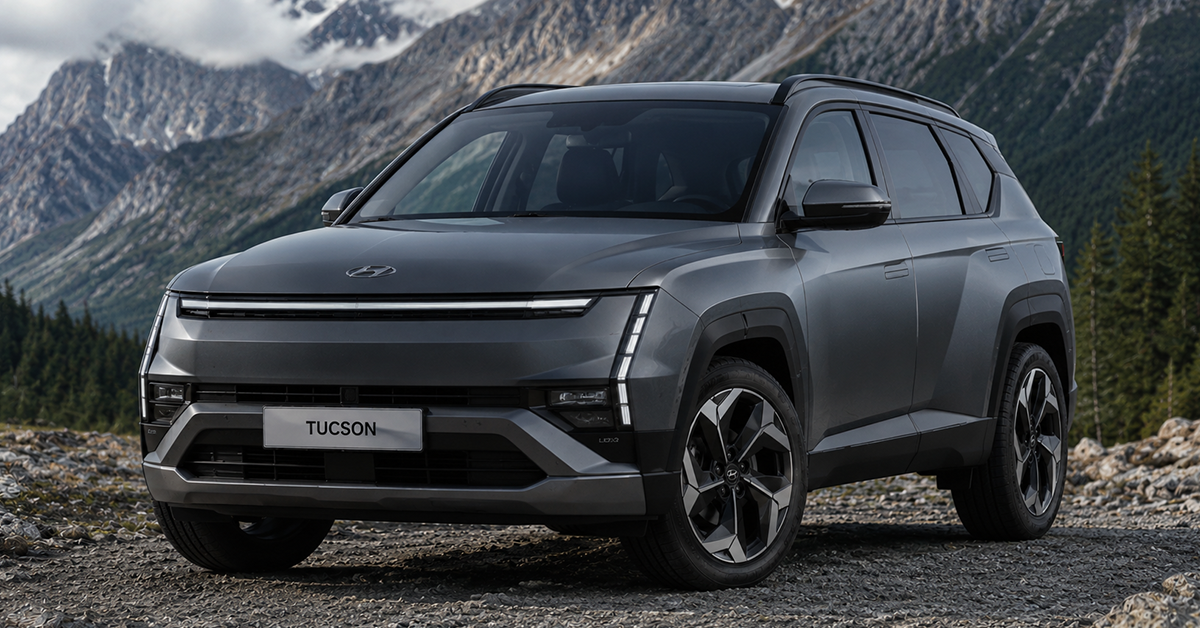
AI-generated concept illustration of the 2027 Hyundai Tucson — not an official Hyundai image. | Rev N Rise
The Hyundai Tucson is one of the best-selling compact SUVs in the world. For 2027 Hyundai is replacing it completely — with something that looks nothing like the current car. Spy shots of the fifth-generation Tucson, codename NX5, confirm a dramatic shift to a boxy, upright, rugged silhouette and an entirely new interior with a 17-inch Pleos touchscreen and an AI assistant called Gleo. It is a complete reimagining — and it arrives late 2026.
The current Hyundai Tucson — introduced in 2021 — is one of the most distinctive compact SUVs on the road, with its parametric jewel grille, hidden door handles and complex creased bodywork. The 2027 NX5 goes in the opposite direction entirely. Spy shots and confirmed renderings show a car that is unashamedly boxy — a squarish silhouette, flat body sides, a more upright stance and significantly more wheel-arch and lower-body cladding. The overall impression is closer to a rugged off-road vehicle than the European-styled crossover that the current Tucson resembles.
The front end features vertical LED daytime running light signatures, a blocky upper grille section and horizontally stacked main headlamps mounted lower in the bumper. A clamshell-style hood is visible on prototypes — wrapping over the front fenders in a way that reduces panel gaps and gives the nose a cleaner, more purposeful appearance. At the rear, spy shots confirm L-shaped light signatures that stretch into the bumper — giving the Tucson a wide, planted rear stance that suits the squarer overall design language. Hyundai calls this direction "Art of Steel" — referencing the angular, structural quality they are targeting for the new generation.
The interior spy shots published by Korean Car Blog in May 2026 confirm a cabin that has been completely redesigned from scratch. The centrepiece is the 17-inch Pleos Connect touchscreen — Hyundai's latest infotainment system — mounted centrally in the dashboard. Unlike the current Tucson's dual-screen setup, the new design integrates the instrument cluster separately and more cleanly into the dashboard surface itself rather than extending from a single floating panel.
Critically, Hyundai has retained physical controls. A row of physical knobs and buttons sits below the touchscreen — a decision that sets the NX5 apart from every trend toward full touchscreen dashboards and that will be welcomed by buyers who want to adjust climate and volume without taking their eyes off the road. The dashboard design reads as cleaner and more horizontal than the current model — borrowing elements from the new Hyundai Palisade and giving the cabin a more mature, premium appearance. Material quality in the spy shots appears improved, with softer surfaces and more restrained trim choices than the outgoing car.
The AI assistant integrated into the Pleos system is named Gleo — Hyundai's new voice AI platform that learns driver preferences over time and responds to natural language commands. Gleo handles navigation, media, climate and vehicle settings and is connected to the car's over-the-air update capability to receive new skills and features after purchase.
Hyundai has confirmed that the 2027 Tucson will adopt an all-hybrid lineup for the US market — mirroring the approach taken by the 2026 Toyota RAV4, which abandoned non-hybrid variants entirely. Standard hybrid and plug-in hybrid configurations are expected. The PHEV is expected to receive a significantly extended electric-only range compared to the current model's modest 33-mile figure. A Tucson N performance model is also increasingly likely based on patent filings and indirect confirmation from Hyundai's product team — though specific output figures have not been confirmed.
In the US, Hyundai is expected to keep familiar trim names: Blue SE, SEL, SEL Convenience and Limited for the hybrid lineup. An XRT Pro off-road variant has also been spotted — with lifted suspension, all-terrain tyres and additional underbody protection — for buyers who want the rugged exterior to reflect genuine capability rather than just styling intent.
| Codename | NX5 — 5th generation |
| Design language | Art of Steel — boxy, upright, rugged |
| Front lights | Vertical LED DRLs + horizontally stacked headlamps |
| Hood | Clamshell-style — wraps over front fenders |
| Rear lights | L-shaped LED signatures stretching into bumper |
| Screen | 17-inch Pleos Connect touchscreen |
| AI assistant | Gleo — natural language — learns over time |
| Physical controls | Retained — knobs and buttons below screen |
| Dashboard | Clean horizontal layout — inspired by Palisade |
| US powertrains | Hybrid only lineup — standard + PHEV |
| Tucson N | Performance variant — increasingly likely |
| XRT Pro | Off-road variant — lifted, all-terrain tyres |
| US trims | Blue SE, SEL, SEL Convenience, Limited |
| US release | Q3 2026 — alongside new Hyundai Elantra |
| Global debut | Late 2026 — South Korea first |
| Est. starting price (Korea) | ~34 million won (~$24,000 USD) |
| Confirmed by | Hyundai CEO José Muñoz — shareholder letter March 2026 |
The 2027 Hyundai Tucson is the most significant compact SUV redesign of the year. Going boxy when most rivals are going sleeker is a bold decision — but one that gives the NX5 a genuine identity in a segment crowded with look-alike crossovers. The 17-inch Pleos screen with Gleo AI and retained physical controls is the right interior brief. The hybrid-only US lineup reflects where the segment is heading. And the XRT Pro and Tucson N variants mean there is a version for every buyer. The full reveal comes in late 2026. Based on everything in these spy shots, it will be worth the wait.