 Brands
Subaru — History, Models and Everything You Need to Know
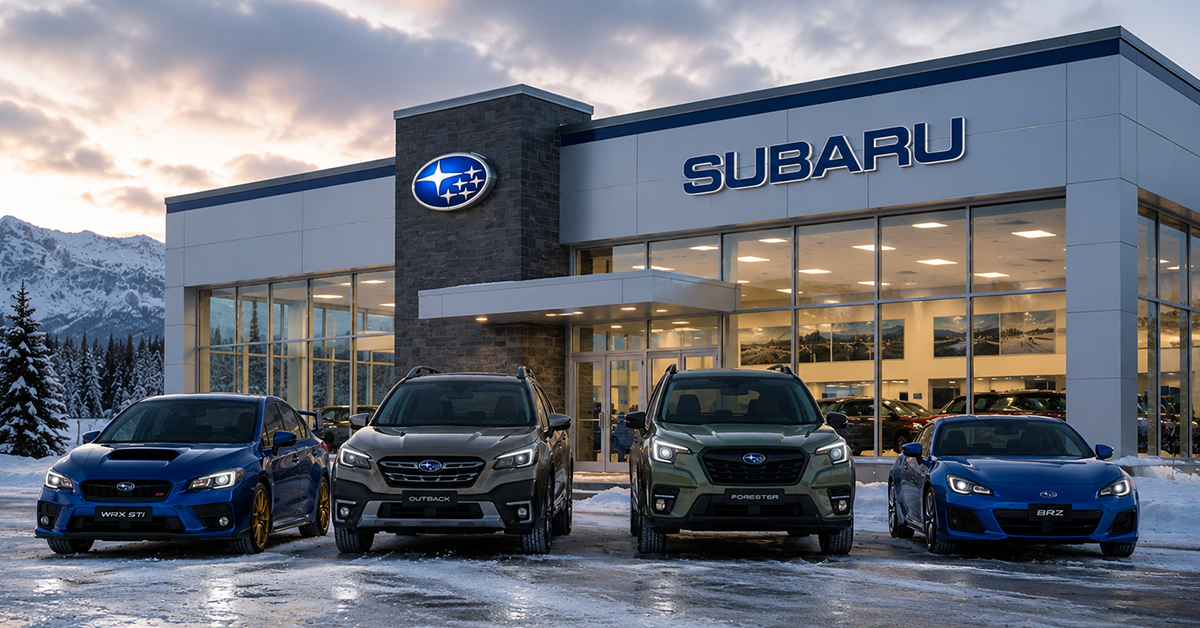
AI-generated concept illustration — Subaru brand overview. | Rev N Rise
Subaru is the Japanese automaker that turned all-wheel drive into an identity. Its Symmetrical AWD system, flat Boxer engine and rally-bred WRX performance cars have built one of the most loyal customer bases in the automotive world. From the snowy mountain roads of Japan and North America to the rally stages of the World Rally Championship, Subaru makes cars built for drivers who demand capability in all conditions without compromise.
Subaru began as the automotive division of Fuji Heavy Industries — a company formed in 1953 from the merger of five companies that had been part of Nakajima Aircraft during World War II. The name Subaru comes from the Japanese word for the Pleiades star cluster — the six-star cluster visible in the night sky and depicted in the brand's logo. The stars represent the five companies that merged to form Fuji Heavy Industries plus the merged entity itself.
The first Subaru car — the 360 microcar — launched in 1958. Small, affordable and practical, it was Japan's answer to the European bubble car movement. Subaru's first internationally significant model was the Leone of 1971 — the first Subaru exported to the United States. The Leone station wagon with optional four-wheel drive, launched in 1972, established Subaru's AWD identity that has defined the brand ever since.
The Legacy of 1989 raised Subaru's profile globally and the Legacy RS set a world speed record for a production saloon at the Nürburgring. The Impreza WRX launched in 1992 — a turbocharged AWD performance saloon derived from Subaru's World Rally Championship programme that became a cult car globally. The WRX STI variant — developed by Subaru Tecnica International — pushed performance further still, producing some of the most exhilarating driving experiences available at any price from a mainstream manufacturer. Subaru won the WRC Manufacturers' Championship in 1995, 1996 and 1997 with driver Colin McRae winning the Drivers' title in 1995.
Subaru's Symmetrical All-Wheel Drive system is the engineering foundation of every Subaru car. Unlike the asymmetric AWD systems used by most manufacturers — where the engine is mounted transversely and power delivery to front and rear axles is unequal by design — Subaru mounts its Boxer engine longitudinally, aligned with the centreline of the car. The transmission, propshaft and differentials all follow the same centreline, creating a drivetrain that is genuinely symmetrical from left to right.
The consequences for handling and stability are significant. A symmetrical drivetrain produces even weight distribution between left and right sides of the car, reducing the tendency to pull under acceleration and improving cornering stability. Combined with the Boxer engine's low centre of gravity — its horizontally opposed cylinders sit lower in the engine bay than an inline or V layout — the result is a car that is genuinely more stable than most AWD alternatives at the same price.
Subaru's competitive advantage is its genuine all-weather capability at mainstream prices. Most manufacturers offer AWD as an expensive option on cars designed primarily for two-wheel drive. Subaru builds every car — except the rear-drive BRZ — around Symmetrical AWD as standard. The result is that Subaru owners in Canada, the northern United States, Norway and Japan simply do not worry about winter driving in the way that other brand owners do. The Outback and Forester are consistently among the most capable family vehicles in snow and mud at their respective price points — not because Subaru markets them aggressively on that basis but because the engineering genuinely delivers. And the WRX continues to deliver turbocharged AWD performance that rewards skilled drivers on both road and track in a way that few mainstream saloons can match at any price.