 Brands
Lamborghini Temerario Review — The 907HP Hybrid V8 Worth Skipping the V10 For

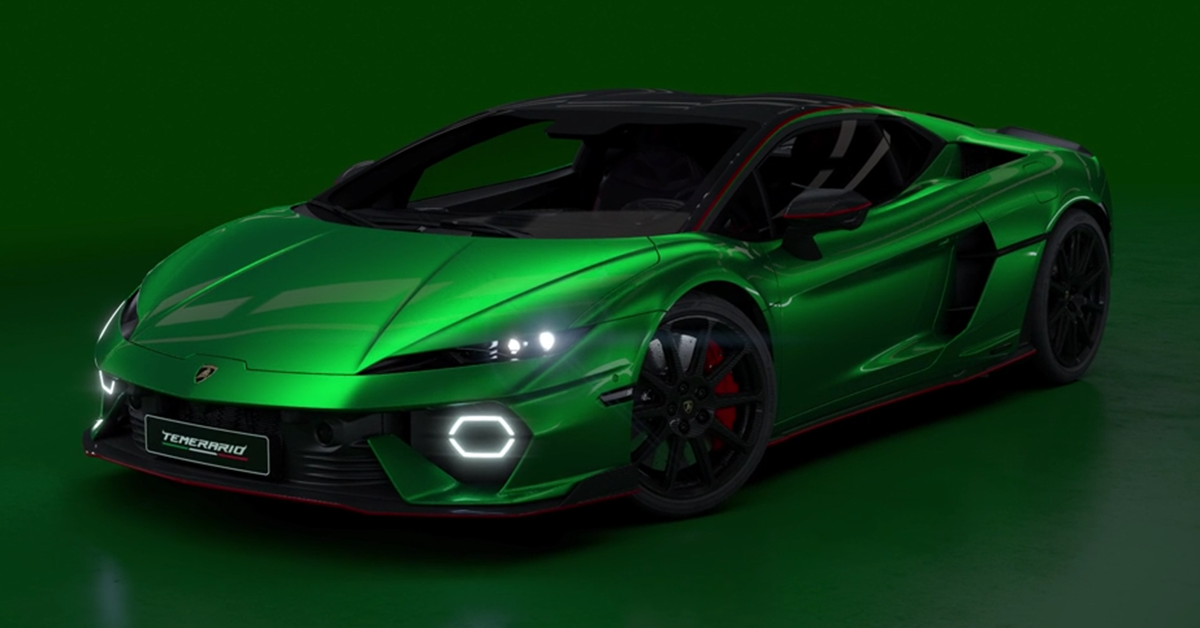
Official press image of the Lamborghini Temerario. | © Automobili Lamborghini
The Huracán is dead, and with it goes Lamborghini's beloved naturally-aspirated V10 — a genuine end of an era for the brand's entry-level supercar. In its place arrives the Temerario, a twin-turbo hybrid V8 that somehow makes more power, revs higher, and according to nearly everyone who's driven it, is a genuinely better car to live with. This is whether trading ten cylinders for eight, plus three electric motors, was the right call.
The Lamborghini Temerario is for the buyer who wants the most usable, most technologically advanced entry point into the Lamborghini range — a car capable of genuine daily-driver comfort in Città mode and a record-breaking 10,000rpm-plus supercar the moment the road opens up. It is for buyers who value all-wheel-drive traction and a roomier, more comfortable cabin over the raw emotional theatre of a screaming naturally-aspirated engine. It is not for the purist who specifically mourns the Huracán's V10 soundtrack above all else — for that buyer, no amount of turbocharged horsepower will fully replace what's been lost. But for nearly everyone else shopping in this segment, the Temerario is the more complete car.
This is the first time in Lamborghini's history that the brand's "entry-level" super sports car has switched its fundamental engine architecture. Since the Gallardo in 2003, that role has always belonged to a naturally-aspirated V10. The Temerario replaces it with an entirely new twin-turbo V8 — but rather than treating hybridization and turbocharging as a step down from the V10 era, Lamborghini has framed the powertrain as a genuine performance upgrade in its own right, not merely an emissions-compliance compromise.
CEO Stephan Winkelmann has called the car a genuine "fuoriclasse" — Italian for a class of its own — describing it as an extraordinary and innovative vehicle both technically and stylistically. That confidence isn't just marketing language. The numbers back it up: this is the most powerful, highest-revving production V8 Lamborghini has ever built, and the first V8-powered, mid-engine Lamborghini since the 1981 Jalpa.
At the heart of the Temerario is an entirely new 4.0-litre twin-turbo flat-plane V8, designed and built from scratch in Sant'Agata Bolognese rather than adapted from an existing unit. On its own, it produces 789 horsepower from 9,000 to 9,750rpm, with a 10,250rpm redline — making it the highest-revving production V8 ever fitted to a road car. To allow it to spin that high safely, Lamborghini fitted titanium connecting rods, a short-stroke design and the flat-plane crankshaft that gives the engine its distinctive, racing-derived character.
Three electric motors supplement the combustion engine to bring combined output to 907 horsepower and 538 lb-ft of torque. One sits between the engine and the eight-speed dual-clutch transmission, contributing 148 horsepower on its own. The other two are mounted on the front axle — one per wheel — using axial-flux motor technology that provides a larger magnetic surface for better performance in a more compact package. That front-axle arrangement is also what gives the Temerario genuine all-wheel drive, with real torque vectoring between the front wheels.
Lamborghini quotes a 2.7-second 0-62mph time and a top speed of 213mph (343km/h) — genuinely quicker than the outgoing Huracán despite carrying more weight from the hybrid hardware. Braking from 100km/h to a stop takes just 32 metres. In the Temerario's electric-only Città mode, the car can travel up to six miles on battery power alone, drawing from the same 3.8kWh battery pack borrowed from the larger Revuelto flagship.
Chief Technical Officer Rouven Mohr has described the result as combining precision with genuine driver involvement: the e-4WD system, including real torque vectoring, lets the car feel absolutely effective on track, while still preserving a rear-wheel-drive character oriented toward driver engagement rather than simply maximum grip at all costs.
| Engine | 4.0L twin-turbo flat-plane V8 + 3 electric motors |
| Combined Output | 907 hp / 538 lb-ft |
| V8-Only Output | 789 hp (9,000–9,750 rpm) |
| Redline | 10,250 rpm — highest of any production V8 |
| Electric Motor Output | 148 hp (engine-side) + 2 front-axle motors |
| Battery | 3.8 kWh (shared with Revuelto) |
| EV-Only Range | Up to 6 miles (Città mode) |
| Drive | All-wheel drive, e-4WD with torque vectoring |
| Transmission | 8-speed dual-clutch (adapted from Revuelto) |
| 0-62 mph | 2.7 seconds |
| Top Speed | 213 mph (343 km/h) |
| 100-0 km/h Braking | 32 metres |
| Curb Weight | ~3,726–4,100 lbs (varies by source) |
| US Starting Price | $386,649 (incl. destination) |
Visually, the Temerario carries unmistakable Lamborghini drama — sharp hexagonal daytime running lights, an exposed engine bay visible through the rear glass, and a functional rear spoiler genuinely shaped for aerodynamic efficiency rather than pure styling. Inside, Lamborghini's "feel like a pilot" philosophy continues with hexagonal air vents integrated into the dashboard, an aviation-inspired Start/Stop power button under a red protective flip cover, and a new generation dashboard designed so the driver can reach every control without breaking their seating position.
Edmunds' own testing notes the cabin is genuinely roomier and more welcoming than the Huracán's was — Winkelmann himself has pointed out that the increased headroom means even a tall driver wearing a racing helmet won't hit their head, a deliberate change aimed at buyers who want to use the car frequently rather than only on special occasions. Drive modes are selected via a red-crowned rotor on the steering wheel, cycling through Città, Strada, Sport, Corsa and Corsa Plus — the latter disabling electronic stability control entirely for committed track use.
True to Lamborghini's Ad Personam tradition, the Temerario launches with two dedicated new colours — Blu Marinus and Verde Mercurius — alongside access to over 400 body colours and special liveries through the personalisation program. Buyers can also specify an optional Alleggerita (lightweight) package, the first time this designation has appeared on a new Lamborghini at launch, shaving over 55 pounds through extensive use of carbon fibre — though Edmunds notes the package itself can cost as much as $75,000, a steep price for the weight saved.
The Temerario is a genuine "fuoriclasse": a car in a league of its own, an extraordinary and innovative vehicle both from a technical and stylistic point of view.
— Stephan Winkelmann, Chairman & CEO, Automobili LamborghiniThe Temerario succeeds at the hardest job Lamborghini could have given it — replacing a genuinely beloved engine without making the resulting car feel like a step backward. The new V8's willingness to scream past 10,000rpm gives it real character of its own, the all-wheel-drive system delivers traction the rear-drive V10 Huracán never had, and the roomier, more comfortable cabin makes this a supercar you could realistically drive every day rather than just on weekends. It costs more than its closest hybrid rivals at launch, and purists will rightly miss the V10's specific sound. But on nearly every measurable metric — power, speed, usability, traction — the Temerario is a better car than what it replaces. That's a genuinely difficult thing for any manufacturer to pull off, and Lamborghini has done it.