 Brands
Porsche 911 Turbo S Review — 701HP, T-Hybrid Tech and the Fastest Production 911 Ever

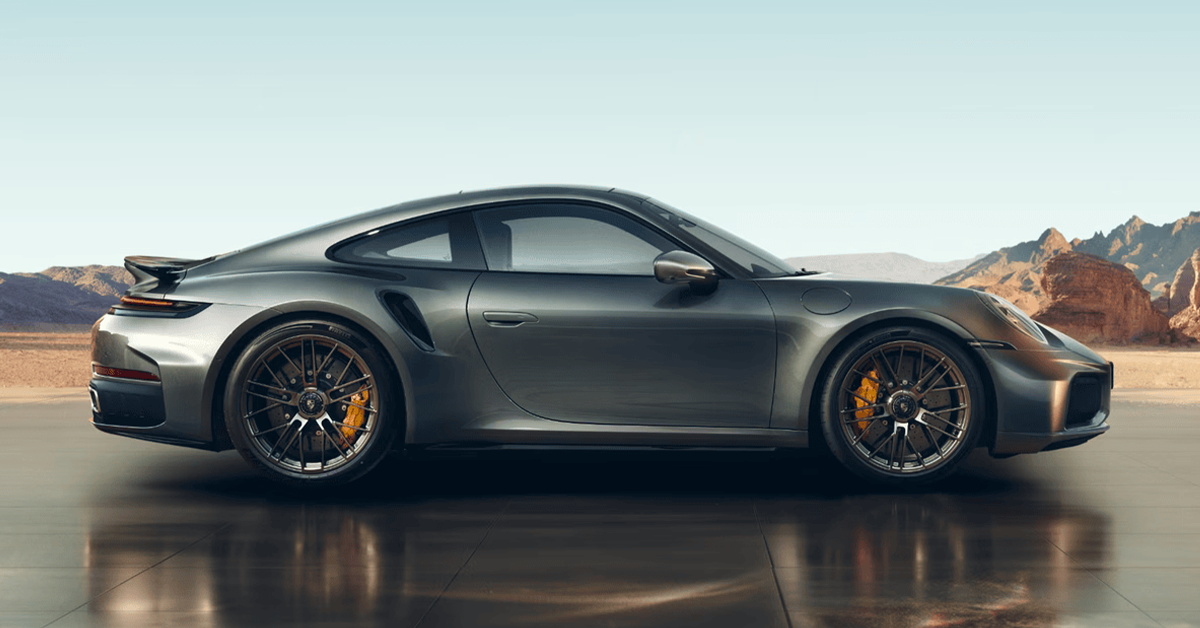
Official press image of the Porsche 911 Turbo S. | © Dr. Ing. h.c. F. Porsche AG
The 911 Turbo S has always had one job — be the ultimate all-weather, everyday-usable supercar slayer. For 2026, Porsche has gone hybrid to do that job better than ever, and the result is the most powerful production 911 in history, a Nürburgring lap more than 14 seconds quicker than before, and a car that still has rear seats and a real front trunk. This is whether borrowing technology from Porsche's Le Mans-winning 919 hybrid racer was the right call for the road.
The Porsche 911 Turbo S is for the buyer who wants genuine supercar performance without sacrificing a single ounce of everyday usability — a car that can be a daily driver, a long-distance grand tourer and a Nürburgring weapon depending entirely on how you drive it. It is for buyers who value all-weather, all-wheel-drive confidence over the theatre of an exotic mid-engine layout. It is not for the buyer chasing maximum exclusivity or the most dramatic styling in the segment — for that, a Lamborghini or Ferrari will turn more heads. But for the buyer who wants the most complete, most usable 700-horsepower car money can buy, the Turbo S remains the benchmark.
The headline change for 2026 is Porsche's new T-Hybrid system, derived directly from the philosophy behind the brand's 919 Hybrid Le Mans racer: use electrification to make the combustion engine sharper, not to replace it. This is not a plug-in hybrid, and the Turbo S cannot drive on electric power alone. Instead, two electric exhaust gas turbochargers spool up using power from a small 1.9kWh battery before exhaust gas even arrives, virtually eliminating traditional turbo lag, while an electric motor integrated directly into the 8-speed PDK transmission supplements the combustion engine's output.
The result is 701 horsepower and 590 lb-ft of torque — 61 horsepower more than the outgoing non-hybrid Turbo S, and enough to make this the most powerful production 911 ever built, edging out even the hardcore GT2 RS by a single horsepower. Torque doesn't just peak briefly either — it holds steady in a plateau from roughly 2,300 to 6,000rpm, giving the car a genuinely flat, always-available wall of thrust rather than a single sharp spike.
Porsche quotes 0-60mph in 2.4 seconds with Launch Control, two-tenths quicker than the previous Turbo S, with a top speed of 200mph. Several outlets covering the launch have pointed out that Porsche's own acceleration claims have historically proven conservative — the previous-generation Turbo S was independently tested to 60mph in just 2.1 seconds by at least one outlet — meaning this new car could plausibly be the first production 911 to break the 2-second barrier in real-world testing, despite Porsche's own official figure.
The number that genuinely stands out, though, is the Nürburgring lap. Porsche brand ambassador Jörg Bergmeister piloted the new Turbo S around the Nordschleife in 7 minutes 3.92 seconds — officially confirmed under notarial supervision — more than 14 seconds quicker than the outgoing car's time around the nearly 13-mile circuit. Bergmeister described the new car as more agile, offering more grip, and noticeably faster than its predecessor in every relevant section of the track.
| Engine | 3.6L twin-turbo flat-six (T-Hybrid) + integrated PDK motor |
| System Output | 701 hp / 590 lb-ft |
| Battery | 1.9 kWh (shared with 911 GTS T-Hybrid) |
| Electrical Architecture | 400V |
| Drive | All-wheel drive |
| Transmission | 8-speed PDK dual-clutch |
| 0-60 mph | 2.4 seconds (Launch Control) |
| Top Speed | 200 mph |
| Nürburgring Lap | 7:03.92 (notarized, ~14s faster than predecessor) |
| Curb Weight | ~3,829 lbs (+180 lbs vs. non-hybrid Turbo S) |
| Rear Tyres | 325/30 ZR21 (10mm wider than predecessor) |
| US Price (Coupe) | $272,650 (incl. destination) |
| US Price (Cabriolet) | ~$286,650 |
| US Arrival | Spring 2026 |
To handle the extra power, Porsche widened the rear tyres by 10mm to a substantial 325-section width, while increasing the rear ceramic composite brake rotors to 410mm in diameter. The suspension gains electro-hydraulic Porsche Dynamic Chassis Control (ehPDCC) for the first time, tied into the same 400-volt electrical system as the hybrid powertrain, reducing body roll while genuinely improving ride quality rather than trading one for the other. Active aerodynamics now include a deployable front spoiler for the first time on this generation, working alongside the existing active rear wing and adaptive cooling flaps to keep the car planted at speed.
Reviewers who have driven the car describe the added 180 pounds of hybrid hardware as mattering far less than the spec sheet suggests — one outlet noted that to drive this generation of Turbo on track is to have your expectations confounded, with stability and poise that never seem flummoxed by late braking, aggressive turn-in, or greedy throttle application.
Visually, the Turbo S retains its unmistakable widebody silhouette, now featuring new all-in-one LED headlight clusters incorporating HD Matrix Design headlights, daytime running lights and indicators into a single unit. A new Turbonite finish — a distinctive bronzed metal accent — appears across the wheel centres, badging and Porsche crest, becoming a visual signature for this generation of Turbo models. Inside, leather-trimmed 18-way power-adjustable Sport Seats Plus come standard, with Turbonite stitching and embossed Porsche crests reinforcing the car's flagship positioning within the 911 range.
Despite shedding rear seats as standard to offset some of the hybrid system's added weight, Porsche allows buyers to reinstall them entirely free of charge — a small but telling detail that underlines how seriously the brand still takes the Turbo S's everyday usability, even at the absolute performance limit of the lineup.
After the run, Bergmeister emphasized that the Turbo S is more agile, offers more grip, and is noticeably faster than its predecessor in all relevant sections of the track.
— Porsche, on Jörg Bergmeister's record Nürburgring lapThe 2026 911 Turbo S proves that hybridization, done with genuine motorsport intent rather than as a regulatory checkbox, can make an already exceptional car meaningfully better rather than merely different. Borrowing the T-Hybrid philosophy from Porsche's own Le Mans-winning 919 racer isn't a marketing exercise — it shows up directly in the elimination of turbo lag and in a Nürburgring lap that's genuinely 14 seconds quicker than before. The price increase is real and the styling won't win over everyone, but the fundamental brief — the ultimate all-weather, all-occasion supercar that still has rear seats and a front trunk — has never been executed better. For buyers who want maximum usable performance without compromise, this remains the car to beat.