 Brands
Aston Martin Valhalla Review — The 1,064HP F1-Bred Hybrid That Changes the Brand Forever

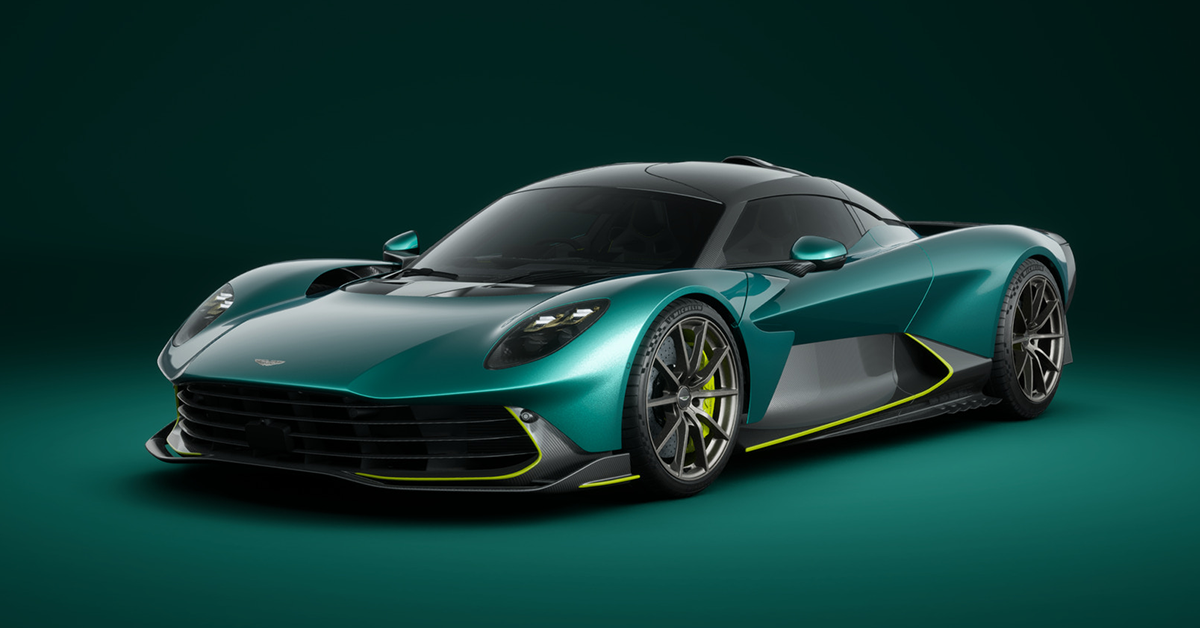
Official press image of the Aston Martin Valhalla. | © Aston Martin Lagonda
Aston Martin has never built a car like this. The Valhalla is the company's first-ever mid-engine production supercar and its first plug-in hybrid, developed using genuine technology transfer from Aston Martin's own Formula 1 team — and according to the people who've actually driven it, it somehow still feels like a usable road car rather than a track-only weapon wearing license plates. This is whether a century-old British grand tourer maker can genuinely build a credible mid-engine hypercar on its first attempt.
The Aston Martin Valhalla is for the collector who wants genuine Formula 1-derived engineering in a hypercar that's noticeably more usable day-to-day than its closest rivals — a car with a front-axle lift, surprisingly compliant road modes, and a price point that undercuts the McLaren W1 and Ferrari F80 while still delivering over 1,000 horsepower. It is for buyers who specifically value Aston Martin's design language and racing heritage over the more clinical engineering reputations of McLaren or Ferrari. It is not for the buyer chasing the absolute highest power-to-weight ratio in this generation's hypercar trio — both the W1 and F80 have an edge there. But for buyers who want genuine F1 technology transfer wrapped in classic British design, the Valhalla is unmatched.
This is more than just Aston Martin's most powerful road car. The Valhalla represents the company's first genuine mid-engine production supercar in its 112-year history, and its first car built with real, direct technology transfer from Aston Martin's own Formula 1 team rather than simply borrowing the team's name for marketing purposes. The project traces back to 2018, originally developed in partnership with Red Bull Racing under the codename AM-RB 003, before evolving into its current form as Aston's response to the extreme, track-only Valkyrie — positioned as a more genuinely road-usable expression of the same engineering philosophy.
The car also carries real financial weight for Aston Martin. CEO Adrian Hallmark has called the Valhalla the "keystone" for rounding out the company's product portfolio, explicitly citing the "huge economic leverage" it provides from a pure cash-flow perspective for a company that has spent years raising capital to stay afloat. With pricing starting around $1,051,700 and all 999 units already allocated — over 100 of which had already been delivered by early 2026 — the program is projected to generate well over $1 billion in revenue once bespoke customization options are factored in.
At the heart of the Valhalla is a 4.0-litre twin-turbocharged flat-plane-crank V8, based on the Mercedes-AMG M178 unit but extensively modified for this application — Aston Martin describes it as the most powerful V8 ever fitted to one of its cars. Two 63-millimetre turbochargers feed the engine, which Aston Martin's own marketing materials credit with helping deliver a system total of 1,064 horsepower (1,079 PS) and 811 lb-ft of torque once combined with the car's three electric motors.
That electrified portion of the powertrain is genuinely sophisticated. Two electric motors sit on the front axle, providing both torque vectoring and all-wheel-drive capability, while a third motor is integrated at the rear alongside the combustion engine and the bespoke 8-speed dual-clutch transmission. Notably, the Valhalla has no mechanical reverse gear at all — all eight forward gears in the transmission are dedicated purely to going forward, with reverse handled entirely by the electric motors running in the opposite direction. A 6.1kWh high-voltage battery powers the system, enabling both genuine torque-fill that virtually eliminates traditional turbo lag and a seamless electric-only reverse function.
Aston Martin quotes 0-62mph in approximately 2.5 seconds and a top speed of 217mph. That puts the Valhalla solidly within hypercar territory, though it's worth noting both the McLaren W1 (2.7 seconds, but rear-wheel-drive only) and Ferrari F80 (2.15 seconds, with all-wheel drive) represent different points on the same performance spectrum — the F80 edges the Valhalla on outright acceleration, while the W1 trades a slightly slower time for rear-drive purity. Aston Martin's own CEO has acknowledged this competitive reality directly, noting that had the company known how aggressively the F80 and W1 would be priced, the Valhalla might not have been positioned as competitively as it ultimately was — a genuinely candid admission that's worked out well for residual values, in his words.
Where the Valhalla's case strengthens considerably is everyday usability. Despite genuine hypercar-level performance, Aston Martin insists the car is usable daily, citing a front-axle lift system and a notably more compliant ride in road-oriented driving modes than its track-focused specification might suggest. Reviewers who've driven it on public roads have described it as "remarkably engaging" yet "surprisingly docile" — a combination that's genuinely rare at this performance level.
| Engine | 4.0L twin-turbo flat-plane V8 (AMG-derived) + 3 electric motors |
| Combined Output | 1,064 hp (1,079 PS) / 811 lb-ft |
| Battery | 6.1 kWh high-voltage, 150kW output |
| Drive | All-wheel drive — front e-motor torque vectoring |
| Transmission | 8-speed dual-clutch (forward only — reverse via e-motors) |
| 0-62 mph | ~2.5 seconds |
| Top Speed | 217 mph |
| Max Downforce | 600+ kg at 150 mph (Race mode) |
| Curb Weight | ~1,550 kg (3,417 lbs) target |
| Chassis | Full carbon-fibre monocoque (AMPT-developed) |
| Production Run | 999 units — sold out |
| US Starting Price | ~$1,051,700 |
| First Deliveries | December 2025 |
The Valhalla's aerodynamic package is where the Formula 1 connection becomes most tangible. An active front wing, hidden behind the grille, works alongside a rear wing that rises 255mm, with both elements reacting within just 0.5 seconds to changing conditions — together generating over 600kg of downforce at 150mph in the car's most aggressive Race mode. Five vortex generators integrated into the rear of the side skirts are taken directly from Formula 1 chassis design, specifically engineered to boost downforce at the midpoint of the car between the front and rear wings, exactly as they would on an actual F1 car.
The underbody features full venturi tunnels generating significant ground-effect downforce, with Aston Martin claiming the aerodynamic load can exceed the car's own weight in certain conditions. When not actively needed, the entire system stows itself away seamlessly, preserving Aston Martin's traditional design silhouette rather than leaving the car looking permanently track-focused.
The Valhalla provides huge economic leverage from a pure cash-flow perspective — it's the keystone for rounding out our product portfolio.
— Adrian Hallmark, CEO, Aston Martin LagondaInside, the Valhalla borrows directly from Aston Martin's Formula 1 team's own design language. The driving position uses a raised-heel setup specifically inspired by F1 cars, with footwells raised to create a more directional, hip-to-heel seating posture, paired with bespoke carbon-fibre seats. Because the seats themselves are fixed to the carbon tub for structural rigidity, both the pedals and steering column adjust instead to accommodate different driver statures — the opposite arrangement to most road cars.
The digital instrument display uses a large, linear tachometer layout designed for easier peripheral viewing at speed, with a dedicated Race mode interface directly informed by Aston Martin's own Formula 1 drivers during development sessions at Silverstone. Despite the extreme focus, genuine luxury touches remain — an optional 14-speaker Bowers & Wilkins sound system with 745W output and dual "Studio" and "Stage" sound modes, full ADAS suites, and adaptive LED matrix headlights all feature, alongside the dramatic dihedral doors that cut into the roofline for unusually easy entry and exit by mid-engine hypercar standards.
The Valhalla succeeds at something genuinely difficult — building a credible, technically serious mid-engine hypercar on the company's first real attempt, while still feeling unmistakably like an Aston Martin rather than a generic exercise in chasing McLaren and Ferrari's established playbooks. The Formula 1 technology transfer here is real and verifiable, not just marketing language, from the active aerodynamics to the raised-heel driving position lifted directly from the team's own race cars. It's not the outright fastest car in this generation's hypercar trinity, and Aston Martin's own broader financial position means this car is carrying real weight as a business lifeline as well as a technical showcase. But as a statement of what Aston Martin can build when given the right resources and the right racing partnership, the Valhalla is a genuine triumph — and a meaningfully more usable one than most rivals at this performance level.