 Brands
Toyota HiAce — 58 Years of Continuous Production, Zero US Sales
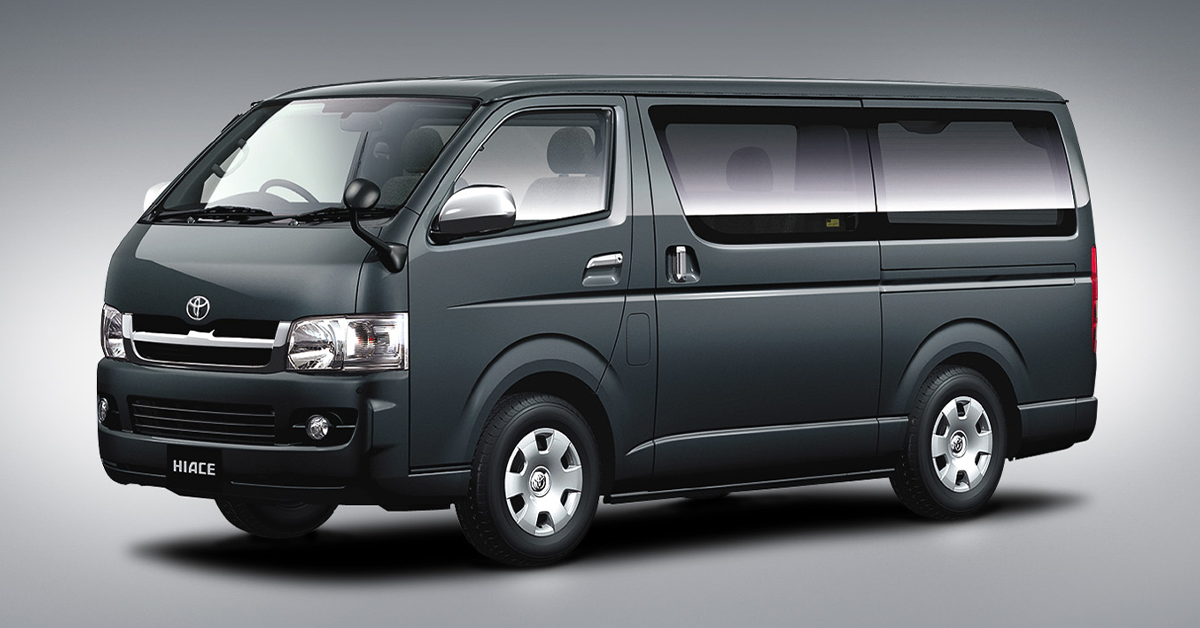
Official press image of the Toyota HiAce. | © Toyota Motor Corporation
No Toyota nameplate has been in continuous production longer than the HiAce. Not the Corolla, not the Land Cruiser, not the Crown. Since October 1967, Toyota has never stopped building it — through six full generations, across more than 150 countries, in configurations ranging from delivery vans to ambulances to full passenger buses. And yet an enormous share of car enthusiasts in the United States have never seen one in person, because Toyota has never once officially sold the HiAce there. It remains, genuinely, one of the most successful vehicles in automotive history that most Americans have simply never had the chance to buy.
Toyota launched the HiAce on 2 October 1967, developed in the late 1960s by Toyota Auto Body, a Toyota subcontracting company, specifically as a replacement for the earlier Toyoace light commercial vehicle. What made the original H10-generation HiAce genuinely notable was its cab-over-engine layout — positioning the engine underneath and slightly behind the driver’s seat rather than in a conventional forward-mounted position, maximising usable cargo and passenger space within a genuinely compact overall footprint. Former senior Toyota employee Akira Kawahara described the one-box design as something “unseen in the Japanese industry” at the time, even though similar layouts already existed on some European vans — a genuine engineering departure for Toyota’s domestic commercial vehicle lineup specifically.
The name itself is a straightforward but deliberate piece of branding: “Hi” references the van’s high roofline and cab-over-engine profile, while “Ace” signals reliability and top-class performance — a genuine step up from the Toyoace it replaced. The original body used a monocoque chassis with independent front suspension, a genuinely sophisticated construction choice for a commercial van of that era, balancing structural rigidity with weight efficiency. It launched across multiple configurations from day one — panel vans, pickup trucks, wagons and commuter variants — powered initially by a modest 1.3-litre inline-four petrol engine, with larger 1.5, 1.6 and eventually 1.8-litre four-cylinder options following as the range matured. Toyota upgraded the standard engine to a 1.6-litre unit producing 83 horsepower in 1971, and this original first generation is now considered the rarest and most sought-after HiAce among dedicated van enthusiasts and collectors.
The HiAce has progressed through six distinct generations since 1967, each identified by its own chassis code, yet all sharing the same fundamental cab-over layout and commercial-first design philosophy. The H20/H30/H40 generation ran from 1977 to 1982, bringing genuine improvements to both exterior design and interior comfort over the utilitarian original. The subsequent H50 through H90 range of variants expanded the HiAce’s role considerably, adding dedicated ambulance, minibus and camper configurations that broadened its commercial reach well beyond simple delivery duty.
The H100 generation, produced from 1989 to 2004, became the genuine global workhorse of the HiAce family — sold across Japan, China, the UK, continental Europe, Sri Lanka, South Africa and the Philippines, and still actively maintained by specialist mechanics in many of those markets today thanks to its mechanical simplicity and long-term durability. The following H200 generation ran in Japan from 2004 and continued in export markets including the Philippines through as recently as 2026, an unusually long production run reflecting just how well the existing formula continued serving fleet and commercial buyers without requiring fundamental change.
The current H300 generation, which began replacing the H200 in most export markets from 2026, represents something genuinely rare in the HiAce’s history: the first major architectural break since the nameplate’s 1967 debut. For nearly six decades, every HiAce generation had refined the same essential recipe — cab-over layout, rear or four-wheel drive, petrol or diesel power — without a fundamental platform change. The H300 breaks that pattern with a genuinely modern structural foundation, while retaining the practical rear 180-degree opening barn doors that have defined the model’s cargo-loading practicality across every generation.
Current H300-generation specifications include a 2.8-litre turbocharged four-cylinder diesel engine producing approximately 174 horsepower, alongside a 3.5-litre V6 petrol option available on truck and bus configurations in select markets. Toyota's own cumulative sales figures place the HiAce at over 6.24 million units sold across more than 150 countries since 1967, with broader tallies including every body-style variant placing the true global figure above 7.5 million units — making it, by any measure, one of the best-selling commercial vehicles ever built.
Despite that genuinely staggering global success, the HiAce has never been sold new in the United States. American buyers wanting one have exactly one legal path: importing a Japanese Domestic Market example once that specific model year reaches 25 years old under US federal import regulations — the same legal mechanism that has fuelled America’s broader wave of JDM Kei truck and van imports in recent years. This has created a genuinely dedicated, if niche, American enthusiast community built entirely around older HiAce generations, particularly the H100, prized specifically for its mechanical simplicity, genuine off-grid reliability, and suitability as a base for van-life conversions and overland travel builds. Owners and specialist importers consistently flag the cooling system on JDM H100 diesel imports as the single highest financial risk area — a comparatively inexpensive radiator, thermostat, hose and water pump service performed proactively can prevent a considerably more expensive engine failure down the line, a detail that has become genuine folk wisdom within the import community.
The HiAce platform’s influence extends well beyond the van itself. The Toyota Granvia, a genuinely more premium, better-equipped passenger MPV, is built directly on the same underlying HiAce commercial architecture — upgraded interior materials and comfort specification layered over the same structurally proven, cab-over-engine foundation that has made the HiAce itself so durable. Toyota has also confirmed active development of an E-HiAce, a genuine battery-electric version of the van, targeting approximately 300km of WLTP-rated range from a 62kWh lithium-ion battery pack, aimed primarily at zero-emission urban delivery fleets across Europe as regulatory pressure under the EU’s “Fit-for-55” climate package continues intensifying. Toyota has also floated a shared-mobility fleet-leasing concept in Europe, bundling the van, ongoing maintenance and charging infrastructure into a single subscription package for commercial fleet operators — a genuinely modern business model wrapped around one of the automotive industry’s longest-running and most mechanically conservative nameplates.
Beyond simple JDM enthusiast collecting, the HiAce — particularly the H100 generation — has become a genuinely popular platform among the overland and vanlife conversion community, both in markets where it was sold new and among American importers working within the 25-year rule. The appeal comes down to a specific combination of practical traits that are genuinely difficult to find together in any single vehicle: the cab-over layout keeps the overall footprint narrow enough for city parking and tight trail access, the mechanical architecture is simple enough to diagnose and repair with common tools in remote locations, and the underlying build quality is proven enough that well-maintained examples routinely clear 300,000 to 350,000 miles without major structural issues. That combination has made the HiAce a genuine fixture ferrying passengers through congested Asian megacities, hauling cargo across rural European back-roads, serving as a mobile office for small business owners in South America, and increasingly, forming the base for professionally converted camper builds sold to overland travellers in markets including Australia, New Zealand and parts of the UK import scene.
This same durability profile explains why the HiAce continues seeing active use as ambulances and rural minibus services well beyond typical passenger-vehicle retirement age in many developing markets — a genuinely different kind of longevity story than most passenger cars ever achieve, where a vehicle's true useful life is measured not in years since launch, but in total operating decades across multiple owners and multiple continents.