 Brands
Volkswagen Models List by Type With Specs and Prices
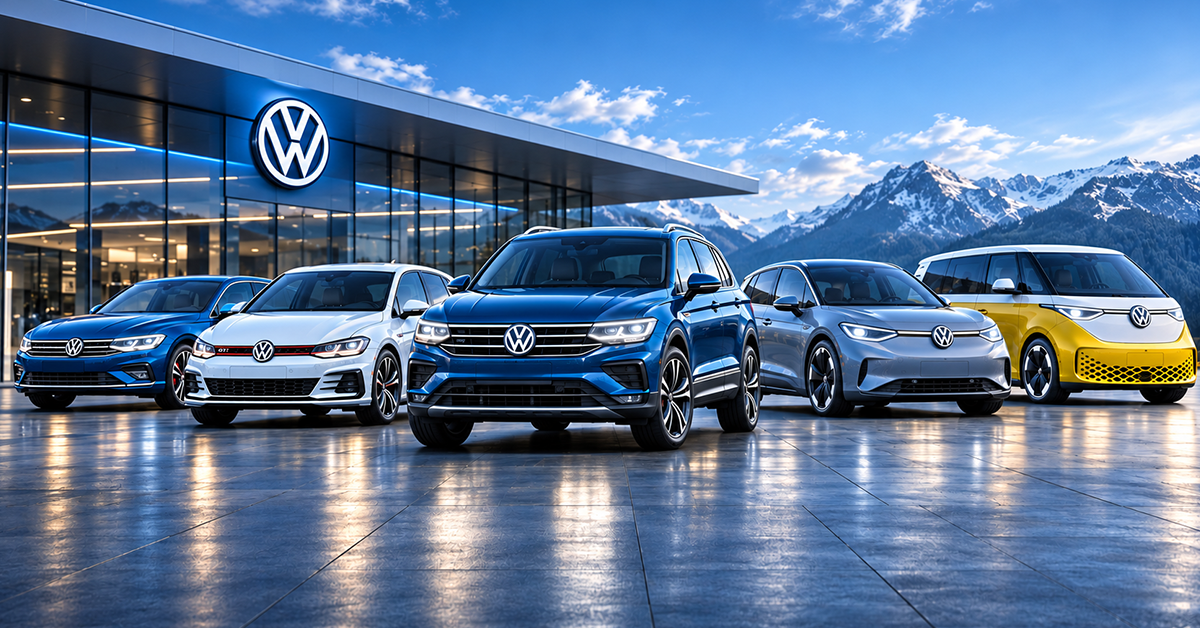
AI-generated concept illustration — Volkswagen models. | Rev N Rise
Volkswagen sells everything from the Golf hatchback to the seven-seat Atlas and a growing range of electric ID. cars. Here is every current Volkswagen model by type, with specs, prices and who each one suits, plus the models Volkswagen has discontinued.

Official press image of the Volkswagen Golf GTI. | © Volkswagen AG
Volkswagen built its reputation on compact cars, and the hatchback and sedan range is still the best place to start when you want to understand the brand. The range is built around the Golf, which has defined the family hatchback for decades, with the Polo as the small car below it, the Jetta as the compact sedan in North America and the Passat as the larger car above it. Each of these has changed a great deal in the past few years, and the biggest change is that Volkswagen is adding electric and hybrid power to almost all of them.
| Golf GTI (Europe) | 195 kW (265 PS), 370 Nm, 0 to 100 km/h in 5.9 s, from 44,505 euros at launch |
| Golf R (Europe) | 245 kW (333 PS), 420 Nm, 4MOTION, from 53,795 euros at launch |
| Golf and T-Roc hybrid | 1.5 TSI with two electric motors, 1.6 kWh battery, due in the fourth quarter of 2026 |
| Golf GTI (US 2026) | 2.0-litre turbo, 241 hp, DSG, from $34,590 |
| Golf R (US 2026) | 328 hp, all-wheel drive, from $49,455 |
| Jetta (US 2026) | 1.5-litre turbo, 158 hp, 8-speed automatic, from $23,995 |
| Jetta GLI (US 2026) | 2.0-litre turbo, 228 hp, manual or DSG, from about $33,745 |
| Polo engines (Edition 50) | 1.0 TSI 70 kW (95 PS) manual or DSG, 1.0 TSI 85 kW (116 PS) DSG |
| Polo Edition 50 | 70 kW (95 PS) manual from 28,200 euros in Germany, over 20 million Polos sold |
| Passat Variant | eTSI 110 kW from 39,995 euros, plug-in hybrids with up to 120 km electric range |
| ID. Polo | Trend from 24,995 euros, up to 454 km (52 kWh, provisional), GTI in 2027 |
The Golf is the core of the range. In Europe the most powerful versions are the Golf GTI and the Golf R. Volkswagen's own figures give the GTI 195 kW (265 PS) and 370 Nm of torque, with 0 to 100 km/h in 5.9 seconds, and it was first offered from 44,505 euros when pre-orders opened in 2024. The Golf R makes 245 kW (333 PS) and 420 Nm, uses a 2.0-litre turbo with a seven-speed DSG and 4MOTION all-wheel drive, and has a top speed of 250 km/h, or 270 km/h with the R-Performance package. It was first priced from 53,795 euros in Germany. Both prices are launch prices and may have changed since.
For buyers who want lower fuel use, Volkswagen has announced a new full hybrid for the Golf and the T-Roc. It uses a 1.5 TSI evo2 turbocharged petrol engine with two electric motors, one that drives the car and one that acts as a generator, and a one-speed gearbox. The battery is a small 1.6 kWh unit mounted in the rear floor, and it charges through braking and the generator rather than from a plug. A Golf R-Line Hybrid with 125 kW is quoted at 5.1 to 4.6 litres per 100 km combined, and the system is due in the fourth quarter of 2026.
In the United States the line-up is smaller and the figures are different. For the 2026 model year the Golf GTI has a 2.0-litre turbo with 241 horsepower and 273 lb-ft of torque, a seven-speed DSG and a combined rating of 27 mpg, and it starts at 34,590 dollars. The Golf R has 328 horsepower, all-wheel drive and a rating of 25 mpg combined, starting at 49,455 dollars. For 2027 the GTI continues in S, SE and Autobahn trims, and the Golf R returns with its Black Edition and a Euro Style Package that deletes the sunroof and adds ArtVelours sport seats and an Akrapovic titanium exhaust, saving nearly 80 pounds.
The Jetta is the compact sedan in North America. The 2026 car has a 1.5-litre turbo with 158 horsepower and 184 lb-ft, an eight-speed automatic with front-wheel drive, and ratings of 33 to 34 mpg combined, and it starts at 23,995 dollars for the S. The Jetta GLI adds a 2.0-litre turbo with 228 horsepower and 258 lb-ft, with a six-speed manual or a seven-speed DSG, and starts at about 33,745 dollars. For 2027 the Jetta is offered in S, Sport, SE and SEL trims, the S gains better infotainment and keyless access, and the GLI is offered only in a fully equipped Autobahn trim.
The Passat has moved in a different direction in Europe, where the current car is a Variant, meaning an estate, rather than a sedan. Volkswagen lists a wide range of drives for it. At launch the entry point was a 110 kW (150 PS) eTSI mild hybrid from 39,995 euros, with a 90 kW (122 PS) TDI diesel from 41,745 euros and a 142 kW (193 PS) TDI 4MOTION with standard all-wheel drive from 57,335 euros. The plug-in hybrids are offered with either 150 kW or 200 kW of system output, they use a 19.7 kWh battery and they offer an electric range of up to 120 kilometres.
The Polo is Volkswagen's small car and has been on sale since 1975. When the car turned 50 in 2025, Volkswagen released a Polo Edition 50, based on the Style trim with 16-inch alloy wheels, a 50 badge on the B-pillar, heated sports seats, a rear-view camera and Discover Media infotainment. It is offered with a 70 kW (95 PS) engine and a manual gearbox from 28,200 euros in Germany, with two DSG versions of 70 kW and 85 kW (116 PS). Volkswagen's anniversary release cites more than 20 million Polos sold across six generations.
The combustion Polo Edition 50 shows the engine range in its final form. All versions use a 1.0-litre TSI petrol engine with a particulate filter: 70 kW (95 PS) with a five-speed manual or a seven-speed DSG, and 85 kW (116 PS) with the seven-speed DSG. Third-party spec data lists the earlier 2021 car with a 1.0 MPI of 80 PS and a 1.0 TSI of 110 PS with 200 Nm, which reaches 100 km/h in 10.4 seconds.
The Polo is changing too. Volkswagen's new naming strategy moves established names onto its electric cars, and the first example is the ID. Polo. In Germany the ID. Polo Trend starts at 24,995 euros, with a 52 kWh battery that gives a provisional range of up to 454 kilometres or a 37 kWh battery with up to 329 kilometres, and an ID. Polo GTI follows in 2027. Combustion models keep their current names and are sold alongside the electric cars, so a buyer can still choose a petrol or diesel Volkswagen while the electric line grows.
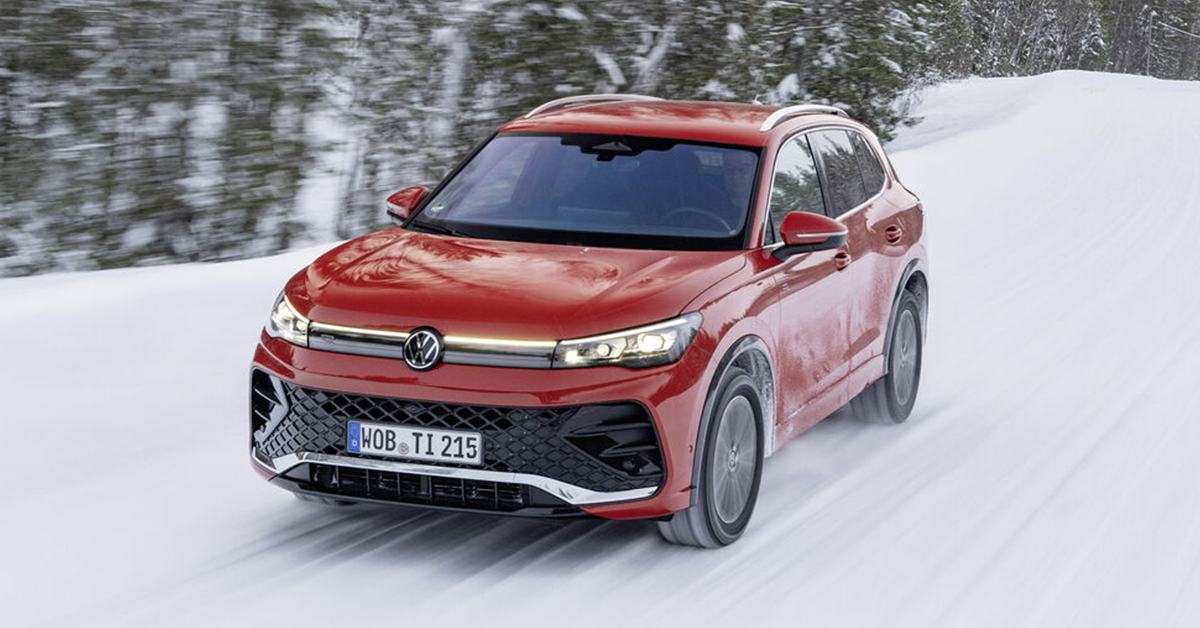
Official press image of the Volkswagen Tiguan. | © Volkswagen AG
Crossovers are now the biggest part of the Volkswagen range, and the compact SUV class is the busiest. The key names are the T-Cross, Taigo, T-Roc and Tiguan in Europe and the Taos and the Tiguan in North America. Together they cover most of what families buy, from a small, stylish crossover to a roomy five-seat SUV with all-wheel drive and a plug-in hybrid option. These are the models that most directly decide how well Volkswagen competes in the segment where most customers shop.
| T-Cross (Europe) | 70, 85 or 110 kW TSI, 385 to 455 litres luggage, from 23,250 euros at launch |
| Taigo (Europe) | SUV coupe, 70, 81 or 110 kW, from 19,350 euros at launch |
| T-Roc (second generation) | 1.5 eTSI 110 kW (150 PS), hybrid 125 kW (170 PS), built in Palmela, Portugal |
| T-Roc fuel use | 1.5 eTSI 6.0 to 5.6 l/100 km, Hybrid 5.6 to 5.0 l/100 km |
| Tiguan (Europe) | 1.5 TSI 110 kW, 2.0 TSI 4MOTION 150 or 195 kW, TDI up to 142 kW, plug-in hybrid over 100 km |
| Tiguan towing | Up to 2,200 kg with TSI and 4MOTION |
| Tiguan (US 2026) | 2.0-litre turbo, 201 hp (268 hp SEL R-Line Turbo), 8-speed, from $30,805 |
| Tiguan (US 2027) | S, SE, SE R-Line Black, SEL R-Line Turbo, two rows |
| Taos (US 2026) | 1.5-litre turbo, 174 hp, 8-speed, 31 mpg combined, from $26,500 |
| Taos (US 2027) | S, Sport (new), SE, SE Black Package, SEL |
The T-Roc is the smaller of the two and has just entered its second generation. Volkswagen showed the new car on 27 August 2025, and pre-sales started in Europe at the end of that month, with the market launch in November 2025. It is 12 centimetres longer than the first generation, which gives more interior and luggage space, and it earned a five-star Euro NCAP rating. The 1.5 eTSI petrol produces 110 kW (150 PS) and uses 6.0 to 5.6 litres per 100 km, and a new full hybrid with 125 kW (170 PS) uses 5.6 to 5.0 litres.
The T-Roc is built in Palmela, Portugal, and Volkswagen says it has sold more than two million units since 2017, with the first generation Europe's best-selling SUV in 2025. The hybrid went into pre-sales in Germany in July 2026. Volkswagen has also said the T-Roc Cabriolet, built at the Osnabrück plant, will continue until mid-2027. For buyers who want a compact crossover with a real choice of engines, the T-Roc is one of the most complete options in the range.
The Tiguan is the family car. The current third generation is offered in Europe with a 1.5 TSI at 110 kW (150 PS), a 2.0 TSI 4MOTION with either 150 kW (204 PS) or 195 kW (265 PS), a TDI with up to 142 kW (193 PS), a 48-volt eTSI mild hybrid and a plug-in hybrid with more than 100 kilometres of electric range. Towing is rated up to 2,200 kilograms with the TSI and 4MOTION versions, and the Edition 20 model with the 150 PS petrol engine starts at 48,180 euros. It shares its MQB Evo platform with the larger Tayron.
In North America the Tiguan is a two-row, five-seat SUV. The 2026 model has a 2.0-litre turbo with 201 horsepower and an eight-speed automatic, with front-wheel drive standard and 4MOTION all-wheel drive a 1,500 dollar option on the S, SE and SE R-Line Black trims. It starts at 30,805 dollars, and the SEL R-Line Turbo, which has 268 horsepower and standard all-wheel drive, starts at 43,085 dollars. For 2027 it changes very little, but it gains rearview and 360-degree cameras with better image quality and auto hold. The smaller Taos is Volkswagen's entry SUV there. The 2026 Taos has a 1.5-litre turbo with 174 horsepower, an eight-speed automatic and a combined rating of 31 mpg, and starts at 26,500 dollars. For 2027 it adds a new Sport trim above the base S. The Sport is mainly a visual package with black exterior accents, and the range also includes the SE, SE Black Package and SEL. The S gains better infotainment, keyless access and an enhanced rear seatbelt reminder.
Below the T-Roc sit two small crossovers. The T-Cross is Volkswagen's most compact SUV in Europe, and the version that went on sale from late 2023 is offered with TSI petrol engines of 70 kW (95 PS), 85 kW (115 PS) and 110 kW (150 PS). The 85 kW and 110 kW versions have a seven-speed DSG as standard, luggage space is 385 to 455 litres and up to 1,281 litres with the rear bench folded, and the drawbar load was raised from 55 to 75 kilograms. At launch it started from 23,250 euros in Germany across T-Cross, Life, Style and R-Line equipment lines.
The Taigo is the stylish alternative. Volkswagen describes it as the first SUV coupe in the small car segment on the European market, and it launched in 2021 as a five-seat, front-wheel-drive car. It is offered with a 1.0 TSI at 70 kW (95 PS) or 81 kW (110 PS) and a 1.5 TSI at 110 kW (150 PS), with manual gearboxes or a seven-speed DSG on the more powerful engines. The entry price at launch was 19,350 euros for the 1.0 TSI 70 kW with a five-speed manual. Both launch prices are from earlier releases and may have changed.
Choosing between them is simple. The T-Cross, Taigo, Taos and T-Roc suit city drivers and small families who want a high seating position without the size of a full SUV. The Tiguan suits buyers who want more room, all-wheel drive, a wider choice of engines and a plug-in hybrid in Europe. If you need a third row, the next section covers the larger SUVs, and if you want to go electric, the ID. Tiguan described in the electric section is Volkswagen's answer for the same buyer.

Official press image of the Volkswagen Atlas. | © Volkswagen AG
At the top of the combustion SUV range Volkswagen has three models, and each one is in a different stage of its life. The Atlas is the seven-seat family SUV that was built for North America and has just been fully redesigned. The Tayron is the new large SUV for Europe, placed between the Tiguan and the Touareg. The Touareg itself is the premium flagship, and its current generation is coming to an end. The section explains where each stands, and what buyers can expect next.
| Atlas (2027) | 2.0-litre evo5 turbo, 282 hp, FWD or 4Motion, seven seats, built in Chattanooga |
| Atlas Cross Sport | New generation due later in 2026, details not yet published |
| Tayron (Europe) | Five or seven seats, 885 litres luggage, towing up to 2,500 kg, built in Wolfsburg |
| Tayron plug-in | 1.5-litre eHybrid, 110 kW (150 PS) engine, electric range over 100 km (up to 126 km) |
| Touareg | Launched 2002, over 1.2 million sold, combustion model ends in 2026 |
| Touareg R Hybrid | 340 kW (462 PS) system power |
| Touareg Final Edition | From 75,025 euros, orderable until end of March 2026 |
The Atlas is the most important of these in the United States. The 2027 car is a full redesign of the seven-seat midsize SUV, built in Chattanooga, Tennessee, and it is powered by the latest 2.0-litre evo5 EA888 turbocharged four-cylinder with 282 horsepower, the highest output ever offered in an Atlas. It is offered with front-wheel drive or 4Motion all-wheel drive. A seventh airbag, a new front-centre unit, and a power liftgate are new standard features, and fuel economy is expected to improve, with the EPA figures still to come. Trims and pricing were due closer to a fall 2026 launch.
A new-generation Atlas Cross Sport is also due. Volkswagen has said it will enter the market later in 2026 and that further details will follow, but it has not yet published specifications, trims or prices. The Cross Sport has been the sleeker, coupe-styled sibling of the Atlas for buyers who do not need a third row. Until Volkswagen confirms its details, buyers who are interested should treat any figures they see as unconfirmed and wait for the official release.
The Tayron is Volkswagen's large SUV for Europe. It is offered with five seats or, as an option, seven, and it has up to 885 litres of luggage space with five passengers. It is built in Wolfsburg, had its world premiere in October 2024 and shares the MQB Evo platform with the Tiguan. The range includes a mild-hybrid eTSI, TSI petrol and TDI diesel engines with optional 4MOTION all-wheel drive, and a plug-in hybrid eHybrid with a 1.5-litre engine at 110 kW (150 PS) and an electric range of more than 100 kilometres, up to 126 kilometres in the media-drive text. Towing is up to 2,500 kilograms.
The Touareg is the model with the longest history. It launched in 2002 and has sold more than 1.2 million units across three generations, with more than 471,000 of the first generation, more than 483,000 of the second and more than 265,000 of the third so far. The flagship Touareg R Hybrid has a system power of 340 kW (462 PS). Volkswagen has said production of the combustion-engine Touareg ends in 2026, and it offered a Touareg FINAL EDITION, orderable until the end of March 2026, from 75,025 euros. The release does not name a successor.
For buyers the choice depends on the market. In the United States the Atlas is the family SUV, and the redesigned car should be the main option from fall 2026. In Europe the Tayron fills the space between the Tiguan and the Touareg, and the Touareg is on its last cars. Anyone who wants a combustion Touareg should act quickly, and anyone who wants a premium electric Volkswagen SUV should look at the ID. Tiguan and the ID.7 Tourer in the electric section, since these are where Volkswagen is investing now.

Official press image of the Volkswagen ID.7. | © Volkswagen AG
Volkswagen's electric range, sold under the ID. name, is the part of the line-up that is changing fastest. The brand delivered its two-millionth all-electric vehicle to a customer in early 2026, and it is now moving from the first generation of ID. cars to a second wave that is cheaper, smaller and in some cases renamed. This section covers the current ID.3 Neo, the ID.7, the end of the ID.4 in the United States and the new models arriving from 2026 onward, including the ID. Polo, the ID. Cross and the ID. Tiguan.
| ID.3 Neo | 125 to 170 kW, 50 to 79 kWh, up to 630 km (largest battery) |
| ID.7 Pro S | 210 kW (286 PS), 86 kWh, up to 709 km, from 58,985 euros at launch |
| ID.7 GTX | 250 kW (340 PS), all-wheel drive, from 63,155 euros at launch |
| ID.4 (US) | Production ended April 2026, not offered for 2027, future version planned |
| ID. Cross | 85 to 155 kW, 37 or 52 kWh, up to about 427 km, about 28,000 euros expected |
| ID. Tiguan | 140 to 220 kW, 58 or 77 kWh, up to 607 km, from 42,695 euros, launch early 2027 |
The ID.3 Neo is the successor to the ID.3, and it shows how much Volkswagen is changing the cars. Pre-sales began on 16 April 2026 in Germany and many other European markets. It offers 125 kW (170 PS), 140 kW (190 PS) or 170 kW (231 PS) motors with 50 kWh, 58 kWh or 79 kWh net batteries, and it comes in Trend, Life and Style equipment lines. The range reaches up to 630 kilometres with the largest battery in the most favourable variant, and DC charging is up to 105 kW for the smaller batteries and up to 183 kW for the 79 kWh pack.
The ID.7 is the larger electric car, offered as a fastback and as an estate called the ID.7 Tourer. The Pro S has an 86 kWh battery, 210 kW (286 PS) and rear-wheel drive, with a range of up to 709 kilometres for the fastback and up to 690 kilometres for the Tourer. The ID.7 GTX has 250 kW (340 PS) and electric all-wheel drive. Volkswagen's launch prices in Germany were from 58,985 euros for the Pro S, 59,785 euros for the Pro S Tourer, 63,155 euros for the GTX and 63,955 euros for the GTX Tourer.
In the United States the ID.4 has reached the end of its first run. Chattanooga production ended in April 2026, the ID.4 is not offered for the 2027 model year, and Volkswagen expects the remaining 2026 inventory to cover demand into 2027. The company says a future North American ID.4 is planned and that details will follow, but it has not given a return date. This is a notable change, since the ID.4 was Volkswagen's main electric car in the US.
In Europe the next wave is already visible. The ID. Cross, an electric compact SUV, had its world premiere in July 2026 with 85 kW, 99 kW or 155 kW front-wheel-drive versions, 37 kWh or 52 kWh batteries and an expected price of about 28,000 euros in Germany, and it was due on the European market in autumn 2026. The ID. Tiguan premiered on 9 October 2026, with pre-sales from 13 October, a launch in early 2027 and a base price from 42,695 euros. It offers 140 kW, 210 kW or 220 kW versions and a range of up to 607 kilometres.
The ID. Tiguan follows the new naming strategy, in which established names move to electric cars. Volkswagen says it succeeds the ID.4 and ID.5 and sells alongside the combustion and hybrid Tiguan. It is built in Emden for Europe on the MEB+ platform, seats five and charges at up to 165 kW with the 77 kWh battery. Together with the ID. Polo and the ID. Cross, it shows the direction of the brand, which is to give each familiar name an electric version and let customers choose the powertrain that fits them.

Official press image of the Volkswagen ID. Buzz. | © Volkswagen AG
The ID. Buzz is the most characterful car in the Volkswagen range, an electric van that draws on the look of the original Microbus and offers modern technology in a retro package. It is sold in several versions, from the passenger ID. Buzz to the ID. Buzz Cargo for businesses, and in North America it was launched as a seven-seat family vehicle. It has had a mixed time in the United States, with a gap in sales in the 2026 model year, but it returns for 2027 with a new trim structure and new equipment.
| ID. Buzz Pro (Europe) | WLTP range 402 to 423 km, 21.7 to 20.5 kWh/100 km |
| ID. Buzz Cargo (Europe) | WLTP range 402 to 425 km, 22.2 to 20.4 kWh/100 km |
| US long-wheelbase | 91 kWh gross, 85 kWh net, seven seats, on sale June 2024 as a 2025 model |
| US power (reported) | 210 kW (286 hp) rear-wheel drive, all-wheel drive about 250 kW |
| US 2027 trims | Pro S RWD, Pro S 4Motion, Tourer 4Motion, Pro S Plus 4Motion |
| US 2027 features | NACS adapter, one-pedal driving, ID.S 6 software |
| US 2026 model year | Withdrawn, returns for 2027 |
In Europe the ID. Buzz Pro has a WLTP range of 402 to 423 kilometres and a combined consumption of 21.7 to 20.5 kWh per 100 km, according to Volkswagen's media-drive information. The ID. Buzz Cargo has a range of 402 to 425 kilometres and consumption of 22.2 to 20.4 kWh per 100 km. The Cargo version is aimed at tradespeople and delivery companies who want an electric van with a distinctive face. It shows that the Buzz is not only a lifestyle vehicle but also a working vehicle for businesses that want a visible electric fleet.
In North America the van launched in Huntington Beach, California, on 2 June 2023, and the long-wheelbase version went on sale in June 2024 as a 2025 model. It has a 91 kWh gross battery, which is about 85 kWh net, and seats seven across three rows. Reported power is 210 kW (286 hp) with rear-wheel drive, with the all-wheel-drive version rated at about 250 kW, and the EPA estimated range is up to about 260 miles. In December 2025 Volkswagen said it would withdraw the ID. Buzz from the US for the 2026 model year and bring it back for 2027.
The 2027 ID. Buzz comes in four trims, the Pro S RWD, the new Pro S 4Motion, the new Tourer 4Motion and the Pro S Plus 4Motion. All variants get the ID.S 6 software architecture, one-pedal driving and a NACS charging adapter, so the van can use the NACS charging network. The Tourer is the most interesting of the group. It adds a retractable tow hitch, captain's chairs, an electrochromic roof and 20-inch wheels, and it brings a camper-style fold-out mattress platform, front window ventilation panels, retractable blinds and an outdoor table and chairs.
The Buzz is also a good example of the way Volkswagen uses heritage. The original Type 2 Microbus was one of the brand's most loved vehicles, and the new van borrows its two-tone paint, its short nose and its friendly face while using an electric platform. That mix has given it a presence that few rivals can match. For buyers who want a practical electric family vehicle with personality, and who are comfortable with the cost, the Buzz is one of the few options that really stands out from the crowd.
There are limits, as with any new technology. The Buzz is a large vehicle with a price to match, and its range is below that of the latest cars in the ID. family because of its size and shape. Anyone considering one should compare the trims carefully, check the charging options near them and test the camper features if they plan to travel. For the right owner, though, it combines nostalgia and modern electric technology in a way no other Volkswagen does.
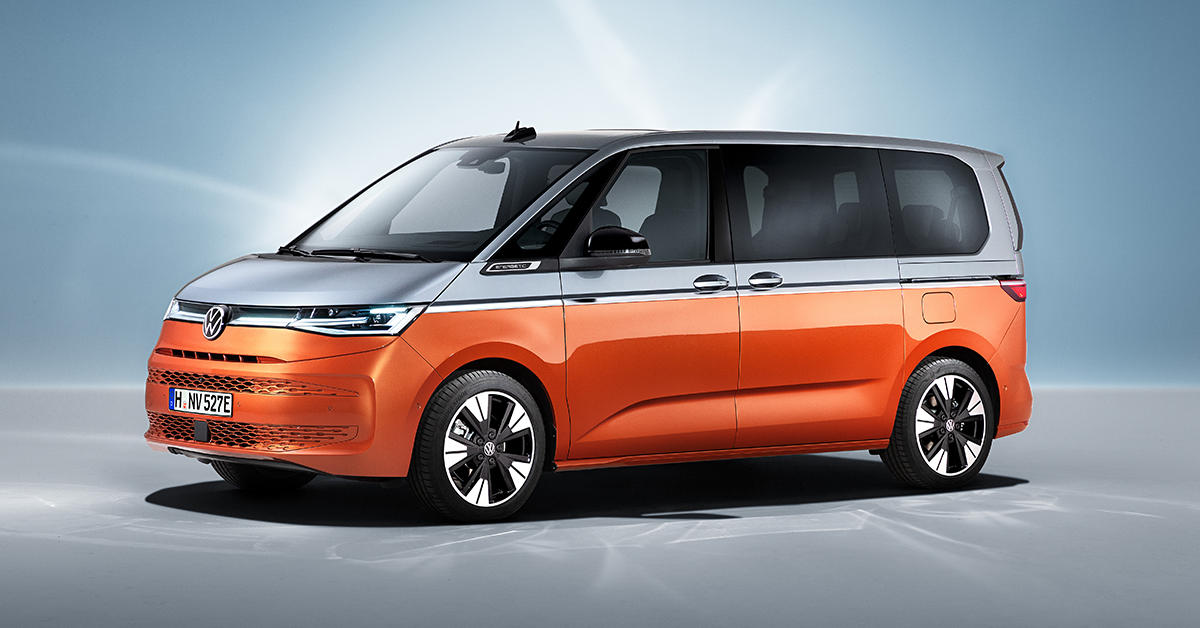
Official press image of the Volkswagen Multivan. | © Volkswagen AG
Volkswagen Commercial Vehicles is a separate part of the business, and it builds some of the best-known vans in the world. Its range covers the Caddy, the Transporter, the Multivan, the California camper, the Crafter, the electric ID. Buzz Cargo and the Amarok pick-up. These vehicles share the same badge as the cars and the same brand design, but they are sold through dedicated van centres in many markets. Most of the figures in this section come from Volkswagen's UK commercial vehicle pages, so prices are in pounds and equipment may differ in other countries.
| Caddy | 1.5 TSI 116 PS or 2.0 TDI 122 PS, five or seven seats, from 37,171 pounds (UK) |
| Caddy facelift | Fifth generation, built in Poznań, eHybrid planned |
| Multivan (T7) | eHybrid 245 PS with up to 57 miles electric range, 2.0 TSI 204 PS, 2.0 TDI 150 PS, from 50,683 pounds (UK) |
| Transporter | Panel van up to 6.8 cubic metres, Shuttle seats up to nine, high roof up to 9.0 cubic metres in 2026 |
| e-Transporter | Electric panel van, Kombi and Shuttle |
| California (UK) | 150 PS 2.0 TDI or 245 PS eHybrid 4MOTION, up to about 52 miles electric range, sleeps up to four, from 66,334 pounds |
| Crafter panel van | 9.3 to 18.4 m3 load volume, payload up to 2,573 kg, FWD, RWD or 4MOTION |
| Amarok (UK) | V6, 4MOTION, payload up to 1,050 kg, towing up to 3,500 kg, from 48,140 pounds excluding VAT |
| New South America pick-up | Built in Pacheco, Argentina, production starts in 2027 |
The Caddy is the smallest of the vans and is sold as a van and as a passenger carrier. The petrol engine is a 1.5 TSI with 116 PS and the diesel is a 2.0 TDI with 122 PS, with DSG automatic available on both and a six-speed manual offered with the petrol. The standard Caddy is about 4.5 metres long and the Caddy Maxi about 4.85 metres, and they seat five or seven. Boot space runs from 191 to 446 litres with the seats up, to as much as 2,556 litres in the Caddy and 3,105 litres in the Maxi. A Caddy Life starts from 37,171 pounds on the road, including VAT.
A facelifted fifth-generation Caddy is on the way. Volkswagen has shown a redesigned front bumper, new colours, 16-inch to 18-inch alloy wheels and a freestanding central display, with cargo and passenger versions, two wheelbases and a range of powertrains that includes an eHybrid. It is built in Poznań, Poland, and further information was promised in late summer. The Caddy is an example of how Volkswagen is bringing electrified power to its smaller vans, where fleet customers are looking for lower running costs.
The Multivan is the premium people carrier, and the current T7 generation is offered with petrol, diesel and plug-in hybrid power. The eHybrid combines a 1.5 TSI with 245 PS and an 85 kW electric motor, with up to 57 miles of electric range on the WLTP-comparable measure and towing of up to 1,600 kilograms. The 2.0 TSI makes 204 PS and 320 Nm, and the 2.0 TDI makes 150 PS and 360 Nm, both with a seven-speed DSG. It seats six or seven, has 469 litres of luggage space as standard and starts from 50,683 pounds on the road including VAT in the UK. An updated Multivan with new LED headlights is due.
The Transporter is the classic working van and comes as a panel van, a Kombi and a Shuttle. The long-wheelbase panel van offers up to 6.8 cubic metres of load space, a high-roof version with up to 9.0 cubic metres is coming in 2026, the Shuttle seats up to nine including the driver and the Kombi seats five as standard. The range includes plug-in hybrid options, a Sportline version and a new e-Transporter that is offered as a panel van, Kombi and Shuttle. An updated California camper with a refreshed design and upgraded infotainment is also due in 2026.
The California is the camper van, and the current model is sold in Beach, Coast and Ocean trims. In the UK it comes with a 150 PS 2.0 TDI and seven-speed DSG with front-wheel drive, or a 245 PS 1.5 eHybrid plug-in hybrid with a six-speed DSG and 4MOTION all-wheel drive. The eHybrid has an electric range of up to about 52 miles on the WLTP cycle, depending on trim, and the camper sleeps up to four people. The California Beach with the 150 PS diesel starts from 66,334 pounds on the road including VAT. The larger Grand California is a separate, bigger camper.
The Crafter is the largest van in the range. The panel van is offered with front-wheel drive, rear-wheel drive or 4MOTION all-wheel drive and with manual or automatic gearboxes, and one UK specification, the medium-wheelbase high-roof CR35, uses a 2.0 TDI with 140 PS. Load volume runs from 9.3 to 18.4 cubic metres, payload reaches up to 2,573 kilograms and the CR35 has a gross vehicle weight of 3,500 kilograms. Panel van lengths are 5,986 millimetres for the medium wheelbase, 6,836 millimetres for the long wheelbase and 7,391 millimetres for the long Maxi.
The Amarok is the pick-up. In the UK the V6 model starts from 48,140 pounds excluding VAT, with 4MOTION all-wheel drive and an automatic gearbox, a payload of up to 1,050 kilograms and towing of up to 3,500 kilograms. It is offered in Style, Dark Label, PanAmericana and Aventura trims, and it was named What Van? Pick-up of the Year for 2024. Volkswagen has also announced a new mid-size pick-up for South America, built in Pacheco, Argentina, with production starting in 2027 and an investment of 580 million US dollars. Pacheco has already built more than 770,000 Amarok pick-ups.

Official press image of the original Volkswagen Beetle. | © Volkswagen AG
A guide to the current Volkswagen range is not complete without the models that have gone. Volkswagen has ended several well-known cars in recent years, some because the market moved away from them, some to make room for electric vehicles and some because their time simply came to an end. These models still matter, because they are what many used-car buyers will meet and because they explain the choices Volkswagen made in the line-up it sells today.
| Beetle | Final car built 10 July 2019 at Puebla, Mexico, original ended there 2003 |
| Beetle sales | About 21.5 million original, over 1.2 million New Beetle, about 500,000 third generation |
| Passat (US) | Production ended December 2021, sold since 1974, last car 2022 Limited Edition |
| Arteon sedan | Built in Emden, ended 2023, nearly 190,000 built |
| Arteon Shooting Brake | Built in Osnabrück, production stopped early, never sold in America |
| Up! | Built December 2011 to October 2023 in Bratislava, 1.0-litre three-cylinder, e-up! 32.3 kWh |
| Sharan | Built 1995 to October 2022 in Palmela, Portugal, almost 670,000 sold |
| Scirocco | Third generation from 2009, ordering stopped October 2017 |
| Phaeton | Built in Dresden 2002 to March 2016 |
| Touran | Built in Wolfsburg 2002 to 29 April 2026, about 2.3 million built |
| Eos | Built in Palmela 2006 to May 2015, folding hardtop |
| Touareg (combustion) | Production ends in 2026 |
| ID.4 (US) | Not offered for 2027 |
The Beetle is the most famous. The final Beetle rolled off the line at the Puebla plant in Mexico on 10 July 2019, and the original Type 1 had ended there on 30 July 2003. About 21.5 million of the original were sold over a 65-year run, more than 1.2 million New Beetles were sold, and about 500,000 of the third-generation car. The last car was a coupe in Stonewashed Blue that was not for sale and went on display at the Volkswagen museum in Puebla. It remains one of the best-selling cars in history.
The Passat ended in the United States in December 2021, when the last US-market car left the Chattanooga Assembly plant. It had been sold for almost 50 years, starting with the Dasher name in 1974, and the Passat name was adopted in 1990 with the third generation. Production was originally due to end with the 2023 model year, but slow sales brought it forward. The last car was the 2022 Passat Limited Edition in Platinum Grey. In Europe the Passat continues, but as an estate called the Passat Variant rather than a sedan.
The Arteon was Volkswagen's stylish liftback and was positioned above the Passat. The sedan was built in Emden and ended in 2023, after nearly 190,000 had been built over eight years. The estate version, the Arteon Shooting Brake, was built in Osnabrück for about five years and stopped production earlier than the planned 2026 date. The Shooting Brake was never sold in America. A planned second-generation Phaeton, which would have sat above the Arteon, was cancelled after the diesel emissions scandal, and Volkswagen has named no direct replacement.
Several smaller and older models have also ended. The Up! city car was built from December 2011 to October 2023 in Bratislava, Slovakia, with 1.0-litre three-cylinder petrol engines from 60 PS to 115 PS in the Up GTI, plus a CNG version. The electric e-up! launched in 2013 with an 18.7 kWh battery, and the second generation from 2019 had a 32.3 kWh battery and about 260 km of range. The Sharan people carrier was built at AutoEuropa in Palmela, Portugal, in two generations, from 1995 to 2010 and from 2010 to October 2022, with almost 670,000 sold. The Scirocco coupe returned in 2009 for its third generation, and VW stopped taking individual orders in October 2017. The Phaeton luxury saloon was built in Dresden’s Transparent Factory from 2002 until production ended in March 2016 after 14 years.
The Touran compact people carrier has also ended. It was built in Wolfsburg in two generations, the first from late 2002 to 2015 on the Golf V platform and the second from 2015 until production ended on 29 April 2026, with about 2.3 million built. Its last engines were a 150 hp 1.5 TSI and a 2.0 TDI with 122 or 150 hp. Reports say it could not meet the EU General Safety Regulation stage that applies to new registrations from 6 July 2026. The Eos coupe-cabriolet was built at Palmela, Portugal, from 2006, and production ended in May 2015. It had a five-section folding hardtop with a glass sunroof and a range of 1.4, 1.6 and 2.0-litre petrol engines, VR6 petrols and a 2.0 TDI. The CC saloon is reported to have finished production in late 2016, ahead of its replacement.
Other models are on their way out. The ID.4 is not offered in the United States for the 2027 model year, with a future North American version planned. The combustion Touareg ends production in 2026, and Volkswagen says the T-Roc Cabriolet at Osnabrück will run until mid-2027. Elsewhere in the range, the Golf's manual gearbox was dropped globally for the 2025 model year, with DSG becoming standard. Together these changes show how much the line-up is shifting.
For used buyers, the discontinued models are often good value, but they need careful checking. A used Passat or Beetle should have a full service history, and a used ID.4 should have a battery health report. It is also worth checking whether parts and software updates are still supported. Volkswagen's long-running models are widely serviced, so most of these cars are easy to maintain. Rev N Rise's individual model guides, as they are published, cover the history, generations, specifications, variants and discontinued versions of each car.
With so many models, the simplest approach is to choose by what you need and then narrow by powertrain. Volkswagen's range is more varied than most mass-market brands, and the same car name can mean quite different things in different markets. A Tiguan in Europe, for example, is available with a plug-in hybrid and a diesel, while the North American car is a two-row SUV with a different trim line. Always check the range for your own market before comparing figures from another one.
| Best small car | Golf, ID. Polo, Jetta (US) |
| Best compact SUV | Taos, T-Roc, Tiguan |
| Best large SUV | Atlas (US), Tayron (Europe) |
| Best electric range | ID.7 up to 709 km, ID.3 Neo up to 630 km, ID. Tiguan up to 607 km |
| Best for fun | Golf GTI, Golf R, Jetta GLI |
| Best for work | Caddy, Transporter, Amarok |
| Best lifestyle choice | ID. Buzz |
If you want a small, practical car, the Golf, the T-Cross, the Taigo and the ID. Polo are the obvious starting points. The Golf offers a range of petrol and hybrid engines and a choice of performance versions in the GTI and R, and the ID. Polo offers an electric alternative from 24,995 euros in Germany. In the United States the Jetta fills the role of the compact car, from 23,995 dollars, with the GLI as the sporty option. For buyers who want a compact SUV, the Taos and T-Roc offer the high seating position at a lower price than the Tiguan.
If you want more space, the Tiguan, Tayron, Atlas and Touareg offer increasing size. The Tiguan has the widest choice of drives in Europe, including a plug-in hybrid with more than 100 kilometres of electric range. The Tayron adds a third row as an option and a towing capacity of up to 2,500 kilograms. The Atlas is the seven-seat choice in the United States, with 282 horsepower from the 2027 redesign. The Touareg is the premium choice, though its combustion generation is ending, so buyers should act quickly if they want one.
If you need a van or a pick-up, the Caddy is the compact choice, the Multivan is the premium people carrier, the Transporter is the working van and the Amarok is the pick-up, with electric and plug-in hybrid options appearing across the range. If you want to go electric, the choice depends on your budget. The ID. Cross and ID. Polo are the cheaper cars, the ID.3 Neo offers up to 630 kilometres with the largest battery, the ID.7 offers up to 709 kilometres and the ID. Tiguan offers up to 607 kilometres with a launch in early 2027. The ID. Buzz is the lifestyle option, with a seven-seat version in North America. In the United States the ID.4 is paused and remaining 2026 inventory is being sold, while the ID. Buzz returns for 2027, so buyers should check the latest availability.
Pricing and availability change quickly. Most of the euro prices in this guide were launch prices for Germany, and US prices vary by trim and by dealer. The figures here come from Volkswagen's own releases, and range and consumption numbers are manufacturer estimates that depend on equipment and conditions. Before you decide, check Volkswagen's current price list and your local dealer, and compare at least two engines or batteries on the model you like, because the difference in cost and efficiency can be larger than the difference between models.
The guide to the history and meaning of the Volkswagen logo adds background on the brand behind these cars and explains how the V and W emblem developed from the late 1930s to the flat design used today. Individual model guides, as they are published, cover the history, generations, specifications, variants and discontinued versions of each car, so you can see how the car in front of you fits into the longer story of the brand.