 Brands
Volkswagen Golf — The Hatchback That Replaced the Beetle

Official press image of the Volkswagen Golf, eight generations and more than 37 million built. | © Volkswagen AG
The Volkswagen Golf has been built since 1974, with more than 37 million sold across eight generations. Here is the full Golf story, with history, specs, the GTI and R, the electric and hybrid versions, discontinued models and what comes next.
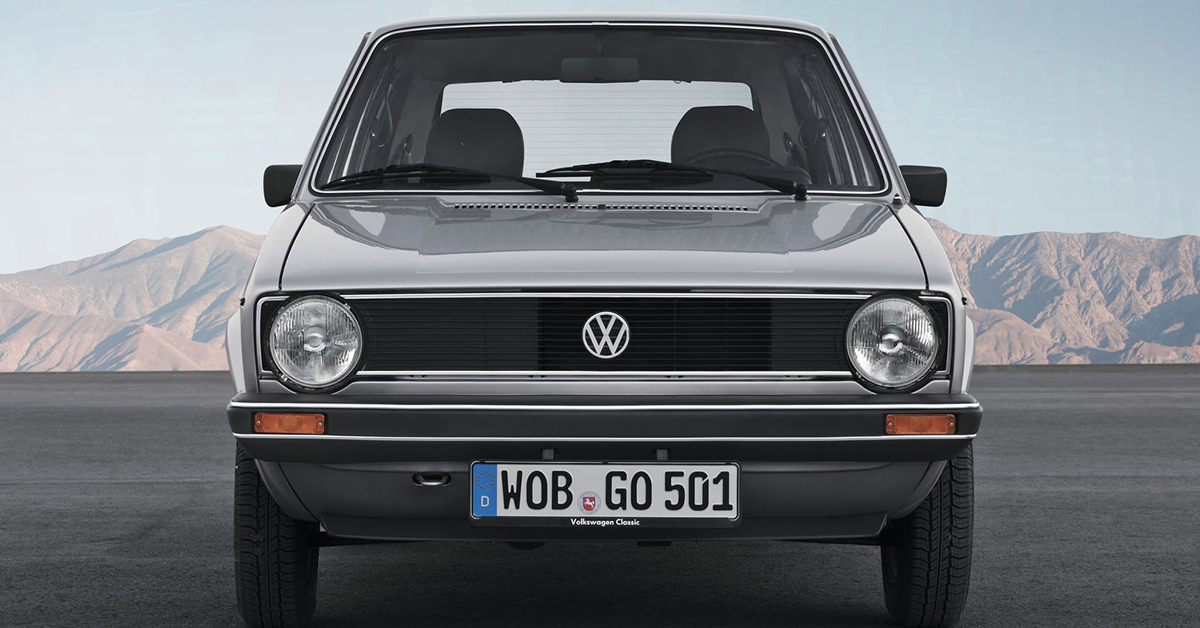
Official press image of the Volkswagen Golf I (first generation). | © Volkswagen AG
The Volkswagen Golf is the car that took over from the Beetle, and Volkswagen calls it Europe’s most successful car. Series production began on 29 March 1974 at the Wolfsburg plant, and the first cars reached showrooms in July 1974. Volkswagen has now built more than 37 million Golfs across eight generations, with about 20 million made in Wolfsburg and about 17 million at other sites, including plants in Germany, Belgium, Brazil, China, Malaysia, Mexico, Slovakia and South Africa. That puts the Golf far ahead of any other model in the company’s history, and it passed the Beetle’s total of more than 21.5 million long ago.
| Production start | 29 March 1974, Wolfsburg |
| First showroom cars | July 1974 |
| Designer | Giorgetto Giugiaro (Italdesign) with Volkswagen Design |
| Layout | Front engine, front-wheel drive, hatchback |
| Total built | More than 37 million, eight generations |
| Built in Wolfsburg | About 20 million |
| Built elsewhere | About 17 million, in eight countries |
| One millionth Golf | October 1976 |
| 10 millionth Golf | June 1988 |
| 15 millionth Golf | May 1994 |
| Predecessor | Beetle, more than 21.5 million built |
The Golf was designed by Giorgetto Giugiaro of Italdesign together with Volkswagen Design, and its layout broke with everything the Beetle stood for. Instead of an air-cooled engine at the rear, it had a water-cooled engine mounted across the front, driving the front wheels. It also had a big tailgate and a folding rear seat, which made it far more practical than a saloon of the same size. The straight-edged body was a clean break from the rounded shapes of the 1960s. At launch the Golf cost 600 German marks more than the Beetle 1303, which was a bold price for a car that was meant to replace it.
Early sales confirmed the bet. The first million Golfs had been built by October 1976, and the 10-millionth followed in June 1988 and the 15-millionth in May 1994. The first Golf was offered with a 1.1-litre engine of 37 kW (50 PS) and a 1.5-litre of 51 kW (70 PS), and over the next few years Volkswagen added a 1.6-litre petrol, the Golf D diesel in 1976 and the GTI the same year. In total about 6.9 million first-generation cars were sold by 1983, of which around one million were diesels. The car sold so well across Europe that, by the time the second generation arrived, the Golf was already the benchmark compact car for its rivals.
The Golf has never changed its basic recipe. Each generation has been a front-wheel-drive five-seat hatchback with a transverse engine, a practical interior and a price that sits just above the cheapest cars in the class. What changes is the technology. The Golf was the model that introduced mainstream buyers to the regulated catalytic converter, ABS, front airbags, the DSG gearbox and, later, mild and plug-in hybrid drives. Volkswagen also stresses that it has never officially numbered the generations, and the “Mk” labels used by enthusiasts and in this guide are a convenience rather than an official naming system.
A few counting notes are worth knowing. Volkswagen’s documents give slightly different totals for the early generations, depending on whether derivatives such as the Cabriolet, the Variant and the Jetta saloon are included, so this guide quotes the figures from the company’s 50th-anniversary release and describes them as approximate. The 2012 press kit, for example, put the total at 29.13 million units sold up to 31 July 2012, while the 2024 release counts more than 37 million built. The sections below cover each generation, the GTI, the R, the electric and hybrid versions and the models that have been dropped.
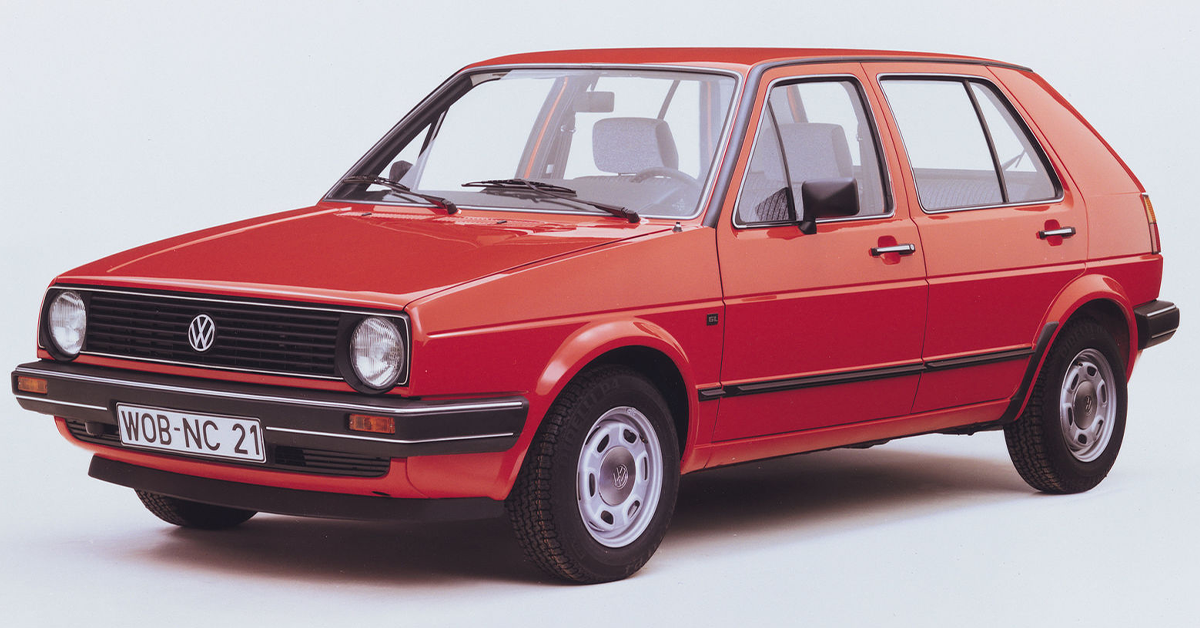
Official press image of the Volkswagen Golf II (1983). | © Volkswagen AG
The first four Golf generations built the car’s reputation. The Golf I ran from 1974 to 1983 and carries the factory code Type 17. At launch it offered 37 kW (50 PS) and 51 kW (70 PS) petrol engines, and later changes included a 1.6-litre engine in 1975, the Golf D diesel in 1976, a 1.3-litre in 1979 and a 1.6-litre turbo diesel in the Golf GTD of 1982. Trim levels in 1976 were Basic, L and GL, with the L the most popular, and from 1981 the base model became the C. South Africa kept building the Golf I as the Citi Golf until November 2009, long after the rest of the world had moved on.
| Golf I | 1974 to 1983, Type 17, about 6.9 million (including derivatives) |
| Golf II | 1983 to 1991, about 6.3 million, Syncro AWD (1986), ABS (1986) |
| Golf III | 1991 to 1997, about 4.8 million, VR6, TDI (1993), Variant (1993) |
| Golf IV | 1997 to 2003, about 4.9 million, 4MOTION (1998), R32 (2002) |
| Golf I launch engines | 1.1-litre 37 kW (50 PS), 1.5-litre 51 kW (70 PS) |
| Golf I GTD (1982) | 1.6-litre turbo diesel, 70 PS |
| First airbags | Front airbags in 1992, side airbags in 1996 |
| First DSG | Golf R32, 2003 |
| Citi Golf | South Africa until November 2009 |
Small details show how the first Golf matured. Plastic-coated, impact-resistant bumpers arrived in 1978, a five-speed “4+E” gearbox became optional on the more powerful models in 1980, and the diesel grew to 1.6 litres and 54 PS the same year. In 1982 the service interval was extended to 15,000 km and plastic wheel-arch liners were added to the front wings. The Golf I was also sold as a three-door and a four-door, and the four-door was available from the start.
The Golf II arrived in 1983 and ran until 1991, with about 6.3 million built. Its design was an evolution of the original, and the big changes were under the skin. It introduced a regulated catalytic converter in 1984, ABS in 1986 and the Syncro all-wheel-drive system, which was the first all-wheel drive offered on a Golf. Power steering was added, and Volkswagen showed electric and hybrid prototypes as early as 1989. The 10-millionth Golf was built in June 1988, which shows how quickly this generation was selling. The second generation also saw the GTI grow into a car for the mass market.
The Golf III ran from August 1991 to 1997 and about 4.8 million were built. It brought a wave of safety and engine firsts. Front airbags arrived in 1992, side airbags in 1996, and ABS became standard in September 1996. The VR6, the first six-cylinder Golf, was launched in this generation, and 1993 saw the Cabriolet, the first Golf Variant (estate) and the first TDI diesel. The SDI naturally aspirated diesel followed in 1995, and the 15-millionth Golf was built in May 1994. This was the generation that took the Golf into the estate and diesel markets as well as the hatchback.
The Golf IV ran from 1997 to 2003 and about 4.9 million were built. It brought electronic stability control in 1998, with 4MOTION all-wheel drive using a Haldex clutch the same year. A six-speed gearbox followed in 1999, FSI petrol direct injection in 2002 and standard head airbags in 2002. The GTI got a 132 kW version in 2001, and the Golf R32 of 2002 reached a top speed of 250 km/h. In 2003 the R32 became the first Volkswagen to use the DSG dual-clutch gearbox, a technology that later spread across the whole range.
Across these four generations the Golf moved from a basic, light, cheap hatchback to a safe, comfortable and well-equipped car that cost more than its rivals and still sold in huge numbers. Each generation added equipment and safety technology, and that steady upgrading is how the Golf moved from a simple economy hatchback towards a small premium car.
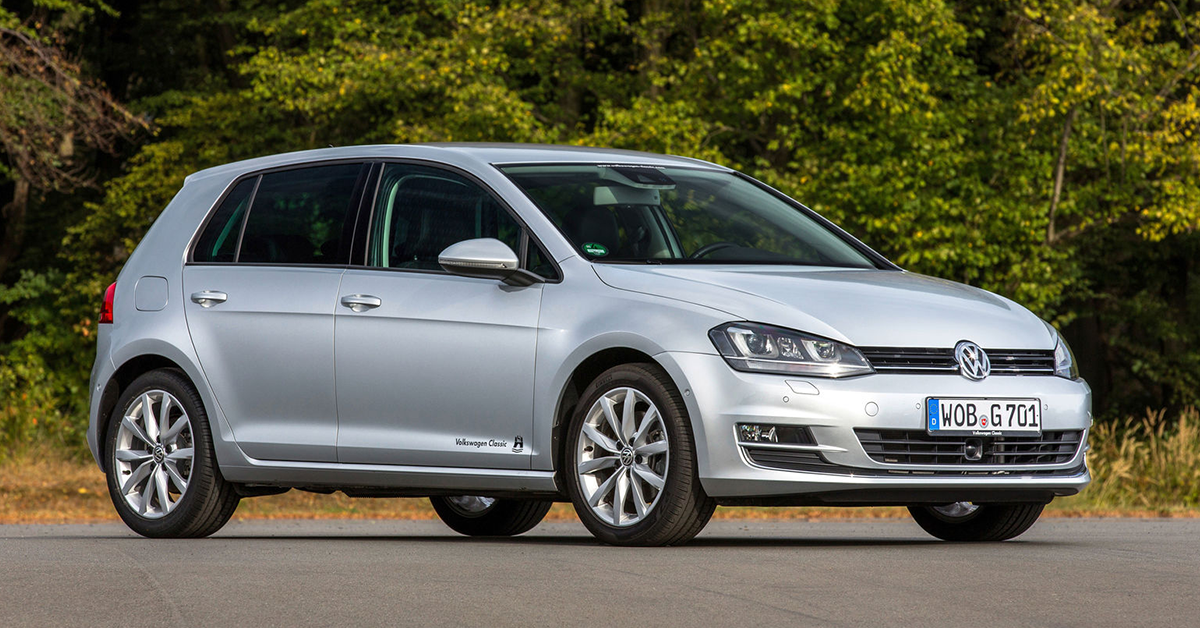
Official press image of the Volkswagen Golf VII (2012 to 2019). | © Volkswagen AG
The Golf V ran from 2003 to 2008 and about 3.4 million were built. Volkswagen raised its torsional rigidity by 35 percent, fitted a four-link rear suspension and offered up to eight airbags and the seven-speed DSG arrived in this generation. The GTI returned in 2004 with a turbocharged FSI engine, the Golf Plus followed in 2006 and the first twincharger TSI engine appeared the same year. The BlueMotion of 2007 used 4.5 litres per 100 km. The Golf V also introduced the Detroit wheel design to the GTI.
| Golf V | 2003 to 2008, about 3.4 million, 7-speed DSG, +35% rigidity |
| Golf VI | 2008 to 2012, about 3.6 million, 5 Euro NCAP stars, 2009 World Car of the Year |
| Golf VII | 2012 to 2019, about 6.3 million, MQB, up to 100 kg lighter |
| Golf VII premiere | Berlin, 4 September 2012 |
| Golf VIII premiere | 24 October 2019, Wolfsburg, on sale December |
| Golf VIII mild hybrids | 81 kW (110 PS), 96 kW (130 PS), 110 kW (150 PS) |
| Golf VIII plug-ins (2019) | 150 kW (204 PS) and 180 kW (245 PS) GTE, 13 kWh battery, about 60 km |
| Golf VIII 2024 update | Illuminated VW logo, new infotainment, plug-in range up to 143 km |
| Next generation | Expected around 2028 (reported) |
The Golf VI ran from 2008 to 2012 and about 3.6 million were built, according to Volkswagen’s anniversary release. It was an evolution of the Golf V, with a new look and many technical improvements. It won five Euro NCAP stars and was named World Car of the Year in 2009. New features included a driver’s knee airbag, dynamic chassis control, Light Assist, Park Assist, a hill-start assistant and stop-start. TDI engines moved to common-rail injection, and a second BlueMotion version reached 3.8 litres per 100 km with 99 g/km of CO2. The Golf VI Cabriolet returned in 2011 and ran until 2016.
The Golf VII was a bigger step. It premiered in Berlin on 4 September 2012, was built on the Modular Transverse Toolkit (MQB) platform, and was up to 100 kg lighter than the car it replaced, with fuel use down by up to 23 percent depending on the engine. The model line grew with the GTI, GTD and R in 2013, the e-Golf, GTE, Golf SV and R Variant in 2014, the GTI Clubsport in 2015 and the GTI Clubsport S in 2016. About 6.3 million were built, and its combustion-engine production ended at Zwickau in December 2019. The Golf VII Variant continued until 2020.
The Golf VIII premiered on 24 October 2019 in Wolfsburg and reached the market in December. It was the most digital Golf yet, with nearly all displays and controls digitised, an optional head-up display and standard Car2X, which warns of hazards up to 800 metres away. The engine range included 48-volt eTSI mild hybrids with 81 kW (110 PS), 96 kW (130 PS) and 110 kW (150 PS), plug-in hybrids with 150 kW (204 PS) and 180 kW (245 PS), TSI petrol engines of 66 kW (90 PS) and 81 kW (110 PS), TDI diesels of 85 kW (115 PS) and 110 kW (150 PS), and a TGI natural gas version of 96 kW (130 PS). It is built in Wolfsburg.
In 2024 Volkswagen gave the Golf VIII a mid-life update to mark its 50th anniversary. It brought a fresh design, new assist systems, new drive systems, a new infotainment system developed from scratch and, for the first time on a Golf, an illuminated Volkswagen logo. The plug-in hybrids gained an electric range of up to 143 km, and the Golf Edition 50 used a 1.5 TSI with 110 kW (150 PS). More than a million Golf VIII cars had been sold by early 2024. Volkswagen has also announced a Golf Hybrid for 2026, covered in a later section, and the next generation is expected around 2028.

Official press image of the Volkswagen Golf GTI. | © Volkswagen AG
The Golf GTI is the car that created the hot hatch, and it has been part of the range since 1976. The first GTI was unveiled at the IAA in Frankfurt in 1975 and went on sale in 1976 with a 1.6-litre fuel-injected engine taken from Audi, rated at 81 kW (110 PS). The car weighed a base 810 kg, and the HR tyre rating meant it was guaranteed to go over 180 km/h. About 462,000 of the first-generation GTI were built between 1976 and 1983, and a 1.8-litre engine rated at 112 PS replaced the 1.6 in 1982. The red line around the grille, a feature of the first GTI, is still part of the car’s look today.
| First GTI (1976) | 1.6-litre, 81 kW (110 PS), base weight 810 kg |
| 1982 update | 1.8-litre, 112 PS |
| First-generation GTI built | About 462,000 (1976 to 1983) |
| Golf VIII GTI (2020) | 180 kW (245 PS) |
| Golf GTI (2024) | 195 kW (265 PS), 370 Nm, 0 to 100 km/h in 5.9 s, 250 km/h |
| GTI Clubsport | 221 kW (300 PS), 400 Nm, 5.6 s, from 48,075 euros (Germany) |
| GTI Clubsport 24h | 256 kW (348 PS), race car, not for sale |
| GTI Edition 50 | 239 kW (325 PS), 270 km/h |
| GTI sold in total | Well over 2.3 million |
| US 2026 GTI (listing) | 241 hp, from about $34,590 |
Every generation since has had a GTI. Volkswagen’s archive lists them as the Golf I GTI (1976 to 1983), Golf II GTI (1984 to 1991), Golf III GTI (1991 to 1997), Golf IV GTI (1998 to 2003), Golf V GTI (2004 to 2008), Golf VI GTI (2009 to 2012) and Golf VII GTI (2013 to 2019). The Golf IV GTI of 2001 had a 132 kW version, and the turbocharged FSI engine of 2004 made the Golf V GTI a much more serious car. The Detroit wheel design was introduced on the Golf V GTI, and a 1980 motorsport Golf GTI with 184 PS shows that the car had a racing career almost from the start.
The Golf VIII GTI first appeared in 2020 with 180 kW (245 PS). In 2024 Volkswagen raised the output to 195 kW (265 PS) and 370 Nm from the 1,984 cc EA888 evo4 turbocharged engine, paired with the seven-speed DSG. The car reaches 100 km/h in 5.9 seconds, and its top speed is electronically limited to 250 km/h. Combined fuel consumption is 7.3 to 7.1 litres per 100 km, with CO2 emissions of 167 to 162 g/km. Volkswagen says the GTI has sold well over 2.3 million units in total, which is a large figure for a performance car.
The GTI Clubsport sits above it. It has 221 kW (300 PS) and 400 Nm, reaches 100 km/h in 5.6 seconds, and is limited to 250 km/h, or 267 km/h with the optional Race package. In Germany it was priced from 48,075 euros, with pre-sales beginning on 4 July 2024. A 24-hour race version, which is not for sale, has 256 kW (348 PS). The Clubsport’s world premiere took place at the Nürburgring.
The most powerful GTI so far is the Golf GTI Edition 50, with 239 kW (325 PS) and a top speed of 270 km/h, and Volkswagen calls it the most powerful series-production GTI to date. Its combined fuel use is 7.9 to 7.6 litres per 100 km. In the United States, third-party listings put the 2026 Golf GTI at 241 horsepower from about $34,590. Whatever the market, the GTI formula remains the same as in 1976 — a practical hatchback with a quick front-wheel-drive chassis and a red grille line.
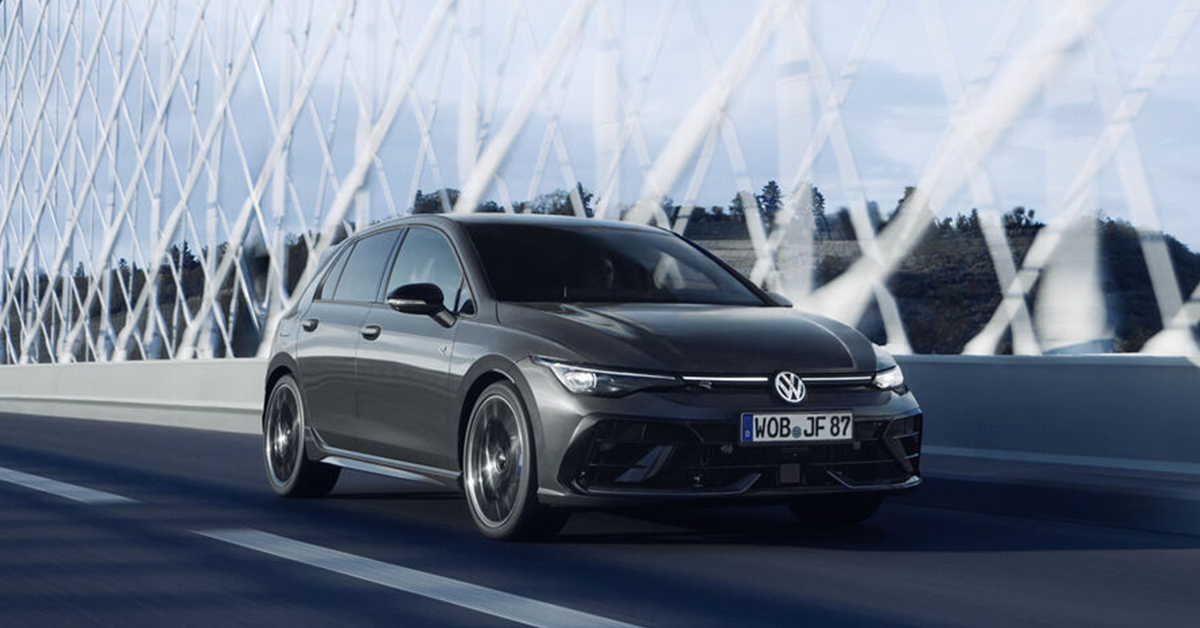
Official press image of the Volkswagen Golf R in Dolphin Grey Metallic. | © Volkswagen AG
Above the GTI sits the Golf R, the fastest regular Golf. The line began with the Golf IV R32 of 2002, which had a top speed of 250 km/h, and which was the first Volkswagen to get the DSG gearbox in 2003. The R name was then used on the Golf VII, launched in 2013 and shown at the IAA in Frankfurt, and its output was raised to 310 PS in the 2017 update. The R uses 4MOTION all-wheel drive, which gives it far more traction than a front-wheel-drive GTI and makes it quick in all weather.
| Golf IV R32 (2002) | Six-cylinder, 250 km/h, first DSG in 2003 |
| Golf VII R (2013) | Shown at the Frankfurt IAA, 4MOTION, 310 PS from the 2017 update |
| Golf R (2024) | 245 kW (333 PS), 0 to 100 km/h in 4.6 s |
| Golf R Variant | 245 kW (333 PS), 4.8 s, 1,642 litres luggage |
| Top speed | 250 km/h, or 270 km/h with R-Performance package |
| Consumption (combined) | 8.5 to 8.1 l/100 km |
| Germany prices | R from 53,795 euros, R Variant 55,065 euros, R Black Edition 58,440 euros |
| GTI TCR (2019) | 213 kW (290 PS) per Volkswagen listing |
| US 2026 Golf R (listing) | 328 hp, from about $49,455 |
Volkswagen rolled out the 2024 performance range in stages. European pre-sales of the updated GTI began on 14 May 2024, the GTI Clubsport had its world premiere at the Nürburgring on 1 June, and pre-sales of the Clubsport and the R opened in July. The Edelweiss-Bergpreis hill climb followed on 28 and 29 September 2024. The sequence shows how seriously Volkswagen treats the GTI and R, which are the cars that most buyers think of first when they hear the name Golf.
The current Golf R, introduced with the 2024 update, has 245 kW (333 PS), which is 10 kW (14 PS) more than its predecessor. It reaches 100 km/h in 4.6 seconds, and the Golf R Variant, the estate version, does it in 4.8 seconds with a luggage capacity of 1,642 litres. The top speed is 250 km/h, or 270 km/h with the optional R-Performance package. Combined fuel consumption is 8.5 to 8.1 litres per 100 km, with CO2 emissions of about 193 to 184 g/km. In Germany Volkswagen priced the R from 53,795 euros, the R Variant from 55,065 euros and the R Black Edition from 58,440 euros.
Volkswagen has also built limited and special performance Golfs. The GTI Clubsport and Clubsport S of the Golf VII were produced in 2015 and 2016, and the GTI TCR of 2019 was a road car inspired by the TCR touring-car series. Volkswagen’s own listing gives that car 213 kW (290 PS), although its press page also mentions a 257 kW (350 PS) figure that refers to the race car and not the road car. During the Golf VIII era the company also built a Golf R 333 Limited Edition with 333 PS and a run of 333 vehicles, as well as the Golf GTD with 147 kW (200 PS) and a seven-speed DSG in 2020.
The performance versions share an engine family. Both the GTI and the R use the EA888 evo4 2.0-litre turbo petrol, with the R tuned for 245 kW and all-wheel drive. The result is a family hatchback that can accelerate to 100 km/h in under five seconds. The cars are also quite similar in everyday use, with the R’s main differences being its extra grip, its sharper noise and the higher price.
In the United States the Golf line has been simplified to the performance cars. Third-party listings give the 2026 Golf R 328 horsepower from about $49,455. That makes the R roughly $15,000 more than the GTI, which is the same kind of gap seen in Europe. For a buyer deciding between them, the question is usually all-wheel drive. The GTI is lighter and cheaper and its front-wheel-drive chassis is great fun on a back road, while the R is the better choice in wet or snowy conditions and is noticeably quicker from a standstill.
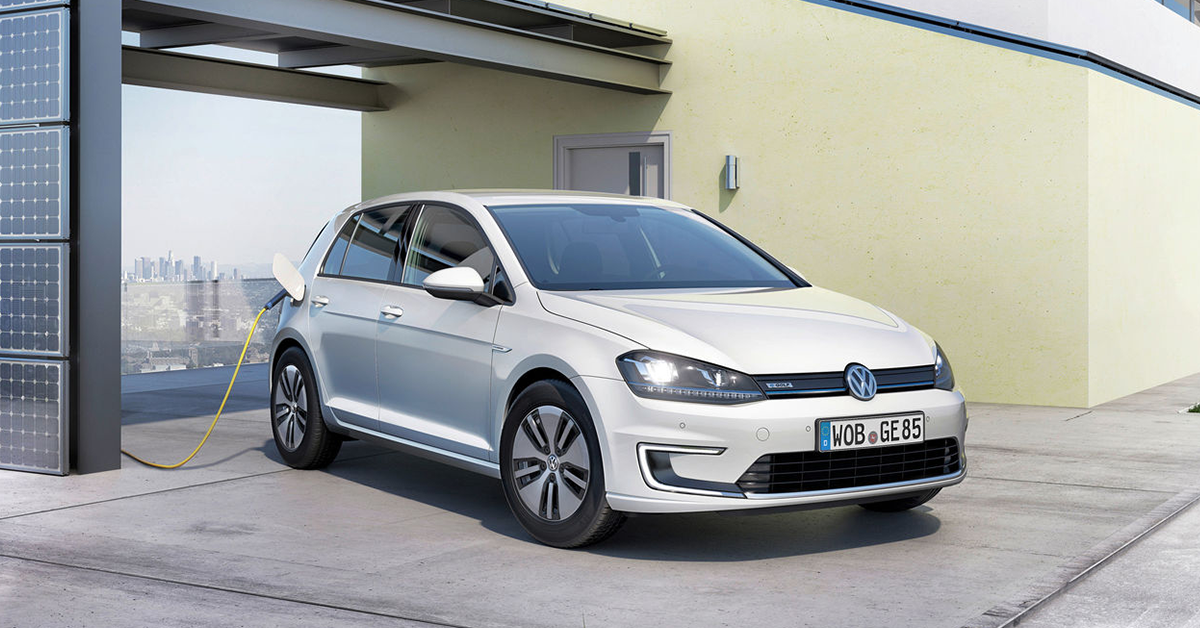
Official press image of the Volkswagen e-Golf. | © Volkswagen AG
Volkswagen has been experimenting with electric Golfs for decades. It showed electric and hybrid Golf prototypes as early as 1989, but the first series-production electric Golf was the e-Golf, presented in Berlin in March 2014 with a market launch in Europe that summer. It was a Golf VII with an 85 kW (115 PS) permanent-magnet motor, 270 Nm of torque and a 24.2 kWh lithium-ion battery of 264 cells in 27 modules. Volkswagen quoted an NEDC range of up to 190 km, with a practical range of 130 to 190 km and combined consumption of 12.7 kWh per 100 km.
| e-Golf (2014) | 85 kW (115 PS), 270 Nm, 24.2 kWh, up to 190 km NEDC |
| e-Golf performance | 0 to 100 km/h in 10.4 s, 140 km/h limited |
| e-Golf charging | 2.3 kW AC about 13 h, 3.6 kW about 8 h, 40 kW DC 80% in about 30 min |
| e-Golf later battery | Up to 31.5 kWh net |
| Last e-Golf | Completed 23 December 2020 |
| Golf GTE (2014) | Plug-in hybrid, about 50 km electric range |
| Golf VIII GTE (2019) | 180 kW (245 PS), 13 kWh, about 60 km |
| 2024 plug-in update | Electric range up to 143 km, DC fast charging |
| Golf Hybrid (2026) | 125 kW (170 PS) full hybrid, from 41,400 euros (R-Line, Germany) |
The e-Golf was quick for its time but not fast. It reached 60 km/h in 4.2 seconds and 100 km/h in 10.4 seconds, and its top speed was electronically limited to 140 km/h. Charging took about 13 hours from a standard household socket at 2.3 kW, about 8 hours with an optional 3.6 kW wallbox, and 80 percent in about 30 minutes using an optional DC CCS connection at up to 40 kW. Later cars used a battery of up to 31.5 kWh net. Volkswagen built the e-Golf in Wolfsburg and Dresden, and the last one was completed on 23 December 2020.
Plug-in hybrids have been a longer-lasting part of the range. The Golf GTE arrived in 2014 with combined consumption of 1.5 litres per 100 km and an electric range of about 50 km. The Golf VIII GTE launched in 2019 with 180 kW (245 PS) and a 13 kWh battery for an electric range of about 60 km, alongside a 150 kW (204 PS) plug-in version. Volkswagen’s 2024 update then gave the plug-in hybrids a next-generation drive with DC fast charging and an electric range of up to 143 km, which is a large gain over the earlier cars.
Mild hybrids and gas-powered versions filled in the range. The Golf VIII launched with 48-volt eTSI mild hybrids of 81 kW (110 PS), 96 kW (130 PS) and 110 kW (150 PS), which Volkswagen said cut consumption by up to 10 percent under WLTP. The company also offered the Golf TGI natural-gas model with 96 kW (130 PS). At the Golf VIII’s premiere Volkswagen said five hybrid versions would be available from the start.
Efficient combustion Golfs have a history of their own. The Golf VII TDI BlueMotion used just 3.2 litres per 100 km combined (85 g/km of CO2 on the NEDC cycle), the 1.4 TSI with 103 kW (140 PS) and cylinder shut-off used 4.7 litres per 100 km (109 g/km), and Volkswagen said the average CO2 output across the engine range fell by 13.9 percent compared with the Golf VI. The 1.6 TDI BlueMotion used an average of 3.4 litres per 100 km and carried energy-efficiency class A+ as standard.
The newest step is the Golf Hybrid, a full hybrid announced for 2026 with 125 kW (170 PS) and no plug, so it needs no wallbox. In Germany the Golf Hybrid R-Line is priced from 41,400 euros, with combined consumption of 5.1 to 4.6 litres per 100 km and CO2 emissions of 117 to 105 g/km. The Golf Hybrid is aimed at buyers who want lower fuel bills without having to charge, and it is one of the first full hybrids in the Golf range. Reports say a pure-electric Golf is still some years away, and the last section covers what has been reported about the cars that will follow.

Official press image of the Volkswagen Golf I Cabriolet (1979). | © Volkswagen AG
Volkswagen has sold the Golf in many body styles. The Golf I, II and III were available as three-door and five-door hatchbacks, and the third generation introduced the first Golf Variant (estate) in 1993. Volkswagen’s archive lists the Golf III Variant as 1993 to 1999, the Golf IV Variant as 1999 to 2006, the Golf V Variant as 2007 to 2009, the Golf VI Variant as 2009 to 2013 and the Golf VII Variant as 2013 to 2020. The Variant is still on sale today in the eighth generation, including as the 333 PS Golf R Variant, which makes the Golf one of the few compact cars where the estate has always been a major part of the range.
| Golf Cabriolet (I) | 1979 to 1993 |
| Golf Cabriolet (III and IV) | 1993 to 2002 |
| Golf Cabriolet (VI) | 2011 to 2016 |
| Golf Variant (III) | 1993 to 1999 |
| Golf Variant (IV) | 1999 to 2006 |
| Golf Variant (V and VI) | 2007 to 2009 and 2009 to 2013 |
| Golf Variant (VII) | 2013 to 2020 |
| Golf Plus | Introduced 2006 |
| Golf SV (Sportsvan) | Introduced 2014 |
| Last e-Golf | 23 December 2020 |
| Citi Golf | South Africa until November 2009 |
The Golf Cabriolet is the most famous discontinued variant. The first one arrived in 1979, and Volkswagen’s archive lists it as running from 1979 to 1993. The Golf III and IV Cabriolet followed from 1993 to 2002, and the Golf VI Cabriolet returned in 2011 and ended in 2016. Volkswagen has said that the Golf was for a time the best-selling convertible in the world after the Cabriolet’s launch. It replaced the Beetle Cabriolet, the last of which was built by Karmann in Osnabrück in 1980, and the Beetle guide covers that car in detail.
Several compact people-carrier versions have also come and gone. The Golf Plus, based on the fifth generation, was introduced in 2006 and was a taller, more spacious version of the hatchback. The Golf SV, called the Sportsvan, arrived in 2014 on the Golf VII platform. Both were sold alongside the standard car. The Golf has also been sold in the CrossGolf form and as the Golf BlueMotion, a version with a low-consumption tune.
The Golf I had its own special models. The Golf SC arrived in 1980, and in 1981 Volkswagen offered a Formula E economy version of the 1.1 and the diesel, with the aim of cutting fuel use. The Golf VII added the Golf 4MOTION in 2013, the R Variant in 2014 and the GTD Variant in 2015, and a 2017 update brought the 1.5 TSI ACT engine with cylinder cut-off, along with an update for the Sportsvan. These cars show how many different versions the Golf has had, and why the family is one of the broadest in the industry.
Engines and drivetrains have been discontinued too. The Golf I GTD of 1982 was a turbocharged diesel Golf, and the VR6 of the third generation was the first six-cylinder Golf. The Golf II Syncro of 1986 was the first all-wheel-drive Golf, and the e-Golf ended in December 2020. The Citi Golf finished in South Africa in November 2009. The Golf VII with combustion engines left production at Zwickau in December 2019.
Special editions have always been a part of Golf history. The Golf VII had the Allstar in 2015, the Sound in 2016 and the IQ.Drive in 2019, and the 2024 anniversary was marked with the Edition 50 and the GTI Edition 50. The GTI Edition 50 is the most powerful series GTI at 239 kW (325 PS).

Official press image of the Volkswagen Golf (near-production vehicle). | © Volkswagen AG
The current Golf is the eighth generation, refreshed in 2024 and still built in Wolfsburg. The range covers a Golf hatchback and Variant with petrol and diesel engines, plug-in hybrids, the new full-hybrid Golf Hybrid for 2026, the GTI with 195 kW (265 PS), the GTI Clubsport with 221 kW (300 PS), the GTI Edition 50 with 239 kW (325 PS) and the Golf R and R Variant with 245 kW (333 PS). Volkswagen’s trims include R-Line on the hybrid, and the 2024 Edition 50 used a 1.5 TSI with 110 kW (150 PS), 5.6 litres per 100 km combined and 128 g/km of CO2 under WLTP.
| Generation on sale | Golf VIII, refreshed in 2024, built in Wolfsburg |
| Golf Hybrid (2026) | 125 kW (170 PS) full hybrid, from 41,400 euros (R-Line, Germany) |
| Golf GTI | 195 kW (265 PS) |
| Golf GTI Clubsport | 221 kW (300 PS) |
| Golf GTI Edition 50 | 239 kW (325 PS) |
| Golf R and R Variant | 245 kW (333 PS) |
| Golf Edition 50 | 1.5 TSI 110 kW (150 PS), 5.6 l/100 km, 128 g/km CO2 |
| US 2026 (listings) | GTI 241 hp from about $34,590, R 328 hp from about $49,455 |
| Golf 9 | Expected around 2028 (reported), Wolfsburg to keep building the Golf |
Not every market gets the same Golf. In Europe the full range is available, and the Golf Hybrid R-Line starts at 41,400 euros in Germany. In the United States, third-party listings show the line narrowed to the GTI and R, with putting the 2026 GTI at 241 horsepower from about $34,590 and the 2026 R at 328 horsepower from about $49,455. Prices and specifications differ between countries, so always check Volkswagen’s local website before buying, and treat the figures above as a guide to the relative positions of the cars in each lineup rather than as a final quote.
The question most enthusiasts ask is what comes next. Volkswagen has confirmed that the Wolfsburg plant will keep building the Golf, and reports say the ninth generation is expected to debut in 2028. The first teaser image was reported to have been shown to employees in early 2026. Several reports say Volkswagen plans both a combustion version, described as a heavily updated Golf VIII with hybrid options, and a fully electric Golf that may be called the ID. Golf and use Volkswagen’s new SSP platform. Volkswagen has not confirmed those details, and earlier reports of an electric-only Golf 9 have since changed.
One thing Volkswagen’s design chief has reportedly said is that the new car will bring back physical buttons and knobs in a move away from the touch controls of the Golf VIII. This is reported rather than confirmed, so treat it as a sign of direction and not a specification. What is certain is that the Golf has survived every shift in the car market since 1974, from the oil crisis and diesel rules to SUV fashion and electrification, and Volkswagen has said it will keep the name and the Wolfsburg production base.
For a buyer today the choice is simple. If you want a Golf and you do not want to wait, the Golf VIII is a mature and well-sorted car, and the 2024 update added a new infotainment system. If you want a classic, the first-generation GTI of 1976 is the car that started it all. If you want the cheapest way into a Golf, look at used Golf VII and Golf VIII cars. The Volkswagen models guide covers the rest of the range, and the Beetle guide covers the car that the Golf replaced.
