 Brands
Volkswagen Polo — 20 Million Cars and an Electric Reboot

Official press image of the Volkswagen Polo, six generations and more than 20 million built. | © Volkswagen AG
The Volkswagen Polo has been built since 1975, with more than 20 million made across six generations. Here is the full Polo story, with history, specs, the GTI, the rally cars, discontinued versions, the current range and the new electric ID. Polo.

Official press image of the Volkswagen Polo I (first generation). | © Volkswagen AG
The Volkswagen Polo is the small car that sits one class below the Golf, and it has been on sale since 1975. Volkswagen presented it in Geneva in March 1975 under the slogan “Small on the outside. Big on the inside”, and the market launch followed in early May 1975. Series production began in Wolfsburg on 5 March 1975. The first Polo was technically based on the Audi 50, which had gone on sale in October 1974, and it arrived after the Passat of 1973 and the Golf of 1974 to complete the new front-wheel-drive family that replaced the Beetle. Across six combustion generations Volkswagen has built more than 20 million Polos.
| Presented | Geneva, March 1975 |
| Series production start | 5 March 1975, Wolfsburg |
| Market launch | Early May 1975 |
| Technical basis | Audi 50 (on sale since October 1974) |
| Slogan | Small on the outside. Big on the inside. |
| Polo I size | 3,500 mm long, 1,559 mm wide, 685 kg |
| Polo I engine | 0.9-litre, 29 kW (40 PS), 132 km/h, 0 to 100 km/h in 21.2 s |
| Polo I price | Polo N from 7,500 German marks |
| Polo I built | More than 1.1 million (1975 to 1981) |
| Total built | More than 20 million across six generations |
| Awards | Car of the Year 2010, World Car of the Year 2010, World Urban Car 2018 |
The first Polo was small even by the standards of its day. It was 3,500 mm long and 1,559 mm wide, weighed 685 kg and carried a 0.9-litre engine rated at 29 kW (40 PS). That was enough for a top speed of 132 km/h and 0 to 100 km/h in 21.2 seconds, which sounds slow now but was normal for the class. The basic Polo N started at 7,500 German marks, and the better-equipped Polo L cost 510 marks more. The Polo seated four, and its short length and light weight were exactly what buyers wanted in the years after the oil crisis. The first generation sold more than 1.1 million cars between 1975 and 1981.
The Polo has never tried to be a different kind of car from its larger sibling. It has always been a front-wheel-drive hatchback with a transverse engine, a practical interior and, over time, more of the equipment that used to belong to bigger cars. Airbags, belt tensioners and ABS arrived with the third generation in the 1990s, and the sixth generation brought assistance systems from higher classes to the small car when it moved to the MQB platform in 2017. The Golf guide covers the larger car in detail, and the Polo follows the same pattern of steady growth from one generation to the next.
Production has spread around the world. The Polo started in Wolfsburg, and over the years it has been built in Spain, Argentina, South Africa, Slovakia, China, Brazil and India, among other countries. The Pamplona plant in Spain took over as the lead factory from 1992 and had built more than 8.4 million Polos by 2024. South Africa’s Kariega plant, became the world main site for the model in summer 2024. The Polo has also won major awards, including Car of the Year 2010, World Car of the Year 2010 and World Urban Car 2018.
The story is now entering a new chapter. In 2025 Volkswagen marked 50 years of the Polo with an Edition 50 special model, and in April 2026 it announced the all-electric ID. Polo as the seventh generation of the nameplate. The combustion Polo continues alongside it for now, and the sections below cover each generation, the GTI, the rally cars, the variants that have come and gone, the current range and the ID. Polo itself. The table gives the key dates for the early years of the car.

Official press image of the Volkswagen Polo II (1981). | © Volkswagen AG
The Polo I ran from 1975 to 1981, with the original version built until 1978 and an updated version until 1981. Engines grew in 1976 with 37 kW (50 PS) and 44 kW (60 PS) options, and in 1979 the Polo GT arrived with a 1.3-litre engine of 44 kW (60 PS). The Derby, a notchback saloon launched in 1977, was the first Polo derivative. It was 30 cm longer than the hatchback and had a 515-litre boot, and it was later renamed the Polo notchback in 1985 and the Polo Classic from 1995 to 1997. Volkswagen built 1.1 million first-generation Polos in Wolfsburg alone by 1981.
| Polo I | 1975 to 1981, over 1.1 million, Derby notchback from 1977 |
| Polo II | 1981 to 1994, about 2.7 million, 3.66 m long, facelift 1990 |
| Polo Coupé GT | 55 kW (75 PS), 170 km/h |
| Polo Coupé G40 (1987) | 85 kW (115 PS), 195 km/h, supercharged |
| G40 built | 500 first units, 2,000 by 1989 |
| Record run (1985) | 208.13 km/h average, 1,300 cc class |
| Polo III | 1994 to 2001, about 3.5 million, first five-door |
| Polo III GTI (1998) | 1.6-litre, about 120 to 125 PS, 0 to 100 km/h in 9.1 s, 3,000 built |
| Polo III Variant (1997) | Boot 390 to 1,250 litres |
| Harlequin | Introduced 1995 |
The Polo II arrived in September 1981 and stayed in production for 13 years, through a facelift in 1990, with about 2.7 million sold. It grew to 3.66 metres long, with a base weight of 770 kg, and it was launched as a squareback two-door small estate with a fastback Coupé added a year later. The Coupé GT had 55 kW (75 PS) and a top speed of 170 km/h. In 1987 Volkswagen introduced the limited-edition Coupé G40, the first Polo with a scroll-type supercharger, rated at 85 kW (115 PS) and 195 km/h. The smallest diesel, rated at 33 kW (45 PS), debuted the same year.
The G40 was more than a fast Polo, because it became a small cult car. The first 500 units were built in 1987 and 2,000 had been made by 1989, and in 1991 the G40 gained a catalytic converter and was rated at 83 kW (113 PS). In 1985 a Polo set a record run at an average of 208.13 km/h in the 1,300 cc class. Production moved around too. Wolfsburg built the Polo II until 1992, the SEAT plant in Pamplona began building it in March 1984.
The Polo III ran from 1994 to 2001 and about 3.5 million were built. It had a new body, chassis and engines, and it was the first Polo with five doors. It measured 3,715 mm long and weighed 915 kg. Airbags, belt tensioners and ABS were introduced in this generation. The Harlequin, a modular multicolour design with panels in different colours, appeared in 1995, and an estate called the Polo Variant followed in 1997, with boot space that grew from 390 to 1,250 litres with the seats folded.
The Polo III also gave the car its first GTI. The 1998 Polo GTI used a 1.6-litre engine rated at about 88 to 92 kW (120 to 125 PS) depending on the Volkswagen source, reached 100 km/h in 9.1 seconds and was limited to 3,000 units. The generation also added the Polo Classic saloon and the Variant estate, and Bratislava in Slovakia began building the Polo on 1 July 1999.
Put together, the first three generations built roughly 7.3 million Polos between 1975 and 2001, from about 1.1 million Polo I cars and about 2.7 million Polo II cars to about 3.5 million Polo III cars. Each generation was longer and heavier than the one before, from 3,500 mm and 685 kg for the Polo I to 3,715 mm and 915 kg for the Polo III, and each added safety and comfort equipment that had once been reserved for larger cars. The Polo II’s facelift of 1990 kept the car competitive for a full 13 years, while the Polo III was the car that made the Polo a true five-door family hatchback.
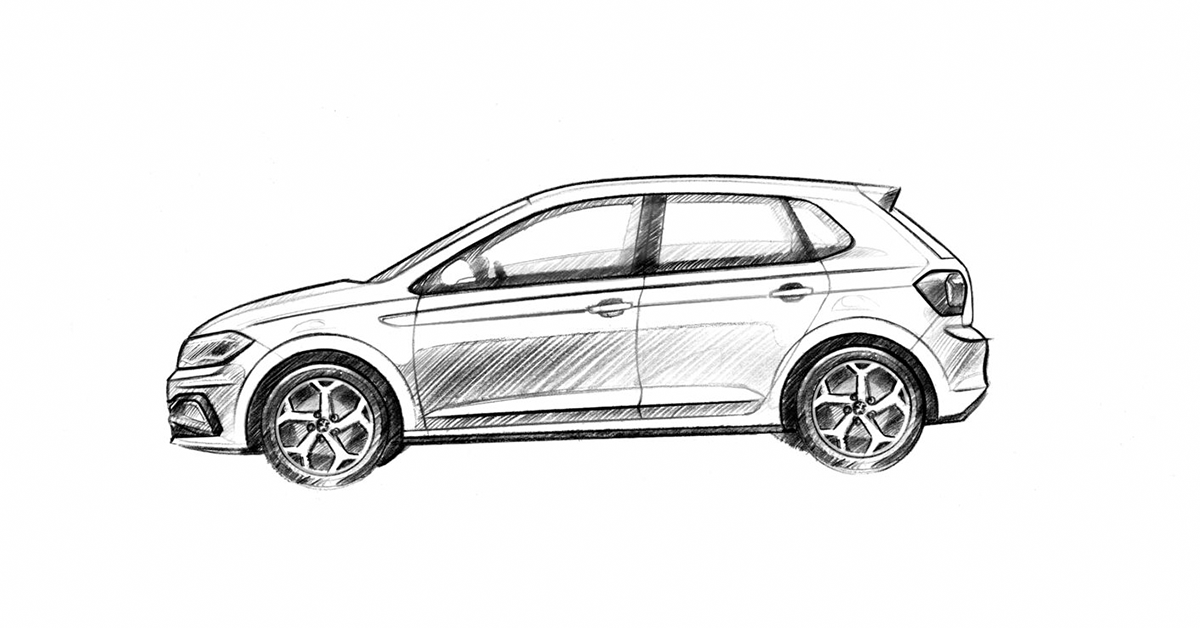
Official press image of the Volkswagen Polo VI. | © Volkswagen AG
The Polo IV ran from 2001 to 2009 and about 4.1 million were built. It was unveiled at the IAA in Frankfurt at the end of 2001 as the 9N, and Volkswagen added a 9N2 saloon in 2003, built by Volkswagen do Brasil and imported to Europe. The big update, the 9N3, went on advance sale in March 2005. The car was 15 cm longer than the Polo III and had 1,030 litres of luggage space with the rear seats folded. After the 2005 update the engine range covered 44 kW (60 PS) to 132 kW (180 PS).
| Polo IV | 2001 to 2009, about 4.1 million, 9N, 9N2 saloon (2003), 9N3 (2005) |
| Polo V | 2009 to 2017, about 6.3 million, 6R, updated 2014 as 6C |
| Polo VI | 2017 to date, about 2.5 million to October 2024, MQB platform |
| Polo VI (2021) engines | 1.0 MPI 80 PS, 1.0 TSI 95 PS and 110 PS, 1.0 TGI 90 PS |
| Polo VI size (2026) | 4,074 mm long, 1,751 mm wide, 2,552 mm wheelbase |
| Polo VI boot | 351 litres, 1,125 litres seats folded |
| Travel Assist | Partly automated driving up to 210 km/h (optional) |
| Edition 50 (2025) | Anniversary special model |
| Built at | Pamplona (Spain) and Kariega (South Africa) |
The Polo V ran from 2009 to 2017, sold about 6.3 million and carries the factory code 6R. It had its world premiere in March 2009 and was almost four metres long. Launch engines included a 1.2 MPI, a 1.4 MPI, a 1.2 TSI of 77 kW (105 PS) and a 1.6 TDI diesel in 75, 90 and 105 PS versions, with a DSG automatic as an alternative to the manual gearbox. The 2014 update, known as the 6C, brought Euro 6 engines and up to 21 percent lower consumption than the predecessor. Its range then included new 1.0 MPI and 1.0 TSI petrol engines, 1.2 TSI engines of 90 or 110 PS and a 1.4 TDI diesel.
The Polo VI arrived in 2017 as the first Polo on the MQB platform. It was 81 mm longer and had a wheelbase 92 mm longer than the Polo V, with a 351-litre boot, and it brought assistance systems from higher classes to the small-car class. About 2.5 million were built between 2017 and October 2024. In 2021 it received a revamp with an 8.0-inch Digital Cockpit as standard, matrix LED headlights and IQ.DRIVE Travel Assist, which allows partly automated driving up to 210 km/h. The 2021 engines were a 1.0 MPI of 59 kW (80 PS), a 1.0 TSI of 70 kW (95 PS), a 1.0 TSI of 81 kW (110 PS) and a 1.0 TGI natural-gas version of 66 kW (90 PS).
The current combustion Polo measures 4,074 mm long and 1,751 mm wide, with a wheelbase of 2,552 mm and a height of about 1,451 mm, according to Volkswagen’s April 2026 comparison with the ID. Polo. In 2025 Volkswagen marked 50 years with the Polo Edition 50. The Polo is built at Pamplona in Spain and Uitenhage, also called Kariega, in South Africa, though South Africa has been the world main site since summer 2024.
Taken together, the last three generations show how much the Polo has grown. The Polo V was almost four metres long, and the Polo VI and the ID. Polo are now just over 4.05 metres long, with the Polo IV’s 1,030-litre folded boot rising to 1,125 litres in the current car. A buyer who walked into a showroom in 1975 would barely recognise the modern car as the same model, yet it still occupies the same place in the Volkswagen range, one step below the Golf and one step above the Up!, which has itself been discontinued.

Official press image of the Volkswagen Polo GTI. | © Volkswagen AG
The Polo GTI is the small sibling of the Golf GTI, and it has been part of the range since 1998. The first GTI was a limited run of 3,000 cars based on the Polo III, with a 1.6-litre engine of about 120 to 125 PS and a 0 to 100 km/h time of 9.1 seconds. It was followed in 2006 by the Polo IV GTI, which used a 1.8-litre turbo petrol engine of 110 kW (150 PS) and weighed 1,200 kg. A GTI Cup Edition with 132 kW (180 PS) was launched at the same time and reached 100 km/h in 7.3 seconds with a top speed of 225 km/h.
| Polo III GTI (1998) | 1.6-litre, about 120 to 125 PS, 0 to 100 km/h in 9.1 s, 3,000 built |
| Polo IV GTI (2006) | 1.8 turbo, 110 kW (150 PS) |
| Polo IV GTI Cup Edition | 132 kW (180 PS), 7.3 s, 225 km/h |
| Polo V GTI (2010) | 132 kW (180 PS), 6.9 s |
| Polo V GTI (2014) | 141 kW (192 PS), 6.7 s, 236 km/h |
| Polo VI GTI (2017) | 147 kW (200 PS), 6.7 s, 237 km/h |
| Polo VI GTI (2021) | 152 kW (207 PS), 2.0 TSI |
| GTI Edition 25 (2023) | Limited to 2,500 units |
| ID. Polo GTI | 166 kW (226 PS), 290 Nm, 6.8 s, 175 km/h, 52 kWh, just under 39,000 euros, due 2027 |
The Polo V GTI arrived in 2010 with 132 kW (180 PS), and a 0 to 100 km/h time of 6.9 seconds. In 2014 Volkswagen replaced that engine with a 1.8 TSI of 141 kW (192 PS), which cut the sprint time to 6.7 seconds and raised the top speed to 236 km/h. A BlueGT version with a 1.4 TSI ACT engine of 140 PS, later raised to 110 kW (150 PS), offered cylinder deactivation for efficiency. These cars gave the Polo a reputation as a serious hot hatch and not just a small commuter car.
The Polo VI GTI launched in 2017 with a 2.0-litre turbo engine rated at 147 kW (200 PS). It reached 100 km/h in 6.7 seconds and had a top speed of 237 km/h. In 2021 Volkswagen raised the output to 152 kW (207 PS), and in 2023 it built a GTI Edition 25 limited to 2,500 units to mark the GTI’s 25th anniversary in the Polo range.
Across these generations the GTI has gained roughly 80 PS, and the 0 to 100 km/h time has fallen from 9.1 seconds in 1998 to 6.7 seconds in the 2017 car, while the Polo has stayed a compact car. It is smaller and lighter than the Golf GTI, which is much of its appeal, and each generation has had its own engine.
The Polo GTI is now moving to electric power. Volkswagen showed the all-new ID. Polo GTI as a near-production concept on Friday 15 May 2026 at the 24-hour race at the Nürburgring. It has a front-wheel-drive electric motor of 166 kW (226 PS) and 290 Nm, a 52 kWh net NMC battery, a 0 to 100 km/h time of 6.8 seconds, a top speed of 175 km/h and DC charging of up to 105 kW. Volkswagen said the price will be just under 39,000 euros in Germany, with pre-sales starting in autumn and the car due in 2027. The combustion GTI is still on sale in the meantime.
Volkswagen’s own sources do not always agree on the details of the early GTIs, and that is worth knowing before buying one. The 1998 Polo GTI is described by Volkswagen as 92 kW (125 PS) in one document and as 88 kW (about 120 PS) in another, and the 2006 GTI Cup Edition is given as 7.3 seconds from 0 to 100 km/h in one place and 7.5 seconds in another. This guide therefore describes those cars as “about” or “up to” and leaves the exact figure to the car’s own papers. The later GTIs, from the Polo V onward, are documented more consistently.

Official press image of the Volkswagen Polo R WRC rally car of the 2016 season. | © Volkswagen AG
Volkswagen has built several fast Polos beyond the GTI. The first was the Polo GT, launched in 1979 with a 1.3-litre engine of 44 kW (60 PS), a sporty version for the first generation. The Polo Coupé GT of the second generation had 55 kW (75 PS), and the Polo Coupé G40 of 1987 added a scroll-type supercharger for 85 kW (115 PS), a top speed of 195 km/h and a cult following that has never faded. In 1991 the G40 gained a catalytic converter and was rated at 83 kW (113 PS). Together these cars set the pattern for small, fast Volkswagens before the GTI existed.
| Polo GT (1979) | 1.3-litre, 44 kW (60 PS) |
| Polo Coupé GT | 55 kW (75 PS), 170 km/h |
| Polo Coupé G40 (1987) | 85 kW (115 PS), 195 km/h, supercharged |
| G40 with catalytic converter (1991) | 83 kW (113 PS) |
| Polo R WRC | Four World Rally Championship titles, 2013 to 2016 |
| Polo R WRC Street (2012) | 162 kW (220 PS), 2,500 built |
| Polo V BlueMotion (2009) | 1.2 TDI 75 PS, 3.3 l/100 km |
| Polo IV BlueMotion (2006) | 59 kW (80 PS), 3.8 l/100 km |
| Polo V BiFuel (2010) | 86 PS petrol, 82 PS LPG |
| CrossPolo (IV and V) | Rugged crossover versions |
The Polo R WRC is the most famous competition Polo. Volkswagen won the World Rally Championship in four consecutive seasons from 2013 to 2016 with the car, which gave the small hatchback an international profile it had never had before. To celebrate, Volkswagen built the Polo R WRC Street in 2012, a limited edition with 162 kW (220 PS) that was limited to 2,500 units and was the fastest series Polo of its time. The R WRC remained a sporting rather than a road car, but the Street version showed how closely the two were related.
Volkswagen also tuned the Polo for efficiency. The Polo V BlueMotion of December 2009 used a 1.2 TDI of 75 PS and claimed 3.3 litres of diesel per 100 km. The earlier Polo IV BlueMotion of 2006 used a three-cylinder pump-nozzle turbo diesel of 59 kW (80 PS) with a diesel particulate filter and a consumption figure of 3.8 litres per 100 km. The BiFuel version of 2010 ran on petrol or LPG and was rated at 86 PS on petrol and 82 PS on LPG.
There is also the family of rugged versions. The CrossPolo of the fourth generation was the successor to the Polo Fun, available only with five doors and with outputs of 47 to 77 kW (64 to 105 PS). It had 15 mm more ground clearance and 17-inch alloy wheels as standard. A second CrossPolo followed on the Polo V in 2010. These cars were never real off-roaders, but they let Volkswagen sell a small SUV-style car long before the T-Cross arrived, and they show how often the company has reinvented the Polo for new tastes.
The sporting Polos are collectable today. The G40 is the best-known, with only about 2,000 built in the first two years, and the Polo R WRC Street and GTI Edition 25 are limited by their production numbers. These cars are a reminder that the Polo has always been more than an economy hatchback, and the electric ID. Polo GTI is designed to carry that character forward.
The numbers show how far the small Polo went in competition and in tuning. A Polo set a record run at an average of 208.13 km/h in the 1,300 cc class in 1985, only a few years after the Polo II launched. The G40 grew from the first 500 cars in 1987 to 2,000 by 1989, and the supercharged 1.3-litre car stayed on sale into the 1990s with a catalytic converter. Later the BlueMotion cars went in the opposite direction and chased low fuel consumption, with 3.8 litres per 100 km in 2006 and 3.3 litres per 100 km in 2009. Taken together, they show that the Polo has been used as a platform for both speed and economy.
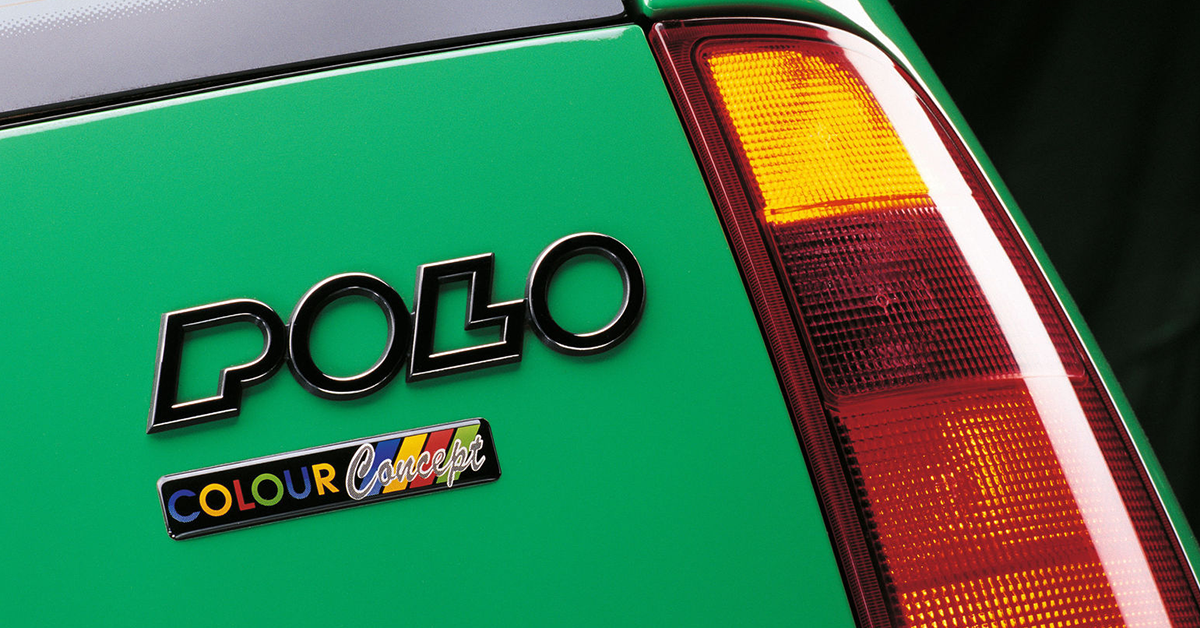
Official press image of the Volkswagen Polo Variant Colour Concept special model of 1998. | © Volkswagen AG
The Polo has been sold in far more body styles than most small cars. The first generation was a two-door hatchback, and the Derby of 1977 added a notchback saloon with a 515-litre boot. The second generation arrived as a squareback small estate, with a fastback Coupé added a year later. From the Polo III in 1994 the car was available with five doors, and the Polo Classic saloon and the Polo Variant estate followed in 1995 and 1997. The Variant raised the boot capacity from 390 to 1,250 litres with the seats folded, which made the small Polo a useful load carrier.
| Derby (1977) | Notchback saloon, 515-litre boot, 30 cm longer |
| Polo Classic | Saloon, name used 1995 to 1997 |
| Polo Variant (1997) | Estate, boot 390 to 1,250 litres |
| Polo IV saloon (9N2, 2003) | 432-litre boot, built by Volkswagen do Brasil |
| Harlequin (1995) | Modular multicolour design |
| Kaluga, Russia | Polo built 2010 to 2022 |
| Pune, India | 2009 to 2016 |
| Pamplona, Spain | From March 1984, over 8.4 million by 2024 |
| Kariega, South Africa | World main site since summer 2024 |
Many of these body styles have been discontinued. The Derby became the Polo notchback in 1985 and the Polo Classic from 1995 to 1997, and the Polo IV 9N2 saloon of 2003, with a 432-litre boot, was built by Volkswagen do Brasil and imported to Europe. The Polo was built at Kaluga in Russia from 2010 to 2022, and production in Pune, India, ran from 2009 to 2016. As Volkswagen moved into SUVs, it dropped the saloon and estate Polos in Europe and kept the hatchback, which is now the only body style of the current Polo VI.
Some special variants were designed for particular markets. The Harlequin of 1995 was a modular multicolour Polo with panels in different colours that could be swapped, and it is now a collector’s item. The Kariega plant in South Africa built 167,084 vehicles in 2024, including 131,485 Polos for export, which shows how important the plant has become.
Production plants have come and gone too. The Pamplona plant built the Polo from March 1984. Bratislava in Slovakia started on 1 July 1999. Other sites in the Polo network have included Martorell in Spain, Pacheco in Argentina, Anting in China, Thika in Kenya, Kigali in Rwanda and Accra in Ghana, which have helped the Polo reach markets around the world.
The Polo has also lost some of its engines. The diesels that were once common, such as the 1.6 TDI and 1.4 TDI, belong to earlier generations, and the 1.0 TGI natural-gas version of 66 kW (90 PS) was a niche option of the 2021 range. Check current local price lists before buying, because engine and trim availability differs from market to market.
A short guide to what each body style means for a used buyer can help. The two-door hatchback and the fastback Coupé belong to the first and second generations, which are now classics. The Derby, the Polo notchback and the Polo Classic cover the notchback line from 1977 to 1997, and the 2003 saloon of the fourth generation, with its 432-litre boot, was a separate car built in Brazil. The Variant estate belongs to the third generation, with 390 litres of boot rising to 1,250 litres with the seats folded. The CrossPolo, with 15 mm more ground clearance in the fourth generation, and the BiFuel of 2010, rated at 86 PS on petrol and 82 PS on LPG, are rarer. The R WRC Street and the GTI Edition 25 are limited editions, with 2,500 cars each. The Harlequin of 1995 completes the list of quirky Polos.
For most buyers the useful point is that the Polo family has never been a single car. In its first 20 years it already included a hatchback, a notchback, an estate and a coupé, and in the years since it has added sporty, economical and rugged versions. Only the hatchback has survived into the sixth generation, which is why older Polos often look so different from the current one. When comparing used cars, check the exact generation, the engine and the body style rather than just the name, because the Polo badge has covered very different cars.

Official press image of the Volkswagen Polo Edition 50. | © Volkswagen AG
The Polo that is on sale today is the sixth generation, and it is built on the MQB platform. Volkswagen’s 2021 update gave it a digital cockpit as standard, with an 8.0-inch Digital Cockpit as standard, matrix LED headlights and IQ.DRIVE Travel Assist for partly automated driving up to 210 km/h. The GTI sits at the top of the range.
| Generation on sale | Polo VI, MQB, updated 2021 |
| Engines | 1.0 TSI 70 kW (95 PS), 81 kW (110 PS), Edition 50 also 85 kW (116 PS) |
| GTI | 152 kW (207 PS), 2.0-litre turbo |
| Edition 50 (2025) | 70 kW manual from 28,200 euros (Germany) |
| Standard cockpit | 8.0-inch Digital Cockpit |
| Optional assist | IQ.DRIVE Travel Assist up to 210 km/h |
| Kariega, South Africa | World main site since summer 2024, world main site |
| Pamplona, Spain | Lead plant 1992 to 2024, over 8.4 million |
| Polo VI built | About 2.5 million, 2017 to October 2024 |
The engines on sale are small and turbocharged. The 1.0 TSI is offered with 70 kW (95 PS) and a manual gearbox or an optional seven-speed DSG, and with 81 kW (110 PS) with a seven-speed DSG. The Polo Edition 50 of 2025 offers the 1.0 TSI in 70 kW and 85 kW (116 PS) forms, and in Germany Volkswagen listed the 70 kW manual from 28,200 euros. The GTI, with 152 kW (207 PS) and a 2.0-litre turbo, tops the range. These engines keep the Polo as one of the more efficient cars in its class, even though it is now larger than the Golf of the early 1980s.
The question for buyers is where the car is built. Volkswagen’s Kariega plant in South Africa became the world main site for the model in summer 2024. Pamplona, which was the lead plant from 1992 to 2024, had built more than 8.4 million Polos by then. Volkswagen’s figures show that 2.5 million Polo VI cars were built between 2017 and October 2024. These facts matter for supply, because the car is now built a long way from its biggest European markets.
Prices vary by market. In Germany the Polo Edition 50 started at 28,200 euros for the 70 kW manual, which is above the 24,995 euros that Volkswagen asks for the ID. Polo Trend. Prices and trims differ by country, so the Volkswagen models guide is the place to compare the Polo with the rest of the range.
For a buyer who wants a combustion Polo, the late Polo VI cars have the 2021 update and the most modern equipment, and the GTI is the sporting choice. The G40 and Polo R WRC Street are now collectors’ items. For the newest technology, the ID. Polo is the only Polo on a new platform, and it is the subject of the next section.
Volkswagen’s figures give a useful picture of how the current car has changed over time. The 2021 update listed the Polo VI at 4,053 mm long with a wheelbase of 2,564 mm, 1,751 mm wide and 1,446 mm high, while Volkswagen’s April 2026 comparison with the ID. Polo gives the combustion car as 4,074 mm long with a wheelbase of 2,552 mm and a height of 1,451 mm. The two documents were written years apart and for different purposes, so small differences are to be expected, and the car’s own papers are the best guide for any particular model.
The Polo Edition 50 is the car Volkswagen built to mark the anniversary. It is based on the Style trim and has 16-inch wheels. In Germany the entry model, the 1.0 TSI with 70 kW (95 PS) and a manual gearbox, starts from 28,200 euros. The same engine is offered with the DSG, and a version with 85 kW (116 PS) and the DSG is also listed. Earlier Polo engines mentioned in third-party price lists include a 1.0 MPI of 80 PS and a 1.0 TSI of 110 PS, which match the 2021 range. The Edition 50 therefore shows the Polo’s long-term strategy, which is to offer a small, well-equipped car with a one-litre turbo engine.
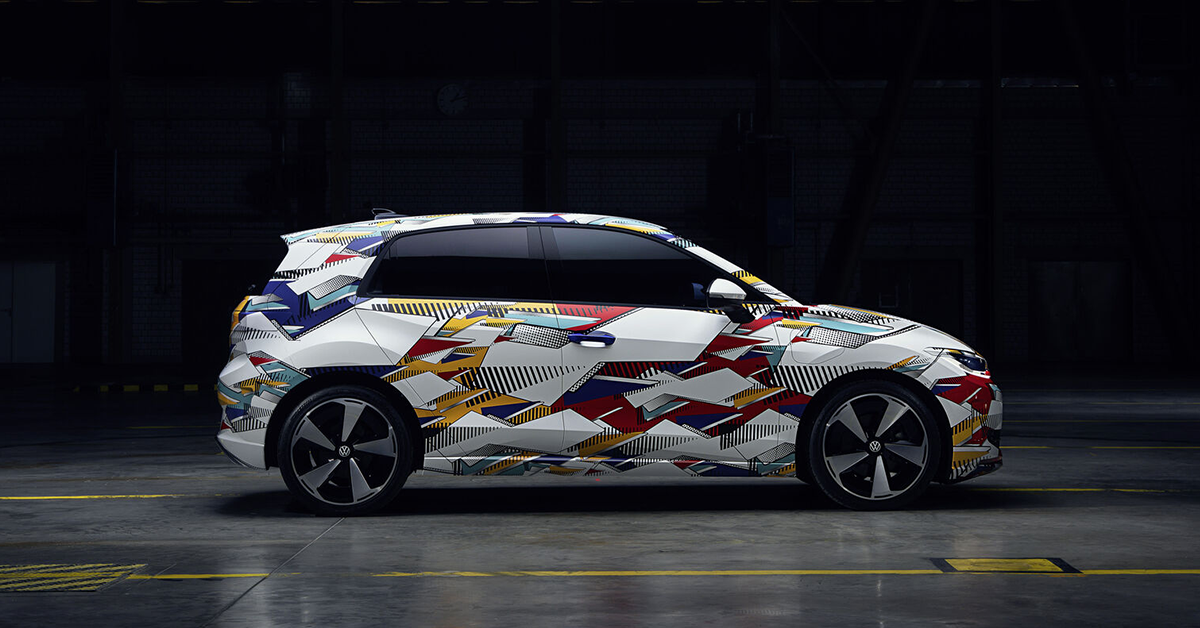
Official press image of the Volkswagen ID. Polo. | © Volkswagen AG
The ID. Polo is Volkswagen’s all-electric small car, and Volkswagen calls it the seventh generation of the Polo. It was announced on 29 April 2026, with pre-sales beginning in Germany the same day. The car is based on the MEB+ electric platform, was designed at the Volkswagen Design Centre in Wolfsburg and is to be built at the SEAT and Cupra plant in Martorell, Spain, according to a December 2025 Volkswagen release. It is 4,053 mm long, 1,816 mm wide and 1,530 mm high, with a wheelbase of 2,600 mm, so it is shorter than the combustion Polo but wider, taller and longer between the wheels.
| Announced | 29 April 2026, pre-sales in Germany from the same day |
| Platform | MEB+, front-wheel drive |
| Built at | Martorell, Spain (per a December 2025 release) |
| Size | 4,053 mm long, 1,816 mm wide, 1,530 mm high, 2,600 mm wheelbase |
| Motors | 85 kW (116 PS), 99 kW (135 PS), 155 kW (211 PS) |
| Batteries | 37 kWh LFP (up to 329 km), 52 kWh NMC (up to about 454 km), provisional |
| DC charging | Up to 90 kW (37 kWh), up to 105 kW (52 kWh), about 23 to 24 minutes |
| Boot | 441 litres, 1,240 litres seats folded |
| Price (Germany) | From 24,995 euros, Life 155 kW from 33,795 euros |
| ID. Polo GTI | 166 kW (226 PS), shown 15 May 2026, due 2027 |
There are three motors and two batteries. The 85 kW (116 PS) and 99 kW (135 PS) versions use a 37 kWh net LFP battery with a provisional WLTP range of up to 329 km and DC charging of up to 90 kW. The 155 kW (211 PS) version uses a 52 kWh net NMC battery with a provisional range of up to about 454 km and DC charging of up to 105 kW. Charging from 10 to 80 percent takes about 23 to 24 minutes. Top speed is 160 km/h for all three.
The interior is where the ID. Polo changes the most. The boot holds 441 litres, which is up from 351 litres in the combustion Polo, and 1,240 litres with the rear seats folded, compared with 1,125 litres. Vehicle-to-load supplies up to 3.6 kW. The trims are Trend, Life and Style. Sources differ slightly on some figures, for example boot size and the DC charging peak of the larger battery, so treat the numbers as provisional until deliveries begin.
Prices start at 24,995 euros in Germany for the base version, and the ID. Polo Life with the 155 kW motor and 52 kWh battery starts from 33,795 euros. The 155 kW Life launches first, with the other versions following in summer 2026. The ID. Polo GTI, shown on 15 May 2026, is due in 2027 with 166 kW (226 PS). Volkswagen says the combustion Polo will continue to be sold alongside the electric car for now, and it has not said when the combustion model will end, so treat any end date as unconfirmed.
The ID. Polo matters because it puts an electric Volkswagen in the small-car segment at a price close to the old combustion Polo. It also continues a name that has been used since 1975 and links back to the Polo I. Where the first Polo was a light, cheap front-wheel-drive car based on an Audi, the ID. Polo is a light, cheap front-wheel-drive car based on a new platform and built with SEAT and Cupra. The Volkswagen models guide covers the full electric range, and this Polo guide will be updated as Volkswagen confirms prices, deliveries and the end of the combustion model.
Volkswagen has said the pre-sales sequence will run in stages. The ID. Polo Life with 155 kW went on sale first on 29 April 2026, and the other versions follow in summer 2026. The ID. Polo GTI, which Volkswagen showed on 15 May 2026, is due in 2027 and is expected to carry a price just under 39,000 euros in Germany, with pre-sales this autumn. For readers outside Germany, prices and dates depend on local importers, so use Volkswagen’s national website for the final figures.