 Brands
Ford Taurus — From the 1986 Original to the Last Build
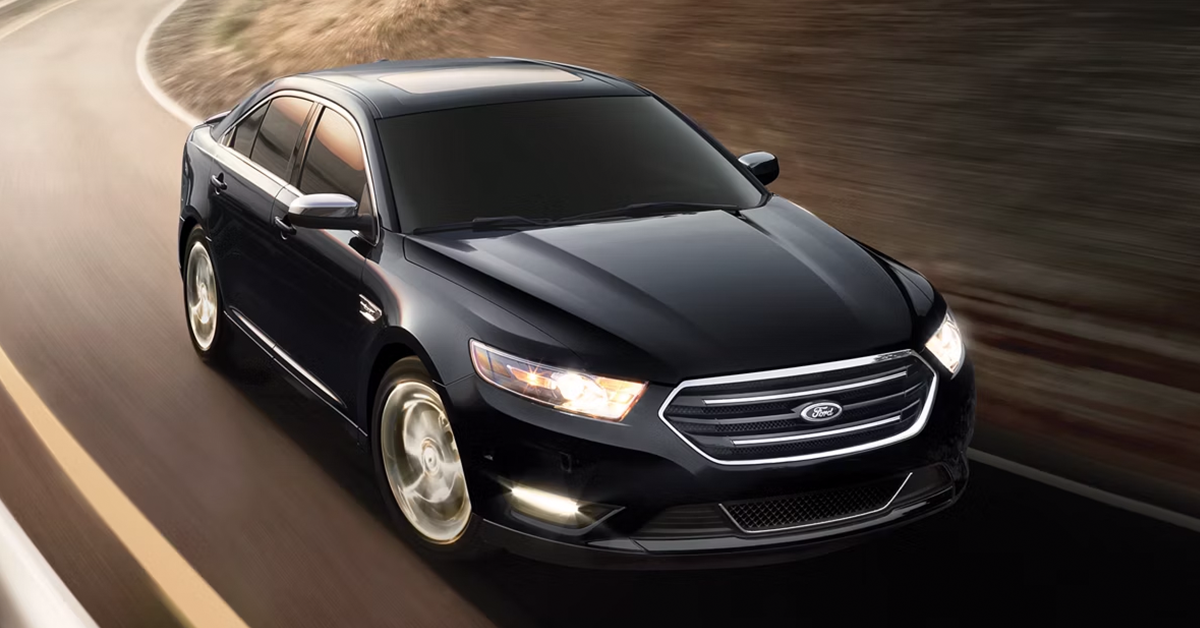
Official press image of the Ford Taurus. | © Ford Motor Company
The Ford Taurus from the 1986 original through the Yamaha-engined SHO, the 2008 revival, the 2010 redesign and Police Interceptor Sedan, to the last car built in Chicago in 2019: engines, sales and what is known.
The Ford Taurus was an American sedan that Ford sold for the 1986 to 2019 model years, with a pause in the middle. A reference history gives production as October 1985 to October 2006 and then May 2007 to March 2019, and says the 2007 model year went only to fleets (reported). Ford’s own March 2019 end-of-production release says more than 8 million Taurus passenger cars were built at Chicago Assembly over 34 years of near continuous production (Ford). We use that Ford figure as the main total.
| Model years | 1986 to 2019 (reported) |
| Production, one source | Oct 1985 to Oct 2006; May 2007 to Mar 2019 (reported) |
| Built at Chicago | More than 8 million (Ford) |
| Final US car | March 1, 2019 (Ford) |
| 2007 model year | Fleet only (reported) |
| Revived | 2008 model year (reported) |
| Class, early | Mid-size (reported) |
| Class, later | Full-size (reported) |
| Wagon | 1986 to 2005 (reported) |
| SHO eras | 1989 to 1999; 2010 to 2019 (reported) |
The name returned after a gap. A trade magazine says the Taurus briefly ended production in 2006 before it was revived as an all-new car in 2008, and that the same model soldiered on to its final 2019 form (reported). That description skips a detail covered later: the car that came back for the 2008 model year was a renamed Five Hundred, and the car most people picture as the modern Taurus arrived for 2010. We treat 1986 to 2006 and 2008 to 2019 as the two main runs of the nameplate.
The Taurus began as a mid-size car and ended as a full-size one. A reference history lists the class as mid-size from 1985 to 2007 and full-size from 2007 to 2019, with front-wheel drive throughout and all-wheel drive added from 2008 (reported). It also says the sedan was offered through the whole run, with a wagon from 1986 to 2005 (reported). Ford’s own pages that we could read do not give a class label, so the class names are reported and not Ford’s.
The Taurus also had a sporting side. A reference history says the SHO, short for Super High Output, was built in four generations, 1989 to 1999 and 2010 to 2019 (reported). Ford’s 2009 release on the returning SHO describes the original as launched in limited production for the 1989 model year with a five-speed manual only (Ford). Later sections cover both eras, along with the Police Interceptor Sedan that Ford built on the later car.
Generation counts differ. One reference history says six generations were produced over 34 years, with a hiatus for model years 2006 and 2007 (reported). A car-history site says the Taurus spans eight generations (reported), and a buying guide numbers the last car as the sixth generation (reported). A separate news report calls the car still built in China the seventh generation (reported). Ford’s own pages we read do not number generations, so we use years instead of numbers where we can.
The Taurus was sold outside the United States only in a few places. A reference history says the third-generation car was sold in Australia between 1996 and 1998 (reported), and a news report says a region-specific Taurus was later built in China (reported). Ford’s own pages we read do not describe those sales. We therefore treat the Taurus as an American story first, and our wider Ford history article gives the company context around it. We give no worldwide total, only Ford’s own Chicago figure.
The first Taurus arrived for the 1986 model year. A reference history says it was introduced in late 1985, and a heritage article says it was revealed at the 1985 Los Angeles show (reported). A trade magazine says it had two engine choices at launch, a 2.5-litre four-cylinder with 90 horsepower and a 3.0-litre V6 with 140 horsepower (reported). Ford’s own pages that we could read do not give launch specifications, so those figures stay tagged as reported.
| Debut | Late 1985 for 1986 (reported) |
| Show | 1985 Los Angeles (reported) |
| Base engine | 2.5L four, 90 hp (reported) |
| Optional engine | 3.0L V6, 140 hp (reported) |
| Designer credited | Jack Telnack (reported) |
| Millionth sold | 1989 (reported) |
| First generation sold | More than 2 million by 1991 (reported) |
| First generation end | 1991; July in one source (reported) |
| Twin | Mercury Sable (reported) |
| Related | Lincoln Continental, 1988 to 2002 (reported) |
The car was a gamble. A reference history says Ford had been producing mainly rear-wheel-drive cars at the time, while Chrysler and General Motors were offering more front-wheel-drive mid-range cars (reported). It also says that if the Taurus failed, Ford would have had to file for Chapter 11 bankruptcy, and that the older LTD stayed in production for a while (reported). That claim is widely repeated but comes from a secondary account, and Ford’s own pages we read do not make it, so we present it only as reported.
The design drew attention. A reference history credits Jack Telnack as the designer (reported). A history article says Ford borrowed a climate control layout from Saab, introducing the masses to a three-dial system (reported). A road-test summary quoted in a reference history says early press praised the car as a totally new breed of car (reported). These are opinions and attributions, not engineering data, so we use them only to describe how the car was received and not to prove how it was built.
Sales milestones are reported. A reference history says the millionth Taurus was sold in 1989, three years into production, and that more than 2 million first-generation cars had been sold when production ended in 1991 (reported). Another source gives July 1991 as the end of the first generation (reported). Ford’s own pages we read do not give sales by year for this period, and we found no Ford figure to confirm either number, so we leave the dates and totals as reported.
Production was spread over more than one plant. A reference history lists Hapeville, Georgia and Chicago, Illinois as the first-generation assembly plants (reported). Ford’s own 2019 release names only Chicago Assembly as the plant that built more than 8 million cars over 34 years (Ford). The two statements fit together, since Ford’s total is a Chicago figure and not a company-wide one. The SHO of the same period was built in Atlanta, according to a reference history, which we cover in a later section (reported).
The Mercury Sable was a close relative. A reference history says that from the 1986 to 2009 model years the Taurus was sold alongside its near-twin, the Mercury Sable, and that the Taurus was also the basis for the first front-wheel-drive Lincoln Continental, built from 1988 to 2002 (reported). Ford’s own pages we read do not describe either car. We keep distinct models separate, so we do not fold the Sable or Continental into the Taurus numbers and give no sales for either.
The Taurus became a sales leader in the 1990s. A trade magazine says that by 1992 it had become America’s best-selling passenger car and held that title until 1996 (reported). A different data site says it was the best-selling car in the United States for 10 consecutive years from 1992 to 2001 (reported). The two sources disagree on the end year, 1996 or 2001, so we carry both. Ford’s own pages that we read do not give the ranking.
| Best-seller start | 1992 (reported) |
| Best-seller end, one source | 1996 (reported) |
| Best-seller end, other source | 2001 (reported) |
| Second generation | 1992 to 1995 (reported) |
| Third generation | 1996 to 1999 (reported) |
| Third generation design | Widely panned (reported) |
| Australia | Third generation, 1996 to 1998 (reported) |
| Fourth generation | 2000 to 2006 (reported) |
| Production paused | October 2006 (reported) |
| Late buyers | Mostly fleets (reported) |
The second generation ran from 1992 to 1995, according to a buying guide that lists the generations as 1989 to 1991 for the first SHO and 1992 to 1995 for the second (reported). A car-history site says the 1992 car had extensive restyling except for the doors (reported). The third generation followed for 1996. A buying guide says it ran 1996 to 1999 and lists its polarizing design among the cons (reported), and an industry site says the style was widely panned (reported).
The third generation reached Australia. A news report says Ford sold the third-generation sedan there between 1996 and 1998 (reported). Ford’s own pages we read do not mention Australian sales, and we found no figure for them, so we give none. We also found no Ford statement on why the sales were so brief, so we do not offer a reason, and we do not say how many cars were sold there. Readers who need Australian registration data should consult the national industry statistics for those years. We treat the Australian run only as a short, reported footnote to the American story told here.
The fourth generation covered 2000 to 2006. A buying guide gives 2000 to 2006 for it (reported), and a reference history says production ended in October 2006 (reported). A car-history site says sales waned in the early 2000s and that the Taurus was discontinued before coming back in 2008 (reported). A trade report says that by the end the car was sold mainly to fleets and rental companies as more families bought rivals (reported). Those are commentary and not Ford data.
Rival cars come up repeatedly in the commentary. A reference history names Chrysler’s K platform cars and the Chevrolet Celebrity as front-wheel-drive competitors in 1985 (reported). A heritage article says later buyers moved to the Camry and Accord (reported). We give no market share, since we found no Ford source for one. A reader who wants rankings by year should use an industry sales database, because magazine retrospectives round and sometimes disagree, as the two end years above show.
Ford’s own pages are thin for this middle period. The company’s 2019 release covers the whole run in one sentence, saying the Taurus was built for 34 years (Ford). The detailed engines and trims of the 1990s and early 2000s, including the V6 options and the wagon, are not documented in any Ford page we could read. We therefore avoid giving horsepower or price figures for the second to fourth generations, other than the SHO figures covered in the next section. Readers who need engine specifications for a particular year should check the owner’s manual or a period road test, since the details changed between model years and between markets.
The SHO was Ford’s performance Taurus. Ford’s 2009 release says the original Taurus SHO was launched in limited production, with only a five-speed manual transmission, for the 1989 model year (Ford). It says the critical element was a Yamaha-developed 3.0-litre V6 delivering 220 horsepower (Ford). The same release says the SHO twist was design subtlety, meaning an unassuming exterior (Ford). Ford’s Performance site also carries a heritage page for the later car and calls the engine a twin-turbocharged V6 (Ford).
| Debut | 1989 model year (Ford) |
| Launch run | Limited production (Ford) |
| Transmission, 1989 | Five-speed manual only (Ford) |
| Engine | Yamaha-developed 3.0L V6 (Ford) |
| Output | 220 horsepower (Ford) |
| Redline | 7,000 rpm; 7,300 for prototype (reported) |
| Torque, 3.0L | 200 lb-ft (reported) |
| 3.2L automatic engine | 220 hp, 215 lb-ft (reported) |
| SHO V6 years | 1989 to 1995 (reported) |
| Sold through 1999 | More than 100,000 (reported) |
The engine story is told by secondary sources. A heritage magazine says the prototype assembled in 1986 used Yamaha’s 220-horsepower 3.0-litre V6, which gained 80 horsepower over the stock engine and revved some 2,000 rpm higher (reported). Another source says the engine redlined at 7,000 rpm, and a magazine says 7,300 rpm for the prototype (reported). We carry both redlines as reported. A magazine says the engine produced 200 lb-ft of torque (reported).
Context for the output helps. A trade magazine says that 220 horsepower was only 5 less than a V8 Mustang of 1989 (reported), and that the 0 to 60 mph time was under 7 seconds (reported). A separate magazine says a rival Saab 9000 Turbo produced 160 horsepower in 1989 (reported). Ford’s own pages we read do not give a 0 to 60 time for the 1989 car, and we did not test it, so we leave that time as a reported claim. Output figures for 1980s engines were also measured by different methods from today’s, so a comparison with a modern car is only a rough guide.
The SHO changed over time. A reference history says a 3.2-litre version of the SHO V6 was introduced for the automatic-equipped car, still at 220 horsepower, with torque up to 215 lb-ft, and that an automatic was added in 1993 (reported). It also says the SHO V6 ran from 1989 to 1995, and that in 1996 Ford discontinued it and began fitting the Taurus with a different engine (reported). The model years 1996 to 1999 therefore ran on a different SHO engine, and we found no Ford figure for it.
Where it was built is reported. A reference history lists Atlanta Assembly at Hapeville, Georgia as the original SHO plant (reported). A heritage magazine says the project was carried out by the team that later designed the Mustang SVT Cobra, working with Yamaha under an agreement to base a V6 on Ford’s Vulcan engine (reported). Ford’s own pages we read do not describe the agreement, and we found no Ford figure for the contract, so we tag all of it as reported.
Sales are only roughly documented. A collector-car page says more than 100,000 SHO models were sold through 1999 (reported). A newspaper review of 1989 says Ford expected about 25,000 units for the year, which is an expectation and not a result (reported). Another source says the first SHO generation was sold for the 1989 to 1991 model years (reported). Ford’s own 2009 release does not give totals, so we treat 100,000 as an approximate, reported figure. We also found no Ford figure for how many SHO cars had manual gearboxes, and we give no split by year. Collectors who want exact production numbers should consult an owners’ club registry.
The Taurus name came back through a rename. A news report says that when Alan Mulally arrived at Ford in September 2006, one of his first moves was to revive the Taurus name, because research showed customers recognised it unlike that of the Five Hundred (reported). A used-car guide says Ford claimed that 80 per cent of consumers recognised the Taurus nameplate, while only 40 per cent had heard of the Five Hundred (reported). Ford’s own pages we read do not give those percentages.
| Revival model year | 2008 (reported) |
| Based on | Freshened Five Hundred (reported) |
| Taurus X | Renamed Freestyle (reported) |
| Mulally arrived | September 2006 (reported) |
| Name recognition, Taurus | 80 per cent, per Ford claim (reported) |
| Name recognition, Five Hundred | 40 per cent (reported) |
| New grille | Three-bar chrome (reported) |
| New engine | 3.5L V6 (reported) |
| Other markets | Five Hundred name kept (reported) |
| Show | 2007 Chicago (reported) |
The 2008 model was a freshened Five Hundred. A used-car guide says Ford chose to resurrect the Taurus nameplate and put it on the freshened 2008 Five Hundred, with a three-bar chrome grille and new rectangular headlights (reported). A news report says Ford replaced the powertrain and some sheet metal and renamed the Freestyle crossover the Taurus X (reported). We found no Ford page that lists the changes in full, so we describe only what those reports state.
Engines changed too. A used-car guide says a new 3.5-litre V6 arrived for the 2008 car, replacing the Five Hundred’s weaker engines (reported). A news report says each of the old Five Hundred and Freestyle suffered from too little power for their hefty weight (reported). We give no horsepower for the 2008 and 2009 cars, because we did not find a figure in the sources we read, and Ford’s own pages we read do not list one. The 2010 car, covered next, has Ford’s own figures.
The rename was not universal. A reference history says outside the United States, Canada and South Korea, the car kept the Five Hundred branding, and lists a Ford Five Hundred name for the Middle East (reported). That is why we describe the 2008 to 2009 car as a renamed Five Hundred in North America and not as a worldwide Taurus. Ford’s own pages we read do not describe those markets, so we give no sales or availability for them.
Mulally’s comments are reported. A reference history says he told the press he was baffled that the Taurus had been discontinued, that he believed discontinuing it was a mistake, and that the Five Hundred should have been named Taurus from the beginning (reported). A trade magazine says sales to the public had ceased before the revival, with only fleets and rental companies buying the old car (reported). Both are secondhand accounts and not Ford statements we could read, so we give them as reported. We do not use his remarks to say why the Five Hundred sold poorly, since we found no Ford data on that.
The revival was also tied to the new Ford leadership. A reference history says the revamped Five Hundred and Freestyle were unveiled as the Taurus and Taurus X at the 2007 Chicago show (reported). Ford’s own pages we read do not describe the cost of the rename or how many cars were sold in 2008 and 2009, so we give no sales for those years. Ford’s own pages we read do not say how much the 2010 redesign cost, and we found no figure, so we give none.
Ford revealed the 2010 Taurus on January 11, 2009 in Detroit. Its release called the new car upscale and tech-savvy and said it was powered by the award-winning 3.5-litre Duratec V6 with one of two six-speed automatics, including SelectShift with shift paddles, and available all-wheel drive (Ford). A news summary says the base engine produced 263 horsepower and 249 lb-ft, driving the front wheels (reported). Ford’s own release does not give the 263 figure in the passage we read, so we tag it.
| Reveal | January 11, 2009, Detroit (Ford) |
| Standard engine, 2010 | 3.5L Duratec V6 (Ford) |
| Base output, 2010 | 263 hp (reported) |
| Gearbox | Six-speed SelectShift automatic (Ford) |
| Class-exclusive features | 10 (Ford) |
| SHO engine | 3.5L twin-turbo EcoBoost V6 (Ford) |
| SHO output | 365 hp, 350 lb-ft (Ford) |
| SHO take rate | 20 per cent of Taurus mix (Ford) |
| SHO 2010 price | $37,995 (reported) |
| SHO 2013 price | $39,200 (reported) |
Ford highlighted technology. Its release said the Taurus offered more technology features, 10 of them class-exclusive, than more costly premium sedans (Ford). It listed features such as SYNC, multi-contour seats with Active Motion, a capless fuel filler and a Sony surround sound system (Ford). It said the car used a new SR1 suspension configuration named for its one-to-one rear shock absorber ratio (Ford). Those are Ford’s own marketing claims, and we did not verify them independently.
The SHO returned with a turbocharged engine. Ford said the Taurus SHO returned with a 365-horsepower EcoBoost V6, all-wheel drive and a paddle-shift six-speed SelectShift Automatic (Ford). Its engine page says the engine produced an estimated 365 horsepower at 5,500 rpm and 350 lb-ft at 3,500 rpm (Ford). It said enthusiasts had pushed Ford to revive the SHO, and a news summary says a forum had more than 10,000 registered users (Ford, reported).
Ford said the SHO sold better than expected. Its release says take rates reached 20 per cent of the overall Taurus mix (Ford). In 2011, Ford said the SHO had the highest conquest rate in the large-sedan segment, attracting customers defecting from other brands (Ford). It also said the SHO delivered up to 25 miles per gallon on the highway, according to EPA ratings (Ford). We did not find an annual SHO sales figure in any Ford page, so we give none.
The 2013 update added engines and power. Ford announced at the New York show that the 2013 Taurus would offer two EcoBoost engines, a new 2.0-litre four-cylinder and the 3.5-litre V6 for the SHO (Ford). A review says the standard 3.5-litre V6 gained 25 horsepower to 288 (reported), and a trade report says the SHO kept 365 horsepower and 350 lb-ft in 2013 (reported). A reference history says the 2.0-litre EcoBoost made 240 horsepower and became optional in 2014, the first four-cylinder Taurus since 1991 (reported).
Prices are reported only. A blog says the 2010 SHO started at $37,995 (reported), and a review says the 2013 SHO started at $39,200 (reported). Those are launch-era US list prices from secondary sources, and we found no Ford price list for either year. Prices changed by year and by trim, so a buyer should check a current used-market guide. We also give no fuel-economy figures for the base car, because the Ford passages we read give a highway rating only for the SHO. Ford’s own pages we read do not give a boot size either, so we give none. The SHO remained in the lineup until 2019, according to a reference history (reported). Ford’s 2012 and later pages that we read do not describe the end of the SHO separately, and we found no Ford figure for the last SHO built, so we give none.
Ford built a police version of the later Taurus. A reference history says the Police Interceptor Sedan was introduced for the 2013 model year, based on the sixth-generation Taurus (reported). Ford’s own 2011 release says the 2013 Police Interceptor Sedan and Utility passed Michigan State Police tests and were ready for law enforcement use (Ford). It adds that the pursuit-rated Interceptors came standard with all-wheel drive (Ford). The Sedan could be had with a 3.5-litre flex-fuel V6 or a 3.5-litre EcoBoost V6 (Ford).
| Introduced | 2013 model year (reported) |
| Based on | Sixth-generation Taurus (reported) |
| Test release | 2011, Michigan State Police (Ford) |
| Drive | All-wheel drive standard, pursuit-rated (Ford) |
| Base engine | 3.5L V6 (Ford) |
| Added engine | 3.7L V6 (Ford) |
| 3.7L output | 300, 304 or 305 hp by source (Ford, reported) |
| Top engine | 3.5L EcoBoost, 365 hp (Ford) |
| Special service | 2.0L EcoBoost, 240 hp (reported) |
| Predecessor | Crown Victoria, ended late 2011 (Ford) |
The Interceptor replaced the Crown Victoria. A Ford heritage post says production of the Crown Victoria at St. Thomas Assembly in Ontario ended in late 2011, as Chicago Assembly moved to the new Police Interceptor and Interceptor Utility (Ford). The same post says the 3.5-litre EcoBoost version produced at least 365 horsepower and 350 lb-ft in the sedan (Ford). It describes the pair as highlighting Ford’s new EcoBoost engines and driver-assist technologies (Ford).
A 3.7-litre engine joined the sedan in 2013. Ford’s release says the Sedan was available with a standard 3.5-litre V6, the new 3.7-litre V6 and the 3.5-litre EcoBoost (Ford). It says the 3.7-litre engine was already available on the Utility (Ford). The output differs by source: a review gives 305 horsepower for the sedan, another gives 304 for the Utility, and Ford’s test release gives 300 for the Utility (reported, Ford). We carry all three as a conflict.
Ford also offered a non-pursuit version. A news report says Ford announced a special-service police sedan in September 2013 with the 2.0-litre EcoBoost, rated at 240 horsepower and 270 lb-ft, at the request of agencies seeking to cut fuel costs (reported). It says the car kept the durability of the pursuit sedan but was not pursuit-rated (reported). Ford’s own pages we read do not restate those figures, so we tag them as reported.
Ford’s numbers for speed tests are not in the pages we read. A forum post quoting a test says the older 288-horsepower 3.5-litre sedan ran 0 to 60 mph in 8.36 seconds, behind rivals (reported). We treat that as a single reported test and not as a Ford figure. We give no top speed or pursuit-test results. Ford’s Michigan State Police release says only that the cars passed the tests, without publishing the times (Ford). Police fleets also fit their own equipment, and we found no Ford figure for the weight or cost of that equipment, so we do not say how it changed the car’s performance. We also give no prices for the Interceptor, because Ford sold it through fleet channels and we found no price list.
The Interceptor ended with the Taurus. A police trade magazine said in April 2018 that 2019 would be the final model year for the Taurus and the Interceptor Sedan (reported). It quoted Ford’s police brand marketing manager saying Ford would continue to sell the Fusion and its hybrid police sedans for a period to be determined (reported). A reference history says the sedan was replaced by the Interceptor Utility and the Police Responder Hybrid Sedan (reported).
Ford announced the end in 2018. A news report quotes a Ford spokeswoman saying the Taurus would end production by March 2019 and be replaced at the plant by the all-new Lincoln Aviator, and says the announcement came with first-quarter earnings (reported). A second report says Ford made the announcement one day before the Chicago show, where the company would introduce three new SUVs (reported). Ford’s own release of the following year covers the final car and is more complete.
| End announced | April 2018, by March 2019 (reported) |
| Last US car | March 1, 2019 (Ford) |
| Other date | March 4, 2019 (reported) |
| Total built, Chicago | More than 8 million (Ford) |
| Years of production | 34, near continuous (Ford) |
| Plant investment | $1 billion (Ford) |
| Jobs added | 500 (Ford) |
| Replaced by | Explorer, Aviator at the plant (Ford) |
| China Taurus start | End of 2015 (reported) |
| 2019 changes | Blind-spot monitor on Limited (reported) |
Ford’s release says the last Taurus sedan rolled off the line at Chicago Assembly Plant on March 1, 2019 (Ford). It says the date marked the end of US production of the historic and pioneering nameplate (Ford). Some reports date the end to March 4 (reported), but we found no Ford page that says so. We therefore give March 1 as the Ford date and note the other date as a conflict.
Ford tied the end to an investment. The release says Ford was investing $1 billion in Chicago Assembly and Chicago Stamping and adding 500 jobs, to build the all-new Explorer, Police Interceptor Utility and Lincoln Aviator (Ford). It said Ford aimed to replace 75 per cent of its vehicle lineup by the end of 2020 and add models such as the Ranger and Bronco (Ford). A news report says the Explorer would effectively replace the Taurus in showrooms (reported), though Ford does not use that wording.
The Taurus nameplate continued in China. A news report says a region-specific Taurus continued to be built by the Changan Ford joint venture in Hangzhou (reported). A data site says Ford started producing the Taurus large sedan in China at the end of 2015 for the local market (reported), and a news site says it comes with a twin-turbo 2.7-litre V6 in four trims (reported). The same data site lists 6,320 sales for 2019 and 18,071 for 2020 (reported). Ford’s own pages we read do not confirm those numbers.
The last model year was lightly changed. A used-car guide says the 2019 Taurus carried over essentially unchanged, with blind-spot monitoring now standard on the Limited and a new Agate Black colour (reported). A buying guide lists the sixth generation as 2010 to 2019 and recommends the SHO’s 365-horsepower engine for performance, while noting non-SHO cars had pedestrian performance and outdated technology (reported). Those are opinions, and we did not drive the cars.
For readers who want the current Ford range, our Ford models page shows what the company sells now. We did not find a Ford announcement of a Taurus successor in the pages we read, and a news report says the Explorer effectively replaced it (reported). We make no claim about the Taurus returning, and used prices vary widely, so we give none. Buyers should check service records, especially on the SHO, and have any car inspected before purchase. The twin-turbo engine and all-wheel-drive system add complexity, and Ford’s own pages we read give no reliability or warranty data for either, so we make no claim about them. A car that was used for police work may also have been driven hard, so ask for its history.