 Brands
Hyundai Verna — Specs, Prices, Safety and Generations
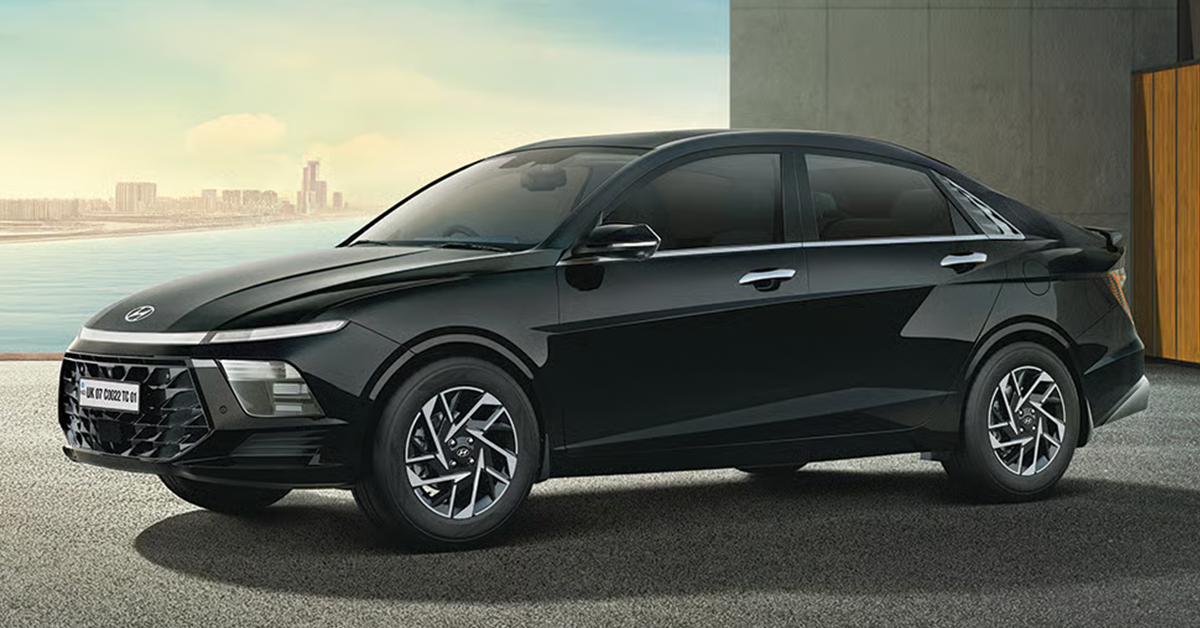
Official image of the Hyundai Verna. | © Hyundai Motor India Limited
Hyundai Verna. The 2026 update, prices from 10.98 lakh rupees, 160 PS turbo and 115 PS engines, 6 or 7 airbags, ADAS and the story since 2006.
The Hyundai Verna is a midsize sedan sold mainly in India, and it got a major update this year. Hyundai Motor India launched the new Verna on March 9, 2026, at a starting price of 10,98,400 rupees ex-showroom, with more than 25 enhancements across design, technology, safety and comfort (Hyundai). A trade report says the Verna is Hyundai’s longest-running nameplate in India, launched on September 25, 2006 as the successor to the Accent (reported). Our Hyundai Models article covers the cars Hyundai sells in the U.S. and Canada.
| Update launched | March 9, 2026 (Hyundai) |
| Starting price | 10,98,400 rupees ex-showroom (Hyundai) |
| Top price | 18,25,400 rupees ex-showroom (Hyundai) |
| Price gap | 7,27,000 rupees (Hyundai, our calculation) |
| Variants | 12 across 6 trims (Hyundai, our calculation) |
| Engines | 1.5 MPi petrol, 1.5 turbo GDi petrol (Hyundai) |
| Gearboxes | 6-speed manual, IVT, 7-speed DCT (Hyundai) |
| Enhancements in the update | More than 25 (Hyundai) |
| India launch of the Verna | September 25, 2006 (reported) |
| Diesel | Dropped with the fourth generation (reported) |
We read Hyundai India’s own pages first. Those are the March 9, 2026 launch release, the Hyundai India Verna blog page, a June to July 2024 Verna brochure, older Verna brochures and Hyundai Motor India’s 2025-26 annual report. Trade reports and catalogs supply history, mileage and later prices, and we tag them reported and do not name them. Prices and availability may have changed since publication, and exchange rates are not applied. Prices stay in Indian rupees, and a lakh means 100,000.
The Verna has 12 variants. The launch release lists five 1.5-liter MPi petrol variants with a manual gearbox, four with an IVT automatic, one 1.5-liter turbo GDi petrol with a manual and two with a 7-speed DCT (Hyundai). Five plus four plus one plus two is 12 (Hyundai, our calculation). The release names six trims, HX2, HX4, HX6, HX6+, HX8 and HX10, and a trade report says the new names bring the Verna in line with the new Venue (Hyundai, reported).
The price range is wide. The cheapest Verna is the HX2 MPi manual at 10,98,400 rupees and the dearest is the HX10 turbo DCT at 18,25,400 rupees (Hyundai). The gap is 7,27,000 rupees, since 18,25,400 minus 10,98,400 is 7,27,000 (Hyundai, our calculation). A trade report puts the October 2026 range at 10.99 lakh to 18.31 lakh rupees, which is slightly higher (reported). Trade reports name the Honda City, Volkswagen Virtus and Skoda Slavia as rivals (reported).
The Verna is a petrol-only car now. Hyundai’s release lists only a 1.5-liter MPi petrol and a 1.5-liter turbo GDi petrol (Hyundai). A trade report says the fourth generation dropped the diesel engine, a first for the Verna, and that there is no diesel and no hybrid anywhere in the range (reported). The same trade report says the 2026 update left the powertrains unchanged (reported). We found no Hyundai page that announces a diesel or hybrid Verna.
This guide covers the 2026 update, prices, engines, size, safety, the generations, the link to the Accent and the conflicts between sources. We mark every figure Hyundai, reported or our calculation, and we show both values where sources disagree. We found no Verna sales figure on a Hyundai page, so we give none. Check a Hyundai India dealer for current prices, because Hyundai says prices and specifications may change (Hyundai). The release names a brand campaign called “Respect the Young” and quotes Tarun Garg, Managing Director and CEO of Hyundai Motor India, who says the new Verna is more than a product upgrade and is a statement (Hyundai). Hyundai Motor India turned 30 on May 6, 2026, and its annual report puts cumulative sales at 13.5 million units (Hyundai).
Hyundai’s launch release gives every ex-showroom price. The 1.5 MPi petrol with a 6-speed manual starts at 10,98,400 rupees for the HX2, then 12,25,400 for the HX4, 13,19,400 for the HX6, 13,81,400 for the HX6+ and 14,88,400 for the HX8 (Hyundai). The IVT comes in the HX6 at 14,40,400, the HX6+ at 15,02,400, the HX8 at 16,09,400 and the HX10 at 17,15,400 rupees (Hyundai). The release says these are ex-showroom prices (Hyundai).
| HX2 MPi manual | 10,98,400 rupees (Hyundai) |
| HX4 MPi manual | 12,25,400 rupees (Hyundai) |
| HX6 MPi manual | 13,19,400 rupees (Hyundai) |
| HX8 MPi manual | 14,88,400 rupees (Hyundai) |
| HX6 MPi IVT | 14,40,400 rupees (Hyundai) |
| HX10 MPi IVT | 17,15,400 rupees (Hyundai) |
| HX8 turbo manual | 16,28,400 rupees (Hyundai) |
| HX8 turbo DCT | 17,62,400 rupees (Hyundai) |
| HX10 turbo DCT | 18,25,400 rupees (Hyundai) |
| IVT premium | 1,21,000 rupees on HX6, HX6+ and HX8 (Hyundai, our calculation) |
The steps between manual trims are uneven. The HX4 costs 1,27,000 rupees more than the HX2, since 12,25,400 minus 10,98,400 is 1,27,000 (Hyundai, our calculation). The HX6 costs 94,000 more than the HX4, the HX6+ costs 62,000 more than the HX6 and the HX8 costs 1,07,000 more than the HX6+ (Hyundai, our calculation). The HX2 to HX8 climb is 3,90,000 rupees, since 14,88,400 minus 10,98,400 is 3,90,000 (Hyundai, our calculation).
The IVT premium is the same on every trim. The IVT costs 1,21,000 rupees more than the manual on the HX6, the HX6+ and the HX8, since 14,40,400 minus 13,19,400, 15,02,400 minus 13,81,400 and 16,09,400 minus 14,88,400 are each 1,21,000 (Hyundai, our calculation). The IVT HX10 costs 1,06,000 more than the IVT HX8, since 17,15,400 minus 16,09,400 is 1,06,000 (Hyundai, our calculation). The HX10 has no manual version listed (Hyundai).
The turbo costs more again. The turbo manual HX8 is 16,28,400 rupees and the turbo DCT HX8 is 17,62,400 (Hyundai). The turbo manual HX8 costs 1,40,000 more than the MPi manual HX8, since 16,28,400 minus 14,88,400 is 1,40,000 (Hyundai, our calculation). The DCT adds 1,34,000 over the turbo manual, since 17,62,400 minus 16,28,400 is 1,34,000 (Hyundai, our calculation). The turbo HX10 DCT is 18,25,400, which is 63,000 above the turbo HX8 DCT (Hyundai, our calculation). Against the IVT, the turbo manual HX8 costs 19,000 rupees more, since 16,28,400 minus 16,09,400 is 19,000 (Hyundai, our calculation). The turbo DCT costs 1,53,000 more than the IVT in the HX8, since 17,62,400 minus 16,09,400 is 1,53,000, and 1,10,000 more in the HX10, since 18,25,400 minus 17,15,400 is 1,10,000 (Hyundai, our calculation).
Prices have moved since March. A trade report says the October 2026 price range is 10.99 lakh to 18.31 lakh rupees for 12 variants, against 10.98 lakh to 18.25 lakh at launch (reported). The top price is about 5,600 rupees higher, if the rounded figures are read literally, since 18.31 lakh minus 18,25,400 is about 5,600 (reported, our calculation). A separate report says Hyundai Motor India planned to raise car prices by up to 1 percent from May 2026 (reported).
Older Verna prices show the trend. A trade report lists the first generation at 6.21 to 7.35 lakh rupees, the second at 6.99 to 10.74 lakh, the third at 7.99 to 12.61 lakh, the 2020 facelift at 9.31 to 15.10 lakh and the 2026 facelift at 10.99 to 18.31 lakh (reported). The entry price rose 4.78 lakh from the first generation to the 2026 car, since 10.99 minus 6.21 is 4.78 (reported, our calculation). We do not adjust for inflation, and exchange rates are not applied.
The turbo is the headline engine. Hyundai’s launch release lists the 1.5-liter turbo GDi petrol at 117.5 kW, or 160 PS, at 5,500 rpm and 253 Nm, or 25.8 kgm, from 1,500 to 3,500 rpm (Hyundai). A 2024 Hyundai brochure lists the same figures and a displacement of 1,482 cc (Hyundai). The torque in kgm matches the Nm figure, since 253 divided by 9.807 is 25.8 (Hyundai, our calculation). The turbo torque band is 2,000 rpm wide, since 3,500 minus 1,500 is 2,000 (Hyundai, our calculation).
| Turbo engine | 1.5 turbo GDi, 1,482 cc (Hyundai) |
| Turbo power | 117.5 kW, 160 PS at 5,500 rpm (Hyundai) |
| Turbo torque | 253 Nm, 25.8 kgm, 1,500 to 3,500 rpm (Hyundai) |
| MPi engine | 1.5 MPi, 1,497 cc (Hyundai) |
| MPi power | 84.4 kW, 115 PS at 6,300 rpm (Hyundai) |
| MPi torque | 143.8 Nm, 14.7 kgm at 4,500 rpm (Hyundai) |
| Turbo gearboxes | 6-speed manual, 7-speed DCT (Hyundai) |
| MPi gearboxes | 6-speed manual, IVT (Hyundai) |
| Drive modes | Normal, Eco, Sport (Hyundai) |
| Claimed mileage | 18.6 to 20.6 kmpl (reported) |
The naturally aspirated engine is the base. The 2024 brochure lists a 1.5-liter MPi petrol of 1,497 cc with 84.4 kW, or 115 PS, at 6,300 rpm and 143.8 Nm, or 14.7 kgm, at 4,500 rpm (Hyundai). Hyundai’s 2026 blog page does not state this engine’s output (Hyundai). Catalogs convert the 115 PS to 113 or 114 bhp, which is a unit difference and not a conflict (reported). The turbo has 45 PS more than the MPi, since 160 minus 115 is 45 (Hyundai, our calculation). The MPi reaches its peak torque 3,000 rpm higher than the turbo starts to, since 4,500 minus 1,500 is 3,000 (Hyundai, our calculation).
Gearbox choices differ by engine. Hyundai says the MPi comes with a 6-speed manual or the IVT, and the turbo with a 6-speed manual or a 7-speed DCT (Hyundai). The 2024 brochure says the IVT is offered on the SX and SX(O) trims of the old naming (Hyundai). A trade report calls the MPi automatic a CVT, while Hyundai calls it an IVT, so the two names refer to the same kind of gearbox (Hyundai, reported). The release lists Normal, Eco and Sport drive modes, paddle shifters and Idle Stop and Go (Hyundai).
Mileage comes from reports. Catalogs list ARAI-claimed economy of 18.6 kmpl for the MPi manual and 20.6 kmpl for the best automatic, the turbo (reported). Hyundai’s pages we read give no mileage figure (Hyundai). With the 45-liter tank, 18.6 kmpl is a theoretical 837 km per tank, since 45 times 18.6 is 837, and 20.6 kmpl is 927 km, since 45 times 20.6 is 927 (Hyundai, reported, our calculation). Real-world figures will be lower. The gap between the two claimed figures is 2.0 kmpl, since 20.6 minus 18.6 is 2.0 (reported, our calculation).
The older Verna used other engines. An April 2020 Hyundai brochure lists a 1.5-liter MPi petrol at 115 PS, a 1.5-liter U2 CRDi diesel at 115 PS and a 1.0-liter Kappa turbo GDi petrol at 120 PS with a 7-speed DCT (Hyundai). The current turbo has 40 PS more than that 1.0-liter, since 160 minus 120 is 40 (Hyundai, our calculation). The MPi output is unchanged at 115 PS (Hyundai).
Earlier generations had a wide spread. A trade report says the third generation had a 123 hp 1.6-liter petrol and a 128 hp 1.6-liter diesel with a 6-speed manual or torque-converter automatic (reported). The second generation had 1.4 and 1.6-liter petrols and diesels, from 90 hp to 128 hp (reported). The spread from 90 to 128 is 38 hp, since 128 minus 90 is 38 (reported, our calculation). Those engines are gone, and the fourth generation has just two petrols.
Hyundai’s 2026 release gives the size. The Verna is 4,565 mm long, 1,765 mm wide and has a 2,670 mm wheelbase, which Hyundai calls the widest sedan and longest wheelbase in its segment (Hyundai). The Hyundai blog page lists a height of 1,475 mm (Hyundai). The release lists boot space of 528 liters and calls it the largest in the segment, which we could not check against rivals (Hyundai). The boot is 0.528 cubic meters, since 528 liters divided by 1,000 is 0.528 (Hyundai, our calculation).
| Length, 2026 | 4,565 mm (Hyundai) |
| Length, 2024 brochure | 4,535 mm (Hyundai) |
| Width | 1,765 mm (Hyundai) |
| Height | 1,475 mm (Hyundai) |
| Wheelbase | 2,670 mm (Hyundai) |
| Boot space | 528 liters (Hyundai) |
| Fuel tank | 45 liters (Hyundai) |
| Displays | Dual 10.25 in (Hyundai) |
| Audio | Bose, 8 speakers (Hyundai) |
| Colors | 6 single-tone and 1 dual-tone (Hyundai) |
The length differs between Hyundai documents. The 2024 brochure lists a length of 4,535 mm, while the 2026 release and blog page list 4,565 mm, a difference of 30 mm (Hyundai, our calculation). The width, height and wheelbase are the same in both (Hyundai). The change may come from the new bumpers, but Hyundai does not say so, and we show both figures. The 2020 brochure lists an older body of 4,440 mm by 1,729 mm by 1,475 mm on a 2,600 mm wheelbase (Hyundai).
The newer body is much bigger than the older one. It is 125 mm longer than the 2020 car, 36 mm wider and has a wheelbase 70 mm longer, with the same height, since 4,565 minus 4,440 is 125, 1,765 minus 1,729 is 36 and 2,670 minus 2,600 is 70 (Hyundai, our calculation). The fuel tank is 45 liters in both the 2020 and 2024 brochures (Hyundai). The brochure says the 2,670 mm wheelbase is the longest in the segment (Hyundai).
The cabin has two large screens. Hyundai lists dual 10.25-inch displays, one for infotainment and one for the driver, equal to 52.06 cm in total width (Hyundai). The 2024 brochure also lists an 8.0-inch touchscreen on mid variants and a 10.25-inch navigation screen on upper ones (Hyundai). The steering wheel is a three-spoke design, and a trade report says it carries the new Morse-code Hyundai logo, with four dots standing for the letter H (reported). Our Hyundai Logo article explains the badge. The two screens together measure 20.5 inches of diagonal, since 10.25 plus 10.25 is 20.5 (Hyundai, our calculation).
Comfort features are long. Hyundai lists an 8-way electric driver seat with memory and welcome retract, a 4-way electric passenger seat with a walk-in device, ventilated front seats, an electric sunroof, a Smart Key with push-button start, a wireless phone charger, ambient lighting, rear AC vents with Type-C USB ports and a rear window sunshade (Hyundai). It lists leatherette upholstery and a D-cut steering wheel (Hyundai). A trade report says the 2026 car lost its heated front seats and cabin air purifier (reported). The two electric seats have 12 adjustment directions between them, since 8 plus 4 is 12 (Hyundai, our calculation).
Audio and connectivity come next. Hyundai lists a Bose premium 8-speaker sound system, wireless Android Auto and Apple CarPlay, more than 350 voice commands and Bluelink with more than 70 connected features, including Find My Car through the surround view monitor and remote lamp controls (Hyundai). The release lists seven colors, six single-tone and one dual-tone, including new Classy Blue and Titan Grey Matte (Hyundai). Seven colors against six single-tone and one dual-tone adds up, since 6 plus 1 is 7 (Hyundai, our calculation).
Hyundai markets the 2026 Verna as a safety car. The release cites Hyundai SmartSense Level 2 ADAS with 20 features, more than 75 advanced safety features and 35 standard ones (Hyundai). It lists Blind Spot View Monitor, a Surround View Monitor, a dashcam, rain-sensing wipers, tire pressure monitoring, four-wheel disc brakes, an electric parking brake with auto hold, ESC with VSM, ABS with EBD, ISOFIX anchors and rear parking sensors (Hyundai). The standard safety count of 35 is no more than 46.7 percent of the 75 features, since 35 divided by 75 is 0.467 (Hyundai, our calculation).
| Standard airbags | 6 on all variants (Hyundai) |
| Top-trim airbags | 7 with center side airbag (Hyundai) |
| ADAS, 2026 | Hyundai SmartSense Level 2, 20 features (Hyundai) |
| ADAS, 2024 brochure | Up to 21 features (Hyundai) |
| Safety features, 2026 | More than 75, 35 standard (Hyundai) |
| Safety features, 2024 | 65-plus, 30 standard (Hyundai) |
| Cameras | Surround View Monitor, dashcam (Hyundai) |
| Brakes | Four-wheel disc, EPB with auto hold (Hyundai) |
| Crash rating | 5-star Global NCAP, 2023 (Hyundai) |
| Bharat NCAP score | Not found (Hyundai) |
The airbag count is not simple. The release headline and safety section cite 7 airbags, covering driver, passenger, side, curtain and center side, while its standard list cites 6 (Hyundai). Hyundai’s blog page says 6 airbags are standard on all variants and higher trims add a center-side airbag for 7 (Hyundai). A trade report says the 7 airbags come only on the top variant (reported). So 7 is the top-trim figure, and 6 is the standard one (Hyundai, reported). The gap is one airbag, the center side bag (Hyundai, our calculation).
ADAS counts have changed. The 2024 brochure lists ADAS with up to 21 features and markets 65-plus safety features including 30 standard (Hyundai). The 2026 release says 20 ADAS features and more than 75 safety features, 35 of them standard (Hyundai). That is one fewer ADAS feature and five more standard items, since 21 minus 20 is 1 and 35 minus 30 is 5 (Hyundai, our calculation). Hyundai does not explain the change, and a trade report names 20 features including emergency braking and lane keeping (reported).
ADAS is not on every trim. The 2024 brochure says the Level 2 ADAS and its Smart Cruise Control with Stop and Go are tied to the DCT and other upper variants, and that the turbo-only items include four disc brakes and an electric parking brake (Hyundai). The 2026 blog page says Level 2 ADAS is available in select variants and names forward collision-avoidance assist, lane keeping assist, blind-spot collision-avoidance assist and smart cruise control (Hyundai). Check the trim before you buy.
The crash rating is strong. Hyundai Motor India’s 2025-26 annual report says the Verna received a 5-star Global NCAP rating in 2023 and that Hyundai became India’s first mass-market maker to standardize six airbags across all models and trims (Hyundai). Trade reports repeat the 5-star rating (reported). We found no Bharat NCAP score for the Verna on a Hyundai page, so we give none (Hyundai). The 2023 rating came three years before the 2026 update, since 2026 minus 2023 is 3 (Hyundai, our calculation).
Older Vernas had less. The April 2019 brochure lists driver and passenger airbags as standard and side and curtain airbags only on upper trims (Hyundai). A trade report says the second-generation car already offered six airbags, a rear camera and a cabin air purifier as segment firsts (reported). The 2026 standard of six airbags on every trim is a clear step from 2 on base trims in 2019 (Hyundai, our calculation).
The Verna reached India in 2006. A trade report says it launched on September 25, 2006 as the successor to the Accent, because Hyundai wanted to sell both midsize sedans at once (reported). It says the first generation was a plain three-box design just over 4.3 m long with a 103 hp 1.6-liter petrol and a 110 hp 1.5-liter diesel, both with a 5-speed manual at first (reported). It lists a price of 6.21 to 7.35 lakh rupees and a 2007 Value for Money award (reported). The award came a year after launch, since 2007 minus 2006 is 1 (reported, our calculation).
| First generation | 2006 to 2011 (reported) |
| Second generation | 2011 to 2017, Fluidic (reported) |
| Third generation | 2017 to 2023, K2 platform (reported) |
| 2020 facelift | 1.0 turbo GDi and 7-speed DCT added (Hyundai) |
| Fourth generation | 2023 to present, no diesel (reported) |
| 2026 update | March 9, 2026 (Hyundai) |
| First-generation engines | 103 hp petrol, 110 hp diesel (reported) |
| First-generation price | 6.21 to 7.35 lakh rupees (reported) |
| 2026 price | 10.98 to 18.25 lakh rupees at launch (Hyundai) |
| Years on sale in India | 20 (reported, our calculation) |
The first facelift came in 2010. The report says the Transform update changed the headlamps, grille, bumpers, wheels and tail lamps, and added blue LED interior lighting (reported). It lists a price of 6.56 to 9.22 lakh rupees (reported). The Transform update came four years after launch, since 2010 minus 2006 is 4 (reported, our calculation). The second generation arrived in 2011 with the Fluidic Sculpture design, a larger body, and the widest engine spread of any generation, from a 107 hp 1.4-liter petrol to a 128 hp 1.6-liter diesel (reported). It had a rear camera and 6 airbags as segment firsts (reported).
The third generation came in 2017. The report says it used Hyundai’s K2 platform, was longer and wider than the second and had an Elantra-inspired look with a hexagonal grille (reported). It had a 123 hp 1.6-liter petrol and a 128 hp 1.6-liter diesel, and was the first with ventilated front seats (reported). Hyundai’s own 2020 brochure shows the 2020 facelift added a 1.0-liter turbo GDi with a 7-speed DCT and BS6 diesel and petrol engines (Hyundai).
The fourth generation started in 2023. The report says it follows Hyundai’s Sensuous Sportiness design, with split headlamps and a full-width LED light bar, and that it dropped the diesel for the first time (reported). It lists a 115 hp 1.5-liter naturally aspirated petrol and a 160 hp 1.5-liter turbo, with heated front seats, Level 2 ADAS and a Bose system as segment firsts (reported). The Verna’s 5-star Global NCAP result came in 2023 (Hyundai).
The 2026 update changed details. The report says it added revised bumpers and alloy wheels, a new three-spoke steering wheel, a 10.25-inch digital cluster, Boss mode, a 360-degree camera and 7 airbags, with unchanged powertrains (reported). Hyundai’s release lists the same 360-degree view monitor, a dashcam and rain-sensing wipers (Hyundai). Boss mode is not in Hyundai’s release, so we treat it as reported only (Hyundai, reported).
Counting years shows how long the Verna has lasted. From 2006 to 2026 is 20 years, since 2026 minus 2006 is 20 (reported, our calculation). The generations ran 2006 to 2011, 2011 to 2017 and 2017 to 2023, so 5, 6 and 6 years (reported, our calculation). The fourth generation is about 3 years old at the 2026 update, since 2026 minus 2023 is 3 (reported, our calculation). Our Hyundai history article covers the company behind these cars. Only two engines are on sale in 2026, against four in the second-generation lineup of 1.4 and 1.6-liter petrols and diesels (reported, our calculation).
The Verna name starts in Korea. Hyundai’s corporate timeline lists the launch of the Verna under 2000, and its truck and bus history site lists it under 1999, and both put it beside the Equus and Trajet XG (Hyundai). Reports say the Accent was replaced in South Korea by the Verna around that time while most export markets kept the Accent name (reported). We show 1999 or 2000 as a Hyundai conflict. The two years differ by one, since 2000 minus 1999 is 1 (Hyundai, our calculation).
| Korean Verna launch | 1999 or 2000 (Hyundai) |
| Indian Verna launch | September 25, 2006 (reported) |
| Verna length, 2024 | 4,535 mm (Hyundai) |
| Accent length, Peru | 4,535 mm (Hyundai) |
| Verna boot, 2026 | 528 liters (Hyundai) |
| Accent trunk, Peru | 528 liters (Hyundai) |
| Verna MPi power | 115 PS (Hyundai) |
| Accent power, Peru | 113 hp (Hyundai) |
| Verna screens | Dual 10.25 in (Hyundai) |
| Accent screens | 8 in or 9 in (Hyundai) |
In India the Verna replaced the Accent in 2006. A trade report says Hyundai launched the Verna as its Accent replacement because it wanted to sell both midsize sedans together, and the Verna was much more premium, with keyless entry and automatic climate control (reported). So the Indian Verna and the Korean Verna are different cars from different eras, even though they share a name (reported). Our Hyundai Accent article covers the Accent.
The current Accent in Peru is the same car as the Verna. Hyundai Peru’s sheet lists a length of 4,535 mm, a width of 1,765 mm, a height of 1,475 mm, a wheelbase of 2,670 mm and a 528-liter trunk, which match the Verna’s 2024 brochure and 2026 boot space (Hyundai). Both list six airbags and a 1.5-liter MPi engine with about 14.7 kgm of torque (Hyundai). Hyundai does not say they are the same car, so this is our inference (Hyundai, our calculation).
The power matches as well. Hyundai Peru lists 113 hp for its 1.5-liter engine, and the Verna brochure lists 115 PS for the MPi, a pairing that is consistent after a unit difference (Hyundai). Hyundai Middle East lists 113 hp and 144 Nm, which equal the Verna’s 143.8 Nm (Hyundai). The Peru Accent has a 6-speed manual or IVT, the same pair as the Verna MPi (Hyundai). The Accent has no turbo in the markets we read (Hyundai). The 2 difference between 115 PS and 113 hp mixes units, and we do not convert them (Hyundai, our calculation).
The Verna has features the Accent lacks. The Verna has a 160 PS turbo, a 7-speed DCT, Level 2 ADAS and a Bose system, none of which the Peru or Middle East Accent pages list (Hyundai). The Verna also has dual 10.25-inch screens against the Accent’s 8 or 9-inch screen (Hyundai). That is a 1.25-inch edge over the Peru screen, since 10.25 minus 9 is 1.25 (Hyundai, our calculation). The Accent is the cheaper, simpler version of the same body.
Other Verna uses are not covered. A report says the Verna has been exported from India, but we found no Hyundai export figure for the Verna alone (reported). Hyundai Motor India says it has sold 13.5 million units since its start in 1996, domestic and export together as we read it (Hyundai). We did not research Hyundai in other markets that use the Verna name, and we give no figures for them. Hyundai Motor India turned 30 on May 6, 2026, which fits a 1996 start, since 2026 minus 30 is 1996 (Hyundai, our calculation).
Hyundai’s own documents conflict on size. The 2024 brochure gives a length of 4,535 mm and the 2026 release gives 4,565 mm, a gap of 30 mm (Hyundai, our calculation). Hyundai’s blog page repeats 4,565 mm (Hyundai). We use 4,565 mm for the 2026 car and 4,535 mm for the 2024 brochure. A catalog lists a wheelbase of 2,670 mm, which matches both Hyundai documents (reported).
| Length, 2024 and 2026 | 4,535 mm and 4,565 mm (Hyundai) |
| Airbags | 6 standard, 7 on top trim (Hyundai, reported) |
| ADAS features | 21 in 2024, 20 in 2026 (Hyundai) |
| Bluelink features | 60-plus, 65-plus, 70-plus (Hyundai) |
| Top price, March and October | 18,25,400 and 18.31 lakh rupees (Hyundai, reported) |
| Entry price, March and October | 10,98,400 and 10.99 lakh rupees (Hyundai, reported) |
| Turbo power | 160 PS and 158 bhp (Hyundai, reported) |
| Claimed mileage | 18.6 and 20 kmpl (reported) |
| Verna sales figure | Not found (Hyundai) |
| Boss mode | Reported only (reported) |
Airbag and ADAS counts conflict. The release cites 7 airbags in its headline and 6 in its standard list, the blog says 6 standard and 7 on higher trims, and a trade report says 7 only on the top variant (Hyundai, reported). The 2024 brochure says up to 21 ADAS features and the 2026 release says 20 (Hyundai). Bluelink is quoted as 65-plus, 60-plus and 70-plus features across Hyundai documents (Hyundai). We keep each value tagged by source. The Bluelink spread is 10 features, since 70 minus 60 is 10 (Hyundai, our calculation).
Prices conflict by date. Hyundai’s March 2026 release gives 10,98,400 to 18,25,400 rupees, while a trade report gives 10.99 to 18.31 lakh rupees for October 2026 and another gives on-road Delhi figures from 12.76 lakh (Hyundai, reported). The on-road price includes taxes and insurance, so it is not comparable to ex-showroom (reported). The ex-showroom top price is about 5,600 rupees higher in October, since 18.31 lakh minus 18,25,400 is about 5,600 (reported, our calculation). The entry price differs by about 600 rupees, since 10,99,000 minus 10,98,400 is 600 (reported, our calculation).
Power and mileage conflict by unit. Hyundai gives 115 PS for the MPi, while catalogs give 113, 114 or 115 bhp and one gives 158 bhp for the turbo against Hyundai’s 160 PS (Hyundai, reported). PS and bhp are different units, so those are not true conflicts. Mileage is 18.6 kmpl in one report and 20 kmpl in another, which likely reflects different variants (reported). Hyundai’s own pages give no mileage (Hyundai). The 160 PS and 158 bhp figures also mix units, so we do not convert them (Hyundai, reported).
Several items are not confirmed. We found no Verna sales figure, no Bharat NCAP score, no warranty term and no mileage on a Hyundai page (Hyundai). Boss mode appears in trade reports and not in Hyundai’s release (reported). We did not read Hyundai pages for markets outside India that use the Verna name, and we found no Hyundai statement on a next-generation Verna (Hyundai). The Accent link is our inference from matching specs (Hyundai, our calculation). That is five items we could not confirm: sales, Bharat NCAP, warranty, mileage and a next-generation plan (Hyundai, our calculation).
To check this article, start with Hyundai India’s March 9, 2026 launch release and its Verna blog page, then the 2024 and 2020 brochures (Hyundai). Then read Hyundai Motor India’s 2025-26 annual report for the NCAP and six-airbag claims (Hyundai). Our Hyundai Models article covers the U.S. and Canada range, and our Hyundai Accent article covers the sister car. Treat any figure tagged reported as a lead to verify, and check a Hyundai India dealer for current prices.
