 Brands
Hyundai i20 — Prices, Engines, Safety and Generations
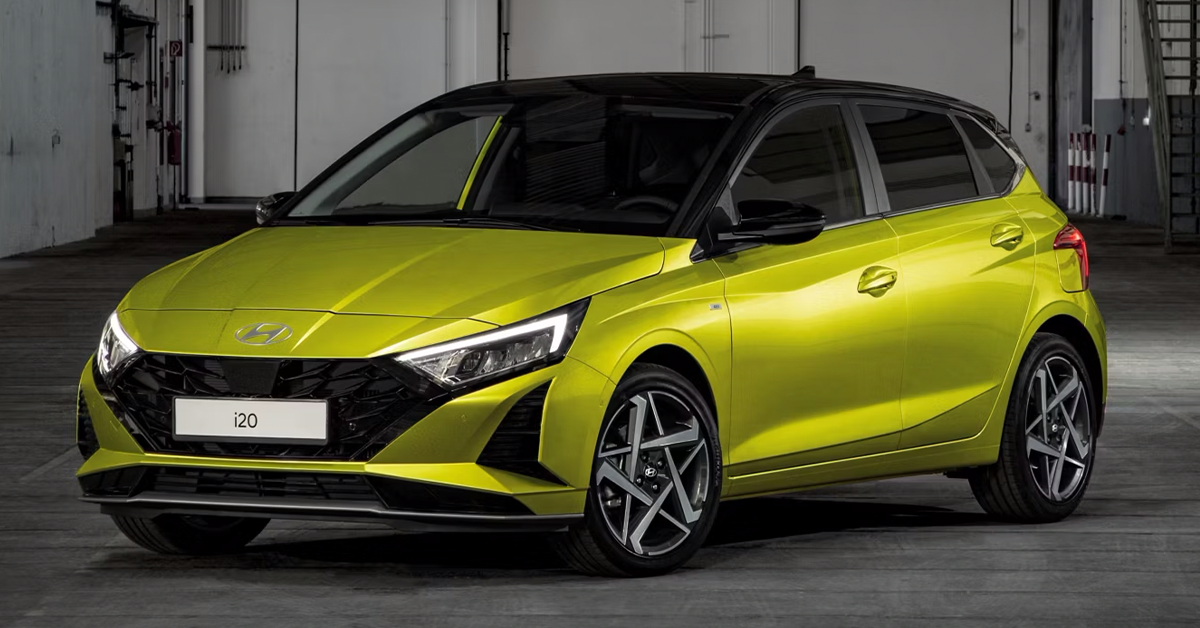
Official press image of the Hyundai i20. | © Hyundai Motor Deutschland
Hyundai i20. India prices from 5.99 lakh rupees, the 1.2 Kappa engine, six airbags, the 90 PS Europe model, N Line and the story since 2008.
The Hyundai i20 is a premium hatchback sold mainly in Europe and India, and the two markets get different cars. Hyundai’s worldwide history page says the i20 was unveiled in 2008, that the second generation was released in 2014 and that the third generation launched in 2020 (Hyundai). A trade report says the third generation is still on sale and that the i20 passed 15 lakh cumulative sales in India, reported on July 24, 2026 (reported). Our Hyundai Models article covers the wider Hyundai range. From the 2008 unveiling to 2026 is 18 years, since 2026 minus 2008 is 18 (Hyundai, our calculation).
| Unveiled | 2008 (Hyundai) |
| Second generation | 2014 (Hyundai) |
| Third generation | 2020 (Hyundai) |
| India starting price | 5,99,000 rupees ex-showroom (Hyundai) |
| India engine | 1.2 Kappa petrol (Hyundai) |
| Europe engine, 2027 | 1.0 T-GDI, 66 kW, 90 PS (Hyundai) |
| Europe boot | 352 liters (Hyundai) |
| India customers | More than 1.47 million (Hyundai) |
| India cumulative sales | 15 lakh by July 24, 2026 (reported) |
| India warranty | 3 years or 1,00,000 km (Hyundai) |
We read Hyundai’s own pages first. For India those are the February 5, 2026 price release, the Hyundai India price page, the i20 brochures from 2020 and 2024 and Hyundai Motor India’s annual report. For Europe they are the Hyundai Germany model year 2027 release of July 16, 2026 and the Hyundai Europe press kit of September 2023. Trade reports fill the gaps and carry the reported tag, and we do not name them. Prices and availability may have changed since publication, and exchange rates are not applied.
In India the i20 is a petrol hatchback. Hyundai India lists the 1.2-liter Kappa petrol engine across the range, with a 5-speed manual or an IVT automatic (Hyundai). The base Era starts at 5,99,000 rupees ex-showroom and comes with six airbags (Hyundai). A lakh means 100,000, so 5,99,000 rupees is 5.99 lakh (Hyundai, our calculation). Hyundai India says the i20 has built a legacy of more than 1.47 million customers over more than 15 years (Hyundai).
In Europe the i20 has one engine now. The Hyundai Germany release for model year 2027 lists a 1.0-liter turbocharged three-cylinder petrol with 66 kW, or 90 PS, a standard 6-speed manual and an optional 7-speed dual-clutch automatic (Hyundai). It says the car is still built at Hyundai’s plant in Izmit, Turkey, and has a boot of 352 liters (Hyundai). A 2023 Hyundai release gave a starting price of 18,900 euros for the revised i20 (Hyundai).
A fourth generation has been shown. Trade reports say Hyundai unveiled it in Brazil in June 2026, with a more crossover-like body, and that Hyundai Europe says its own version will differ (reported). The Hyundai pages we read do not describe the fourth generation, so we treat every detail of it as reported. The third generation is 6 years old at the end of 2026, since 2026 minus 2020 is 6 (Hyundai, our calculation). One report says Hyundai has not announced plans to sell it in India (reported).
This guide covers prices and variants in India, the Indian engines, size and equipment, safety, the European range, the generations, the fourth generation and the conflicts between sources. We mark every figure Hyundai, reported or our calculation, and we show both values where sources disagree. We found no Hyundai page that gives an i20 crash-test score, so we give none from Hyundai. Check a Hyundai dealer for current prices, because Hyundai says prices and variants may change without notice (Hyundai). The European range has four trims, Select, Trend, Blackline and Prime, and a 352-liter boot (Hyundai).
Hyundai Motor India announced new i20 pricing on February 5, 2026. Its price table lists the Era at 5,99,000 rupees, the Magna Executive at 6,73,900 and the Magna at 6,99,900, all ex-showroom (Hyundai). The release text rounds the Magna Executive to 6.74 lakh and the Magna to 6.99 lakh, so the table figures are the exact ones (Hyundai). The text figure is 100 rupees above the Magna Executive price and 900 below the Magna price (Hyundai, our calculation). The span from the Era to the Magna is under 1,01,000 rupees across the three listed trims (Hyundai, our calculation).
| Era | 5,99,000 rupees (Hyundai) |
| Magna Executive | 6,73,900 rupees (Hyundai) |
| Magna | 6,99,900 rupees (Hyundai) |
| Dealer touchscreen option | 14,999 rupees (Hyundai) |
| Era to Magna Executive | 74,900 rupees (Hyundai, our calculation) |
| Magna Executive to Magna | 26,000 rupees (Hyundai, our calculation) |
| Era to Magna | 1,00,900 rupees (Hyundai, our calculation) |
| Top price, February | 10.57 lakh rupees (reported) |
| Top price, July | 10.63 lakh rupees (reported) |
| Top price, October | 10.68 lakh rupees (reported) |
The steps between trims are small. The Magna Executive costs 74,900 rupees more than the Era, since 6,73,900 minus 5,99,000 is 74,900 (Hyundai, our calculation). The Magna costs 26,000 rupees more than the Magna Executive, since 6,99,900 minus 6,73,900 is 26,000 (Hyundai, our calculation). From the Era to the Magna the climb is 1,00,900 rupees, since 6,99,900 minus 5,99,000 is 1,00,900 (Hyundai, our calculation). The release names a new starting price for the Era (Hyundai).
Hyundai also sells a touchscreen as a dealer-installed option. The release lists a 25.55 cm, or 10.1-inch, infotainment screen with wireless Apple CarPlay and Android Auto and a rear camera for 14,999 rupees, with a 3-year warranty (Hyundai). Adding it to the Era gives 6,13,999 rupees and adding it to the Magna gives 7,14,899, since 5,99,000 plus 14,999 is 6,13,999 and 6,99,900 plus 14,999 is 7,14,899 (Hyundai, our calculation). The release does not say the screen is fitted at the factory (Hyundai).
The trim list is longer than the release. Hyundai India’s price page names the Era, Magna, Sportz, Sportz (O), Sportz (O) Knight, Asta and Asta (O), and its closing paragraph adds Asta (O) Knight (Hyundai). That is eight names, and the page does not list the Magna Executive (Hyundai, our calculation). Its variant price table is empty. A trade report says the 2026 i20 comes in seven trims, while a catalog counts 15 variants in October 2026 and an older catalog counts 14 (reported).
Reported ranges move with each report. A trade report gives 5.99 to 10.57 lakh rupees in February 2026, 6 to 10.63 lakh in July 2026 and a catalog gives 6 to 10.68 lakh in October 2026 (reported). The top price rose 6,000 rupees from February to July and 5,000 from July to October, 11,000 in all, since 10.63 minus 10.57 is 0.06 lakh, 10.68 minus 10.63 is 0.05 lakh and the two add to 0.11 lakh (reported, our calculation). The July report gives the N Line at 9.27 to 11.74 lakh (reported).
The N Line costs more than the standard car. Its top price is 1,11,000 rupees above the top standard i20, since 11.74 minus 10.63 is 1.11 lakh (reported, our calculation). The 2020 launch prices were 6.79 lakh for the entry car and 10.59 lakh for the diesel Asta (O) dual-tone, so the new Era is 80,000 rupees cheaper than the 2020 entry price, since 6.79 minus 5.99 is 0.80 lakh (reported, our calculation). We do not adjust for inflation, and exchange rates are not applied. The top price rose 0.09 lakh, or 9,000 rupees, from the 2020 diesel top of 10.59 lakh to the October 2026 top of 10.68 lakh (reported, our calculation).
The standard Indian i20 has one engine. Hyundai India says the 1.2-liter Kappa petrol powers the range, with a 5-speed manual and an IVT automatic (Hyundai). The 2024 brochure lists 61 kW, or 83 PS, at 6,000 rpm with the manual and 64.7 kW, or 88 PS, at 6,000 rpm with the IVT, plus Normal and Sports drive modes (Hyundai). The kilowatt figures match the PS figures, since 61 times 1.36 is about 83 and 64.7 times 1.36 is about 88 (Hyundai, our calculation).
| Standard engine | 1.2 Kappa petrol (Hyundai) |
| Displacement | 1,197 cc (reported) |
| Power, manual | 61 kW, 83 PS at 6,000 rpm (Hyundai) |
| Power, IVT | 64.7 kW, 88 PS at 6,000 rpm (Hyundai) |
| Torque | 11.7 kgm at 4,200 rpm (reported) |
| Gearboxes | 5-speed manual, IVT (Hyundai) |
| Drive modes | Normal and Sports (Hyundai) |
| N Line engine | 1.0 turbo GDi, 120 PS (Hyundai) |
| Diesel | Discontinued in 2023 (reported) |
| Claimed mileage | 16 to 20 kmpl (reported) |
The IVT has more power than the manual. The gap is 5 PS, since 88 minus 83 is 5 (Hyundai, our calculation). A copy of a Hyundai brochure hosted on a dealer site lists 1,197 cc, 11.7 kgm at 4,200 rpm and a 5-speed manual, with McPherson strut front and coupled torsion beam rear suspension (reported). The torque matches catalogs that give 114.7 Nm, since 11.7 times 9.807 is about 114.7 (reported, our calculation).
Power figures differ between listings. Catalogs give 82 to 87 bhp, 83.14 PS for the manual and 88.21 PS for the IVT, and trade reports give 83 hp (reported). Hyundai gives 83 PS and 88 PS (Hyundai). PS and bhp are different units and we do not convert them, so these are not true conflicts. The same Kappa engine is used on all variants, so the gearbox sets the output and not the engine size (Hyundai). The 1,197 cc displacement and the torque agree across the sources we read (reported).
The turbo is now an N Line engine. A Hyundai India brochure lists a 1.0-liter turbo GDi petrol with 88.3 kW, or 120 PS, at 6,000 rpm with the DCT (Hyundai). A trade report says the third generation was the first i20 in India with a turbo-petrol and that it is now limited to the N Line, with a 6-speed manual or 7-speed DCT (reported). The turbo has 37 PS more than the standard car, since 120 minus 83 is 37 (Hyundai, our calculation). That is about 45 percent more, since 120 divided by 83 is 1.45 (Hyundai, our calculation).
The diesel is gone. Hyundai’s 2020 brochure lists a 1.5-liter U2 CRDi diesel with 73.5 kW, or 100 PS, at 4,000 rpm (Hyundai). A trade report says the diesel was discontinued in 2023 (reported). The diesel had 17 PS more than the 83 PS petrol, since 100 minus 83 is 17 (Hyundai, our calculation). Reports say the first generation had 1.2 and 1.4-liter petrols and a 1.4-liter diesel, and the Elite i20 had a 1.2-liter petrol and a 1.4-liter diesel (reported).
Mileage comes from reports. Catalogs list 16 to 20 kmpl for the current car, and an older listing gives ARAI claims of 25 kmpl for the diesel manual, 21 for the petrol manual and 20.28 for the petrol automatic (reported). Hyundai’s pages we read give no mileage figure (Hyundai). A catalog lists a 37-liter fuel tank, which gives 592 to 740 km at 16 to 20 kmpl, since 37 times 16 is 592 and 37 times 20 is 740 (reported, our calculation). Real-world figures will be lower.
Hyundai’s 2020 brochure lists an overall length of 3,995 mm and a width of 1,775 mm (Hyundai). Catalogs add a height of 1,505 mm and a wheelbase of 2,580 mm (reported). Catalogs list a boot of 311 liters, and one catalog says its boot figure is reported by users and not given by Hyundai (reported). The Hyundai India pages we read give no boot figure, so treat 311 liters as unconfirmed (Hyundai). The width exceeds the height by 270 mm, since 1,775 minus 1,505 is 270 (Hyundai, reported, our calculation). The 2,580 mm wheelbase is about 65 percent of the 3,995 mm length, since 2,580 divided by 3,995 is 0.65 (Hyundai, reported, our calculation).
| Length | 3,995 mm (Hyundai) |
| Width | 1,775 mm (Hyundai) |
| Height | 1,505 mm (reported) |
| Wheelbase | 2,580 mm (reported) |
| Boot, India | 311 liters, unconfirmed (reported) |
| Touchscreen, brochure | 10.25 in with navigation (Hyundai) |
| Touchscreen, dealer option | 10.1 in (Hyundai) |
| Audio | Bose, 7 speakers (Hyundai) |
| Wheels | 16-inch diamond-cut alloys (Hyundai) |
| Colors | 6 single-tone and 2 dual-tone (Hyundai) |
The European car has a different boot. Hyundai Europe lists 352 liters with the rear seats up and 1,165 liters with them folded (Hyundai). The folded gain is 813 liters, since 1,165 minus 352 is 813 (Hyundai, our calculation). The unconfirmed Indian boot figure is 41 liters smaller than the European one, since 352 minus 311 is 41 (Hyundai, reported, our calculation). The two cars are built for different markets, so the comparison is only a guide.
The 2024 brochure lists a lot of technology. It names a 26.03 cm, or 10.25-inch, HD touchscreen with navigation, a Bose premium 7-speaker system, 12 interface languages, Alexa in English and Hindi, over-the-air updates for maps and infotainment, Type-C fast charging, a wireless charger and a digital cluster with a TFT display (Hyundai). The dealer-installed screen in the 2026 release is 10.1 inches, which is 0.15 inch smaller (Hyundai, our calculation). The European Bose system has eight speakers (Hyundai).
Equipment depends on the trim. The brochure lists fully automatic temperature control, rear AC vents, cruise control, push-button start, 16-inch diamond-cut alloy wheels, LED headlamps with daytime lamps, Z-shaped LED tail lamps, blue ambient lighting and seven ambient nature sounds (Hyundai). The 2026 release says the Era has a fully digital cluster and skid plates, while the Magna adds an electric sunroof, LED daytime lamps and rear AC vents (Hyundai). The top-trim items are not on the Era.
The colors are limited. The brochure lists six single-tone colors, Fiery Red, Amazon Grey, Atlas White, Titan Grey, Typhoon Silver and Starry Night, and two dual-tone options with a black roof (Hyundai). That is eight options, since 6 plus 2 is 8 (Hyundai, our calculation). A trade report lists the same six single-tone colors (reported). Hyundai India’s price page mentions Knight editions with a darker exterior theme (Hyundai). An older catalog lists four colors (reported).
Warranty and costs come next. Hyundai lists a standard warranty of 3 years or 100,000 km and an extended warranty of up to 7 years on petrol variants (Hyundai). The brochure includes 3 years of free Bluelink with more than 60 connected features (Hyundai). It claims an average yearly periodic maintenance cost of 3,157 rupees over five years in Delhi, against 2,875 rupees in the 2020 brochure, a gap of 282 rupees (Hyundai, our calculation). The brochure cites a third-party catalog for the claim, so treat it as a claim.
Hyundai India says every i20 has six airbags. The February 2026 release lists six airbags on the base Era (Hyundai). The 2024 brochure lists six standard airbags, ESC with vehicle stability management, an emergency stop signal, hill-start assist, ISOFIX anchors and a rear camera with dynamic guidelines, plus rear parking sensors and 3-point belts with reminders on all seats (Hyundai). It claims 26 standard safety features (Hyundai). We cannot check which items the 26 include (Hyundai).
| India airbags | 6 on every trim (Hyundai) |
| Stability control | ESC with VSM (Hyundai) |
| Standard safety features | 26 claimed in brochure (Hyundai) |
| Child seat anchors | ISOFIX (Hyundai) |
| Rear view | Camera with dynamic guidelines (Hyundai) |
| Six-airbag standard | All models and trims since 2023 (Hyundai) |
| Europe emergency call | eCall 4G on all variants (Hyundai) |
| Europe braking | AEB for vehicles, pedestrians, cyclists (Hyundai) |
| Europe adaptive cruise | Optional on Prime (Hyundai) |
| Global NCAP | 3 stars, per a catalog (reported) |
The six-airbag standard is a company-wide step. Hyundai Motor India’s 2025-26 annual report says Hyundai became India’s first mass-market maker to standardize six airbags across all models and trims in 2023 (Hyundai). The brochure also lists a body structure with advanced high-strength steel, impact-sensing auto door unlock, speed-sensing auto door lock, automatic headlamps, a burglar alarm and a tire pressure monitor with a display on the highline trim (Hyundai). The six-airbag rule dates from 2023, three years before the February 2026 price release, since 2026 minus 2023 is 3 (Hyundai, our calculation).
The crash rating is not on a Hyundai page. A catalog lists a 3-star Global NCAP rating for the i20 (reported). We found no Hyundai page with an i20 crash score, and we do not know which test year the catalog means (Hyundai, reported). Our Hyundai Verna article covers the Verna’s 5-star rating, which Hyundai Motor India’s annual report states (Hyundai). Star ratings from different years and test rules are not directly comparable.
The European car has more driver assistance. The Hyundai Germany release lists autonomous emergency braking with front collision warning for vehicles, pedestrians and cyclists, with turn assist at junctions on the Prime trim (Hyundai). It lists lane following and lane keeping assist, intelligent speed limit assist, driver attention warning, a high beam assistant, an occupant alert for rear seats, blind-spot warning and a rear cross-traffic assistant that brakes when reversing (Hyundai). That is nine functions, since the list names braking, lane following, lane keeping, speed limit assist, driver attention warning, high beam assist, a rear occupant alert, blind-spot warning and rear cross-traffic assist (Hyundai, our calculation).
Adaptive cruise is optional. The release lists navigation-based adaptive cruise control and a parking assistant in an optional assistance package on the Prime trim (Hyundai). It says the next-generation eCall on 4G is standard on all variants and triggers when the airbags deploy (Hyundai). The 2023 press kit listed forward collision assist with cyclist detection and lane following as standard, with rear cross-traffic assist, blind-spot assist and navigation-based cruise as options (Hyundai). The 2027 text does not say which of these are standard on every trim.
Other Hyundai sheets add detail. A Hyundai specification sheet with four trims, Element, Black Line, Tech Line and N Line S, marks eCall and rear seat alert on all four (Hyundai). Those trim names differ from the Select, Trend, Blackline and Prime names in Germany, so the sheets cover different markets or years (Hyundai). Four trims on the sheet and four in the German release match in number but not in name (Hyundai, our calculation). We found no Euro NCAP score on a Hyundai page, and we give none (Hyundai).
Hyundai Germany issued the model year 2027 release on July 16, 2026. It calls the car the third generation, updated with a facelift, and says the i20 was first launched in 2008 (Hyundai). The only engine is a 1.0-liter turbocharged three-cylinder with direct injection, rated at 66 kW, or 90 PS, with 172 Nm available from 1,500 to 3,500 rpm (Hyundai). The 6-speed manual is standard, and the 7-speed dual-clutch is optional on the Trend, Blackline and Prime trims, but not the Select (Hyundai).
| Release date | July 16, 2026 (Hyundai) |
| Engine | 1.0 T-GDI three-cylinder (Hyundai) |
| Output | 66 kW, 90 PS (Hyundai) |
| Torque | 172 Nm, 1,500 to 3,500 rpm (Hyundai) |
| Gearboxes | 6-speed manual, optional 7-speed DCT (Hyundai) |
| Boot | 352 liters, 1,165 folded (Hyundai) |
| Fuel use, WLTP | 6.0 to 5.7 l per 100 km (Hyundai) |
| Trims | Select, Trend, Blackline, Prime (Hyundai) |
| Warranty | 5 years, no mileage limit (Hyundai) |
| Built in | Izmit, Turkey (Hyundai) |
Fuel use is quoted by the WLTP test. The release gives 6.0 to 5.7 liters per 100 km combined for both gearboxes, with CO2 of 135 to 129 grams per km for the manual and 135 to 128 for the DCT, in CO2 class D (Hyundai). The manual’s spread is 6 grams, since 135 minus 129 is 6, and the DCT’s is 7, since 135 minus 128 is 7 (Hyundai, our calculation). A Hyundai Slovakia sheet lists a 40-liter fuel tank and a torque band of 1,500 to 3,000 rpm, which differs from the German 3,500 rpm (Hyundai).
The engine range has shrunk. The 2023 press kit listed a 1.2-liter MPi with 84 PS and 118 Nm, a 1.0-liter turbo with 100 PS and 172 or 175 Nm, and a 48-volt mild-hybrid 1.0 turbo with 120 PS (Hyundai). The single 90 PS engine is 10 PS below the 100 PS version and 30 PS below the 120 PS one (Hyundai, our calculation). The 2023 kit gave 13.1 seconds to 100 km/h for the 1.2-liter, and a top speed of 173 km/h in its table and 171 km/h in its text, a Hyundai conflict (Hyundai).
There are four trims. The Select has a 10.3-inch navigation touchscreen, Bluelink-Connect, Apple CarPlay and Android Auto, a 4.2-inch instrument display, a rear camera and rear parking sensors (Hyundai). The Trend adds a 10.3-inch digital cockpit, white ambient lighting, a wireless charging tray, a heated steering wheel, front seat heating, power-folding mirrors and 16-inch wheels (Hyundai). The Blackline has full LED lights and a Bose system, and the Prime has 17-inch wheels, automatic climate control, a smart key and rear outer seat heating (Hyundai).
There are seven colors for 2027. They are Lucid Lime Metallic, Vibrant Blue, Lumen Grey, Atlas White, Phantom Black, Aurora Grey and the new Fierce Red Metallic, with an optional black roof on the Prime only (Hyundai). The 2023 kit listed eight colors, so the range is one color smaller, since 8 minus 7 is 1 (Hyundai, our calculation). Hyundai gives a five-year vehicle warranty with no mileage limit, a five-year paint warranty and a five-year mobility guarantee (Hyundai). Free over-the-air map updates are included for model year 2027 (Hyundai).
The N Line is harder to pin down. Hyundai Europe’s N Line page lists nine exterior colors and an optional two-tone roof (Hyundai). The 2023 press kit lists 17-inch two-tone wheels, N sport seats with red stitching, an N steering wheel and metal pedals (Hyundai). The Hyundai Germany 2027 text does not mention the N Line (Hyundai). The 2023 release gave a starting price of 18,900 euros, the 2027 release lists no prices and a trade report put the UK range at about 20,000 pounds in December 2025 (Hyundai, reported).
Hyundai’s worldwide history page lists the i20 as an entry that starts in 2008, with the second generation in 2014 and the third in 2020 (Hyundai). It says the third generation is the first of Hyundai’s European strategic models to reflect the Sensuous Sportiness design philosophy (Hyundai). It lists a 2015 Golden Steering Wheel award for the second generation in the B segment and a 2020 gold in the Best Car category for cars up to 25,000 euros for the third (Hyundai). It also says a racing car based on the model won the WRC Rally Deutschland (Hyundai).
| First generation | 2008 (Hyundai) |
| India launch, first generation | December 2008 (reported) |
| Second generation | 2014 (Hyundai) |
| Elite i20 India launch | August 11, 2014 (reported) |
| Third generation | 2020 (Hyundai) |
| Third-generation facelift | September 2023 (reported) |
| First-generation sales, 2008 to 2012 | 2,71,361 units (reported, our calculation) |
| Sales in 2015 | 1,30,126 units (reported) |
| Awards | 2015 Golden Steering Wheel, 2020 Best Car gold (Hyundai) |
| India cumulative sales | 15 lakh by July 2026 (reported) |
In India the first generation arrived in December 2008. Trade reports say it replaced the Getz and helped create the premium hatchback segment, with a 1.2-liter petrol, a 1.4-liter petrol and a 1.4-liter diesel, and options that included a sunroof, automatic climate control, a cooled glove box and six airbags (reported). A report says it sold 196 units in 2008 and 33,446 in 2009 (reported). A facelift came in 2012, and one reference page says the first generation went on sale in India in March 2012, which conflicts with December 2008 (reported).
The first generation grew steadily. A sales table lists 71,849 units in 2010, 80,571 in 2011, 85,299 in 2012, 71,788 in 2013 and 69,116 in 2014 (reported). The 2008 to 2012 total is 2,71,361 units, since 196 plus 33,446 plus 71,849 plus 80,571 plus 85,299 is 2,71,361 (reported, our calculation). Sales fell 13,511 units from 2012 to 2013, since 85,299 minus 71,788 is 13,511 (reported, our calculation).
The Elite i20 changed the picture. A report says it launched in India on August 11, 2014, used the Fluidic Sculpture 2.0 design and won the Indian Car of the Year 2015 award on December 17, 2014 (reported). Sales were 1,30,126 units in 2015 and 1,22,489 in 2016 (reported). The 2015 jump is 61,010 units over 2014, or about 88 percent, since 1,30,126 minus 69,116 is 61,010 (reported, our calculation). A report says the Elite sold 8 lakh units over a seven-year run, but 2014 to 2020 is six years (reported, our calculation).
The third generation arrived in 2020. Reports say its Indian launch prices were 6.79 lakh to 10.59 lakh rupees, it was the first i20 in India with a turbo-petrol, a facelift came in September 2023 and the diesel left in 2023 (reported). In Europe, the Hyundai press kit is dated September 8, 2023 and the Hyundai Germany release lists the revised i20 launch on September 25, 2023 (Hyundai). The gap between the two dates is 17 days (Hyundai, our calculation).
Sales milestones show the pace. A report lists 1 lakh units in 2010, 5 lakh in 2015, 10 lakh in 2019 and 15 lakh on July 24, 2026 (reported). The second 5 lakh took 4 years and the third took 7, since 2019 minus 2015 is 4 and 2026 minus 2019 is 7 (reported, our calculation). Generations are 6 years apart, since 2014 minus 2008, 2020 minus 2014 and 2026 minus 2020 are each 6 (Hyundai, our calculation). Our Hyundai history article covers the company.
Reports say the fourth-generation i20 debuted in Brazil in June 2026, tied to Hyundai’s role as a World Cup partner (reported). They give a length of 4,130 mm, a width of 1,780 mm and a wheelbase of 2,580 mm, on a new K3 platform, with a Brazilian price from 99,000 reais (reported). That is 135 mm longer and 5 mm wider than the 3,995 mm by 1,775 mm body in Hyundai’s 2020 brochure, since 4,130 minus 3,995 is 135 and 1,780 minus 1,775 is 5 (Hyundai, reported, our calculation).
| Fourth generation | Shown in Brazil, June 2026 (reported) |
| Fourth-generation length | 4,130 mm (reported) |
| Fourth-generation width | 1,780 mm (reported) |
| Length gain over 2020 brochure | 135 mm (Hyundai, reported, our calculation) |
| Brazil price | From 99,000 reais (reported) |
| India plans | Not announced (reported) |
| Europe plans | Different version (reported) |
| Indian boot | Not on a Hyundai page (Hyundai) |
| Euro NCAP score | Not found (Hyundai) |
| i20 N return | Reported only (reported) |
Plans for other markets are unclear. A report quotes Hyundai Europe saying its i20 will be styled, engineered and refined for Europe and is a different vehicle (reported). Another says Hyundai has not announced plans to sell the fourth generation in India, and that an India crossover is expected near the end of 2026 (reported). A report says production will start at the Piracicaba plant in Brazil alongside plants in India and Turkey (reported). No Hyundai page we read confirms any of this. Hyundai names no launch date for these cars on the pages we read (Hyundai).
N models are in the news. A report from June 23, 2026 says a next-generation i20 N has been confirmed with hybrid power, after the 2026 i20 N Shadow Edition went on sale in Australia (reported). Another report quotes Hyundai’s head of research and development saying an i20 N for Europe is a must (reported). A third says an i20 N Line Carbon edition was limited to 500 units to mark ten years of the N brand (reported). We found no Hyundai page that confirms these.
Hyundai pages and reports conflict in several places. The Magna price is 6,99,900 rupees in the table against 6.99 lakh in the text, and the Magna Executive is 6,73,900 against 6.74 lakh (Hyundai). The top price is 10.57, 10.63 or 10.68 lakh rupees depending on the month (reported). The torque band is 3,000 or 3,500 rpm, and the Bose system has 7 or 8 speakers depending on the market (Hyundai). The Elite run is seven years in a report and six on Hyundai’s dates (reported).
Several items are not confirmed. We found no Hyundai page for the Indian boot, wheelbase, height, mileage, Global NCAP score or Euro NCAP score (Hyundai). The seven-trim and 15-variant counts are reported only (reported). The fourth generation is reported only (reported). A report says Hyundai has not published European dimensions, prices or trim details for the new i20 (reported). That is six items we could not confirm on a Hyundai page, counting the boot, wheelbase, mileage, Global NCAP, Euro NCAP and the fourth generation (Hyundai, our calculation).
To check this article, start with the Hyundai India February 5, 2026 release and price page, the 2024 and 2020 brochures and Hyundai Motor India’s annual report (Hyundai). For Europe, read the Hyundai Germany July 16, 2026 release and the September 2023 press kit (Hyundai). Our Hyundai Accent article covers Hyundai’s small sedan. Treat any figure tagged reported as a lead to verify, and check a Hyundai dealer for current prices.
