 Brands
Hyundai Kona — 2027 Trims, Electric, N Line and Prices
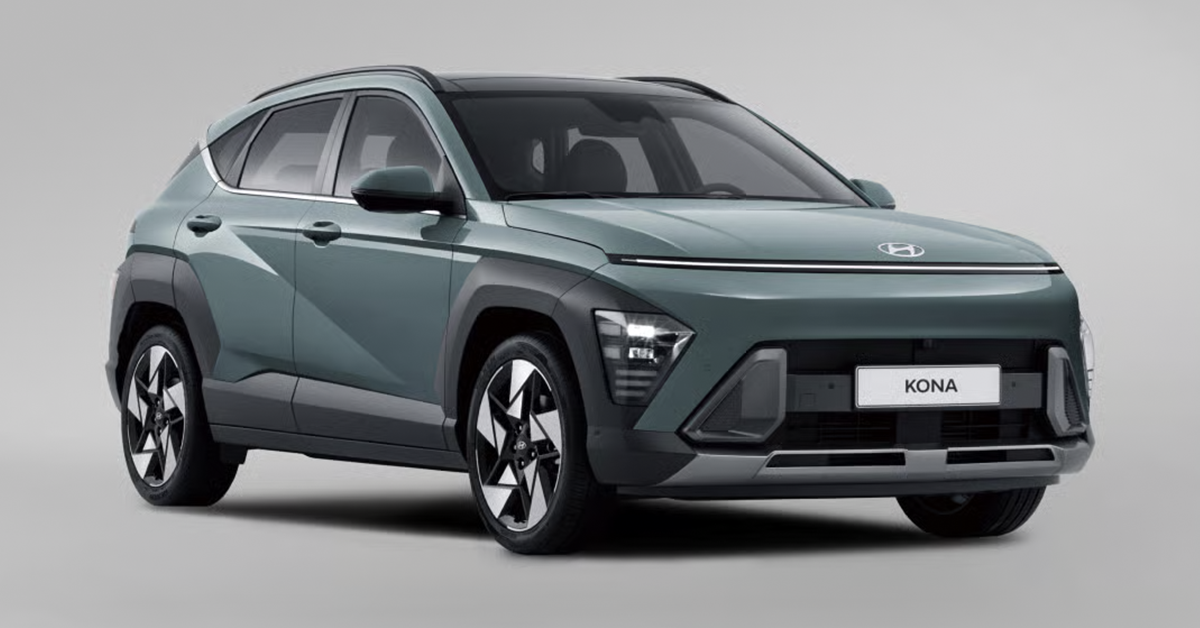
Official image of the Hyundai Kona. | © Hyundai Motor Company
Hyundai Kona. The subcompact SUV since 2017, the 2023 second generation, 147 and 190 hp engines, the Kona Electric, 2027 U.S. prices, sales and ratings.
The Kona is Hyundai’s subcompact SUV. Hyundai Motor Group says the Kona was first released in June 2017 and calls the new model a generational change (Hyundai). Hyundai held a digital world premiere of the second-generation Kona in Seoul on March 7, 2023, after revealing the Korean model on January 18, 2023 (Hyundai). The gap between the 2017 release and the 2023 premiere is 6 calendar years, since 2023 minus 2017 is 6 (Hyundai, our calculation).
| Class | Subcompact SUV, B-SUV (Hyundai) |
| First generation released | June 2017 (Hyundai) |
| Kona Electric global launch | March 2018 (Hyundai) |
| Second-generation Korea reveal | January 18, 2023 (Hyundai) |
| Second-generation global premiere | March 7, 2023 (Hyundai) |
| U.S. engines, 2027 | 2.0 L 147 hp, 1.6 L turbo 190 hp (Hyundai) |
| 2027 SE starting MSRP | 25,500 dollars (Hyundai) |
| 2027 Limited starting MSRP | 32,535 dollars (Hyundai) |
| Kona Electric sales, to June 2020 | 103,719 (Hyundai) |
| U.S. sales, 2025 | 74,814 or 64,666 (reported) |
We read Hyundai’s own pages first. They were the Hyundai worldwide newsroom releases of January 18, 2023, March 7, 2023 and July 16, 2020, the Hyundai Europe press kit of July 31, 2025 and its Kona family release, the Hyundai USA Kona page and the Hyundai Korea price list for the 2027 Kona Hybrid. Reports supply U.S. price lists, sales tables, crash-test awards and the first-generation Kona Electric sales history, and carry the reported tag. Prices and availability may have changed since publication, and exchange rates are not applied.
The second generation is larger and comes in several forms. Hyundai says it is a B-SUV available as an electric car with a standard or long-range battery, a hybrid and a combustion model, plus N Line versions of each (Hyundai). It was developed as an electric car first, in line with Hyundai’s March 2022 plan to bring 11 new EVs to market by 2030 (Hyundai). Not every version is sold in every market, and Hyundai says specifications may differ by country and region (Hyundai).
In the United States, Hyundai USA lists 2027 starting MSRPs of 25,500 dollars for the SE, 26,825 for the SEL Sport, 28,425 for the SEL Premium and 32,535 for the Limited, excluding freight, tax, title and license fees (Hyundai). The spread from SE to Limited is 7,035 dollars, which is 27.6 percent, since 32,535 minus 25,500 is 7,035 (Hyundai, our calculation). The page lists a 147 hp 2.0-liter and a 190 hp turbo 1.6-liter (Hyundai).
The Kona Electric has its own history. Hyundai says the first-generation Kona Electric launched globally in March 2018 and passed 100,000 global sales, reaching 103,719 units by June 30, 2020, with more than three quarters sold outside Korea (Hyundai). Hyundai Europe describes it as the world’s first fully electric subcompact SUV when it launched in 2018 (Hyundai). A report says the 2026 U.S. Kona Electric is a single SE trim with a 48.6 kWh battery (reported).
This guide covers the first generation, the second generation’s size, space and technology, powertrains, trims, 2026 and 2027 U.S. prices, sales, ratings and the items we could not confirm. Our Hyundai Tucson article covers the next SUV up, our Hyundai Elantra article covers the compact sedan, our Hyundai Models article lists the range and our Hyundai history article covers the company. We found no Hyundai page with U.S. Kona sales, so those figures are reported. Hyundai gives the combustion and hybrid models a length of 4,350 mm, and Hyundai Europe says European Kona sales have passed 367,000 units since 2017 (Hyundai).
Hyundai Motor Group says the first Kona was released in June 2017 as the company’s signature compact SUV (Hyundai). Hyundai Europe says it launched in Europe in 2017 with two petrol engines, and an update at the end of 2020 brought new headlights, a wider grille, a more prominent underrun protection, upgraded SmartSense safety and expanded connectivity (Hyundai). The Hyundai Europe release does not use the word generation and calls the car the new Kona (Hyundai).
| First release | June 2017 (Hyundai) |
| Europe launch | 2017, two petrol engines (Hyundai) |
| Kona Electric launch | March 2018 (Hyundai) |
| Kona Hybrid joined Europe | 2019 (Hyundai) |
| Czech Kona Electric production | From 2020 (Hyundai) |
| Kona Electric U.S. specs | 64 kWh, 258 miles, 201 hp (Hyundai) |
| Kona Electric sales, to June 2020 | 103,719 (Hyundai) |
| Kona Electric sales, 2018 | 22,787 (reported) |
| Kona Electric sales, 2020 | 85,313 (reported) |
| Kona N, Europe | 280 PS, 392 Nm (Hyundai) |
The electric version came next. Hyundai says the Kona Electric launched globally in March 2018, and its worldwide newsroom of July 16, 2020 reports 103,719 cumulative sales as of June 30, 2020 (Hyundai). That is just over two years, since March 2018 to June 2020 is 27 months (Hyundai, our calculation). Sales outside Korea made up more than three quarters of the total, so Korea took less than a quarter, or fewer than 25,930 units, since 103,719 divided by 4 is 25,930 (Hyundai, our calculation).
Hyundai gives U.S. specifications for the first-generation electric car. The release lists a 64 kWh lithium-ion battery, an EPA-estimated range of 258 miles, a 150 kW motor of 201 horsepower and 291 lb-ft of torque (Hyundai). It lists forward collision-avoidance assist, lane keeping assist, driver attention warning and blind-spot collision warning, plus a 10.25-inch touchscreen, a head-up display and wireless charging (Hyundai). The release names a goal of 560,000 battery electric vehicles a year by 2025 (Hyundai). That goal is 5.4 times the 103,719 cumulative Kona Electric sales, since 560,000 divided by 103,719 is 5.40, though the goal covers all battery electric models each year and the sales are cumulative for one model (Hyundai, our calculation). Hyundai Europe gives the 64 kWh car 484 km of WLTP range and says one car reached 1,026 km on a single charge, while the EPA figure of 258 miles is about 415 km, since 258 times 1.609 is 415 (Hyundai, our calculation).
Reports give the Kona Electric’s annual sales. They show 22,787 units in 2018, 85,313 in 2020 and 45,610 in 2021, with 285,138 cumulative sales from launch to April 2023 (reported). The 2020 total was 3.7 times the 2018 total, since 85,313 divided by 22,787 is 3.74 (reported, our calculation). The 2021 fall was 39,703 units, or 46.5 percent, which the report blames on a semiconductor shortage (reported, our calculation).
Hyundai Europe adds a full family. It says European sales of all Kona models have surpassed 367,000 units since 2017, including more than 222,000 with combustion engines, which leaves 145,000 for hybrids and electric cars, or 39.5 percent, since 367,000 minus 222,000 is 145,000 (Hyundai, our calculation). It says almost 50,000 Kona Hybrids and almost 97,000 Kona Electrics have sold there, and that the N Line is 15 percent of combustion-engined sales (Hyundai).
The first generation also had a hot version. Hyundai Europe says the Kona N used a 2.0 T-GDI of 280 PS and 392 Nm, reached 0 to 100 km/h in 6.4 seconds, had a top speed of 240 km/h and used an eight-speed wet dual-clutch (Hyundai). The Kona Hybrid joined the line-up in 2019 with a 1.6 GDI engine and a 43.5 PS motor for 141 PS combined and 265 Nm (Hyundai). The Kona Electric was built in the Czech Republic from 2020 (Hyundai). Hyundai Europe calls the Kona N Hyundai’s first hot SUV (Hyundai).
Hyundai gives the second-generation electric Kona as 4,355 mm long, 1,825 mm wide and 1,575 mm high on a 2,660 mm wheelbase, with the N Line at 4,385 mm (Hyundai). That is 175 mm longer, 25 mm wider and 20 mm taller than the 2017 model, with a wheelbase 60 mm longer (Hyundai). The earlier electric car was therefore 4,180 mm long, 1,800 mm wide, 1,555 mm high and had a 2,600 mm wheelbase, since subtracting those gains gives those values (Hyundai, our calculation).
| Length, EV | 4,355 mm (Hyundai) |
| Length, N Line | 4,385 mm (Hyundai) |
| Width | 1,825 mm (Hyundai) |
| Height, EV | 1,575 mm (Hyundai) |
| Wheelbase | 2,660 mm (Hyundai) |
| Boot, VDA | 466 liters (Hyundai) |
| Cargo, U.S., seats folded | 63.7 cu ft (Hyundai) |
| Drag coefficient | 0.27 (Hyundai) |
| Platform | K3 (Hyundai) |
| Airbags, Europe | Seven (Hyundai) |
The combustion and hybrid models are slightly different. Hyundai Europe gives 4,350 mm long and 1,570 mm high for the ICE and hybrid with 17-inch tires, and the Korean release gives 4,350 mm, 1,825 mm wide and 1,580 mm high (Hyundai). Hyundai USA gives a wheelbase of 104.7 inches, a length of 171.3 inches and a width of 71.9 inches, which are 2,659 mm, 4,351 mm and 1,826 mm, so the U.S. figures match the European ones (Hyundai, our calculation).
Space grew. Hyundai Europe gives a 466 liter boot (VDA), 105 liters more than before, and Hyundai says 723 liters (SAE) in the Korean release, while Hyundai USA gives 25.5 cubic feet with the rear seats up and 63.7 cubic feet folded (Hyundai). The previous boot was therefore 361 liters, and the 105 liter gain is 29.1 percent, since 105 divided by 361 is 0.291, which Hyundai rounds to 30 percent (Hyundai, our calculation). The rear seats split 40:20:40 and fold fully, and the electric Kona adds a 27 liter frunk, so its luggage space is 493 liters including the frunk, since 466 plus 27 is 493 (Hyundai, our calculation).
Rear space improved. Hyundai gives second-row legroom as 77 mm more and headroom as 11 mm more than before, with second-row shoulder room of 1,402 mm, which it calls the largest in its class (Hyundai). Rear legroom is 970 mm for the ICE and 925 mm for the EV, so the previous ICE figure was 893 mm, since 970 minus 77 is 893 (Hyundai, our calculation). Rear headroom is 1,013 mm, or 974 mm with the extended sunroof open, so the sunroof costs 39 mm, since 1,013 minus 974 is 39 (Hyundai, our calculation).
Hyundai says the second generation sits on its K3 platform, which also makes it larger, and between the Bayon and Tucson in Europe (Hyundai). It gives a drag coefficient of 0.27 (Hyundai). It lists dual 12.3-inch panoramic displays, Digital Key 2 Touch, full over-the-air updates and Connected Car Navigation Cockpit, the first Hyundai to use it, plus a Smart Power Tailgate with five opening heights in Europe (Hyundai). A 12-inch head-up display is not available in North America (Hyundai).
Safety is detailed. Hyundai lists Forward Collision-Avoidance Assist, Highway Driving Assist, a Blind-Spot View Monitor, Blind-Spot Collision-Avoidance Assist, Remote Smart Parking Assist, Lane Keeping Assist, Lane Following Assist, Intelligent Speed Limit Assist, Driver Attention Warning and a Surround View Monitor (Hyundai). Hyundai Europe lists seven airbags (Hyundai). The Driver Status Monitor is for Europe and Australia only, according to Hyundai (Hyundai). Hyundai USA lists the Surround View Monitor only on the Limited (Hyundai).
Hyundai USA lists two gasoline engines for the 2027 Kona. The SE and SEL Sport use a 2.0-liter four of 147 hp at 6,200 rpm and 132 lb-ft at 4,500 rpm, and the SEL Premium and Limited use a 1.6-liter turbo four of 190 hp at 6,000 rpm and 195 lb-ft from 1,700 to 4,500 rpm (Hyundai). The turbo has 43 hp more, which is 29.3 percent, since 190 minus 147 is 43, and 63 lb-ft more, which is 47.7 percent, since 195 minus 132 is 63 (Hyundai, our calculation).
| 2.0 L, U.S. | 147 hp, 132 lb-ft (Hyundai) |
| 1.6 L turbo, U.S. | 190 hp, 195 lb-ft (Hyundai) |
| 2.0 FWD mpg | 28 city, 35 highway, 31 combined (Hyundai) |
| 1.6 turbo FWD mpg | 26 city, 32 highway, 28 combined (Hyundai) |
| 1.6 turbo AWD mpg | 24, 29 and 26 (Hyundai) |
| Fuel tank | 12.4 or 13.2 gallons (Hyundai) |
| 1.6 T-GDi, Europe | 180 PS, 265 Nm (Hyundai) |
| Full hybrid, Europe | 138 PS, 265 Nm (Hyundai) |
| EV, 65.4 kWh, Europe | 160 kW, 514 km WLTP (Hyundai) |
| Kona Electric, 2025 EPA range | 200 to 261 miles (Hyundai) |
Hyundai USA gives front-wheel-drive economy of 28 city, 35 highway and 31 combined mpg for the 2.0, and 26, 32 and 28 for the turbo, with HTRAC all-wheel drive at 26, 29 and 27 and 24, 29 and 26 (Hyundai). All-wheel drive costs 4 mpg combined on the 2.0, since 31 minus 27 is 4, and 2 on the turbo, since 28 minus 26 is 2 (Hyundai, our calculation). The 2.0 uses an Intelligent Variable Transmission, and the turbo uses an eight-speed automatic (Hyundai).
The tanks hold 12.4 gallons on the SE and SEL Sport and 13.2 gallons on the SEL Premium and Limited, and the page does not state a driving range (Hyundai). At the combined ratings the range works out to about 384 miles for the front-wheel-drive 2.0, since 12.4 times 31 is 384, and about 370 miles for the front-wheel-drive turbo, since 13.2 times 28 is 370 (Hyundai, our calculation). The SE weighs 3,005 pounds with front-wheel drive and 3,203 with all-wheel drive, which is 198 more (Hyundai, our calculation).
Hyundai Europe lists more engines. The 1.0 T-GDi makes 115 PS and 200 Nm, the 1.6 T-GDi makes 150 PS and 250 Nm or 180 PS and 265 Nm, and the 1.6 GDi full hybrid makes 138 PS combined and 265 Nm (Hyundai). The 180 PS version reaches 100 km/h in 8.1 seconds and 210 km/h, while the 1.0 takes 11.9 seconds and tops out at 178 km/h (Hyundai). The Korean release listed about 198 ps, 149 ps and 141 ps for the 1.6T, 2.0 and hybrid (Hyundai).
The electric Kona has four battery and motor combinations in Europe. Hyundai lists 48.4 kWh with 114.6 kW and 377 km of WLTP range, 48.6 kWh with 99 kW and 380 km, 65.4 kWh with 160 kW and 514 km and 64.8 kWh with 150 kW and 510 km, all with 255 Nm (Hyundai). The March 2023 release gave over 490 km for the 65.4 kWh car, so the figure rose by 24 km, since 514 minus 490 is 24 (Hyundai, our calculation). Supplier allocation varies by market (Hyundai).
Charging and U.S. range are also listed. Hyundai says the 400-volt architecture charges from 10 to 80 percent in 41 minutes on a fast charger and gives Vehicle-to-Load output of 3.13 kVA in Europe and 1.63 kVA in North America (Hyundai). Hyundai USA lists EPA ranges of 261 miles for the 2025 Kona Electric Limited and SEL, 230 miles for the N Line and 200 miles for the SE (Hyundai). Hyundai Canada lists up to 420 km and up to 201 hp for its Kona Electric (Hyundai).
Hyundai USA lists four 2027 Kona trims. The SE has 17-inch alloys on 215/60R17 tires, a 4.2-inch digital gauge cluster, a 6-way driver seat and no heated seats, and the SEL Sport adds 18-inch black alloys on 215/55R18 tires, heated front seats, a leather-wrapped steering wheel and a wireless phone charger (Hyundai). All trims have a 12.3-inch touchscreen, Smart Cruise Control with Stop and Go, wireless Apple CarPlay and Android Auto, Blind-Spot Collision Warning and Rear Cross-Traffic Collision-Avoidance Assist (Hyundai). Hyundai USA gives seating for five, lists Bluelink+ with three years of complimentary map and multimedia updates, and lists roadside assistance for 5 years with unlimited miles (Hyundai).
| 2027 U.S. trims | SE, SEL Sport, SEL Premium, Limited (Hyundai) |
| SE wheels | 17 in, 215/60R17 (Hyundai) |
| SEL Sport wheels | 18 in black, 215/55R18 (Hyundai) |
| Turbo trims wheels | 19 in, 235/45R19 (Hyundai) |
| Limited gauge cluster | 12.3 in digital (Hyundai) |
| Limited audio | Bose, 8 speakers (Hyundai) |
| Dropped for 2026 | SEL, SEL Convenience, N Line, N Line S (reported) |
| Korea hybrid, Modern | 30,380,000 won (Hyundai) |
| Korea hybrid, N Line | 37,620,000 won (Hyundai) |
| Europe trims | GLS, TOP (Hyundai) |
The SEL Premium and Limited have the turbo engine, 19-inch alloys on 235/45R19 tires and an 8-way power driver seat, and the SEL Premium keeps a 4.2-inch gauge cluster (Hyundai). The Limited adds a 12.3-inch digital gauge cluster, ventilated front seats, 8-speaker Bose audio, a power tilt-and-slide sunroof, a Surround View Monitor, a Blind-Spot View Monitor, parking distance warning, Remote Smart Parking Assist, an auto-dimming mirror and ambient interior lights (Hyundai).
The trim list changed. Reports say the 2026 Kona dropped the SEL, SEL Convenience, N Line and N Line S in favor of the SEL Sport and SEL Premium, and that every Kona now wears contrasting black fenders (reported). The 2025 Kona had listed SE, SEL, SEL Convenience, N Line S, N Line and Limited at 26,045 to 33,595 dollars with destination (reported). The 2025 range was 7,550 dollars wide, since 33,595 minus 26,045 is 7,550 (reported, our calculation).
The N Line lives on in other markets. Hyundai Europe describes N Line styling with a dedicated front and rear, dual exhausts on ICE and hybrid models, metal pedals, an N Brand shift lever for the six-speed manual and 18-inch wheels, or 19-inch on the EV (Hyundai). Hyundai Korea lists a Kona Hybrid N Line at 37,620,000 won, with 18-inch alloys, wing-type spoiler and a single twin-tip muffler (Hyundai, translated from Korean). Hyundai USA listed a 2025 Kona N Line at a starting MSRP of 31,100 dollars (Hyundai).
Hyundai Korea lists three trims for the 2027 Kona Hybrid. They are Modern at 30,380,000 won, Black Exterior at 36,980,000 won and N Line at 37,620,000 won before a tax benefit, or 29,380,000, 36,030,000 and 36,670,000 won after it (Hyundai, translated from Korean). The tax benefit is 1,000,000 won on the Modern and 950,000 won on the others, and the N Line costs 7,240,000 won more than the Modern, since 37,620,000 minus 30,380,000 is 7,240,000 (Hyundai, our calculation). Exchange rates are not applied.
Europe uses its own trim names. Hyundai Europe refers to GLS and TOP trims, with an electric-only GLS design pack of black 17-inch alloys, a black grille and a body-colored spoiler (Hyundai). The N Line seats are N Line Cloth on the GLS and Eco Alcantara and Leather on the TOP (Hyundai). The Kona Electric for 2026 in the United States is offered in SE trim only, with a 48.6 kWh battery, according to a report (reported).
Hyundai USA lists 2027 starting MSRPs of 25,500 dollars for the SE, 26,825 for the SEL Sport, 28,425 for the SEL Premium and 32,535 for the Limited, excluding freight, tax, title and license fees (Hyundai). The steps are 1,325 dollars from SE to SEL Sport, 1,600 to SEL Premium and 4,110 to Limited, which add to 7,035 dollars, since 26,825 minus 25,500, 28,425 minus 26,825 and 32,535 minus 28,425 give those values (Hyundai, our calculation).
| 2027 SE | 25,500 dollars (Hyundai) |
| 2027 SEL Sport | 26,825 dollars (Hyundai) |
| 2027 SEL Premium | 28,425 dollars (Hyundai) |
| 2027 Limited | 32,535 dollars (Hyundai) |
| All-wheel drive premium | 1,500 dollars (reported) |
| Destination | 1,600 dollars (reported) |
| 2026 SE with destination | 26,950 or 26,845 dollars (reported) |
| 2026 SEL Premium with destination | 30,150 dollars (reported) |
| Powertrain warranty | 10 years or 100,000 miles (Hyundai) |
| New-vehicle warranty | 5 years or 60,000 miles (Hyundai) |
A listing gives all-wheel-drive 2027 prices of 27,000 dollars for the SE, 28,325 for the SEL Sport, 29,925 for the SEL Premium and 34,035 for the Limited, each 1,500 dollars above its front-wheel-drive price (reported, our calculation). Reports give a destination charge of 1,600 dollars, so the SE with destination is 27,100 dollars, since 25,500 plus 1,600 is 27,100 (reported, our calculation). Another report puts the 2027 range with destination at 27,150 to 34,185 dollars (reported). The Limited all-wheel drive at 34,035 dollars is 8,535 above the SE front-wheel drive, since 34,035 minus 25,500 is 8,535 (reported, our calculation). Hyundai USA lists an estimated net price label for the SE but shows no value for it (Hyundai).
The 2026 Kona is priced from 26,950 dollars for the SE, 28,275 for the SEL Sport and 30,150 for the SEL Premium including 1,600 dollars of destination, with all-wheel drive 1,500 dollars on every trim (reported). Taking out destination gives 25,350, 26,675 and 28,550 dollars, which match another listing’s 2026 MSRPs (reported, our calculation). Against those, the 2027 SE is 150 dollars higher and the SEL Sport 150 higher, while the SEL Premium is 125 lower, since 28,425 minus 28,550 is minus 125 (Hyundai, reported, our calculation).
Another list gives a 2026 SE of 26,845 dollars, which is 105 dollars below 26,950, and equals 25,350 plus a 1,495 dollar destination charge (reported, our calculation). We therefore do not compare lists with different destination bases directly. A 2026 Limited is reported at 34,135 or 34,145 dollars with destination, which conflicts by 10 dollars, and a 2025 list gave the Limited at 33,595 dollars (reported). Hyundai USA does not give a 2026 Limited price in the pages we read.
Hyundai Korea lists the 2027 Kona Hybrid at 30,380,000 won for the Modern, 36,980,000 won for the Black Exterior and 37,620,000 won for the N Line before a tax benefit (Hyundai, translated from Korean). The list says the current model was launched on April 7, 2026 (Hyundai, translated from Korean). A report gives Australian 2027 prices from 33,950 dollars for the base trim to 71,000 dollars for the top electric trim before on-road costs (reported). Exchange rates are not applied.
A 2025 report says the Kona Electric N Line started at 34,270 dollars (reported). The 2025 U.S. Kona Electric lineup had SE, SEL, N Line and Limited trims, and a report says the 2026 car is SE only with the standard battery (reported). Hyundai USA lists a 10-year or 100,000-mile powertrain warranty and a 5-year or 60,000-mile new-vehicle warranty for the 2027 Kona (Hyundai). Prices and availability may have changed since publication, and exchange rates are not applied.
Hyundai USA does not publish Kona sales in the pages we read, so the U.S. figures are reported. A sales table gives 74,814 U.S. units in 2025, down about 9 percent, and 36,169 in the first half of 2026 (reported). A separate site lists 64,666 for 2025 and 82,172 for 2024, which conflicts on 2025, and the 9 percent fall matches 82,172, since 74,814 divided by 82,172 is 0.911 (reported, our calculation). We use 74,814 and flag the conflict.
| U.S. sales, 2025 | 74,814 or 64,666 (reported) |
| U.S. sales, 2024 | 82,172 (reported) |
| U.S. sales, 2021 peak | 90,069 (reported) |
| U.S. sales, 2018 | 47,090 (reported) |
| U.S. sales, 2026 first half | 36,169 (reported) |
| Europe sales since 2017 | More than 367,000 (Hyundai) |
| Kona Electric Europe | Almost 97,000 (Hyundai) |
| North American award | 2019 Utility Vehicle of the Year (Hyundai) |
| Institute 2025 and 2026 | Top Safety Pick Plus (reported) |
| Green NCAP, Kona Electric | 5 stars, 2020 (Hyundai) |
The same site lists U.S. sales of 47,090 in 2018, 73,326 in 2019, 76,253 in 2020, 90,069 in 2021, 65,691 in 2022, 79,116 in 2023 and 82,172 in 2024 (reported). The 2021 peak was 91.3 percent above 2018, since 90,069 divided by 47,090 is 1.913 (reported, our calculation). The 2022 fall was 24,378 units, or 27.1 percent, since 90,069 minus 65,691 is 24,378 (reported, our calculation). The 2025 figure of 74,814 is 83.1 percent of the 2021 peak (reported, our calculation).
The 2025 average was about 6,235 a month, since 74,814 divided by 12 is 6,234.5, and the first half of 2026 averaged about 6,028 a month, since 36,169 divided by 6 is 6,028 (reported, our calculation). The Kona Electric is not broken out from regular Kona sales in Hyundai Motor America’s tables, according to a report (reported). Hyundai Motor America’s total U.S. sales were 901,686 in 2025, so the Kona was about 8.3 percent of them, since 74,814 divided by 901,686 is 0.083 (reported, our calculation). Total sales rose 8 percent from 836,802 in 2024, so the Kona fell while the total rose (reported). In Europe the almost 97,000 Kona Electrics are 26.4 percent of the 367,000 total, since 97,000 divided by 367,000 is 0.264 (Hyundai, our calculation).
Hyundai Europe says European Kona sales have exceeded 367,000 units since 2017 (Hyundai). Hyundai says the Kona and Kona Electric won North American Utility Vehicle of the Year for 2019, and Hyundai Europe lists iF Design, Red Dot and IDEA design awards for 2018 (Hyundai). It also lists a five-star Green NCAP rating for the Kona Electric in 2020 and a Guinness World Record for highest altitude achieved in an electric car in 2021 (Hyundai).
Crash ratings come from the Institute. It lists the 2025 to 2026 Kona as a Top Safety Pick Plus in its 2025 awards and the 2026 Kona as a Top Safety Pick Plus in its 2026 awards (reported). A reprint of Hyundai’s March 24, 2026 release lists the Kona among the 2026 Top Safety Pick Plus winners (reported). We found no NHTSA or Euro NCAP result for the second-generation Kona in the sources we read.
Hyundai Europe offers warranties on the Kona. It lists a five-year unlimited-mileage warranty on all five versions and a battery warranty of 8 years or 160,000 km, whichever comes first (Hyundai). It also lists a free five-year LIVE Services subscription and additional Bluelink connected services (Hyundai). Those terms are for Europe and may not apply to other markets. The Institute’s awards depend on the build date and trim, so check the Institute’s own page for a given car.
Several figures conflict. Hyundai Korea lists a hybrid of 141 ps and a 1.6 turbo of 198 ps, while Hyundai Europe lists 138 PS and 180 PS and Hyundai USA lists 190 hp for the turbo (Hyundai). We do not convert PS to horsepower. Hyundai says the 466 liter boot is 30 percent bigger, while our calculation gives 29.1 percent, and Hyundai gives a 723 liter SAE figure that we cannot compare to the VDA figure (Hyundai, our calculation).
| Hybrid power | 141 ps, 138 PS (Hyundai) |
| 1.6 turbo power | 198 ps, 180 PS or 190 hp (Hyundai) |
| Boot gain | 30 percent or 29.1 percent (Hyundai, our calculation) |
| 65.4 kWh range | Over 490 km or 514 km (Hyundai) |
| 2025 U.S. sales | 74,814 or 64,666 (reported) |
| 2026 SE price | 26,950 or 26,845 dollars (reported) |
| 2026 Limited price | 34,135 or 34,145 dollars (reported) |
| U.S. 2026 sales table | Not found (Hyundai) |
| U.S. Kona hybrid | Not found (Hyundai) |
| Second-generation Euro NCAP | Not found (Hyundai) |
Range and charging figures changed. The March 2023 release gave over 490 km for the 65.4 kWh car and the 2025 press kit gives 514 km, and one passage of the press kit gives the 48.4 kWh motor as 111 kW while the specification table gives 114.6 kW (Hyundai). The 2025 press kit gives 10 to 80 percent charging as 39 to 41, with no unit stated, while the 2023 release says 41 minutes (Hyundai). The press kit also gives 1,310 and 1,300 liters for the folded cargo space (Hyundai). It gives the hybrid’s transmission as a 6DCT in one passage and names a 7DCT in a fuel table entry (Hyundai).
Sales and price figures conflict. 2025 U.S. sales are 74,814 or 64,666, and the 2026 Limited with destination is 34,135 or 34,145 dollars (reported). The 2026 SE is 26,950 or 26,845 dollars because lists use 1,600 or 1,495 dollar destination charges (reported, our calculation). Hyundai USA lists no destination, tax or fees in its starting MSRPs (Hyundai).
Several items are not confirmed. We found no Hyundai page for U.S. sales, for a 2026 U.S. price list, for a second-generation Kona N or for a Kona Hybrid in the United States. We did not confirm whether the 2027 Kona Electric is sold in the United States, because Hyundai Canada’s page was only read in search summaries and we found no 2027 Hyundai USA price for it. We found no Euro NCAP or NHTSA rating for the second generation. Hyundai Canada’s page titled 2027 KONA Electric describes the 2026 KONA Electric with up to 420 km of range, so its model-year label is inconsistent (Hyundai).
The Hyundai USA page we read was truncated at 100,000 characters of 128,063, so some details may be missing (Hyundai). Some Hyundai pages are older. The Korean release of January 18, 2023 and the global release of March 7, 2023 predate the 2025 press kit, and specifications may differ by market (Hyundai). The Hyundai Korea price list is in Korean and our translation may contain errors. Hyundai also says product specification availability may differ by country and region, so a figure for one market may not apply to another (Hyundai).
To check this guide, begin with Hyundai’s March 7, 2023 global release, the Hyundai Europe press kit of July 31, 2025 and Hyundai USA’s Kona page, then compare model years before comparing numbers. Our Hyundai Tucson article covers the next SUV up, our Hyundai Elantra article covers the compact sedan and our Hyundai Models article shows where the Kona sits in the range. Prices and availability may have changed since publication, and exchange rates are not applied.
