 Brands
Hyundai Venue — New Generation, N Line, Prices and Safety
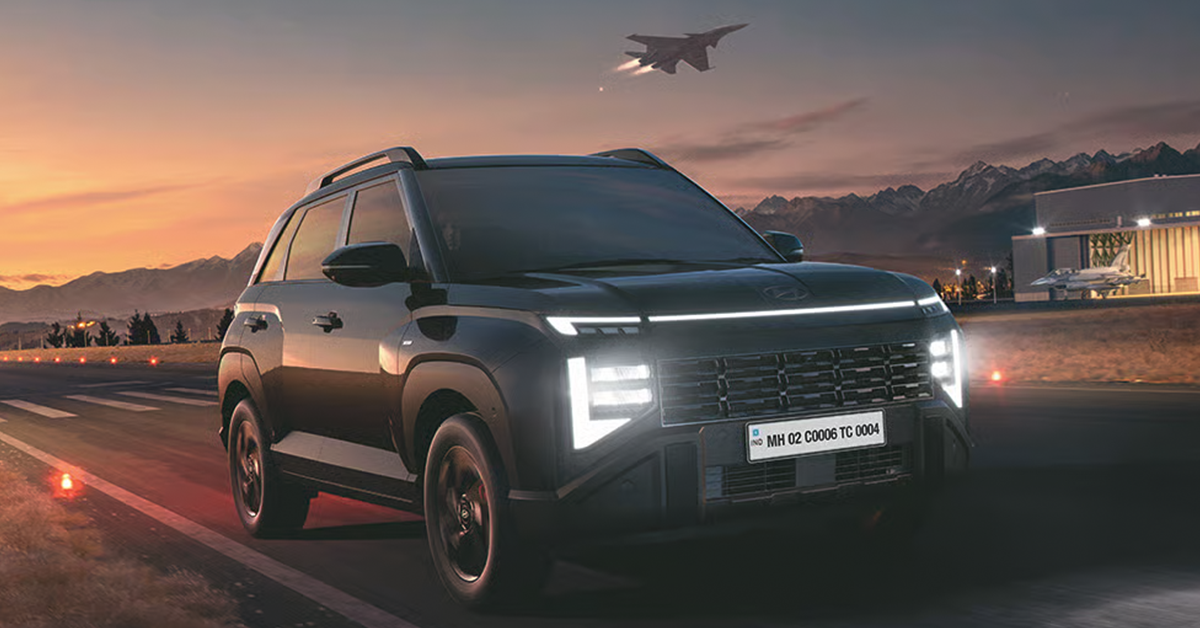
Official image of the Hyundai Venue. | © Hyundai Motor Company
The Hyundai Venue is the small SUV that sits below the Kona. It was shown at the 2019 New York International Auto Show, and an all-new second generation was announced in India on November 4, 2025. In the United States it has a 121 hp 1.6-liter engine and 2027 prices from 20,850 dollars, and in India a 120 PS turbo, where it earned 5 stars at Bharat NCAP. Here are its specs, trims, prices, sales and ratings, and where the sources conflict.
The Venue is Hyundai’s small SUV. Hyundai Australia describes the first Venue as Hyundai’s most affordable SUV, sitting below the Kona, Tucson and Santa Fe, and says it debuted at the 2019 New York International Auto Show as the 2020 Venue (Hyundai). Hyundai says the original Venue debuted in 2019 and sold more than 7 lakh units (Hyundai). Hyundai Motor India announced the all-new Venue in Gurugram on November 4, 2025 (Hyundai). The gap between 2019 and 2025 is 6 calendar years (Hyundai, our calculation). Hyundai says the Venue is the first of 26 products planned by 2030, so 25 are still to come, since 26 minus 1 is 25 (Hyundai, our calculation).
| Class | Small SUV, below the Kona (Hyundai) |
| First Venue debut | 2019 New York show (Hyundai) |
| All-new Venue announced | November 4, 2025, Gurugram (Hyundai) |
| Second-generation production | Exclusively India for global markets (Hyundai) |
| U.S. engine, 2027 | 1.6 L, 121 hp (Hyundai) |
| 2027 SE starting MSRP | 20,850 dollars (Hyundai) |
| 2027 SEL starting MSRP | 23,125 dollars (Hyundai) |
| India launch price | 7,89,900 rupees ex-showroom (Hyundai) |
| India turbo petrol | 1.0 L, 120 PS (Hyundai) |
| Bharat NCAP | 5 stars (Hyundai) |
We read Hyundai’s own pages first. They were the Hyundai worldwide newsroom key facts for the Venue and Venue N Line, the Hyundai Australia debut page of 2019, the Hyundai USA Venue page, the Hyundai India price page and the Hyundai India releases of March 10 and March 30, 2026. Reports supply sales tables, price lists, crash-test scores and the Indian sales history, and carry the reported tag. Prices and availability may have changed since publication, and exchange rates are not applied.
The second generation is a large step for Hyundai in India. Hyundai says the all-new Venue is the first product from the Pune plant of Hyundai Motor India and the first of 26 products planned by 2030, backed by an announced investment of over 45,000 crore rupees, which is 450 billion rupees since one crore is 10 million (Hyundai, our calculation). Hyundai also says the Venue will be manufactured exclusively in India for global markets, in a quote from the company’s chief operating officer (Hyundai). We could not confirm which markets receive the new car.
In the United States, Hyundai USA lists 2027 starting MSRPs of 20,850 dollars for the SE, 22,900 for the SEL with a two-tone roof and 23,125 for the SEL, excluding freight, tax, title and license fees (Hyundai). The spread from SE to SEL is 2,275 dollars, which is 10.9 percent, since 23,125 minus 20,850 is 2,275 (Hyundai, our calculation). Every trim has a 121 hp 1.6-liter engine, an intelligent variable transmission and front-wheel drive (Hyundai).
In India, Hyundai gave a starting price of 7,89,900 rupees ex-showroom for the 1.2-liter HX 2 at launch, described as introductory pricing (Hyundai). Hyundai’s price page now says 7,99,900 rupees, which is 10,000 rupees higher (Hyundai, our calculation). The Indian range offers 83 PS, 120 PS and 116 PS engines, and a Venue N Line in N6 and N10 forms (Hyundai). We do not convert PS to horsepower, and no currency conversion is given. The top of the range was reported at 15.69 lakh rupees, about 1.99 times the 7.899 lakh launch price (Hyundai, reported, our calculation).
This guide covers the first generation, the second generation’s size, space and technology, engines, trims, U.S. and Indian prices, sales, safety ratings and the items we could not confirm. Our Hyundai Kona article covers the next SUV up, our Hyundai Tucson article covers the larger compact SUV, our Hyundai Models article lists the range and our Hyundai history article covers the company.
The first Venue was shown at the 2019 New York International Auto Show as the 2020 model, and Hyundai Australia says it was built in Ulsan, Korea, with Australian arrival planned for the second half of 2019 (Hyundai). The 2019 car was built in Korea, while the all-new car is built in India, so the plant country changed between generations (Hyundai). Reports say the Venue reached the United States in November 2019 and went on sale in India in May 2019 (reported). Hyundai says the original Venue had sold over 7 lakh units by the time of the all-new model (Hyundai).
| First debut | 2019 New York show as 2020 Venue (Hyundai) |
| First-generation plant | Ulsan, Korea (Hyundai) |
| First length | 4,036 mm (Hyundai) |
| First width | 1,770 mm (Hyundai) |
| First height | 1,565 mm (Hyundai) |
| First wheelbase | 2,520 mm (Hyundai) |
| First engine | 1.6 L Smartstream Gamma DPFI (Hyundai) |
| First transmissions | 6-speed manual or 6-speed automatic (Hyundai) |
| First rear cargo | 903 litres (Hyundai) |
| India sales of original | Over 7 lakh (Hyundai) |
Hyundai Australia gave the first Venue as 4,036 mm long, 1,770 mm wide, 1,565 mm tall and 2,520 mm between the axles (Hyundai). Hyundai USA gives 159.1 inches long, 69.7 inches wide, 61.6 inches tall and a 99.2 inch wheelbase for the current U.S. car (Hyundai). Our calculation turns these into 4,041 mm, 1,770 mm, 1,565 mm and 2,520 mm, which differ from the Australian figures by 5 mm in length only (Hyundai, our calculation). The height figure of 1,565 mm and the width figure of 1,770 mm therefore agree between the two Hyundai pages (Hyundai, our calculation).
Hyundai Australia compared the Venue with the Kona. The Venue was 130 mm shorter, 31 mm narrower and 16 mm taller than the Kona, with a wheelbase 81 mm shorter (Hyundai). Total interior volume was 3,132 litres against 3,208 litres for the Kona, and passenger volume was 2,602 against 2,665 litres (Hyundai). Rear cargo capacity was 903 litres against 1,297 litres, a gap of 394 litres, which the page prints without the minus sign (Hyundai, our calculation).
The 2019 Venue used a 1.6-liter Smartstream Gamma four-cylinder with dual port fuel injection, and Hyundai Australia lists a six-speed manual or a six-speed automatic (Hyundai). The page gives no power, torque or economy figures, and says only that the engine was redesigned to improve economy while keeping power and torque (Hyundai). Safety content listed there included forward collision-avoidance assist, lane keeping assist, blind-spot collision warning, driver attention warning and rear cross-traffic warning (Hyundai). Three of the five named systems, blind-spot warning, rear cross-traffic warning and driver attention warning, are warnings rather than assists (Hyundai, our calculation).
Inside, Hyundai Australia lists an 8-inch Display Audio touchscreen with a rear view monitor, Apple CarPlay and Android Auto, a 3.5-inch TFT instrument display, dual USB ports and a leather-wrapped steering wheel (Hyundai). Eight exterior colours were offered, including Ceramic White, Black Noir, Galactic Gray, Scarlet Red, Intense Blue, Green Apple and Denim (Hyundai). The page lists 15-inch alloy wheels as standard and 17-inch alloys as available (Hyundai). Denim paired with a denim cloth and leatherette interior and a white contrasting roof, and a two-tone roof, power sunroof and privacy glass were optional (Hyundai). The cargo area had a 60/40 split flat-folding rear seat, a rear cargo cover shelf and a dual-level cargo floor (Hyundai).
By the 2027 model year the U.S. car had changed. Hyundai USA now lists a 4.2-inch TFT gauge display, an 8.0-inch touchscreen with wireless Apple CarPlay and Android Auto and an intelligent variable transmission on every trim (Hyundai). The 2019 page listed a 3.5-inch display and an 8-inch screen, so the gauge display grew by 0.7 inches, since 4.2 minus 3.5 is 0.7 (Hyundai, our calculation). Our Hyundai Models article lists the rest of the range.
Hyundai gives the all-new Venue as 3,995 mm long, 1,800 mm wide and 1,665 mm tall with a 2,520 mm wheelbase and a 45 liter fuel tank (Hyundai). Hyundai says it is 48 mm taller, 30 mm wider and has a 20 mm longer wheelbase than the existing Venue (Hyundai). Hyundai India lists it as a sub-compact SUV with five doors and front-wheel drive (Hyundai). The 2,520 mm wheelbase is 2.52 metres (Hyundai, our calculation). The Venue stays under 4 metres long, since 3,995 mm is 5 mm below 4,000 mm (Hyundai, our calculation).
| Length | 3,995 mm (Hyundai) |
| Width | 1,800 mm (Hyundai) |
| Height | 1,665 mm (Hyundai) |
| Wheelbase | 2,520 mm (Hyundai) |
| Fuel tank | 45 litres (Hyundai) |
| Touchscreen and cluster | 12.3 inch and 12.3 inch (Hyundai) |
| Sound system | Bose 8-speaker (Hyundai) |
| Connected features | 70 Bluelink features (Hyundai) |
| Body steel | 71 percent hot stamping (Hyundai) |
| N Line upgrades | 32 exclusive (Hyundai) |
Those comparisons raise a question. Subtracting the stated gains from the new figures gives a previous height of 1,617 mm, a previous width of 1,770 mm and a previous wheelbase of 2,500 mm (Hyundai, our calculation). The Hyundai Australia page gives 1,565 mm tall and 2,520 mm for the 2019 car, so height and wheelbase do not match, though width does (Hyundai). The Indian car may have differed from the 2019 export car.
Technology is a major theme. Hyundai lists a 31.24 cm (12.3 inch) navigation system accelerated by NVIDIA, a 12.3 inch digital instrument cluster, dual curved panoramic displays of 12.3 plus 12.3 inches, a Bose 8-speaker sound system and wireless Android Auto and Apple CarPlay (Hyundai). It also lists a voice-enabled smart electric sunroof, up to 20 controllers with over-the-air updates and 70 Hyundai Bluelink connected features (Hyundai). A surround view monitor and a blind spot view monitor are listed (Hyundai). Hyundai also lists six airbags, electronic stability control, hill-start assist, an electric parking brake with auto hold, a rollover sensor and 3-point seatbelts with reminders for all seats on the Venue (Hyundai). Tyre pressure monitoring is listed for the Highline trim (Hyundai).
Hyundai gives the body structure as reinforced, with 71 percent hot stamping and ultra-high-strength, advanced high-strength and high-strength steel (Hyundai). The front suspension is a McPherson strut with coil spring and the rear a coupled torsion beam with coil spring (Hyundai). The front brakes are discs, with rear discs on the N Line and drums or discs on the Venue depending on trim (Hyundai). A report says the car sits on Hyundai’s enhanced global K1 platform (reported).
Wheels and tyres are listed in three sizes for the Venue. Hyundai lists a 195/65 R15 steel wheel with cover, a 215/60 R16 styled steel wheel and a 215/60 R16 diamond-cut alloy, with a 195/65 R15 steel spare (Hyundai). The N Line uses a 215/55 R17 diamond-cut alloy (Hyundai). The 17-inch wheel is 1 inch larger than the 16-inch wheel and 2 inches larger than the 15-inch wheel, by simple subtraction (Hyundai, our calculation). So three wheel diameters are listed across the Venue and N Line (Hyundai, our calculation).
The N Line adds its own look and feel. Hyundai lists 32 exclusive upgrades, a steering wheel with performance control buttons, a wing-type spoiler, twin-tip exhaust, red brake calipers, a black interior with red highlights, metal pedals, black leather seats with N branding and Sunrise Red ambient lighting (Hyundai). Paddle shifters, traction control modes, drive mode select and a Smart Aroma Diffuser are also listed (Hyundai). Our Hyundai Kona article covers the larger N Line SUV.
The U.S. Venue has one engine. Hyundai USA lists a 1.6-liter dual port injection four-cylinder making 121 hp at 6,300 rpm and 113 at 4,500 rpm of torque, with an 11.2 to 1 compression ratio and continuously variable valve timing (Hyundai). The page does not state the torque unit, but a brochure lists 113 lb-ft (reported). Our calculation puts 113 lb-ft at about 153 Nm (reported, our calculation).
| U.S. engine | 1.6 L DPI, 121 hp at 6,300 rpm (Hyundai) |
| U.S. torque | 113 at 4,500 rpm (Hyundai) |
| U.S. transmission | Intelligent variable transmission (Hyundai) |
| U.S. EPA economy | 29 city, 33 highway, 31 combined (Hyundai) |
| U.S. fuel tank | 11.9 gallons (Hyundai) |
| India 1.2 petrol | 83 PS, 114.7 Nm, 5-speed manual (Hyundai) |
| India 1.0 turbo | 120 PS, 172 Nm, 6-speed manual or 7-speed DCT (Hyundai) |
| India 1.5 diesel | 116 PS, 250 Nm, 6-speed manual or automatic (Hyundai) |
| Turbo gain over 1.2 | 37 PS or 44.6 percent (Hyundai, our calculation) |
| Estimated U.S. range | About 369 miles (our calculation) |
The transmission is a Smartstream intelligent variable transmission, standard on all trims, and the drivetrain is front-wheel drive (Hyundai). Hyundai USA lists EPA fuel economy of 29 mpg in the city, 33 on the highway and 31 combined (Hyundai). The fuel tank holds 11.9 gallons, which is about 45.0 litres, close to the 45 litre tank listed for India (Hyundai, our calculation). Drive Mode Select with Normal, Sport and Snow is not available on the SE and is standard on the SEL trims (Hyundai).
Multiplying the tank by the combined rating gives 11.9 gallons times 31 mpg, or about 369 miles, which is about 594 km (our calculation). This is our arithmetic, not a Hyundai range claim, and real use will differ. A report lists 2,612 pounds as the curb weight for the SE, and Hyundai USA lists a range of 2,612 to 2,738 pounds, which is about 1,185 to 1,242 kg (Hyundai, our calculation).
India offers three engines. Hyundai lists a Kappa 1.2-liter MPi petrol of 1,197 cc making 61 kW (83 PS) at 6,000 rpm and 114.7 Nm at 4,200 rpm with a 5-speed manual (Hyundai). The Kappa 1.0-liter turbo GDi petrol of 998 cc makes 88.3 kW (120 PS) at 6,000 rpm and 172 Nm from 1,500 to 4,000 rpm, with a 6-speed manual or 7-speed DCT (Hyundai). The U2 1.5-liter CRDi diesel of 1,493 cc makes 85 kW (116 PS) at 4,000 rpm and 250 Nm from 1,500 to 2,750 rpm (Hyundai). The turbo peaks at 1,500 rpm against 4,200 rpm for the 1.2, a gap of 2,700 rpm, and the diesel peak band is 1,250 rpm wide against 2,500 rpm for the turbo (Hyundai, our calculation).
The Indian engines compare as follows. The turbo makes 37 PS more than the 1.2, which is 44.6 percent, and 57.3 Nm more torque, which is 50.0 percent (Hyundai, our calculation). The diesel makes 78 Nm more torque than the turbo, which is 45.3 percent, with 4 PS less power (Hyundai, our calculation). The diesel uses a 6-speed manual or a 6-speed automatic (Hyundai). Hyundai introduced an HX 8 diesel automatic at 13,69,900 rupees on March 10, 2026 (Hyundai).
The N Line uses only the turbo. Hyundai says the N Line has the 1.0-liter turbo GDi with 88.3 kW (120 PS) and 172 Nm, with a 6-speed manual or a 7-speed DCT with ISG (Hyundai). The page’s N Line table is headed 1.2-liter MPi but gives the turbo’s values, so we follow the values (Hyundai). The U.S. Venue has no turbo, no diesel and no all-wheel drive on the pages we read (Hyundai). Hyundai lists the three engines in kW as 61, 88.3 and 85 (Hyundai).
Hyundai USA lists three 2027 Venue trims, the SE, the SEL with a two-tone roof and the SEL (Hyundai). The SE has cloth seats, a 6-way adjustable driver seat, a black grille, body-colour mirrors, a manual parking brake, 15-inch alloy wheels with 185/65R15 tyres and rear drum brakes (Hyundai). The SEL trims have 17-inch alloys with 205/55R17 tyres and rear disc brakes (Hyundai). Hyundai USA lists a 16.6 foot curb-to-curb turning diameter, about 5.06 metres (Hyundai, our calculation). A catalogue lists two trim levels, so trim counts differ by source (reported).
| U.S. trims, 2027 | SE, SEL two-tone roof, SEL (Hyundai) |
| SE wheels | 15-inch alloy, 185/65R15 (Hyundai) |
| SEL wheels | 17-inch alloy, 205/55R17 (Hyundai) |
| SE rear brakes | Drum (Hyundai) |
| SEL rear brakes | Disc (Hyundai) |
| Two-tone colours | Ecotronic Gray, Mirage Green, Lunar White (Hyundai) |
| Indian variant names | 13 (Hyundai, our calculation) |
| N Line variants | N6 and N10 (Hyundai) |
| N Line standard safety features | 41 (Hyundai) |
| Venue standard safety features | 33 (Hyundai) |
The SEL with a two-tone roof adds cloth and H-Tex seats, heated front seats, a contrasting roof, roof rails, heated mirrors, proximity key with push-button start, a leather-wrapped steering wheel and shift knob, a wireless phone charger, rear USB ports and a chrome grille (Hyundai). Hyundai USA lists Ecotronic Gray, Mirage Green and Lunar White, each with a black roof (Hyundai). The plain SEL has cloth seats, a power tilt-and-slide sunroof, a driver auto-down and up window and body-colour mirrors (Hyundai).
Equipment shared by all U.S. trims is generous for the class. Hyundai lists an 8.0-inch touchscreen, wireless Apple CarPlay and Android Auto, a 4.2-inch TFT gauge display, a rear view monitor with parking guidance, Bluetooth, projector halogen headlights with High Beam Assist, a tilt-and-telescopic steering wheel, dual USB ports and a 12-volt outlet (Hyundai). Automatic temperature control is listed for the SEL trims only (Hyundai). The SEL trims also add blind-spot and rear cross-traffic warning (Hyundai). Rear occupant alert, anti-lock brakes, stability control and tyre pressure monitoring are standard on every U.S. trim (Hyundai).
Indian variants use a different naming system. Hyundai lists HX 2, HX 4, HX 5, HX 5 Knight, HX 5+, HX 6T, HX 6T Knight, HX 6, HX 7, HX 8, HX 8 Knight, HX 10 and HX 10 Knight, which is 13 names (Hyundai, our calculation). Hyundai’s page assigns the 1.2 petrol to HX 2 and HX 4, the turbo to HX 5, HX 5+, HX 6T and HX 8, and the diesel to HX 6, HX 7 and HX 10 (Hyundai). Reports describe seven or eight HX trims and 26 variants (reported).
Trim mapping is not fully settled. A report says the crash-tested cars were an HX 2 diesel manual and an HX 10 diesel automatic, yet Hyundai’s page assigns the diesel only to HX 6, HX 7 and HX 10 (reported, Hyundai). Another report says a turbo is offered in the HX 2 as well (reported). We show both, and we advise checking a dealer before ordering, because Hyundai says variants may change without prior notice (Hyundai).
The N Line has two variants, the N6 with a manual or DCT and the N10 with a DCT (Hyundai). Hyundai lists 41 standard safety features of more than 70 for the N Line, against 33 standard of more than 65 for the Venue (Hyundai). The difference is 8 standard features, since 41 minus 33 is 8 (Hyundai, our calculation). A dashcam was added to the HX 6T, HX 10 and N10, and the 1.2 HX 6 was discontinued (reported).
Hyundai USA lists 2027 starting MSRPs of 20,850 dollars for the SE, 22,900 for the SEL with two-tone roof and 23,125 for the SEL, excluding freight, tax, title and license (Hyundai). The SEL with two-tone roof costs 2,050 dollars more than the SE, and the SEL costs 225 dollars more than the two-tone SEL, since 22,900 minus 20,850 is 2,050 and 23,125 minus 22,900 is 225 (Hyundai, our calculation). Prices and availability may have changed since publication.
| 2027 SE, Hyundai USA | 20,850 dollars (Hyundai) |
| 2027 SEL two-tone, Hyundai USA | 22,900 dollars (Hyundai) |
| 2027 SEL, Hyundai USA | 23,125 dollars (Hyundai) |
| 2027 SE, report | 20,750 dollars (reported) |
| Destination charge | 1,600 dollars (reported) |
| 2026 SE before destination | 20,550 dollars (reported) |
| 2027 SE change | Up 300 dollars (Hyundai, reported, our calculation) |
| India HX 2 at launch | 7,89,900 rupees (Hyundai) |
| India HX 4 at launch | 8,79,900 rupees (Hyundai) |
| India price page | 7,99,900 rupees (Hyundai) |
Reports give lower figures. One report lists 20,750, 22,800 and 23,025 dollars for the same three trims and a 1,600 dollar destination charge (reported). Each is 100 dollars below Hyundai USA’s list, so the two sources differ by a steady 100 dollars (Hyundai, reported, our calculation). Adding the reported destination charge to Hyundai’s SE price gives 22,450 dollars before tax and fees (Hyundai, reported, our calculation). With that charge the SEL comes to 24,725 dollars and the two-tone SEL to 24,500 dollars (Hyundai, reported, our calculation).
The 2026 model is harder to pin down. Reports give the 2026 SE as 20,550 dollars before destination, and with destination as 22,150 dollars, which agrees, since 20,550 plus 1,600 is 22,150 (reported, our calculation). Other reports give 21,400 or 21,700 dollars for the same trim, which probably reflect different bases (reported). The 2026 SEL is 24,425 dollars with destination, which is 22,825 before it (reported, our calculation). The 2026 two-tone SEL is 24,200 dollars with destination, which is 22,600 before it, so the 2027 two-tone SEL is 300 dollars above (Hyundai, reported, our calculation).
Against those figures, the 2027 SE is 300 dollars above the 2026 SE, since 20,850 minus 20,550 is 300 (Hyundai, reported, our calculation). The 2027 SEL is also 300 dollars above, since 23,125 minus 22,825 is 300 (Hyundai, reported, our calculation). The first U.S. price was reported as 17,250 dollars, so the 2027 SE is 3,600 dollars or 20.9 percent higher (Hyundai, reported, our calculation). Exchange rates are not applied.
In India, Hyundai gave introductory ex-showroom prices of 7,89,900 rupees for the HX 2, 8,79,900 for the HX 4 and 9,14,900 for the HX 5, all with the 1.2-liter engine (Hyundai). The HX 4 costs 90,000 rupees more than the HX 2 and the HX 5 costs 35,000 more than the HX 4 (Hyundai, our calculation). The HX 4 is 11.4 percent above the HX 2 and the HX 5 is 15.8 percent above it, since 90,000 and 1,25,000 rupees divided by 7,89,900 give those shares (Hyundai, our calculation). Hyundai India’s price page now says 7,99,900 rupees and gives no variant table (Hyundai).
Reports give more Indian prices. At launch, reports gave a range from about 7.90 lakh to 15.69 lakh rupees, with the N Line from about 10.55 or 10.66 lakh rupees (reported). The HX 8 diesel automatic at 13,69,900 rupees is 5,80,000 rupees above the HX 2 launch price (Hyundai, our calculation). A later report gives 8 lakh rupees for the 1.2 HX 2, 10,000 rupees above launch, and a top price of 15.65 lakh rupees (reported). A Knight edition was reported at 9.70 lakh rupees from April 20, 2026 (reported). Our Hyundai Kona article lists U.S. prices for the next SUV up.
U.S. sales have grown but not in a straight line. Reports give 1,077 Venues in 2019, 17,587 in 2020, 27,094 in 2022, 28,009 in 2023, 24,607 in 2024 and 29,805 in 2025 (reported). The 2025 total is 5,198 above 2024, which is 21.1 percent, while 2024 was 3,402 below 2023, a drop of 12.1 percent (reported, our calculation). Hyundai Motor America said the Venue set an annual sales record in 2025 (Hyundai, reported).
| U.S. sales, 2019 | 1,077 (reported) |
| U.S. sales, 2023 | 28,009 (reported) |
| U.S. sales, 2024 | 24,607 (reported) |
| U.S. sales, 2025 | 29,805 (reported) |
| India domestic sales to May 2026 | 8,02,221 (reported) |
| India exports | Over 55,000 (reported) |
| India bookings, March 2026 | Over 1 lakh (Hyundai) |
| Bharat NCAP | 5 stars (Hyundai) |
| Bharat NCAP adult score | 31.15 of 32 (reported) |
| U.S. new vehicle warranty | 5 years or 60,000 miles (Hyundai) |
The 2025 figure is about 3.3 percent of Hyundai’s 901,686 total U.S. sales, and averages about 2,484 a month (reported, our calculation). A report gives 27,943 through November and 1,862 for December, which add to 29,805 (reported, our calculation). For 2026, reports give 15,625 through June, 162 or 1.0 percent above the 15,463 of the first six months of 2025, and 18,504 through July (reported, our calculation). The six monthly figures reported for 2026, 1,767, 1,897, 3,097, 2,610, 3,159 and 3,095, add to 15,625 (reported, our calculation).
In India, a report puts total domestic sales at 8,02,221 units to the end of May 2026, and says more than 55,000 units have been exported, so global sales from India exceed 8.5 lakh (reported). Adding 55,000 to 8,02,221 gives 8,57,221 (reported, our calculation). Hyundai said bookings passed 1 lakh on March 10, 2026 (Hyundai). A report gives 24,134 sales in April and May 2026 against 15,473 a year earlier, a gain of 56 percent (reported, our calculation).
A report says the Venue made up 36 percent of Hyundai Motor India’s 2.21 million utility vehicle sales from May 2019 to May 2026, which checks out, since 8,02,221 divided by 2.21 million is 36.3 percent (reported, our calculation). A report also says monthly sales peaked at 13,017 units in October 2026 in the festive season (reported). The first generation was the first compact SUV Hyundai Motor India sold, a report says (reported). The U.S. and Indian totals cover different periods and are not combined.
Hyundai India announced on March 30, 2026 that the Venue and Venue N Line achieved a 5-star rating at Bharat NCAP, for adult and child occupants (Hyundai). A report gives 31.15 of 32 points for adult protection, with 15.15 of 16 in the frontal test and 16 of 16 in the side test, and 44.46 of 49 for child protection (reported). The child restraint installation test scored 12 of 12, and the test cars were reported as an HX 2 diesel manual and an HX 10 diesel automatic (reported). The adult score is 97.3 percent and the child score is 90.7 percent (reported, our calculation). The adult total is 0.85 points below the maximum and the child total 4.54 points below, since 32 minus 31.15 is 0.85 and 49 minus 44.46 is 4.54 (reported, our calculation).
Hyundai lists six airbags, electronic stability control, hill-start assist, an electric parking brake with auto hold, four-wheel disc brakes and a rollover sensor for India, and ADAS Level 2 with 16 features (Hyundai). In the United States, Hyundai lists forward collision-avoidance assist with pedestrian detection, lane keeping assist, driver attention warning, rear occupant alert, front side and curtain airbags and a tyre pressure monitor on every trim (Hyundai). The U.S. warranty is 5 years or 60,000 miles, with 10 years or 100,000 miles on the powertrain (Hyundai). We did not find U.S. crash ratings.
Several figures conflict. Hyundai USA lists the 2027 SE at 20,850 dollars, a report lists 20,750, and a Hyundai USA page snapshot we saw for the two-tone SEL said 22,600 dollars against 22,900 on the page we read (Hyundai, reported). The 2026 SE appears as 20,550, 21,400, 21,700 and 22,150 dollars depending on whether destination is included (reported). Hyundai USA lists three 2027 trims and a catalogue lists two (Hyundai, reported). The three 2027 prices each differ by exactly 100 dollars between Hyundai USA and the report, which may point to one price revision, though we could not confirm it (Hyundai, reported, our calculation).
| 2027 SE price | 20,850 or 20,750 dollars (Hyundai, reported) |
| 2027 SEL two-tone price | 22,900 or 22,600 dollars (Hyundai) |
| 2026 SE price | 20,550, 21,400, 21,700 or 22,150 dollars (reported) |
| 2027 trim count | 3 or 2 (Hyundai, reported) |
| Wheelbase | 2,500 or 2,520 mm (Hyundai, our calculation) |
| Height before | 1,617 or 1,565 mm (Hyundai, our calculation) |
| India top price | 15.65, 15.69 or 15.83 lakh rupees (reported) |
| U.S. crash ratings | Not found (Hyundai) |
| U.S. plant | Not found (Hyundai) |
| U.S. N Line | Not found (Hyundai) |
Dimensions conflict. Hyundai says the new Venue has a wheelbase 20 mm longer and a body 48 mm taller than the existing car, which implies 2,500 mm and 1,617 mm, but the 2019 Hyundai Australia page gives 2,520 mm and 1,565 mm (Hyundai, our calculation). The 2019 length is 4,036 mm on the Australian page and about 4,041 mm from the U.S. figure of 159.1 inches (Hyundai, our calculation). The Indian car is 3,995 mm long (Hyundai).
Hyundai’s own Indian page has internal differences. It calls the Venue six-monotone in one place, though it lists five monotone colours plus dual-tone options (Hyundai). It also mentions different ADAS counts for the N Line, 21 features in one place, and its N Line specification table is headed with the 1.2-liter engine but gives the turbo’s values (Hyundai). Reported price ranges top out at 15.65, 15.69 or 15.83 lakh rupees depending on date (reported). The Hyundai worldwide page lists five monotone colours but its text says six, a difference of one, and its N Line ADAS count of 21 is 5 above the Venue count of 16 (Hyundai, our calculation).
Several items are not confirmed. We found no Hyundai page for U.S. sales, for U.S. crash ratings from the Institute or the government, or for the plant that builds the 2027 U.S. Venue. Hyundai says the all-new Venue is made exclusively in India for global markets, but we did not confirm that this includes the United States (Hyundai). We found no U.S. hybrid or turbo Venue, and no confirmed date for an N Line in the United States. We also found no Hyundai page with a 2027 Indian price list by variant, since the price page gives one starting figure only (Hyundai).
Mileage figures also vary. The 2026 U.S. rating is 29 city, 33 highway and 31 combined in every source we read, and one report says the 2027 matches (reported). We did not find the 2025 rating on a Hyundai page. The first Hyundai Australia page gave no economy figure at all (Hyundai). Hyundai India’s bookings release does not mention sales figures, export data or prices for other variants (Hyundai).
To check this guide, begin with the Hyundai worldwide Venue key facts, the Hyundai India price page and the Hyundai USA Venue page, then compare model years before comparing numbers. Our Hyundai Kona article covers the next SUV up, our Hyundai Tucson article covers the compact SUV above it, our Hyundai Models article lists the range and our Hyundai history article covers the company. We will update this guide when Hyundai publishes new prices.
