 Brands
Bentley Flying Spur Review — The Driver's Ultra-Luxury Sedan

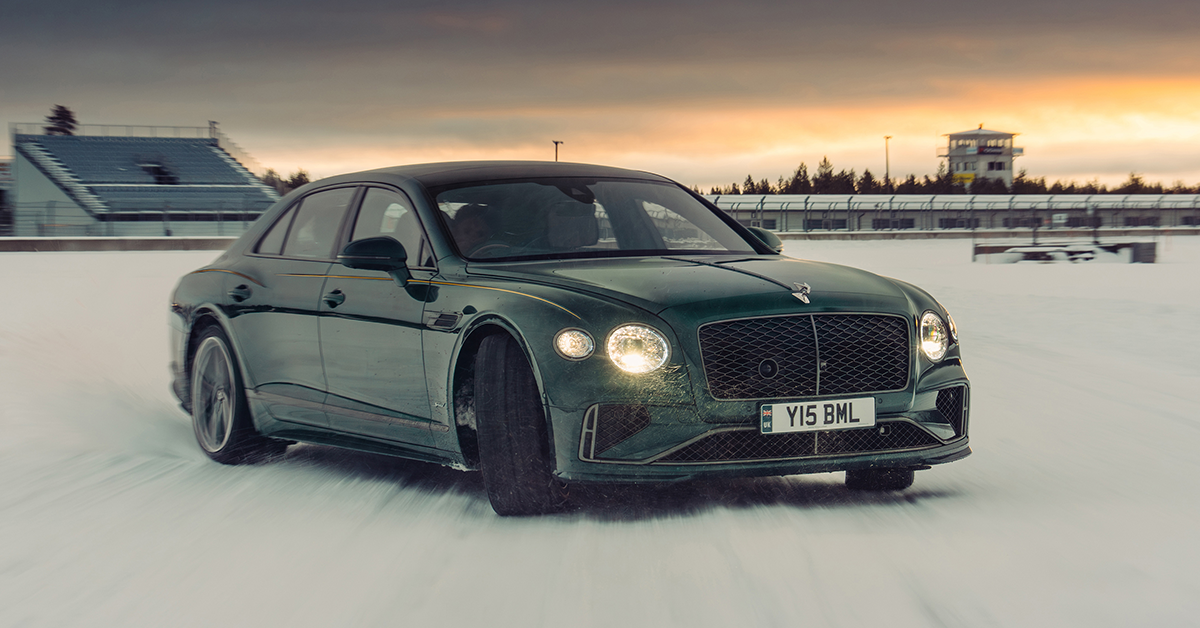
Official press image of the Bentley Flying Spur. | © Bentley Motors
Every ultra-luxury sedan eventually invites the same comparison to the Rolls-Royce Phantom, and the Bentley Flying Spur has spent two decades answering it the same honest way: it does not try to out-Phantom the Phantom. Instead, the Flying Spur builds its entire case on a different premise entirely — that a car this large, this opulent and this expensive can still reward the person sitting behind the wheel, not just the person being driven. In 2026, with the W12 gone and a genuinely potent plug-in hybrid V8 in its place, that premise is stronger than it has ever been.
The Bentley Flying Spur is for the buyer who wants to drive their ultra-luxury sedan, not simply be driven in it. It suits owners who value genuine performance, all-wheel steering agility and hybrid efficiency alongside handcrafted materials and Mulliner-level personalisation. It is not for buyers who prioritise total cabin isolation and chauffeur-first design above all else — that buyer wants the Phantom. For someone who wants a four-door that can genuinely be enjoyed at speed and still arrive looking effortless, the Flying Spur remains one of the best cars in the world.
For most of the Flying Spur’s history, the twin-turbocharged W12 was the defining engine of the range — a genuinely enormous, historically significant powertrain that gave Bentley sedans their signature smoothness and sheer scale of thrust. For 2026, it is gone entirely, replaced across the range by a plug-in hybrid powertrain pairing a 4.0-litre twin-turbocharged V8 with an electric motor. On paper this looks like a downgrade to purists. In practice, it is anything but.
The standard hybrid powertrain produces 671 horsepower, while the range-topping Speed trim pushes that to 771 horsepower — a genuine increase over the outgoing W12’s output, delivered through an 8-speed dual-clutch transmission and standard all-wheel drive. 0–60mph times range from 3.8 seconds in standard trims down to 3.3 seconds in Speed guise — figures that would have been genuinely startling for a car this size a decade ago, and remain properly quick today. The car also gains something the W12 never offered: approximately 30 miles of electric-only driving range, allowing genuinely silent, zero-emission running for typical urban commuting before the V8 engages.
The Flying Spur’s case for being the driver’s choice in this segment rests heavily on its chassis technology. Standard all-wheel steering tightens the car’s turning circle at low speed and adds genuine stability during high-speed lane changes — a meaningful benefit in a car that stretches well over 5.3 metres in length. The Dynamic Ride system uses 48-volt active anti-roll technology to counteract body lean through corners in real time, allowing the Flying Spur to carry genuine pace through a b-road in a way few full-size luxury sedans can match, while still delivering the composed, isolated ride Bentley buyers expect at a cruise.
This is the fundamental difference between the Flying Spur and its most obvious rival. The Phantom is engineered to erase the sensation of speed and motion entirely. The Flying Spur is engineered to let you feel connected to the road when you want to be, and disappear into comfort when you don’t. Neither approach is wrong — they simply serve different owners.
This grand-touring four-door marries the legendary high-end experience of Bentley sedans with a powerful plug-in hybrid powertrain and impeccable road manners.
— Bentley Motors, official Flying Spur product descriptionInside, the Flying Spur leans fully into Bentley’s handcraft reputation. The leather is sourced specifically from herds that graze above sea level in Northern Europe — chosen because higher-altitude grazing produces hides with fewer insect bites and blemishes, a detail that sounds like marketing flourish until you understand how few usable hides that standard actually yields per animal. Veneers are hand-selected wood or engine-turned aluminium finishes that echo the brand’s motorsport heritage. Buyers can choose from seven standard exterior colours or more than 80 extended finishes through Bentley’s in-house Mulliner personalisation division, alongside an optional retractable illuminated Flying B hood ornament and dual-tone paint schemes.
The audio system options are worth calling out specifically: buyers choose between a Bang & Olufsen 1,500-watt system with 16 speakers or a Naim 2,200-watt system with 19 speakers — both genuinely reference-grade setups rarely matched even in this segment. Rear passengers can be specified with dual touchscreen Rear Entertainment displays, and the cabin's overall build quality — formed from superformed aluminium body panels for exceptionally tight, smooth panel gaps — reflects the same manufacturing precision that defines every Bentley product.
| Engine | 4.0L twin-turbocharged V8 + electric motor (PHEV) |
| Power (standard) | 671 hp |
| Power (Speed trim) | 771 hp |
| Transmission | 8-speed dual-clutch |
| Drive | All-wheel drive, standard all-wheel steering |
| 0-60 mph (standard) | 3.8 seconds |
| 0-60 mph (Speed) | 3.3 seconds |
| Electric-only range | ~30 miles |
| Wheels | 20-inch (entry) to 22-inch (higher trims) |
| Suspension | 48V Dynamic Ride active anti-roll |
| Cargo Space | Up to 12.2 cu ft |
| Audio (Option 1) | Bang & Olufsen 1,500W, 16 speakers |
| Audio (Option 2) | Naim 2,200W, 19 speakers |
| US Starting Price | $292,800 |
| Azure Trim (typical MSRP) | ~$310,000–$337,000 |
| Name Origin | 1860 tea clipper ship, London-China trade route |
| Warranty | 36-month basic, powertrain and roadside assistance |
The Flying Spur’s exterior design deliberately avoids the kind of visual drama that would compete with its own driving experience. The body is formed from superformed aluminium panels producing exceptionally smooth surfaces, fronted by crystal-effect LED headlights and Bentley’s large chrome grille. The rear remains clean and understated by comparison — there is no attempt here to shout. For buyers who prefer a more aggressive stance, the Black Optic package replaces the chrome accents with dark trim throughout, giving the car a noticeably more purposeful presence without altering any of the underlying mechanical character.
Losing the W12 could have been a genuine blow to the Flying Spur’s identity, and Bentley deserves real credit for turning that transition into an upgrade rather than a compromise. The plug-in hybrid V8 is more powerful, more efficient, and genuinely more usable day-to-day thanks to its electric-only range — all while the all-wheel steering and active anti-roll technology keep the car’s driving character sharper than anything else in this price bracket. Against the Rolls-Royce Phantom, the honest comparison is this: the Phantom wins on total cabin isolation and bespoke ceiling, but the Flying Spur wins comprehensively on the experience of actually driving the car yourself, at a starting price roughly $235,000 lower. For the buyer who wants their ultra-luxury sedan to still feel alive from behind the wheel, the Flying Spur remains the clear choice in 2026 — arguably stronger than at any point in its history.