 Brands
Honda Avancier — Prices, Specs and Generations
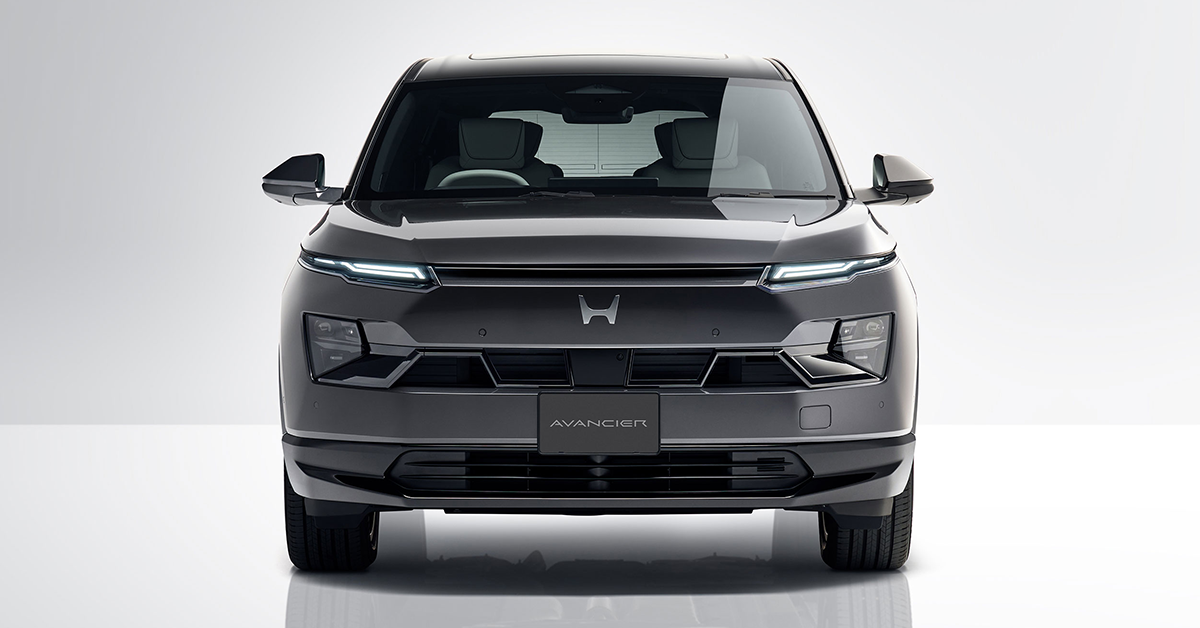
Official press image of the Honda Avancier. | © Honda Motor Co., Ltd.
The Avancier is a Honda nameplate used on a 1999 Japan wagon, a 2016 China SUV and an all-new 2026 three-row hybrid SUV. Here are Honda's own facts for each, plus where Honda pages and reports disagree.
Honda has put the Avancier name on three different vehicles: a Japan-market wagon that Honda announced on September 13, 1999 (Honda), a China-market SUV that Honda unveiled on April 25, 2016 (Honda), and an all-new three-row SUV that Honda unveiled in an online world premiere on November 20, 2026 (Honda). Because the three vehicles were sold in different countries, the prices in this article appear in different currencies: Japanese yen for the wagon, Chinese yuan for the China SUV, and Thai baht for the new model once Honda announces it. We do not convert currencies. Prices and availability may have changed since publication, and exchange rates are not applied.
| Nameplate eras | Three: 1999 wagon, 2016 China SUV, 2026 global SUV (Honda) |
| Wagon announced | September 13, 1999 (Honda) |
| Wagon on sale | September 15, 1999 at Honda Clio dealers (Honda) |
| China SUV premiere | April 25, 2016, Beijing (Honda) |
| New SUV premiere | November 20, 2026, online from Tokyo (Honda) |
| New SUV concept | Grand-Journey, three rows (Honda) |
| New SUV platform | Newly developed platform (Honda) |
| New SUV hybrid system | Honda Hybrid next-generation system (Honda) |
| Thailand launch event | December 1, 2026 from 14:00 (Honda) |
| New SUV pricing | Not yet announced (Honda) |
The first Avancier was an upscale wagon. Honda’s September 1999 release says it was sold from September 15, 1999 at Honda Clio dealerships nationwide in Japan, with a planned domestic volume of 3,000 units per month (Honda). Honda positioned it as an upscale vehicle for diverse lifestyles, with a goal of “limousine space” that combines sedan-like refinement with comfortable seating for everyone (Honda). It was offered with a 3.0-liter V-6 or a 2.3-liter four-cylinder, both with VTEC (Honda). Reports say it was based on the sixth-generation Accord and built at Sayama (reported).
The second Avancier was a flagship SUV for China. Honda’s April 25, 2016 release says the all-new Avancier made its world premiere at the 14th Beijing International Automotive Exhibition and is Honda’s new flagship SUV in China, its top-of-the-line model there (Honda). Honda says it carries a 2.0-liter turbo engine and Honda SENSING, with sales planned before the end of 2016 through Guangqi Honda Automobile Sales (Honda). Reports give its Chinese launch price as 269,800 yuan (reported). The same nameplate is still listed in China in 2026 in 1.5-liter and 2.0-liter turbo versions (reported).
The third Avancier is a global hybrid. Honda’s November 20, 2026 release calls it the first Honda hybrid model to bear the new H mark, and the first to feature a newly developed platform and the Honda Hybrid next-generation hybrid system (Honda). Honda says it is a three-row SUV built around a “Grand-Journey” concept, and that it will roll out primarily in Asia, including Thailand, Japan and China (Honda). Honda Thailand says the live launch and official pricing announcement will come on Tuesday, December 1, 2026, from 14:00 (Honda). Reports add that Honda Australia and Honda New Zealand have confirmed the model for their markets (reported).
A lot of the figures people search for are not on Honda’s pages. For the new model, the Honda release and the Honda Thailand page do not state exterior dimensions, engine, motor or battery output, fuel economy, seating beyond three rows, production location, pricing or safety equipment (Honda). One report puts the new SUV at 4,960 by 1,950 by 1,690 mm, but that figure appeared before the reveal and is an estimate (reported). Another report says Japan launch is planned for spring 2027 (reported). We treat all of these as unconfirmed until Honda publishes them.
We tag every claim by where it came from. A claim tagged Honda comes from a Honda-owned page we read, such as Honda’s global newsroom, its Japanese archive or Honda Thailand. A claim tagged reported comes from a news outlet or a car-catalog site, and we do not name the outlets. A claim tagged our calculation is a figure we worked out from published numbers. Our Honda Models article covers the rest of the range, and the sections below take each Avancier in turn, then compare prices and list the conflicts we found between sources.
Honda’s Japanese newsroom archive carries the release dated September 13, 1999, headed with the idea of a new kind of upscale car (Honda). It says Honda Motor Co., Ltd. would begin selling the Avancier on Wednesday, September 15 through Honda Clio dealerships across Japan (Honda). The release describes a new model with a high-quality, roomy cabin and a distinctive style, powered by a 3.0-liter V-6 or a 2.3-liter four-cylinder VTEC engine (Honda). A contemporary news report from the same day also covered the launch and gave a price range of 2.235 million to 2.777 million yen (reported).
| Release date | September 13, 1999 (Honda) |
| On sale | September 15, 1999 (Honda) |
| Sales channel | Honda Clio dealers nationwide (Honda) |
| Planned volume | 3,000 units per month in Japan (Honda) |
| Types | L, L-4 and V (Honda) |
| Concept | Limousine space, arch cabin form (Honda) |
| Tailgate | Top-light wing hatch (Honda) |
| Rear comfort | Independent rear air vents, 2-way lounge seat (Honda) |
| Sound | Premium sound system, standard on V (Honda) |
| Name origin | Not explained in the release (Honda) |
The development concept in Honda’s release is a vehicle that responds to diversifying lifestyles. Honda calls the Avancier a new proposal for an upscale car that pursues new value in style, packaging, driving and comfort (Honda). The stated goal was “limousine space”, a cabin that combines the refinement of a sedan with generous, comfortable seating for everyone (Honda). Honda says this came from a new packaging layout and an exterior design it calls the arch cabin form (Honda). The release does not state the seating capacity or the width of the vehicle (Honda). It also says fuel economy figures in kilometers per liter are not given, and it does not explain the name (Honda).
Honda’s online factbook page for the 1999 Avancier summarizes the technology in four themes (Honda). The first is a four-seat equal limousine interior, aimed at sharing the same comfort in every seat (Honda). The second is the arch cabin form, which Honda says creates a style that fits any life scene and is meant for upscale cars (Honda). The page lists features under these themes, including a center walk-through with a flat floor, rear multi-ventilation, a multi-information display and a premium sound system with a harmonic-reproduction design (Honda). The page also describes a silky-comfort theme for the drive, and the next section covers the engines and prices (Honda).
The exterior details in the factbook page are specific. It names a top-light wing hatch as the symbol of the Avancier, along with newly designed discharge headlights, green privacy glass, class-leading wind-noise performance and compact twin silencers (Honda). It says the green privacy glass is not fitted to the L-4 type (Honda). The release adds that the top-light wing hatch has a wide opening that suits tight parking spaces (Honda). The factbook also lists a multi-function trunk that can change its load capacity, and it says the discharge headlights give a large, efficient light output (Honda).
Honda’s release also sets out how the Avancier was sold. It lists three types, called L, L-4 and V, and says the planned domestic volume was 3,000 units per month (Honda). The L and L-4 use the 2.3-liter engine and the V uses the 3.0-liter V-6 (Honda). The L and V are front-wheel drive, while the L-4 has real-time four-wheel drive (Honda). Prices differed by region of Japan, and Honda listed seven price columns, from Tokyo to Okinawa, which we reproduce in the next section (Honda). The release does not explain the origin or meaning of the name (Honda).
Some details come only from reports. They say the wagon was based on the sixth-generation Accord, was assembled at Sayama in Saitama, and had a wheelbase of 2,765 mm (reported). They give the 2.3-liter output as 148 hp and say it is the F23A engine, and the 3.0-liter V-6 as the J30A engine (reported). Reports disagree on when production ended, giving 2002, 2003 and 2004 in different places (reported). Honda’s pages that we read do not state an end date, so we do not give one. Our Honda history article puts the wagon in the context of the wider range.
Honda’s 1999 release gives the two engines in metric units. The V-6 is a 3.0-liter VTEC rated at 215 PS at 5,800 rpm and 27.7 kgm of torque at 5,000 rpm (Honda). The four-cylinder is a 2.3-liter VTEC rated at 150 PS at 5,800 rpm and 21.0 kgm at 4,800 rpm (Honda). Honda says both are HONDA LEV engines that comply with the Heisei 12 emissions standard (Honda). That qualified buyers for a 1 percent reduction in acquisition tax, according to the release (Honda). The release does not give fuel economy figures in kilometers per liter (Honda).
| 2.3 L engine | 150 PS at 5,800 rpm, 21.0 kgm (Honda) |
| 3.0 L V-6 engine | 215 PS at 5,800 rpm, 27.7 kgm (Honda) |
| V transmission | 5-speed automatic, Honda's first (Honda) |
| L and L-4 transmission | 4-speed automatic (Honda) |
| L and V drive | Front-wheel drive (Honda) |
| L-4 drive | Real-time four-wheel drive (Honda) |
| L and V length, height | 4,700 mm, 1,500 mm (Honda) |
| L-4 length, height | 4,795 mm, 1,545 mm (Honda) |
| Tokyo price, L | 2,235 thousand yen before tax (Honda) |
| Tokyo price, L-4 and V | 2,495 and 2,695 thousand yen before tax (Honda) |
The transmissions are a notable part of the release. The L and L-4 types use an electronically controlled 4-speed automatic only (Honda). The V type uses an electronically controlled 5-speed automatic only, which Honda describes as its first 5-speed automatic (Honda). Honda also calls the gate-type shifter on the instrument panel a Honda first (Honda). The L and V are front-wheel drive. The L-4 has a real-time four-wheel-drive system, and Honda says it comes with a larger bumper, roof rails and 16-inch tires (Honda). The release does not give a curb weight or a width for any type (Honda).
Dimensions are given only for length and height. The L and V are 4,700 mm long and 1,500 mm high, while the L-4 is 4,795 mm long and 1,545 mm high (Honda). The difference is 95 mm in length and 45 mm in height (our calculation). Honda describes the packaging as compact exterior dimensions with a long wheelbase, a center walk-through and a high cabin for a feeling of space (Honda). Reports give the wheelbase as 2,765 mm, a width range of 1,790 to 1,810 mm and a curb weight range of 1,500 to 1,690 kg across the range (reported).
Honda’s price table is in thousands of yen and excludes consumption tax. In Tokyo the L cost 2,235, the L-4 cost 2,495 and the V cost 2,695 (Honda). In Nagoya the same types cost 2,243, 2,503 and 2,703 in turn, and in Osaka they cost 2,249, 2,509 and 2,709 (Honda). In Sapporo they cost 2,276, 2,536 and 2,736, and in Okinawa they cost 2,317, 2,577 and 2,777 (Honda). The release does not give tax-inclusive prices, so we do not either (Honda). The contemporary report’s range of 2.235 to 2.777 million yen matches the Tokyo L and the Okinawa V (reported).
The equipment list shows how Honda priced the car. The rear 2-way lounge seat with slide and recline is optional on the L and L-4, and the premium sound system with a 6-disc CD changer is standard on the V (Honda). A 7-inch wide-screen Honda Navigation System was optional (Honda). The release lists a rear 5-link double wishbone suspension, ABS with EBD and brake assist, and a variable steering gear ratio (Honda). IHCC, an intelligent highway cruise control that uses a laser to hold following distance, was optional on the V only (Honda). The V also had a 4-way power driver’s seat (Honda).
Safety and environmental claims close out the release. Honda lists its G-Control crash technology, i-SRS airbags for the driver and front passenger, optional front i-side airbags and an interior designed for head-impact protection (Honda). It says the L with the G Package and the L-4 meet the Heisei 22 fuel economy standard (Honda). It says recyclability exceeds 90 percent by Honda’s own calculation, and that lead use is half or less of the 1996 level (Honda). Double vibration isolation, sound-deadening materials and absorbent trim were used for noise insulation (Honda). The release gives no figure for the wagon’s fuel economy, so we do not compare it with later models (Honda).
Honda’s English newsroom page for the Avancier is dated April 25, 2016, the date of the release and the first press day of Auto China 2016 (Honda). It says the all-new Avancier SUV made its world premiere at the 14th Beijing International Automotive Exhibition and calls it Honda’s new flagship SUV in China (Honda). Honda’s Japanese page for the same release gives the press days as April 25 and 26, 2016 and the public days as April 29 to May 4, 2016 (Honda). Both pages describe the model as the top-ranking Honda in the Chinese market (Honda).
| Release date | April 25, 2016 (Honda) |
| Venue | 14th Beijing International Automotive Exhibition (Honda) |
| Press days | April 25 and 26, 2016 (Honda) |
| Public days | April 29 to May 4, 2016 (Honda) |
| Positioning | Flagship SUV, top of the China range (Honda) |
| Engine in release | 2.0 L turbo (Honda) |
| Safety | Honda SENSING (Honda) |
| Sales timing | Before the end of 2016 (Honda) |
| Sales company | Guangqi Honda Automobile Sales Co., Ltd. (Honda) |
| Launch price | 269,800 yuan (reported) |
The release emphasizes space and driving quality. Honda’s Japanese page emphasizes high-quality driving and a spacious interior as the model’s selling points (Honda). The release says the Avancier is equipped with a 2.0-liter turbo engine (Honda). The English page calls it the first turbo engine in Honda’s China lineup, while the Japanese page calls it the first 2.0-liter turbo engine Honda has fitted to a model sold in China (Honda). The two wordings are slightly different, so we quote both rather than choose one. The release also says the car has the Honda SENSING suite of safety and driver-assistance technologies (Honda).
The release gives the sales plan but not the specifications. It says the Avancier would go on sale before the end of 2016 through Guangqi Honda Automobile Sales Co., Ltd., a sales subsidiary of Guangqi Honda Automobile Co., Ltd. (Honda). The Japanese page names the sales company’s general manager as Toshihiko Sato (Honda). The Japanese page does not describe the Avancier as a concept study, and it does not name the production company, give dimensions or state a price (Honda). The Chinese name, Guandao, appears on both pages as the local name of the model (Honda).
The release sits inside a wider China story. Honda President and CEO Takahiro Hachigo said Honda was grateful that its sales in China reached the one-million-unit milestone in 2015 (Honda). He said 2016 would see further growth, with local production of hybrid and turbo engines and expanded localization in China (Honda). The other Honda models shown at the same exhibition were the all-new Civic, a Dongfeng Honda product introduced on April 12, 2016, and the all-new Accord Hybrid, a Guangqi Honda product that Honda says is the first hybrid it will produce locally in China (Honda).
Reports fill in what the release leaves out. They say the Avancier went on sale in China in late 2016 at a starting price of 269,800 yuan, with a length of 4,816 mm, a width of 1,942 mm, a height of 1,669 mm and a wheelbase of 2,820 mm (reported). They say it came with a 2.0-liter turbo and a 9-speed automatic, and that a 1.5-liter turbo was added in March 2017 (reported). They call it Honda’s fourth crossover in China after the CR-V, Vezel and XR-V, built at the Guangzhou joint venture (reported). Our Honda CR-V article covers the best-known of those rivals in the family.
Reports also describe the model’s origins and its twin. They say the production Avancier was based on Concept D, shown at the 2015 Auto Shanghai (reported). They say a sister model, the Honda UR-V, was built by Dongfeng Honda and launched in March 2017 (reported). Honda’s April 2016 pages confirm the premiere, the 2.0-liter turbo engine, the Honda SENSING suite and the sales company, but they do not mention a concept link, a sister model or a price (Honda). We therefore treat the concept link, the sister model and the 2016 price as reported, and we will revisit them if Honda publishes its own figures.
Honda’s pages we read do not cover the China SUV after the 2016 premiere, so this section relies on reports. They say the 1.5-liter turbo arrived in March 2017 alongside the 2.0-liter turbo (reported). They say a mid-cycle update went on sale in China on March 31, 2020, local time (reported). They say the model was updated again in 2023, when it was offered in eight trims with list prices of 239,800 to 329,800 yuan (reported). We cannot check those dates against Honda pages, so they stay tagged as reported.
| 1.5 L turbo added | March 2017 (reported) |
| Mid-cycle update | March 31, 2020, China (reported) |
| 2023 trims | Eight, 239,800 to 329,800 yuan (reported) |
| 1.5 L output, 2023 | 138 kW, 243 N·m, CVT (reported) |
| 2.0 L output, 2023 | 192 kW, 370 N·m, 9-speed (reported) |
| Size, 2023 | 4,858 x 1,942 x 1,670 mm (reported) |
| Wheelbase | 2,820 mm (reported) |
| Length gain since 2016 | 42 mm (our calculation) |
| Fuel economy range | 7.69 to 9.14 L/100 km (reported) |
| 2026 starting list price | 239,800 yuan (reported) |
The 2023 update changed the power figures. Reports say the 1.5-liter turbo with a CVT was rated at 138 kW, down from 142 kW, and the 2.0-liter turbo with a 9-speed automatic at 192 kW, down from 200 kW (reported). That is a drop of 4 kW and 8 kW (our calculation). Torque is given as 243 N·m for the 1.5-liter and 370 N·m for the 2.0-liter (reported). The engines are labeled 240TURBO and 370TURBO, meet the China 6B emissions standard, and the 2.0-liter versions offer a real-time all-wheel-drive system (reported).
Equipment changed too. Reports say the 2023 model brought a 10.1-inch floating center screen, the Honda CONNECT 3.0 system and a redesigned Honda SENSING package (reported). They list adaptive cruise control, lane-keeping assist, road-departure mitigation and collision-mitigation braking, with a night-time pedestrian function added to the braking system (reported). The cabin has five seats, and the front seats are power-adjustable, with heating on all but the entry trim and ventilation on the upper 2.0-liter trims (reported). A Black Edition trim was added with matte black and dark chrome details (reported).
The body size stayed the same through the update. Reports give 4,858 mm long, 1,942 mm wide and 1,670 mm tall, with the four-wheel-drive versions 1,675 mm tall, and a wheelbase of 2,820 mm (reported). Compared with the 2016 figure of 4,816 mm, the 2023 length is 42 mm longer (our calculation). A catalog lists curb weights of 1,715 kg for the 240TURBO front-drive Zhixiang trim, 1,756 kg for the Shuxiang trim, 1,801 kg for the 370TURBO front-drive Luxury trim and 1,877 kg for the four-wheel-drive Supreme two-tone trim (reported).
Performance figures are mixed. One report gives 0 to 100 km/h in 10.8 seconds for the 1.5-liter with a top speed of 198 km/h, and 9 seconds for the front-drive 2.0-liter and 8.8 seconds for the four-wheel-drive version with a top speed of 208 km/h (reported). A different post gives 6.7 seconds for the 2.0-liter (reported). We print both because we cannot tell which is right. Fuel economy is given as 7.69 to 7.75 L/100 km for the 1.5-liter and 8.73 to 9.14 L/100 km for the 2.0-liter (reported).
By 2026 the catalog lists the 240TURBO with a 1.5-liter turbo of 188 hp and the 370TURBO with a 2.0-liter turbo of 261 hp (reported). List prices for the 2026 model start at 239,800 yuan for the 240TURBO front-drive Shuxiang trim, then 255,800 yuan, 279,800 yuan for the 370TURBO front-drive Luxury trim and 292,800 yuan for the four-wheel-drive Zunxiang trim (reported). Another report prints 332,800 yuan for that last trim, and says dealers sell it at about 218,800 yuan (reported). A third report says a 169,800 yuan starting price began in March 2026 (reported). The boot is given as 510 litres (reported).
Honda’s global release is dated Tokyo, November 20, 2026, and says Honda held an online world premiere that day (Honda). It says Honda unveiled the exterior and interior designs of the all-new Avancier along with a technological overview of Honda Hybrid (Honda). The release calls the model a three-row SUV developed under the “Grand-Journey” concept, aimed at comfortable trips with loved ones (Honda). It says the SUV will be rolled out primarily in Asia, including Thailand, Japan and China, and it gives no launch dates (Honda). Honda Thailand’s page repeats the same facts in Thai (Honda).
| Concept | Grand-Journey (Honda) |
| Layout | Three-row SUV (Honda) |
| Exterior | Slim lights, bold grille, flush door handles (Honda) |
| Rear | Thin spoiler hiding the rear wiper (Honda) |
| Instrument panel | No switches or buttons, large center display (Honda) |
| Shifter | Column shifter (Honda) |
| Roof | Panoramic roof extending to third row (Honda) |
| Audio | BOSE Premium Sound, Dolby Atmos, 12 speakers (Honda) |
| Connected features | MyCabin, over-the-air updates (Honda) |
| All-wheel drive | DualPower eAWD, separate front and rear motors (Honda) |
The exterior description is detailed. Honda lists slim multi-function lights, a bold grille, a horizontal side profile, a tapered rear with combination lights and pronounced fender flares (Honda). It adds flush outer door handles and a thin tailgate spoiler with a concealed rear wiper (Honda). Honda Thailand says the rear lights use straight lines and 90-degree angles to accentuate the wheel arches (Honda). The design team cited three themes: meticulous craftsmanship, a high-quality mobility experience and a welcoming environment (Honda). The release does not give a length, width, height or wheelbase (Honda).
The interior is built around a simple instrument panel with no switches or buttons, a large center information display and a column shifter that frees space on the center console (Honda). The first-row seats are designed to reduce strain and fatigue (Honda). The second row has heating, ventilation, a large headrest and large armrests, and the door panels flow from front to back (Honda). Honda says a panoramic roof extends to the third row and that revised door sills improve third-row entry and exit (Honda). Ambient lighting and high-quality materials are used throughout (Honda).
The technology list is long. A BOSE Premium Sound System with Dolby Atmos uses 12 speakers, including overhead channels (Honda). Voice recognition controls features such as air conditioning (Honda). Remote In-Cabin View and Remote Surround View are expected, letting owners check the cabin and surroundings from a smartphone, and Honda groups these features under the name MyCabin (Honda). Over-the-air software updates are offered, with more features planned after purchase (Honda). The release does not describe the safety equipment or Honda SENSING for this model (Honda).
Driving technology is grouped under the name MyMotion. The Motion Management System integrates braking, driving force and other vehicle-dynamics controls, using technology from Honda’s robotics development (Honda). Honda says DualPower eAWD is the first Honda system of its kind, with separate front and rear electric motors that drive and control each axle independently (Honda). Honda S+ Shift, previously seen on the all-new Prelude and the Civic e:HEV RS, is also included (Honda). The release gives no power, torque, battery or range figures (Honda). A report says the design uses slim LED lights and a redesigned H badge on the front (reported).
Reports add context that Honda does not state. They say the SUV sits above the CR-V in Honda’s lineup and is meant for rivals such as the Toyota Innova Zenix and Mitsubishi Destinator (reported). They say it uses a modular architecture designed for C-segment and D-segment models (reported), and that its seating is for seven (reported). Honda’s release confirms the three rows and the modular architecture, but not the seven seats or the rivals (Honda). Our Honda Pilot article covers the large three-row SUV that Honda sells in North America.
Honda announced the name Honda Hybrid on October 9, 2026 (Honda). The release says the name covers its next-generation hybrid system, and that new models with Honda Hybrid will launch globally from 2027 (Honda). It says the system builds on e:HEV, Honda’s original two-motor hybrid system, by developing the engine, the drive unit and the control technologies (Honda). Honda says the gains come from a wider high-efficiency engine operating range and a more efficient, smaller drive unit, and the release gives no fuel economy or cost figures (Honda). The Avancier is the first model to carry it (Honda).
| Honda Hybrid named | October 9, 2026 (Honda) |
| Based on | e:HEV two-motor system (Honda) |
| Global rollout | From 2027 (Honda) |
| Model plan | 15 hybrids by end of fiscal year to March 31, 2030 (Honda) |
| Cost target, May 2026 | More than 30 percent below the 2023 system (Honda) |
| Fuel economy target | More than 10 percent better (Honda) |
| Thailand live launch | December 1, 2026, 14:00 (Honda) |
| Production start | November 23, 2026, Thailand (Honda) |
| Thai investment | More than 12 billion baht (reported) |
| Plant capacity target | 150,000 vehicles by 2029 (reported) |
The release lists Honda’s hybrid history. IMA debuted in 1999 in the first-generation Insight, a parallel hybrid where the engine was the main power source (Honda). i-DCD and i-MMD both date from 2012, and i-MMD was renamed e:HEV from 2020 (Honda). SH-AWD, a three-motor system with independent left and right motors, also dates from 2012 (Honda). That 1999 debut came in the same year Honda launched the first Avancier wagon, and the 2026 Avancier is now the first model to carry Honda Hybrid (Honda).
The strategy is larger than one SUV. Honda says it plans to launch 15 next-generation hybrid models globally by the end of the fiscal year ending March 31, 2030, primarily in North America (Honda). Honda’s May 14, 2026 business briefing summary says next-generation hybrid models with an all-new hybrid system and platform will launch from 2027 (Honda). It says Honda is striving to cut the cost of the next-generation system by more than 30 percent compared with the hybrid system introduced in 2023, and to improve fuel economy by more than 10 percent (Honda). Honda’s November 20 release repeats the 15-model plan (Honda).
Honda’s release describes the platform and the Motion Management System. A newly developed platform uses a new body rigidity approach and weight reduction to improve handling (Honda). Its modular architecture commonizes components such as the engine room and the rear underbody across models, while the rear cabin is specific to each model (Honda). The release says the aim is a body that feels as if it flexes in corners to improve roadholding (Honda). Honda Thailand adds that the Avancier is the first Honda vehicle on this platform (Honda). These are Honda’s own claims, not test results.
Thailand is the first market. Honda Thailand says the live launch and official pricing announcement will be on Tuesday, December 1, 2026, from 14:00, on Honda Thailand’s Facebook, YouTube and TikTok channels (Honda). A related headline on its page says Honda began production of the Avancier in Thailand on November 23, 2026 and that Thailand will be the first market in the world to sell it (Honda). Reports name the Prachinburi plant (reported). Reports also say Honda will invest more than 12 billion baht, lifting capacity from 110,000 to 150,000 vehicles by 2029 and models from six to eight (reported).
Other markets are reported but not confirmed by Honda. Honda Australia is reported to have confirmed the Avancier for Australia after a teaser on November 6, 2026 (reported), and Honda New Zealand is reported to have confirmed a 2027 launch (reported). A Taiwan report says Honda registered the Avancier trademark there (reported). A Japanese report says Japan launch is planned for spring 2027 (reported). Honda’s own release lists only Thailand, Japan and China, and gives no dates (Honda). A report says Honda sold 74,044 vehicles in Thailand in 2025 and aims for 76,000 in 2026 (reported).
The three Avanciers were priced in three currencies. The 1999 wagon started at 2,235 thousand yen before tax in Tokyo and reached 2,777 thousand yen for the V in Okinawa (Honda). The 2016 China SUV launched at 269,800 yuan (reported). The 2023 China update listed 239,800 to 329,800 yuan (reported). The new global SUV has no price yet, and Honda Thailand says the official price will be announced on December 1, 2026 (Honda). We do not convert any of these figures, and comparing them across eras would also need inflation data we do not have.
| 1999 L, Tokyo | 2,235 thousand yen before tax (Honda) |
| 1999 V, Okinawa | 2,777 thousand yen before tax (Honda) |
| 2016 China launch | 269,800 yuan (reported) |
| 2023 China range | 239,800 to 329,800 yuan (reported) |
| 2026 starting list | 239,800 yuan (reported) |
| 4WD trim list, report A | 292,800 yuan (reported) |
| 4WD trim list, report B | 332,800 yuan (reported) |
| 0 to 100 km/h, 4WD | 8.8 seconds or 6.7 seconds (reported) |
| New SUV price | Announced December 1, 2026 (Honda) |
| Wagon end of production | 2002, 2003 or 2004 (reported) |
Several 2026 China prices conflict. One report lists 292,800 yuan for the 370TURBO four-wheel-drive Zunxiang trim, and another lists 332,800 yuan (reported). A launch report gives 239,800 to 329,800 yuan for the 2023 lineup, while a catalog page gives a manufacturer range of 239,800 to 292,800 yuan (reported). The difference may be which trims each source counts, but we cannot confirm that. Reports of street prices as low as 169,800 yuan are dealer-discount claims, not Honda list prices, and Honda’s pages we read do not give China prices at all.
Performance conflicts also remain. One report gives 0 to 100 km/h in 9 seconds for the front-drive 2.0-liter and 8.8 seconds for the four-wheel-drive version (reported), while another post gives 6.7 seconds (reported). Power figures also differ by unit: the catalog gives 261 hp for the 2.0-liter and the launch reports give 192 kW (reported). We did not convert between them. The 2023 length of 4,858 mm differs from the 2016 length of 4,816 mm by 42 mm, which could reflect a real change or a different measurement method (our calculation).
Dates and classes conflict. Reports give the end of wagon production as 2002, 2003 and 2004 (reported). Honda Australia’s announcement is dated November 6 in one report and November 9 in another (reported). Reports number the new model differently, calling it the second generation of the SUV or the third-generation Avancier overall (reported). Honda’s English 2016 page calls the 2.0-liter the first turbo in its China lineup, while its Japanese page calls it the first 2.0-liter turbo in a China model (Honda). Honda’s November release does not say which generation number it is (Honda).
Some claims are not confirmed by Honda. The new SUV’s dimensions, power, seating count, safety equipment and price do not appear on the Honda pages we read (Honda). A report’s headline says the Japan price will be above 7 million yen, but Honda has not announced a Japan price (reported). A report says it will challenge the Innova Zenix and Destinator (reported). Honda Australia is described as having confirmed the model, but Honda’s global release does not list Australia among its first markets (Honda). We will update this article when Honda publishes its December 1 announcement.
To check this article, start with Honda’s three primary pages: the September 13, 1999 Japanese release, the April 25, 2016 premiere release, and the November 20, 2026 global release. The Honda Thailand page adds the December 1 launch schedule. Our Honda Models article and our Honda history article cover the rest of Honda’s range. Prices and availability may have changed since publication, and exchange rates are not applied. If you see a figure here tagged reported, treat it as a lead to verify, not as a Honda statement.
