 Brands
Honda N-WGN — Prices, Specs and Generations
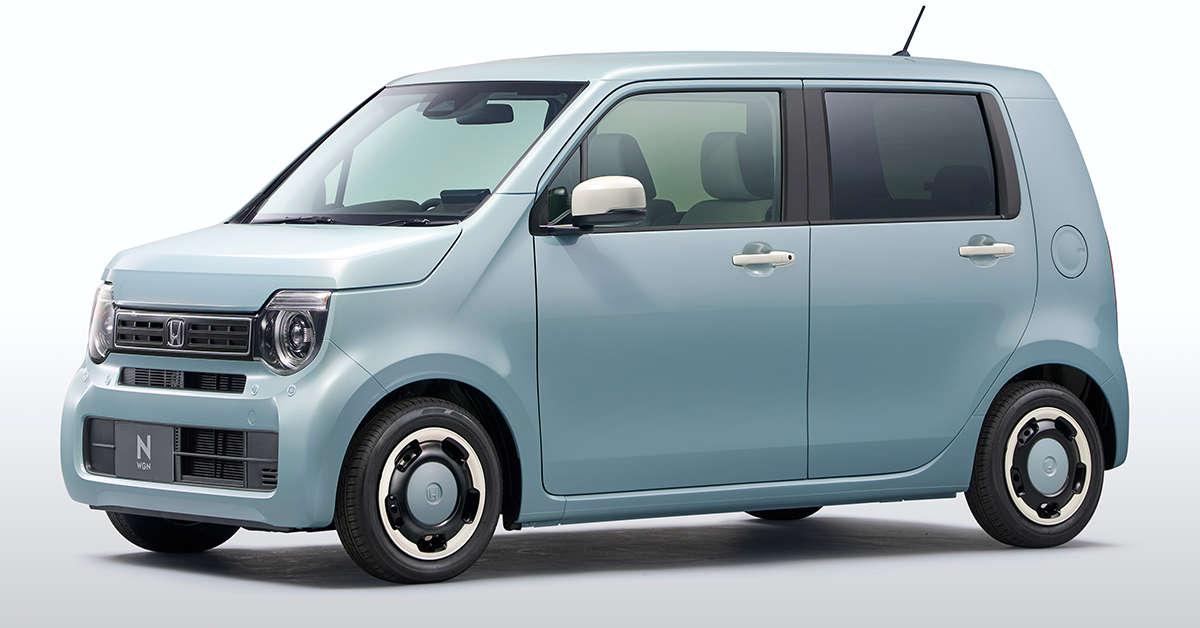
Official press image of the Honda N-WGN. | © Honda Motor Co., Ltd.
The N-WGN is Honda's kei height wagon, sold in Japan since November 2013 and now in its second generation. Here are Honda's own yen prices and updates from 2013 to 2025, plus where Honda pages and reports disagree.
The Honda N-WGN is a Japanese kei car, a mini-vehicle with a 660 cc engine, in a height-wagon body. Honda announced it on November 20, 2013, and sales in Japan began on November 22, 2013 (Honda). Honda says it is the fourth model of the N Series, after the N BOX, N BOX + and N-ONE (Honda). The second generation went on sale on August 9, 2019 and is still the current one (Honda). Every Honda page we read for this article is a Japanese-market page, so prices are in Japanese yen with consumption tax included, and we do not convert currencies. Prices and availability may have changed since publication, and exchange rates are not applied.
| Body style | Kei height wagon (Honda) |
| First sale | November 22, 2013, Japan (Honda) |
| Current generation | Second, August 9, 2019 (Honda) |
| Latest update | September 26, 2025 (Honda) |
| Engine | 660 cc DOHC, NA or turbo (Honda) |
| Transmission | CVT, turbo with paddle shifters (Honda) |
| Drive | FF or 4WD (Honda) |
| Grades | L, L Fashion Style, CUSTOM, BLACK STYLE (Honda) |
| Price range | 1,576,300 to 2,124,100 yen (Honda) |
| Series position | Fourth N Series model (Honda) |
Honda describes the N-WGN as a model for daily use such as commuting, school runs and shopping. Its September 2025 release says the car offers Honda SENSING as standard on all types, a roomy cabin from the center-tank layout and a cargo area that is easy to use (Honda). The N-WGN sits alongside the N-BOX in the N Series, and our Honda N-BOX article covers that model. Our Honda Models article covers the rest of Honda’s range, and our Honda history article covers the brand.
The lineup that Honda’s September 25, 2025 release lists has two bodies and a set of grades. The N-WGN comes as the L, the L Fashion Style and the L with a passenger-side rotating seat (Honda). The N-WGN CUSTOM comes as the L, the L Turbo and the BLACK STYLE special edition in L and L Turbo forms (Honda). Each is offered with front-wheel drive or four-wheel drive, and the transmission is a CVT (Honda). Honda’s pages we read give no engine output, dimensions or WLTC fuel economy for the current car (Honda).
Prices in that table run from 1,576,300 yen for the front-drive N-WGN L to 2,124,100 yen for the four-wheel-drive N-WGN CUSTOM L Turbo BLACK STYLE (Honda). The difference is 547,800 yen (our calculation). Honda’s N-WGN product page shows the same range, 1,576,300 to 2,124,100 yen, with a color surcharge of 33,000 or 55,000 yen on some colors (Honda). Honda says the prices exclude insurance, taxes other than consumption tax and registration costs, that a recycling fee is separate and that dealers set the selling prices (Honda).
The history of changes is short. The first generation ran from 2013 to 2019, and Honda’s timeline lists the second-generation N-WGN in August 2019 (Honda). Honda made a minor model change on September 23, 2022 that added its first Unintended Acceleration Mitigation function (Honda). Prices were revised in July 2023 and July 2024 (Honda). A partial update on September 26, 2025 added the Fashion Style grade, the BLACK STYLE edition, front parking sensors and a 7-inch meter (Honda). We found no Honda release for a 2026 change to the N-WGN.
We tag every claim by its source. A claim tagged Honda comes from a Honda-owned page we read, such as Honda’s global newsroom, its factbook or its product site. A claim tagged reported comes from a news outlet or a car-catalog site, and we do not name the outlets. A claim tagged our calculation is a figure we worked out from published numbers. Where Honda’s pages are silent on a figure, we say so instead of filling the gap, and the few size and fuel figures we do print are tagged reported.
Honda put the name and silhouette of the new car on its website on September 26, 2013, calling it the N Series’ fourth model (Honda). That release describes the N-WGN as a height-wagon kei car that carries over the innovative platform technology of the N Series, and it explains the M-M thinking of maximum space for people and minimum space for mechanisms (Honda). Honda’s Tokyo Motor Show remarks on November 20, 2013 introduced the fourth model of the N Series, and the exhibit notice for the show named the N-WGN as a world premiere (Honda).
| Name and silhouette preview | September 26, 2013 (Honda) |
| Announced | November 20, 2013 (Honda) |
| On sale | November 22, 2013 (Honda) |
| Monthly sales plan | 12,000 units (Honda) |
| Fuel economy | 29.2 km/L, JC08, FWD G (Honda) |
| Rear seat slide | 200 mm (Honda) |
| Under-floor storage depth | 290 mm (Honda) |
| N-WGN G, FF | 1,131,000 yen (Honda) |
| Custom G Turbo Package, 4WD | 1,630,000 yen (Honda) |
| Sales in first year | About 130,000 units (Honda) |
Honda’s November 20, 2013 release says sales in Japan would begin on November 22, 2013, with a monthly sales plan of 12,000 units (Honda). The N-WGN and N-WGN Custom were the fourth model in the N Series, after the N BOX, N BOX + and N-ONE (Honda). Honda’s factbook says the car came from a development and production effort run at its Suzuka plant under the name Suzuka Kei Innovation (Honda). It adds that the design aim was to make a small car look impressive, not a miniature of a large one (Honda).
The powertrain was new. Honda describes a newly developed 660 cc DOHC engine and a CVT with dedicated tuning, and the G Turbo Package used a turbocharged version of the engine (Honda). It says a twin-injection system and a sodium-filled exhaust valve were used for the first time on a Honda mini-vehicle (Honda). JC08 fuel economy was 29.2 km/L for the front-drive G and G A Package of both the N-WGN and the N-WGN Custom (Honda). Honda’s release does not state engine outputs or the vehicle’s dimensions (Honda).
Honda defines the height-wagon class in the release as kei passenger cars between 1,550 mm and 1,700 mm tall (Honda). The cabin is described as comfortably fitting four adults with full-size door armrests (Honda). The rear seats slide 200 mm forward and backward, which Honda calls a first for the N Series, and there is a large tray under them (Honda). The center-tank layout leaves under-floor storage as deep as 290 mm (Honda). The N-WGN has a black upper dashboard with light beige elsewhere, while the Custom uses black and burgundy two-tone trim (Honda).
Safety equipment on all types included an Emergency Stop Signal, Vehicle Stability Assist and Hill Start Assist (Honda). City-Brake Active was available on certain types and is aimed at collisions at roughly 30 km/h or less (Honda). Side curtain airbags and front-seat i-side airbags were standard on select types, and the car had a Pedestrian Injury Mitigation Body (Honda). Honda’s February 2014 release adds that six airbags and City-Brake Active were standard on the G A Package and G Turbo Package and a manufacturer option on the G (Honda).
The first-generation price list had six lines. The N-WGN G cost 1,131,000 yen front-drive and 1,251,000 yen four-wheel drive, the G A Package 1,250,000 and 1,370,000 yen, and the G Turbo Package 1,350,000 and 1,470,000 yen (Honda). The N-WGN Custom G cost 1,335,000 and 1,455,000 yen, the Custom G A Package 1,450,000 and 1,570,000 yen, and the Custom G Turbo Package 1,510,000 and 1,630,000 yen (Honda). Four-wheel drive added 120,000 yen on every line (our calculation). Certain colors cost 31,500 yen extra (Honda). In October 2014 Honda said the N-WGN won the Japan Car of the Year Small Mobility award for 2014 to 2015 and had sold about 130,000 units in roughly a year (Honda).
Honda announced the all-new N-WGN and N-WGN Custom on July 18, 2019, and sales began on August 9, 2019 at dealerships across Japan (Honda). Its monthly sales plan was 7,000 units in Japan, below the 12,000 units planned for the first generation (Honda). Honda’s June 7, 2019 preview said the second generation had round headlights and firm surfaces for a friendly look, while the Custom followed the basic design with a square-based stance (Honda). Honda’s timeline lists the second-generation N-WGN in August 2019 (Honda).
| Announced | July 18, 2019 (Honda) |
| On sale | August 9, 2019 (Honda) |
| Monthly sales plan | 7,000 units (Honda) |
| Tagline | New Simple! (Honda) |
| Honda SENSING | Standard, some opt-outs excl. turbo (Honda) |
| Parking sensors | Four rear, standard (Honda) |
| Steering | Telescopic and tilt (Honda) |
| G Honda SENSING, FF | 1,274,400 yen, 8 percent tax (Honda) |
| L Turbo, 4WD | 1,631,880 yen, 8 percent tax (Honda) |
| Custom L Turbo, 4WD | 1,793,880 yen, 8 percent tax (Honda) |
Honda said it developed the car as one that blends into daily life, can be used comfortably by anyone and has a friendly character (Honda). The advertising campaign used the tagline “New Simple!”, which Honda says reflects a commitment to what is important in daily life (Honda). Honda’s factbook sets out the idea as polishing the essentials of Japanese daily life to make a truly simple car (Honda). The release describes firm, substantial-looking surfaces across the body, from the front end and doors to the tailgate (Honda).
Safety was the headline. Honda SENSING was standard on the N-WGN, although a version without it was offered on some types excluding the turbo (Honda). Honda says its collision mitigation braking could detect a bicycle cutting in front of the car, which it calls a first among mini-vehicles on the market (Honda). Adaptive Cruise Control with Low-Speed Follow was applied to a Honda mini-vehicle for the first time, and a four-sensor rear Parking Sensor System became standard, another first for a Honda mini-vehicle (Honda). Lane Keeping Assist, Road Departure Mitigation, Traffic Sign Recognition and Auto High Beam were also listed (Honda).
The cabin and cargo area changed too. Honda says the driver’s seat has telescopic and tilt steering, which it calls a first for a Honda mini-vehicle, so drivers of different builds can find a good position (Honda). The tailgate opening was lowered to make loading heavy and tall items easier, and a cargo board that comes with the car splits the space into upper and lower levels (Honda). The N-WGN interior has a brown base with ivory front seat surfaces, while the Custom has a black base with titanium-looking garnishes (Honda).
The 2019 price list was quoted with 8 percent consumption tax. The N-WGN G Honda SENSING cost 1,274,400 yen front-drive and 1,405,080 yen four-wheel drive, the L Honda SENSING 1,339,200 and 1,469,880 yen, and the L Turbo Honda SENSING 1,501,200 and 1,631,880 yen (Honda). The version with a rotating front passenger seat cost 1,425,600 yen front-drive and 1,556,280 yen four-wheel drive (Honda). The N-WGN Custom G was 1,512,000 yen, the Custom L 1,587,600 yen and the Custom L Turbo 1,663,200 yen front-drive (Honda). Four-wheel drive added 130,680 yen on the base G (our calculation).
The 2019 launch fits into a wider pattern. Honda’s sibling N-BOX had added Honda SENSING as standard on all types in 2017, which our Honda N-BOX article covers. The N-WGN used a 660 cc DOHC engine with a CVT, and turbo versions were offered on the L Turbo grades (Honda). The release gives no WLTC fuel economy and no dimensions (Honda). Honda’s April 2018 slope-equipped N-BOX and July 2018 N-VAN, listed in its N Series timeline, came shortly before this launch (Honda). Our Honda Step WGN article covers a larger Honda family car.
Honda’s releases for the N-WGN give very few numbers. The 2013 release gives a JC08 fuel economy of 29.2 km/L for the front-drive G and defines the height-wagon class as 1,550 to 1,700 mm tall, but it states no dimensions (Honda). The 2019, 2022 and 2025 releases give no dimensions, output or WLTC fuel economy (Honda). Honda’s price tables name a 660 cc DOHC engine with a CVT, and the Custom L Turbo has a turbocharged 660 cc DOHC engine with a CVT and paddle shifters (Honda).
| Engine | 660 cc DOHC (Honda) |
| Turbo | 660 cc DOHC turbo, paddle shifters (Honda) |
| Transmission | CVT (Honda) |
| 2013 fuel economy | 29.2 km/L, JC08 (Honda) |
| Length | 3,395 mm (reported) |
| Width | 1,475 mm (reported) |
| Height | 1,675 mm, or 1,675 to 1,725 mm (reported) |
| Wheelbase | 2,520 mm (reported) |
| Output, NA and turbo | 58 PS and 64 PS (reported) |
| WLTC, NA FF | 23.1 km/L (reported) |
Size comes from reports. A report on the current N-WGN gives 3,395 mm in length, 1,475 mm in width and 1,675 mm in height for the base L front-drive, with a cabin of 2,055 mm by 1,350 mm by 1,300 mm (reported). Another report gives the height as 1,675 to 1,725 mm and the wheelbase as 2,520 mm (reported). The two reports differ on how the height is stated, and we print both ranges.
Fuel economy and output are also reported. One report gives WLTC fuel economy of 23.1 km/L for the naturally aspirated front-drive car (reported). A reference source gives engine outputs of 43 kW (58 PS) for the naturally aspirated engine and 47 kW (64 PS) for the turbo (reported). Honda’s own pages we read do not give these numbers for the N-WGN. Honda’s N-BOX specification sheet lists the same two output figures for its 660 cc engines, which our Honda N-BOX article covers.
Equipment is better documented. The 2025 release lists a front parking sensor, short-range collision mitigation braking as part of Honda SENSING on all trims, and a 7-inch TFT LCD meter with a simplified multi-information display (Honda). The 2022 release says the car also has the Unintended Acceleration Mitigation function, which is shipped switched off and needs a dealer to turn it on with dedicated equipment (Honda). The dealer setup cost is 5,500 yen including tax per smart key set (Honda).
The cargo design has stayed constant. Honda’s 2019 release says the opening’s ground height was lowered and a board splits the space into two levels, and it says the cargo area had been well received on the previous model (Honda). The 2013 release gave the center-tank layout a 290 mm deep under-floor space (Honda). Honda says the rear seats of the first generation slid 200 mm, and the 2019 release does not repeat the figure for the second generation (Honda). The N-WGN also comes in a passenger-side rotating seat variant (Honda).
Colors and wheels vary by grade. Honda’s 2025 release lists six colors for the N-WGN L, three for the Fashion Style, six for the CUSTOM and four for the BLACK STYLE (Honda). The BLACK STYLE uses 14-inch alloy wheels on the L and 15-inch alloy wheels on the L Turbo (Honda). Two surcharges apply: 33,000 yen for Platinum White Pearl, Twilight Mist Black Pearl and some others, and 55,000 yen for Premium Sunlight White Pearl (Honda). Crystal Black Pearl and Lunar Silver Metallic carry no surcharge on the N-WGN L (Honda).
Honda previewed the minor change on its website on July 8, 2022, saying the N-WGN Custom would become sportier and more imposing (Honda). It announced the change on September 22, 2022, and put it on sale on Friday, September 23, 2022 (Honda). Honda’s release did not state a monthly sales plan (Honda). A report notes that this was the first minor change for the second generation (reported). Honda’s preview page says more evolution beyond those points would be explained on the special site for the new N-WGN (Honda).
| Website preview | July 8, 2022 (Honda) |
| Announced | September 22, 2022 (Honda) |
| On sale | September 23, 2022 (Honda) |
| Honda first | Unintended Acceleration Mitigation (Honda) |
| Dealer setup cost | 5,500 yen per smart key set (Honda) |
| Special edition | STYLE+ BITTER (Honda) |
| G, FF | 1,298,000 yen (Honda) |
| Custom L, FF | 1,648,900 yen (Honda) |
| Custom L Turbo, 4WD | 1,882,100 yen (Honda) |
| 4WD premium, G | 133,100 yen (our calculation) |
The headline was safety. Honda says it adopted an Unintended Acceleration Mitigation function for the first time on any Honda car, as a new Honda SENSING function (Honda). It suppresses acceleration and warns the driver by sound and display when the accelerator and brake pedals are mixed up, and it works even when no obstacle is detected (Honda). Honda says it complements the existing forward and reverse false-start suppression functions and that it would be introduced on other models starting with the N-WGN (Honda).
The function ships switched off. Honda says turning it on needs setup at a dealer using dedicated equipment, at 5,500 yen including tax per smart key set (Honda). Honda’s release links the change to its goal of zero traffic fatalities involving its motorcycles and cars worldwide by 2050 (Honda). Honda adds the usual warning that its driver-assist systems have limits and that drivers should not over-rely on them (Honda). The same function reappeared on the 2023 N-BOX, which our Honda N-BOX article covers.
The N-WGN Custom changed in look. Honda’s preview says the front grille took a dark chrome honeycomb finish for a stronger impression, and the interior adopted full Prime Smooth seats, partly using fabric (Honda). The standard N-WGN gained two new colors, Fjord Mist Pearl and Premium Sunlight White Pearl (Honda). Honda listed Midnight Blue Beam Metallic, Premium Sunlight White Pearl, Twilight Mist Black Pearl, Platinum White Pearl, Crystal Black Pearl and Meteoroid Grey Metallic for the Custom (Honda).
A new special edition arrived with it. STYLE+ BITTER was the third model of the N STYLE+ brand that Honda launched for the 10th anniversary of the N Series, and it was based on the N-WGN L (Honda). It has chrome-plated door handles and rear license garnish, gray metallic and black wheel caps, and a charcoal interior mixing leather-like Prime Smooth with tricot fabric (Honda). Honda says it aims for a calmer and more mature look while keeping the simple design (Honda). Colors were British Green Pearl, Premium Agate Brown Pearl and four others (Honda).
The 2022 price table, with 10 percent tax, started at 1,298,000 yen for the front-drive G and 1,431,100 yen for four-wheel drive (Honda). The L was 1,399,200 and 1,532,300 yen, the L with a swivel passenger seat 1,569,700 and 1,702,800 yen, and the STYLE+ BITTER 1,549,900 and 1,683,000 yen (Honda). The Custom L was 1,648,900 and 1,782,000 yen and the Custom L Turbo 1,749,000 and 1,882,100 yen (Honda). Honda lists two color surcharges, 33,000 and 55,000 yen, without mapping them to colors (Honda). Four-wheel drive added 133,100 yen on the G (our calculation).
Honda raised N-WGN prices twice in two years. On June 23, 2023 it announced new manufacturer’s suggested retail prices for the N-WGN, N-ONE, N-VAN, Fit, Vezel and Civic, effective July 27, 2023 (Honda). It gave global increases in raw material and logistics costs as the reason (Honda). Honda announced a second revision for the N-WGN, N-ONE, Step WGN and ZR-V on June 3, 2024, effective July 4, 2024, citing the same reasons (Honda). Our Honda Step WGN article covers one of the other models in that 2024 release.
| First revision announced | June 23, 2023 (Honda) |
| First revision effective | July 27, 2023 (Honda) |
| Second revision announced | June 3, 2024 (Honda) |
| Second revision effective | July 4, 2024 (Honda) |
| Stated reason | Raw material and logistics costs (Honda) |
| G, FF, 2022 to 2024 | 1,298,000 to 1,344,200 yen (Honda) |
| L, FF, 2022 to 2024 | 1,399,200 to 1,447,600 yen (Honda) |
| Custom L, FF, 2024 | 1,736,900 yen (Honda) |
| Custom L Turbo, FF, 2024 | 1,837,000 yen (Honda) |
| 2024 rise, Custom grades | 52,800 yen (our calculation) |
The 2023 revision moved the front-drive N-WGN G from 1,298,000 yen to 1,317,800 yen and the four-wheel-drive G from 1,431,100 yen to 1,450,900 yen (Honda). The L rose from 1,399,200 yen to 1,419,000 yen front-drive and from 1,532,300 yen to 1,552,100 yen four-wheel drive (Honda). The L with a rotating passenger seat went from 1,569,700 yen to 1,589,500 yen front-drive (Honda). Each of those three rose by 19,800 yen on front-drive (our calculation). Honda’s 2024 table lists the Custom L’s price before that revision as 1,684,100 yen, which is 35,200 yen above its September 2022 price of 1,648,900 yen (our calculation).
The 2024 revision set the G at 1,344,200 yen front-drive and 1,477,300 yen four-wheel drive, up from 1,317,800 and 1,450,900 yen (Honda). The L became 1,447,600 and 1,580,700 yen, and the L with a rotating passenger seat 1,621,400 and 1,754,500 yen (Honda). The STYLE+ BITTER became 1,601,600 and 1,734,700 yen, the Custom L 1,736,900 and 1,870,000 yen, and the Custom L Turbo 1,837,000 and 1,970,100 yen (Honda). The Custom L and Custom L Turbo each rose by 52,800 yen on front-drive (our calculation).
The smaller increases were 26,400 yen on the G, 28,600 yen on the L and 31,900 yen on the rotating-seat L and the STYLE+ BITTER, all on front-drive (our calculation). A report on the same revision gives the N-WGN increases as 26,400 to 52,800 yen, which matches our figures (reported). Over the two revisions the front-drive G rose 46,200 yen from its September 2022 price, and the front-drive Custom L rose 88,000 yen (our calculation). Honda’s 2024 release does not say why the Custom rose more than the standard car (Honda).
The same 2024 release revised the N-ONE, Step WGN and ZR-V (Honda). A report gives the Step WGN increases as 115,500 to 154,000 yen and the ZR-V rise as 159,500 yen on every grade (reported). Those larger rises belong to bigger cars with different content, and we do not compare them with the N-WGN. Honda’s release lists the N-WGN table first and gives new prices as including 10 percent consumption tax (Honda). Honda’s earlier March 2023 release revised the N-BOX, Freed and Step WGN in the same way (Honda).
These revisions matter for the history of prices. Between September 2022 and July 2024 the front-drive Custom L Turbo went from 1,749,000 yen to 1,837,000 yen, a rise of 88,000 yen (our calculation). The 2025 update then put the Custom L Turbo at 1,912,900 yen, 75,900 yen above its 2024 price (our calculation). Honda’s September 2025 release does not say whether those changes include a price revision for the content added, and it does not repeat the earlier reasons (Honda). Prices and availability may have changed since publication.
Honda announced a partial update to the N-WGN on September 25, 2025, with sales from Friday, September 26, 2025 (Honda). Honda’s page does not state a monthly sales target (Honda). A report gives the announcement as September 22 and the sale date as September 23 (reported). Honda’s own release, and the topic date on its product page, say September 25, so we use Honda’s dates and print the conflict (Honda, reported).
| Announced | September 25, 2025 (Honda) |
| On sale | September 26, 2025 (Honda) |
| New grade | L Fashion Style (Honda) |
| Special edition | CUSTOM BLACK STYLE (Honda) |
| New Honda SENSING function | Short-range collision mitigation braking (Honda) |
| Meter | 7-inch TFT LCD (Honda) |
| L, FF | 1,576,300 yen (Honda) |
| L Fashion Style, FF | 1,675,300 yen (Honda) |
| CUSTOM L Turbo, FF | 1,912,900 yen (Honda) |
| L Turbo BLACK STYLE, 4WD | 2,124,100 yen (Honda) |
The update added a new grade and a special edition. Honda describes the Fashion Style as widening the world of the N-WGN, with off-white painted door mirrors and outer handles and colored full wheel caps (Honda). The N-WGN CUSTOM BLACK STYLE uses black accents inside and out (Honda). It has Berlina Black paint on the front grille molding, lower grille molding, fog light garnish and alloy wheels, and Crystal Black Pearl on the mirrors, door handles, rear license garnish, shark fin antenna and emblems (Honda). The interior has piano-black trim on the passenger dashboard, door panels and steering garnish (Honda).
Safety and the meter changed. Honda added a front parking sensor and made short-range collision mitigation braking a new Honda SENSING function, standard on all trims (Honda). The function controls the brakes when a collision is likely, to help avoid it or reduce damage (Honda). The meter became a 7-inch TFT LCD that shows Honda SENSING status more clearly, and the multi-information display was cut down to essential information (Honda). Honda adds the usual warning that driver-assist systems have limits (Honda).
The 2025 table, with 10 percent tax, starts at 1,576,300 yen for the front-drive N-WGN L and 1,721,500 yen for four-wheel drive (Honda). The L Fashion Style is 1,675,300 and 1,820,500 yen, and the L with a passenger-side rotating seat 1,678,600 and 1,823,800 yen (Honda). The CUSTOM L is 1,794,100 and 1,939,300 yen, the CUSTOM L Turbo 1,912,900 and 2,058,100 yen, the L BLACK STYLE 1,860,100 and 2,005,300 yen, and the L Turbo BLACK STYLE 1,978,900 and 2,124,100 yen (Honda). The table lists no G grade (Honda).
Some premiums can be worked out. The Fashion Style costs 99,000 yen more than the L (our calculation). The BLACK STYLE costs 66,000 yen more than the matching CUSTOM L and CUSTOM L Turbo (our calculation). The turbo adds 118,800 yen to the CUSTOM L (our calculation). Four-wheel drive adds 145,200 yen on the L and the CUSTOM L, and 145,200 yen on the BLACK STYLE too (our calculation). The 2025 L is 128,700 yen above the 2024 L of 1,447,600 yen on front-drive (our calculation).
Colors again carry surcharges. Honda lists six colors for the N-WGN L, including Platinum White Pearl at 33,000 yen and Premium Sunlight White Pearl at 55,000 yen (Honda). The Fashion Style has Premium Ivory Pearl II, Fjord Mist Pearl and Botanical Green Pearl (Honda). The CUSTOM has six colors including Midnight Blue Beam Metallic at 33,000 yen, and the BLACK STYLE has four, including Botanical Green Pearl at 33,000 yen (Honda). Honda’s N-WGN product page, as we read it, still shows the 1,576,300 to 2,124,100 yen range alongside an October 6, 2026 notice about the N Series milestone (Honda).
Prices have risen across the N-WGN’s life, but the lineups differ. The first-generation front-drive N-WGN G cost 1,131,000 yen in 2013 (Honda). The second-generation G cost 1,274,400 yen in 2019 with 8 percent tax and 1,298,000 yen in 2022 with 10 percent tax (Honda). It reached 1,344,200 yen after the July 2024 revision, and Honda’s 2025 table lists no G (Honda). The L, the entry grade in 2025, was 1,339,200 yen in 2019, 1,399,200 yen in 2022 and 1,576,300 yen in 2025 on front-drive (Honda).
| 2013 G, FF | 1,131,000 yen (Honda) |
| 2019 G, FF | 1,274,400 yen, 8 percent tax (Honda) |
| 2022 G, FF | 1,298,000 yen (Honda) |
| 2024 G, FF | 1,344,200 yen (Honda) |
| 2022 to 2025 rise, L FF | 177,100 yen (our calculation) |
| 2022 to 2025 rise, CUSTOM L FF | 145,200 yen (our calculation) |
| 4WD premium, 2013 and 2025 | 120,000 and 145,200 yen (our calculation) |
| 2025 range | 1,576,300 to 2,124,100 yen (Honda) |
| 2025 update dates | Sept 25 and 26 (Honda), Sept 22 and 23 (reported) |
| Height | 1,675 mm, or up to 1,725 mm (reported) |
The L therefore rose 177,100 yen between September 2022 and September 2025 (our calculation). Over the same period the front-drive Custom L went from 1,648,900 yen to 1,794,100 yen, a rise of 145,200 yen, and the Custom L Turbo from 1,749,000 yen to 1,912,900 yen, a rise of 163,900 yen (our calculation). Honda attributes its 2023 and 2024 revisions to raw material and logistics costs (Honda). Its 2025 release adds a front parking sensor, short-range braking and a 7-inch meter, but does not say how the 2025 prices relate to them (Honda).
The four-wheel-drive premium on the base grade grew with each generation. It was 120,000 yen in 2013, 130,680 yen in 2019, 133,100 yen in 2022 and 145,200 yen in 2025 (our calculation). The price range has widened too. The 2013 range ran from 1,131,000 to 1,630,000 yen, the 2019 range from 1,274,400 to 1,793,880 yen and the 2025 range from 1,576,300 to 2,124,100 yen (Honda). Tax rates differed between the 2013, 2019 and 2022 tables, so these are not like-for-like comparisons.
Several conflicts exist. A report gives the 2025 update as announced on September 22 and on sale on September 23, while Honda’s release says September 25 and September 26 (reported, Honda). One report gives the current N-WGN’s height as 1,675 mm and another as 1,675 to 1,725 mm (reported). Honda’s own pages give no height for the second generation, and the 2013 release gives only the 1,550 to 1,700 mm class definition (Honda). The 2013 fuel figure of 29.2 km/L is a JC08 value and cannot be compared with the reported 23.1 km/L WLTC value (Honda, reported).
Some items are not confirmed. Honda’s pages give no engine output, WLTC fuel economy or dimensions for the second generation, so the figures in our specs section are reported only (reported). We found no Honda release for a 2026 N-WGN change, and the 2025 table is still what Honda’s product page shows (Honda). We did not find a Honda page that confirms a third generation or an electric N-WGN. Honda does list the N-ONE e: from September 2025 in its N Series timeline (Honda).
To check this article, start with Honda’s newsroom releases of November 20, 2013, July 18, 2019, September 22, 2022, June 23, 2023, June 3, 2024 and September 25, 2025. Honda’s N Series timeline in its October 6, 2026 release lists the N-WGN launches in November 2013 and August 2019 and reports that the N Series passed 4.5 million cumulative units at the end of September 2026 (Honda). Our Honda N-BOX article covers the larger sibling, and our Honda Models article covers the rest of the range. Treat any figure tagged reported as a lead to verify.
