 Brands
Hyundai IONIQ 5 — Range, Prices, Specs, XRT and Awards
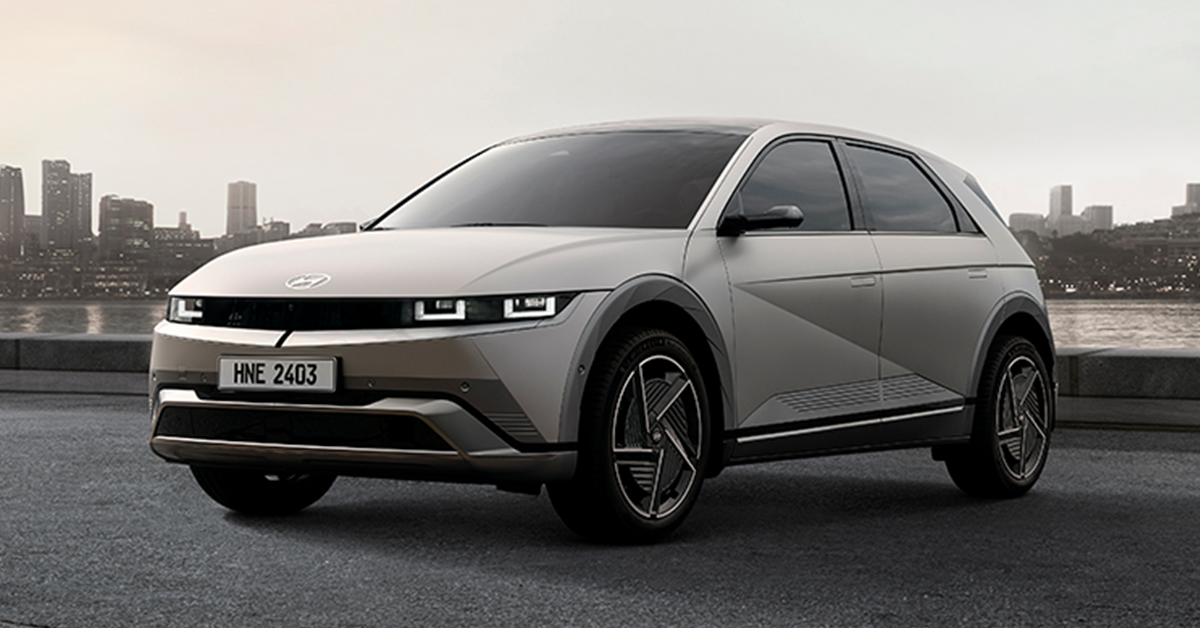
Official image of the Hyundai IONIQ 5. | © Hyundai Motor Company
The Hyundai IONIQ 5 is the all-electric midsize crossover that Hyundai launched on February 23, 2021 as the first model of its IONIQ brand, built on the E-GMP platform with 800 V charging. Hyundai’s own pages give the launch specifications, the 2024 and 2025 update with the 84 kWh battery and the XRT, and the prices in the United States and the United Kingdom. This guide reads those pages first and shows where they differ. It also covers safety, awards and sales.
The Hyundai IONIQ 5 is an all-electric midsize crossover. Hyundai’s worldwide newsroom says Hyundai launched it on February 23, 2021 at a virtual world premiere in Seoul, as the first model in Hyundai’s new IONIQ brand dedicated to battery electric vehicles (Hyundai). Hyundai’s U.S. media center dates the same release February 22, 2021 (Hyundai).
| Body | Midsize electric crossover (Hyundai) |
| World premiere | February 23, 2021 (Hyundai) |
| Platform | E-GMP (Hyundai) |
| Batteries, current | 63.0 kWh and 84.0 kWh (Hyundai) |
| Charging system | 800 V (Hyundai) |
| Range, Europe | Up to 570 km (Hyundai) |
| Range, U.S. | Up to 318 miles (Hyundai) |
| U.S. start price, 2027 | 35,250 dollars (Hyundai) |
| Euro NCAP | Five stars (Hyundai) |
| World Car Awards 2022 | Three wins (Hyundai) |
We used Hyundai’s own pages for the figures in this guide: the worldwide newsroom, the European, U.K. and U.S. sites, the press sites on hyundai.news and hyundainews.com and Hyundai’s technical data PDFs. Where two Hyundai pages differ we show both values. Prices and availability may have changed since publication, and exchange rates are not applied. U.S. prices are in dollars and U.K. prices are in pounds. Where Hyundai gives a figure we use it, and where only reports give it we say so.
Hyundai’s 2027 U.S. page lists the IONIQ 5 in five trims from 35,250 dollars for the SE Standard Range to 46,525 dollars for the XRT, with EPA-estimated range of up to 318 miles (Hyundai). Hyundai’s U.S. media page lists a 63.0 kWh Standard Range battery and an 84.0 kWh Long Range battery, an 800 V charging system and a native NACS port (Hyundai). Hyundai’s European page lists a driving range of up to 570 km (Hyundai). Hyundai’s 2021 U.S. release gave the then EPA maximum as 303 miles for a single motor and 256 miles for dual motors, and said the car was part of Hyundai Motor Group’s plan to introduce 23 BEV models and sell 1 million BEV units worldwide by 2025 (Hyundai). Hyundai’s April 2026 China release says the IONIQ 5 and IONIQ 6 each won hat-trick victories at the World Car Awards (Hyundai).
The car sits on E-GMP, Hyundai Motor Group’s dedicated electric platform, and its 2021 release says E-GMP supports both 400 V and 800 V charging, with 10 to 80 percent in 18 minutes on a 350 kW charger (Hyundai). The IONIQ 5 won three 2022 World Car Awards, according to Hyundai (Hyundai). It earned five stars from Euro NCAP, according to a Hyundai release (Hyundai). Hyundai’s 2020 brand announcement had planned the IONIQ 5 as a midsize crossover for early 2021, based on the 45 concept shown at IAA 2019 (Hyundai).
The IONIQ 5 was refreshed for the 2025 model year, with a bigger battery, a native NACS port in the U.S. and an XRT version, and Hyundai Motor Group Metaplant America in Georgia began building it (Hyundai). The high-performance IONIQ 5 N is covered in our separate Ioniq 5 N review, so this guide mentions it only in passing.
Later sections cover the 2021 launch and design, the original powertrains and charging, the 2024 and 2025 update, current specifications, prices in the U.S. and U.K., safety, awards and sales, and production with the points where Hyundai’s pages conflict. Our Hyundai Models article lists the range, our Hyundai history article covers the company, our Hyundai Tucson article covers the Tucson that received five Euro NCAP stars in the same release and our Hyundai Kona article covers the Kona Electric.
Hyundai’s launch release says the IONIQ 5 design draws on the 45 EV concept shown at the 2019 International Motor Show Germany, and that the C-pillar shape is inspired by it (Hyundai). The release also describes the design as evoking the daring attitude of the Hyundai Pony, the company’s first production car (Hyundai). Hyundai’s U.K. release describes a limited edition called Project 45 offered for online reservation after the premiere (Hyundai). Hyundai’s U.K. release says the car uses eco-friendly materials and nature-inspired colors in many touchpoints (Hyundai).
| Design inspiration | 45 EV concept, 2019 (Hyundai) |
| Exterior theme | Parametric Pixel (Hyundai) |
| Interior theme | Living Space (Hyundai) |
| Length, 2021 | 4,635 mm (Hyundai) |
| Width | 1,890 mm (Hyundai) |
| Height | 1,605 mm (Hyundai) |
| Wheelbase | 3,000 mm (Hyundai) |
| Boot | 527 liters (Hyundai) |
| Boot, seats folded | 1,587 liters (Hyundai) |
| Towing, 2021 | Up to 1,600 kg (Hyundai) |
The exterior theme is Parametric Pixel, with pixel-like lighting clusters in the front daytime running lights and at the rear (Hyundai). Other exterior features include a clamshell hood, auto-flush door handles and 20-inch aerodynamic wheels, and Hyundai lists nine exterior colors (Hyundai). The release gives the dimensions as a length of 4,635 mm, a width of 1,890 mm, a height of 1,605 mm and a wheelbase of 3,000 mm (Hyundai).
Inside, the theme is Living Space, centered on the Universal Island console, which slides back by up to 140 mm, and a flat floor above the batteries (Hyundai). Hyundai lists a 12-inch touchscreen and a 12-inch digital cluster, an augmented reality head-up display that was a first for Hyundai, and an eight-speaker Bose audio system (Hyundai). Heated front seats and a heated steering wheel are listed too (Hyundai).
The second-row seats slide up to 135 mm and fold 6:4, and there is a 15 W wireless phone charger in the center console (Hyundai). Hyundai lists three interior color options, recycled PET and bio-based paint among eco-friendly materials, and says the interior uses sustainable materials (Hyundai). The boot is 527 liters, rising to 1,587 liters with the second row folded, which is 1,060 liters more, by our subtraction (Hyundai, our calculation).
Hyundai gives a front trunk of 24 liters for the North American model, and 57 liters for the non-North American two-wheel drive or 24 liters for the all-wheel drive (Hyundai). The release gives a towing capacity of up to 1,600 kg (Hyundai). Hyundai’s European press kit says E-GMP creates a flat floor with no transmission tunnel, with the batteries stored underneath, and allows two motors and four-wheel drive (Hyundai). A German 2021 facts sheet says the 800 V system gives 100 km of range in five minutes of charging and that Hyundai was the first volume maker to offer the technology (Hyundai). Hyundai’s U.S. release says the IONIQ 5 offers the spaciousness of a large car in a compact SUV (Hyundai).
Hyundai’s European release says the world premiere was a virtual event, and its release of the same day says the car is the first Hyundai based on E-GMP (Hyundai). The release page does not state where the IONIQ 5 is produced (Hyundai). Hyundai’s deep-dive release says the production process includes battery assembly and safety testing, and that three semi-autonomous SmartSense safety features were highlighted (Hyundai). Hyundai’s U.S. release says the IONIQ 5 was to go on sale by the end of 2021 (Hyundai).
Hyundai’s 2021 release says customers could choose a 58 kWh or a 72.6 kWh battery and a rear motor alone or front and rear motors, and that all versions had a top speed of 185 km/h (Hyundai). The 72.6 kWh pack holds 14.6 kWh, or about 25 percent, more than the 58 kWh pack, by our calculation (Hyundai, our calculation). For North America the release gives 77.4 kWh in place of 72.6 kWh (Hyundai).
| Launch batteries | 58 kWh and 72.6 kWh (Hyundai) |
| North America battery | 77.4 kWh (Hyundai) |
| Top speed | 185 km/h (Hyundai) |
| LR AWD | 225 kW, 605 Nm, 5.2 s (Hyundai) |
| LR 2WD | 160 kW, 350 Nm, 7.4 s (Hyundai) |
| SR AWD | 173 kW, 605 Nm, 6.1 s (Hyundai) |
| SR 2WD | 125 kW, 350 Nm, 8.5 s (Hyundai) |
| WLTP range, launch | 470 to 480 km (Hyundai) |
| Charging, 350 kW | 10 to 80 percent in 18 min (Hyundai) |
| V2L output | 3.6 kW (Hyundai) |
The release lists four versions. The Long Range 72.6 kWh all-wheel drive makes 225 kW combined and 605 Nm and reaches 100 km/h in 5.2 seconds, the Long Range two-wheel drive makes 160 kW and 350 Nm in 7.4 seconds, the Standard Range 58 kWh all-wheel drive makes 173 kW and 605 Nm in 6.1 seconds and the Standard Range two-wheel drive makes 125 kW and 350 Nm in 8.5 seconds (Hyundai). Hyundai’s German 2021 facts sheet says the IONIQ 5 was due in summer 2021 as the first model of the sub-brand on E-GMP with 800 V technology (Hyundai).
Hyundai gives a WLTP range of 470 to 480 km for the two-wheel drive with the 72.6 kWh battery (Hyundai). A later European release for the German Car of the Year award gives 481 km for the rear-wheel drive 72.6 kWh version (Hyundai). The Australian page for the 2022 World Car Awards ties the 470 to 480 km figure to a battery of up to 77.4 kWh, which differs from the launch release (Hyundai). Hyundai’s later U.S. release gave EPA ranges of 303 miles for two-wheel drive and 256 miles for all-wheel drive (Hyundai).
E-GMP supports both 400 V and 800 V charging infrastructures, and Hyundai says 800 V charging is standard and needs no adapters (Hyundai). With a 350 kW charger the car charges from 10 to 80 percent in 18 minutes, and five minutes of charging adds 100 km of WLTP range (Hyundai). The Hyundai U.K. release says the 800 V battery can go from 10 to 80 percent in 18 minutes and offered a free two-year subscription to a high-power charging network to Project 45 buyers (Hyundai).
Vehicle-to-load is the other headline feature. Hyundai gives a maximum output of 3.6 kW, with an interior port under the second-row seats that works while the car is on and an exterior port at the charging inlet that works even when the car is off (Hyundai). Hyundai calls it turning the vehicle into a charger on wheels (Hyundai). Hyundai’s deep-dive release repeats the 18-minute charging claim (Hyundai). The 2021 U.S. release says the multi-charging system lets the car use both 400 V and 800 V chargers (Hyundai).
The platform pitch is spaciousness. Hyundai’s European release says E-GMP has no transmission tunnel and a flat floor, with the batteries stored underneath, and allows two motors for extra power and torque and the option of four-wheel drive (Hyundai). Hyundai’s world awards release says the axles could be pushed to the front and back of the car, giving more space than a traditional vehicle (Hyundai).
Hyundai Motor Europe’s release of 4 March 2024 says the updated IONIQ 5’s battery grows from 77.4 kWh to 84.0 kWh, and that its length increases by 20 mm to 4,655 mm, with width, height and wheelbase unchanged (Hyundai). The release lists a restyled front and rear, a rear spoiler extended by 50 mm and new aerodynamic wheels (Hyundai). It says the features were based on Korean models, with Korean customers from March 2024 and global markets later in the year (Hyundai).
| European update announced | March 4, 2024 (Hyundai) |
| Battery change | 77.4 kWh to 84.0 kWh (Hyundai) |
| Length, updated | 4,655 mm (Hyundai) |
| U.S. refresh announced | September 3, 2024 (Hyundai) |
| U.S. batteries, 2025 | 63 kWh and 84 kWh (Hyundai) |
| U.S. charge port | Native NACS (Hyundai) |
| XRT lift | 23 mm (Hyundai) |
| XRT wheels | 18-inch all-terrain (Hyundai) |
| 2025 U.S. build site | Metaplant America, Georgia (Hyundai) |
| 2027 model year | Carryover, minor changes (Hyundai) |
Inside, the update adds a physical button on the Universal Island for heated and ventilated seats, the heated steering wheel and parking assist, a wireless charging pad moved to the upper console, a new steering wheel with interactive pixel lights, the ccNC navigation cockpit and wireless over-the-air updates (Hyundai). It adds Hands-On Detection, Lane Keeping Assist 2, Remote Smart Parking Assist 2 and parking collision-avoidance assist, Digital Key 2 and Built-In Cam 2, and eight airbags including second-row side airbags (Hyundai).
The release says Hyundai strengthened the body with increased cowl crossbar rigidity and reinforced rear wheel and lower vehicle structure, improved sound insulation for the rear motor and reinforced doors and B-pillars for side-collision protection (Hyundai). It describes the new N Line as positioned between the updated IONIQ 5 and the high-performance IONIQ 5 N, with dedicated 20-inch wheels, N Line steering wheel and sport seats (Hyundai).
For the U.S., Hyundai’s release of September 3, 2024 introduced the refreshed 2025 IONIQ 5 and a new XRT with a 23 mm suspension lift, unique 18-inch wheels with all-terrain tires and XRT-only colors (Hyundai). Hyundai’s media presentation lists XRT-only front and rear fascias with a digital camo pattern, black trim on the window surrounds, side sills, spoiler and mirrors, and XRT-only colors named Ultimate Red and Cosmic Blue Pearl (Hyundai). Hyundai’s release calls the XRT new and rugged (Hyundai). It says IONIQ 5 was the first Hyundai to come with a native NACS port, giving access to 17,000 or more Superchargers, and was the first model range built at Hyundai Motor Group Metaplant America in Georgia (Hyundai).
Hyundai’s U.S. release gives batteries of 63 kWh Standard Range and 84 kWh Long Range, against 58 and 77.4 kWh before (Hyundai). The 84 kWh pack holds 21 kWh, or 33 percent, more than the 63 kWh pack, by our calculation (Hyundai, our calculation). The pricing release says the 2025 Long Range rear-wheel drive achieves an EPA-estimated 318 miles and charges from 10 to 80 percent in about 20 minutes on a 350 kW DC fast charger (Hyundai).
The 2027 model year is a carryover with minor changes, according to Hyundai’s U.S. media page, and the lineup continues with SE, SEL, XRT and Limited trims (Hyundai). The page describes the XRT as adventure-focused, with increased ride height, terrain modes and available towing capability (Hyundai). It says roof rails move from the XRT and Limited to the SEL and above, and that HomeLink moves from the SEL and above to the Limited only (Hyundai).
Hyundai’s European page says the IONIQ 5 has up to 570 km of driving range with rear-wheel drive and the Long Range battery, and 0 to 100 km/h in 5.3 seconds (Hyundai). Hyundai’s worldwide page gives the two-wheel drive Long Range a 168 kW rear motor, 229 PS and 350 Nm, with 0 to 100 km/h in 7.5 seconds and a top speed of 185 km/h (Hyundai). The U.K. document gives 170 PS, 228 PS and 325 PS (Hyundai).
| Range, Europe | Up to 570 km (Hyundai) |
| 0 to 100, AWD | 5.3 seconds (Hyundai) |
| Motors, U.K. | 170, 228 and 325 PS (Hyundai) |
| Battery cells | 288 and 384 (Hyundai) |
| Max DC charging, U.K. | 260 kW (Hyundai) |
| Length, current | 4,655 mm (Hyundai) |
| Luggage, U.K. | 520 liters (Hyundai) |
| EPA, SE Standard Range | 245 miles (Hyundai) |
| EPA, Long Range RWD | 318 miles (Hyundai) |
| EPA, XRT | 259 miles (Hyundai) |
Hyundai UK’s pricing and specification document lists motors of 170 PS (125 kW), 228 PS (168 kW) and 325 PS (239 kW), torque of 350 Nm and 605 Nm, 0 to 62 mph in 8.5, 7.5 and 5.3 seconds and a top speed of 114 mph (Hyundai). The document gives electric driving efficiency of 3.98 and 3.87 miles per kWh for the Advance and Premium (Hyundai). It lists a 63 kWh battery with 288 cells and an 84 kWh battery with 384 cells, with battery power of 195 kW and 277 kW (Hyundai). The document is undated.
It gives WLTP range of 273 miles or 440 km and 354 miles or 570 km without labelling each to a variant, and lower figures for the N Line and the Ultimate (Hyundai). Charging is 10.5 kW on board, with 10 to 100 percent in 5 hours 50 minutes (63 kWh) or 7 hours 35 minutes (84 kWh) on a wallbox, 58 minutes or 1 hour 16 minutes at 50 kW and 18 minutes at 350 kW, with maximum DC charging of 260 kW (Hyundai).
The U.K. document gives a length of 4,655 mm, a width of 1,890 mm including mirrors, a height of 1,605 mm, a wheelbase of 3,000 mm and a turning circle of 11.98 meters (Hyundai). Luggage is 520 liters with the seats up and 1,580 liters with them down, which differs from the 527 and 1,587 liters in the 2021 release (Hyundai). It lists kerb weights of 1,880 to 2,190 kg and braked towing of 750 kg for the Standard Range and 1,600 kg for the Long Range (Hyundai).
For the U.S., Hyundai’s pages give EPA range of 245 miles for the SE Standard Range, 318 miles for the rear-wheel drive SE, SEL and Limited, 290 miles for the SE and SEL all-wheel drive, 269 miles for the Limited all-wheel drive and 259 miles for the XRT (Hyundai). The Long Range is 73 miles above the Standard Range (Hyundai, our calculation). Hyundai lists 125 kW for the SE Standard Range, 168 kW (225 hp) for the Long Range and 239 kW (320 hp) for all-wheel drive (Hyundai).
Hyundai’s 2025 U.S. product guide gives voltages of 523 V and 697 V, a maximum operating speed of 115 mph and AC Level II charging from 10 to 100 percent in 5 hours 40 minutes and 7 hours 20 minutes (Hyundai). It gives DC charging from 10 to 80 percent on a 150 kW NACS charger in 24 and 30 minutes (Hyundai). Hyundai’s European page says the 800 V system can add 336 km of range in 15 minutes (Hyundai).
Hyundai’s U.S. 2027 page lists the SE Standard Range at 35,250 dollars, the SE at 37,750 dollars, the SEL at 40,200 dollars, the Limited at 45,225 dollars and the XRT at 46,525 dollars, with MSRP excluding freight, tax, title and license fees (Hyundai). Hyundai says freight charges and actual dealer prices may vary (Hyundai). The XRT is 11,275 dollars above the SE Standard Range, and the Limited is 9,975 dollars above it (Hyundai, our calculation). Hyundai’s pages describe the SE Standard Range with 19-inch wheels, the SEL with H-Tex seating, Highway Driving Assist 2 and a hands-free power liftgate, and the Limited with a Vision Roof, vehicle-to-load capability, premium audio and advanced parking technology (Hyundai). The XRT has all-wheel drive with 239 kW (320 hp), HTRAC all-wheel drive and its own front and rear fascias (Hyundai). Prices and availability may have changed since publication.
| U.S. 2027 SE Standard Range | 35,250 dollars (Hyundai) |
| U.S. 2027 SE | 37,750 dollars (Hyundai) |
| U.S. 2027 SEL | 40,200 dollars (Hyundai) |
| U.S. 2027 Limited | 45,225 dollars (Hyundai) |
| U.S. 2027 XRT | 46,525 dollars (Hyundai) |
| U.S. 2025 start, with destination | 43,975 dollars (Hyundai) |
| U.S. 2025 XRT, with destination | 56,875 dollars (Hyundai) |
| U.K. Advance Standard Range | 39,900 pounds (Hyundai) |
| U.K. Ultimate AWD | 52,900 pounds (Hyundai) |
| U.K. N Line S AWD | 55,900 pounds (Hyundai) |
Hyundai’s September 2024 pricing release gave the 2025 IONIQ 5 a start price of 43,975 dollars including destination and the XRT 56,875 dollars including destination (Hyundai). The XRT was 12,900 dollars above the base car on that basis (Hyundai, our calculation). The 2027 prices exclude freight, so the two sets are not on the same basis and we do not compare them.
Hyundai’s U.S. pages compare the SE Standard Range at 35,250 dollars with rivals listed at 39,990, 37,795 and 47,400 dollars (Hyundai). Those are Hyundai’s comparisons and we did not check the rival prices. The Standard Range is 2,545 dollars below the cheapest of those three rivals, by our subtraction (Hyundai, our calculation). The 63 kWh Standard Range is listed for 2027 with 245 miles of range, and the long-range rear-wheel drive trims with 318 miles (Hyundai).
Hyundai UK’s undated pricing document lists recommended on-the-road prices: the Advance Standard Range 63 kWh at 39,900 pounds, the Advance Long Range at 43,400 pounds, the Premium Standard Range at 42,400 pounds, the Premium Long Range at 45,900 pounds, the N Line at 47,400 pounds rear-wheel drive and 50,900 pounds all-wheel drive, the Ultimate at 49,400 and 52,900 pounds, and the N Line S at 52,400 and 55,900 pounds (Hyundai).
In the U.K. list, all-wheel drive adds 3,500 pounds on the N Line, the Ultimate and the N Line S, and the Long Range adds 3,500 pounds over the Standard Range on the Advance (Hyundai, our calculation). The dearest version is 16,000 pounds above the cheapest (Hyundai, our calculation). Hyundai UK also publishes a Model Year 27 technical guide with pricing effective from 1 October 2026, which lists 63 kWh 170 PS, 84 kWh 228 PS and 84 kWh 325 PS versions (Hyundai).
Colors and packs change the price. The U.K. document lists paint at 350 to 900 pounds, a Tech Pack at 1,500 pounds and a Tech Pack Max at 3,500 pounds on the Ultimate (Hyundai). We found no Hyundai page that gives a Korean price or a euro price list for the IONIQ 5, so we give none, and we did not read the Model Year 27 U.K. prices.
Hyundai’s European release says the all-new Tucson and the IONIQ 5 both received the maximum five-star overall rating in the Euro NCAP safety test, while the Bayon received four stars (Hyundai). The release names the IONIQ 5 alongside the Tucson and Bayon as three new models tested (Hyundai). The release says Hyundai equips its models with SmartSense active safety and driving technologies (Hyundai). We did not read the Euro NCAP datasheet, so we give no category scores.
| Euro NCAP | Five stars (Hyundai) |
| World Car Awards 2022 | Car, EV and Design of the Year (Hyundai) |
| German award | German Car of the Year, 2022 (Hyundai) |
| Sales, Jan to Nov 2022 | Over 88,000 units (Hyundai) |
| IONIQ 5 plus 6, 2022 | Over 100,000 units (Hyundai) |
| U.S. December 2024 | Record, up 41 percent (Hyundai) |
| U.S. May 2026 | Up 28 percent (Hyundai) |
| 100 millionth vehicle | IONIQ 5, Sept 30, 2024 (Hyundai) |
| Total sales since launch | Not found |
| Euro NCAP datasheet | Not read |
Hyundai’s release of April 13, 2022 says the IONIQ 5 won overall World Car of the Year, World Electric Vehicle of the Year and World Car Design of the Year at the 2022 World Car Awards, in all three categories in which it was nominated (Hyundai). It says the results were revealed at a ceremony at the New York International Auto Show and that the design uses Parametric Dynamics and a Living Space theme (Hyundai). Hyundai’s April 21, 2022 release says other Hyundai Motor Group lineups were named in top-three shortlists in the design and luxury categories (Hyundai). Hyundai’s 2026 release says the IONIQ 5 N won World Performance Car in 2024 (Hyundai).
The release adds that since its global launch in 2021 the IONIQ 5 earned German Car of the Year and U.K. Car of the Year among other honors (Hyundai). Hyundai’s European release names the 2022 German Car of the Year award (Hyundai). Hyundai’s U.S. 2024 release calls the lineup America’s Most Awarded EV Lineup, which is Hyundai’s description (Hyundai).
On sales, Hyundai’s November 2022 global sales release says the IONIQ 5 sold over 88,000 units from January to November that year (Hyundai). The European copy says that was more than quadrupled from a year earlier, while the worldwide copy says more than doubled (Hyundai). Hyundai’s 2022 results release says the IONIQ 5 and IONIQ 6 together recorded over 100,000 units of global sales in 2022 (Hyundai).
Hyundai Motor America’s releases report IONIQ 5 records. The December and 2024 year-end release says IONIQ 5 set an all-time December total sales record, up 41 percent, and a Q4 record (Hyundai). Hyundai’s Q3 2024 release says IONIQ 5 retail sales climbed 30 percent in the quarter, and its July 2025 release says IONIQ 5 retail sales rose 71 percent (Hyundai). The September 2025 release says Hyundai set a September total sales record for the IONIQ 5 (Hyundai). The June 2, 2026 release says the IONIQ 5 rose 28 percent in May and had its best May ever (Hyundai).
Hyundai’s milestone release of September 30, 2024 says the 100 millionth and first Hyundai vehicle, an IONIQ 5, was delivered to a customer at a ceremony at the Ulsan plant (Hyundai). Hyundai’s 2021 European results release says the newly introduced IONIQ 5 accounted for more than 3.7 percent of Hyundai’s European sales (Hyundai). The same release says Hyundai sold more than 12,500 zero-emission vehicles in 2021 and led sales in the second half of the year after the IONIQ 5 launch (Hyundai). We found no Hyundai page with a total IONIQ 5 sales figure since launch.
Hyundai Motor Group Metaplant America announced on June 18, 2024 that its first production vehicle would be the 2025 IONIQ 5, with production starting in the fourth quarter, a 7.59 billion dollar Metaplant and 8,500 direct jobs in Georgia (Hyundai). Hyundai’s later releases say the IONIQ 5 was the first model range built at the plant (Hyundai). The 2021 launch release does not say where the car was built (Hyundai). The June 2024 release says the plant was training and preparing to begin production in the fourth quarter (Hyundai).
| First 2025 U.S. build site | Metaplant America, Georgia (Hyundai) |
| Metaplant jobs | 8,500 direct (Hyundai) |
| Launch date, sources | February 22 or 23, 2021 (Hyundai) |
| Battery, launch | 72.6 or 77.4 kWh (Hyundai) |
| AWD 0 to 100, sources | 5.2 or 5.3 seconds (Hyundai) |
| Range, Europe | 470 to 570 km (Hyundai) |
| Boot, sources | 527 or 520 liters (Hyundai) |
| 2022 sales growth, sources | Doubled or quadrupled (Hyundai) |
| Total sales since launch | Not found |
| European build site | Not found |
Several Hyundai pages conflict. The launch date is February 22 or 23, 2021, the launch battery was 72.6 kWh or 77.4 kWh for North America, and the 2WD Long Range output was 160 kW in 2021 and 168 kW later (Hyundai). The all-wheel drive 0 to 100 km/h time was 5.2 seconds at launch and is 5.3 seconds now, and the 2WD Long Range was 7.4 and is 7.5 seconds (Hyundai).
Range and charging figures differ by source. Range is 470 to 480 km, 481 km or up to 570 km in Europe and 318 miles by EPA in the U.S., and the 350 kW charge to 80 percent is 18 minutes, about 20 minutes or 24 minutes at 150 kW (Hyundai). Boot space is 527 liters or 520 liters, and the sales release says quadrupled in one copy and doubled in another (Hyundai).
The U.S. media page calls the 2027 IONIQ 5 a compact all-electric SUV while Hyundai’s European pages call it a midsize crossover (Hyundai). Hyundai’s U.S. prices exclude freight in 2027 and include destination in 2025, and the U.K. price document is undated (Hyundai). We show each value with its source instead of choosing one. The June 2026 U.S. sales release also says the IONIQ 9 rose 279 percent in May, so IONIQ sales figures are best read model by model (Hyundai). Hyundai’s September 2025 release says Hyundai set a September total sales record for the IONIQ 5 and that EV sales rose 153 percent against September 2024 (Hyundai). Hyundai Motor Group Metaplant America’s release also lists the 2022 World Car of the Year among the IONIQ 5’s honors (Hyundai).
Not confirmed: we found no total IONIQ 5 sales figure since launch, no read-through Euro NCAP datasheet, no Hyundai page for a European or Korean price list, no Hyundai page that says where European cars are built, and no statement on a next-generation IONIQ 5. Hyundai’s E-GMP release said from 2021 the platform would underpin the IONIQ 5 and a Kia battery electric model, and we did not research Kia. We also did not read the Model Year 27 U.K. prices.
Things to watch are 2028 model year changes, U.S. price changes after 2027, any new battery or charging update, European production details and any Euro NCAP retest. To check this guide, start with Hyundai’s worldwide newsroom and national press sites and compare dates before numbers. Our Hyundai Models article lists the range and our Hyundai history article covers the company.
