 Brands
Hyundai Recalls 421,000 Tucson and Santa Cruz — Phantom Braking Issue

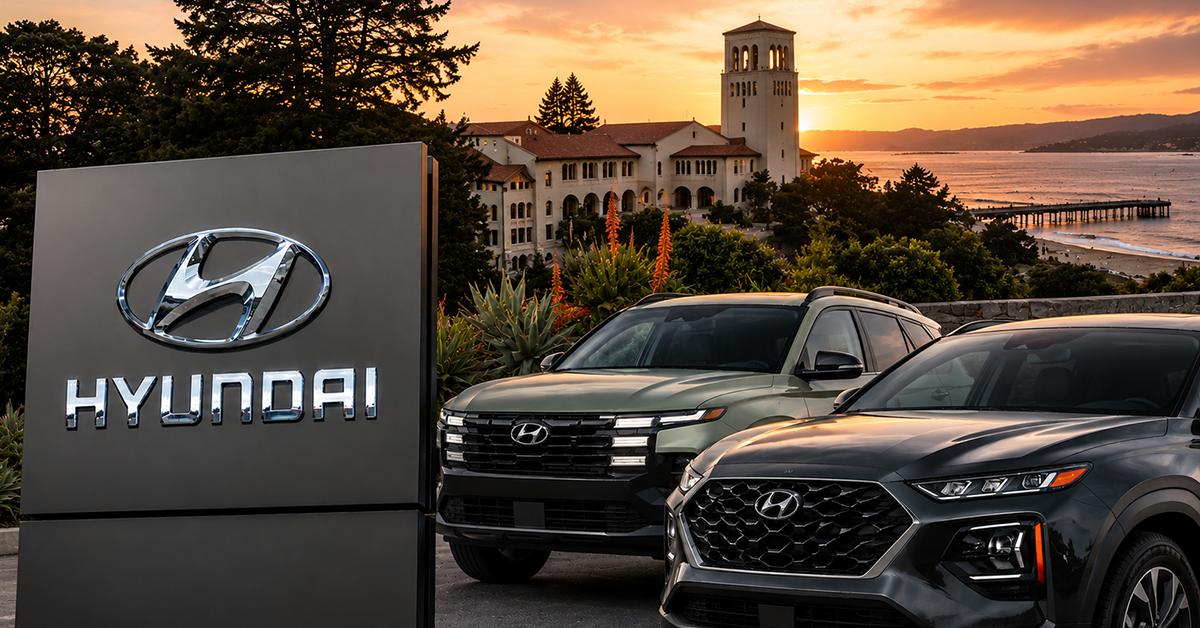
AI-generated concept illustration of the Hyundai Tucson — not an official Hyundai image. | Rev N Rise
Hyundai has recalled more than 421,000 SUVs and pickups in the United States after discovering that a software error can cause the forward collision avoidance system to slam on the brakes for no reason. The vehicle detects a crash that is not happening — and responds with maximum braking force. At motorway speed, that means the car behind you has no warning. Injuries have already been reported. Here is everything you need to know.
Affected vehicles: 2025–2026 Hyundai Tucson, Tucson Hybrid, Tucson Plug-In Hybrid and 2025–2026 Hyundai Santa Cruz.
Check your VIN: Visit NHTSA.gov and use the VIN lookup tool — or call Hyundai at 1-855-371-9460.
The fix is a free software update at your nearest Hyundai dealer. No hardware replacement needed.
If your car unexpectedly brakes hard for no reason — this is a known safety issue. Contact your dealer immediately.
Phantom braking is the informal name for a specific failure mode in collision avoidance systems — where the vehicle's front camera or radar mistakenly identifies a hazard that does not exist and applies maximum emergency braking in response. The system is doing exactly what it was designed to do. The problem is that it is triggering at the wrong time, in the wrong place, with no warning to the driver or to the vehicles behind.
In a car park or at low speed, phantom braking is startling and unpleasant. At highway speed, it is genuinely dangerous. A vehicle suddenly decelerating from 70mph to near-zero, without any brake lights or signal that a driver behind could anticipate, gives the following driver essentially no time to respond. The most common result is a rear-end collision — the vehicle behind drives into the back of the Hyundai at full or near-full speed. Injuries from these impacts have already been reported in connection with this specific recall.
Hyundai's description of the defect in documents filed with NHTSA is precise. In some situations the Forward Collision Avoidance system may exhibit increased sensitivity to forward object proximity — meaning the camera processes a normal road environment as an imminent collision and activates maximum braking. The trigger conditions are not limited to one specific scenario — the issue can occur on open roads, in traffic and in conditions that would not alert a human driver to any hazard at all.
The root cause of the phantom braking is a software error in the front camera system — the primary sensor feeding data into Hyundai's Forward Collision Avoidance Assist system. The front camera is responsible for detecting vehicles, pedestrians and obstacles ahead of the car and calculating whether a collision is imminent. When the software processes certain visual inputs — specific lighting conditions, road markings, reflections or lane geometry — it can incorrectly calculate that a collision is about to occur and trigger the maximum braking response.
The error is not in the physical camera hardware. The lens, the sensor and the mounting are all working correctly. The problem is in the image processing and threat assessment logic within the camera's software — the code that translates what the camera sees into a decision about whether to brake. Because the error is software-based, the fix is also software-based: a calibration and logic update that corrects the sensitivity thresholds and reduces the likelihood of false positive detections. Hyundai has confirmed the fix is available now and that dealers can apply the update free of charge.
| Hyundai Tucson 2025 | Affected — build dates vary |
| Hyundai Tucson 2026 | Affected — build dates vary |
| Hyundai Tucson Hybrid 2022–2025 | Affected — specific build dates |
| Hyundai Tucson Plug-In Hybrid 2022–2025 | Affected — specific build dates |
| Hyundai Santa Cruz 2025 | Affected — build dates vary |
| Hyundai Santa Cruz 2026 | Affected — build dates vary |
| Total Tucson units | 407,996 |
| Total Santa Cruz units | 13,082 |
| Total recalled | 421,078 |
| Defect | Software error — front camera — over-sensitive collision avoidance |
| Result | Phantom braking — maximum braking with no real hazard present |
| Safety risk | Rear-end crash — injuries reported |
| Fix | Free software update — dealers — no hardware replacement |
| Hyundai customer service | 1-855-371-9460 |
| VIN lookup | NHTSA.gov |
If you own a 2025 or 2026 Hyundai Tucson — including the standard petrol, Hybrid or Plug-In Hybrid variant — or a 2025 or 2026 Hyundai Santa Cruz, your vehicle may be included in this recall. The affected build date ranges vary between the four specific model variants — the most reliable way to confirm whether your individual vehicle is affected is to check your VIN using the free NHTSA lookup tool at NHTSA.gov, or to contact your Hyundai dealer directly.
The repair is a free software update applied at any authorised Hyundai dealership. There is no parts replacement, no towing required and no extended time at the dealership — the software update is a straightforward service appointment. If your vehicle has already experienced an unexpected hard braking event that you could not explain — particularly at highway speed or in normal traffic conditions with no obvious hazard ahead — that is a strong indicator that your vehicle is affected. Report it to your dealer immediately and request the recall repair as a priority.
Hyundai has not set a formal deadline for completing the recall repair, but given the active safety risk — including reported injuries — acting promptly is strongly advised rather than waiting for an official notification letter.
The Hyundai recall is part of a broader pattern emerging as advanced driver assistance systems become standard equipment across the automotive industry. Forward Collision Avoidance systems were designed to save lives — and in genuine crash scenarios, they do. Studies consistently show that automatic emergency braking reduces rear-end collisions by 40-50 percent when functioning correctly. The problem is that the same sensitivity that makes these systems effective in real emergencies can also trigger false positives in edge cases that the software was not fully trained to handle.
Phantom braking reports are not unique to Hyundai. Multiple manufacturers have issued recalls or software updates in recent years to address over-sensitive collision avoidance systems. The challenge for engineers is finding the precise calibration point where the system catches genuine emergencies reliably without triggering on shadows, overpasses, road markings, reflections or temporary signage. Getting that calibration right at scale — across millions of vehicles, in every weather condition and road environment — remains one of the most difficult problems in automotive safety software.
A vehicle that slams on the brakes without warning on a highway is not a minor inconvenience — it is a genuine crash risk, and injuries have already been reported. Hyundai is handling this correctly by recalling 421,000 vehicles and providing a free software fix rather than waiting for more incidents to occur. If you own a 2025 or 2026 Tucson or Santa Cruz — check your VIN at NHTSA.gov today and book the software update as soon as your dealer can fit you in. The fix takes minutes. The alternative is considerably worse.