 Brands
Polestar — History, Models and Everything You Need to Know
AI-generated concept illustration — Polestar brand overview. | Rev N Rise
Polestar is the Swedish performance electric car brand born from decades of Volvo motorsport heritage — a company that began as a racing team in the 1990s, became Volvo's official performance tuning partner, and was reborn in 2017 as a standalone electric vehicle manufacturer with a distinctly minimalist Scandinavian design language. Polestar combines genuine performance pedigree with a design sensibility that consciously rejects the technological maximalism of many EV rivals.
Polestar's origins trace back to 1996, when it began as Flash Engineering, a Swedish racing team competing with Volvo cars. The team rebranded as Polestar Racing in 2005 and developed an increasingly close relationship with Volvo's engineering department, eventually becoming Volvo's official motorsport partner and competing successfully in touring car championships across Scandinavia and internationally. The Polestar name became associated with genuinely capable, track-proven performance engineering applied to Volvo's otherwise safety-and-comfort-focused product range.
In 2009, Volvo formalised the relationship by acquiring Polestar's performance operations, and Polestar began producing officially badged high-performance road car variants — modified versions of standard Volvo models with enhanced engines, suspension and aerodynamics, sold through Volvo's own dealer network. These Polestar-tuned Volvos built a loyal following among enthusiasts who valued Volvo's safety engineering combined with genuine performance credibility.
The most significant transformation in Polestar's history came in 2017, when Volvo and its parent company Geely relaunched Polestar as an entirely standalone electric performance car brand, separate from Volvo's own model range, with its own dedicated dealer network, design language and engineering team. This represented a deliberate strategic decision to create a distinct premium electric vehicle brand within the broader Geely-Volvo corporate family, occupying a position between mainstream Volvo and the more design-forward, technology-focused electric vehicle market that Tesla had pioneered. Polestar went public on the Nasdaq in 2022 through a SPAC merger, becoming a publicly traded company.
Polestar's design identity is built on deliberate minimalism — a conscious rejection of the increasingly large touchscreens, aggressive styling and maximalist feature lists that characterise much of the modern electric vehicle market. Polestar's interiors favour clean lines, sustainable materials and a restrained colour palette, drawing explicitly on Scandinavian design traditions that prioritise functional simplicity over visual spectacle. This approach has earned Polestar a distinctive reputation among design-conscious buyers who find Tesla's interior philosophy too austere and other premium EV interiors too ostentatious, positioning Polestar in a specific aesthetic niche within the broader EV market.
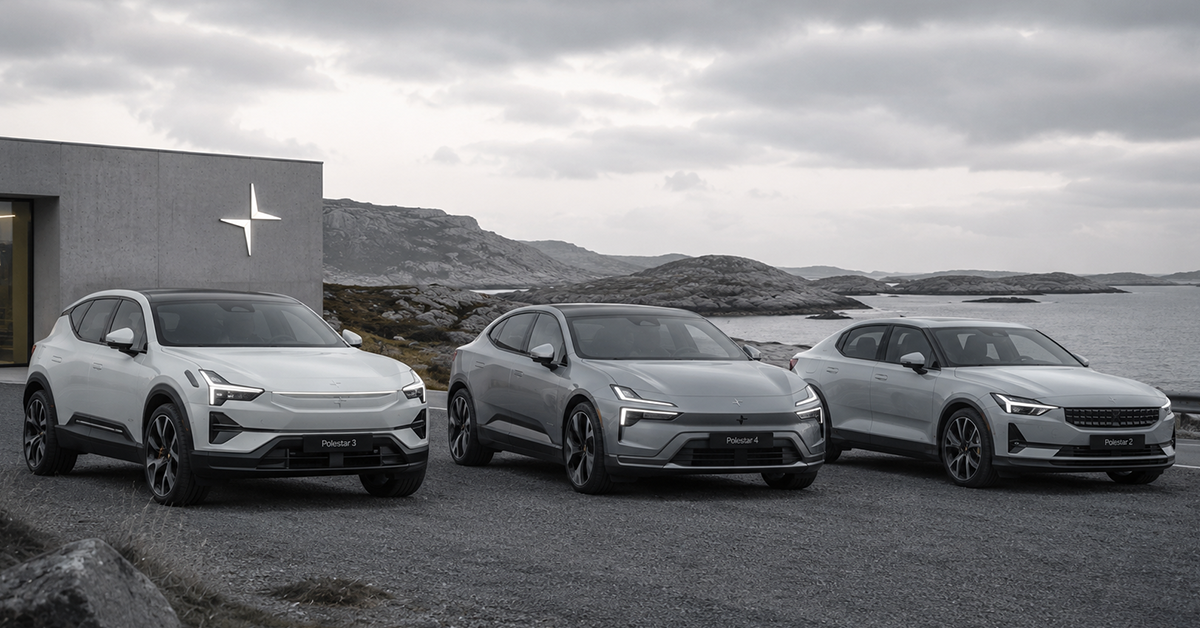
Polestar's competitive positioning rests on a combination of genuine motorsport heritage and a deliberately restrained design philosophy that differentiates it from both Tesla's tech-forward minimalism and the more conventional luxury EV approaches of German manufacturers entering the segment. The brand's racing pedigree gives its performance claims genuine credibility rather than purely marketing-driven positioning. The Polestar 4's decision to eliminate the rear window entirely in favour of a rear-facing camera and interior display is the kind of genuinely unconventional engineering decision that demonstrates Polestar's willingness to challenge automotive design conventions rather than simply iterate on existing formulas. Polestar's relationship with both Volvo and Geely gives it access to shared platform engineering and manufacturing scale that smaller independent EV startups lack, while its standalone brand identity allows it to pursue a more design-led, performance-oriented positioning than Volvo's own mainstream safety-focused brand identity would permit.