 Brands
Rivian — History, Models and Everything You Need to Know
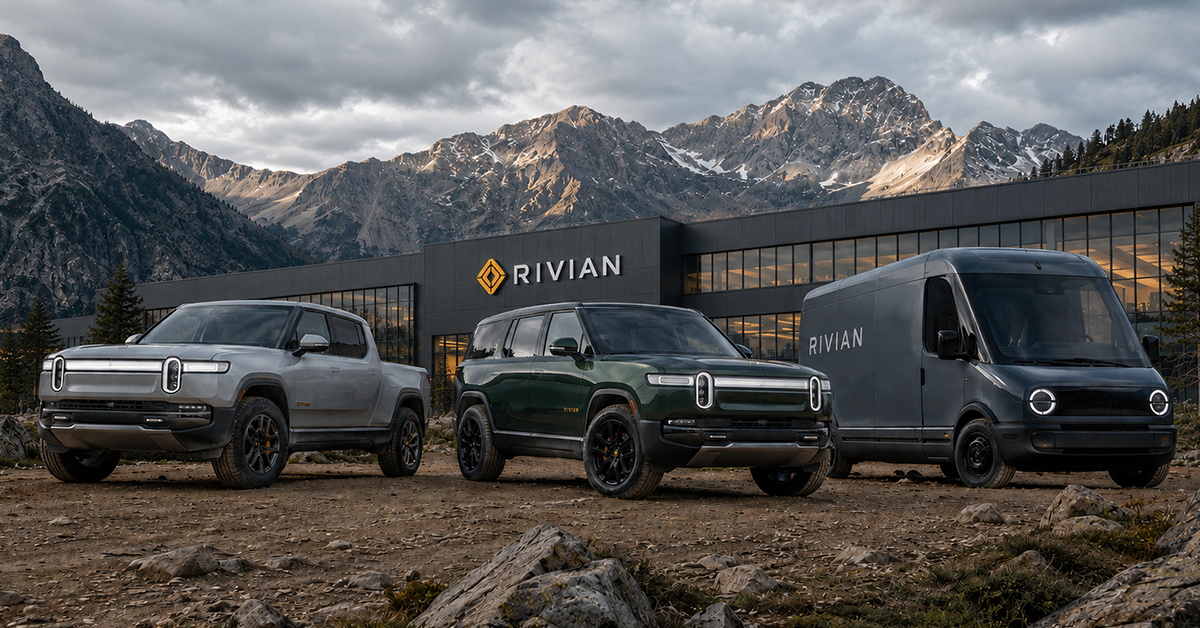
AI-generated concept illustration — Rivian brand overview. | Rev N Rise
Rivian is the American electric vehicle company that beat both Tesla and Ford to market with a production electric pickup truck — a remarkable achievement for a company that operated in near-total secrecy for nearly a decade. Founded by MIT-trained engineer RJ Scaringe with a vision of building adventure-ready electric vehicles capable of going anywhere while minimising environmental impact, Rivian has become one of the most credible new entrants in the American automotive landscape.
RJ Scaringe founded what would become Rivian in 2009, shortly after completing his PhD in mechanical engineering at MIT. The company operated initially under the name Mainstream Motors and spent its first several years working in almost complete secrecy on an electric sports car concept that was ultimately abandoned. Scaringe restructured the company's strategy around 2011, pivoting toward the adventure and outdoor vehicle market — recognising an opportunity to combine genuine off-road capability with electric powertrain technology in a way that no established manufacturer had yet attempted.
Rivian remained in stealth mode for an extraordinarily long period — nearly a decade — before finally revealing its products to the public at the Los Angeles Auto Show in November 2018. The unveiling of both the R1T electric pickup truck and R1S electric SUV simultaneously demonstrated that Rivian had developed not just a single concept but an entire platform strategy, immediately establishing the company as a serious contender rather than a speculative startup.
Rivian secured major investment from Amazon and Ford in 2019, providing the capital needed to bring the R1T and R1S into actual production. Amazon's involvement extended beyond pure investment — the company placed an order for 100,000 electric delivery vans, which Rivian subsequently developed as the Rivian Commercial Van, creating a substantial and stable revenue stream alongside the consumer vehicle business. Rivian's IPO in November 2021 was one of the largest public offerings in US stock market history, reflecting the enormous investor enthusiasm for credible new electric vehicle manufacturers at the time.
The Rivian R1T achieved something that surprised much of the automotive industry — it became the first electric pickup truck to reach mass production, beating both the long-anticipated Tesla Cybertruck and the Ford F-150 Lightning to market by entering production in September 2021. The R1T offered genuinely novel features for a pickup truck, including a "gear tunnel" — a lockable storage compartment running across the bed behind the cab — and a quad-motor configuration enabling a tank turn manoeuvre that allows the truck to rotate in place. The R1T's combination of genuine off-road capability, family-friendly practicality and premium build quality earned it widespread critical acclaim, including being named MotorTrend's Truck of the Year in 2022.
Rivian's competitive identity centres on combining genuine off-road and adventure capability with environmental responsibility — a positioning distinct from Tesla's tech-forward minimalism and from traditional truck manufacturers' combustion heritage. The R1T and R1S's quad-motor configurations, off-road-tuned air suspension and genuinely capable wading depth and approach angles give Rivian credibility with the outdoor and overlanding community that values authentic capability over simply electric novelty. The Amazon delivery van partnership has provided Rivian with a commercial revenue stream that insulates the company somewhat from the volatility of the consumer EV market. The upcoming R2 — positioned at a substantially lower price point than the R1 lineup — represents Rivian's most important strategic bet: whether the brand's premium adventure-vehicle identity can translate successfully into a higher-volume, more accessible price segment without diluting the qualities that have made the R1T and R1S so well regarded among early adopters.