 Brands
Toyota Celica — 36 Years, Seven Generations, One Rally Legend
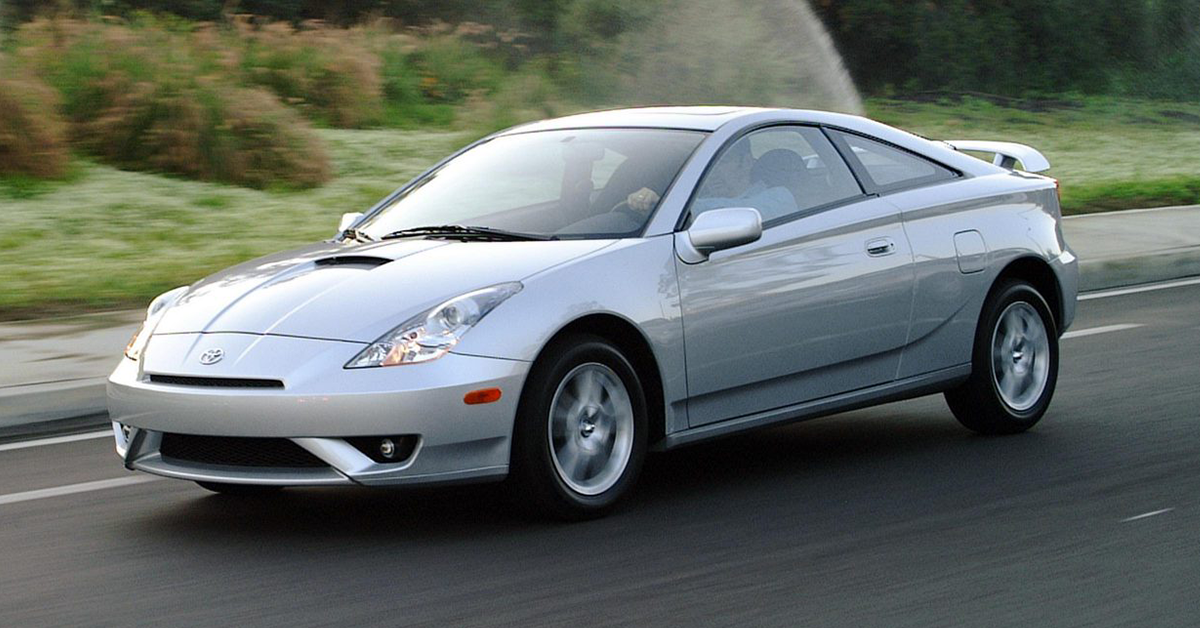
Official press image of the Toyota Celica. | © Toyota Motor Corporation
Over 36 years and seven complete generations, the Toyota Celica sold more than four million units worldwide, spawned the only World Rally Championship homologation car Toyota has ever built, and starred in one of the more unlikely celebrity car-launch campaigns of the early 1990s. Then, in April 2006, it simply stopped. No successor was ever announced. Two decades later, the strongest evidence that the name might return is a handful of trademark filings and a great deal of enthusiast speculation — which tells you almost everything about how deeply this particular nameplate is still missed.
The Celica launched in 1970 as a coupe and three-door hatchback, sharing its underlying platform with the Toyota Carina sedan — a fairly common approach at the time, and one that gave the earliest Celicas genuine mechanical robustness without the development cost of an entirely bespoke chassis. The first Celica to reach the United States was badged the Celica ST, initially powered by a 1.9-litre 8R engine paired with a four-speed manual, before Toyota moved to a larger 2.0-litre 18R-C engine for 1972 through 1974 models, and again to a 2.2-litre 20R unit from 1975 to 1977. An automatic transmission option arrived in 1973 for buyers who didn’t want to shift for themselves — a genuinely notable addition at a time when most sporty coupes in this segment remained manual-only.
The Celica’s defining performance chapter arrived with the introduction of the All-Trac Turbo, known internationally as the GT-Four — a turbocharged, all-wheel-drive variant built specifically to satisfy World Rally Championship homologation requirements. It remains, to this day, the only WRC-homologation production car Toyota has ever sold, produced across three successive chassis codes: ST165, ST185 and ST205. By the fifth-generation Celica, the All-Trac Turbo used a 2.0-litre turbocharged inline-four producing 200 horsepower and 200 lb-ft of torque — genuinely potent figures for a compact coupe of that era, and numbers that translated directly into rally-stage success for Toyota’s competition programme.
Of the roughly 4.1 million Celicas Toyota built across all seven generations, the GT-Four variants represent only a small fraction of total production. The ST205, the final and rarest GT-Four generation, now commands the strongest premiums in the used market of any Celica variant — a genuine collector’s car built in numbers small enough, and with a rally pedigree significant enough, to guarantee lasting desirability.
The fifth-generation Celica, launched at the start of the 1990s, marked a genuine styling departure — trading the angular lines that had defined earlier generations for considerably more rounded, curved bodywork. Toyota enlisted Eddie Murphy to help market the redesigned car in 1990, a genuinely unusual celebrity endorsement choice for a Japanese compact coupe at the time. Mechanically, the GT trim used a 2.2-litre four-cylinder producing 130 horsepower, the base ST offered a 1.6-litre unit at 103 horsepower, and the GT-S variant extracted 135 horsepower from the same 2.2-litre engine — while the All-Trac Turbo continued serving as the range-topping performance flagship at 200 horsepower.
The final, seventh-generation Celica — internally coded T230 and sold from 1999 to 2006 — represented the most significant mechanical departure in the nameplate’s history. Toyota dropped both the GT-Four and its all-wheel-drive system entirely, moving to a front-wheel-drive-only lineup built around two Yamaha-developed 1.8-litre inline-four engines. The 1ZZ-FE, fitted to the SS-I and US-market GT trims, produced 140 horsepower paired with either a four-speed automatic or five-speed manual. The more focused 2ZZ-GE, fitted to the SS-II and US GT-S, produced a genuinely eager 180 horsepower at 7,600rpm, using VVTL-i variable valve lift and timing that engaged around 6,000rpm to unlock the engine’s higher-rev performance — paired standard with a six-speed manual gearbox. Design for this generation was previewed by the XYR concept, unveiled at the January 1999 Detroit Motor Show, with the production car arriving remarkably close to that concept’s aggressive, angular styling.
The T230’s 2ZZ-GE engine, while genuinely exciting to drive, developed known long-term reliability concerns that remain the dominant pre-purchase inspection priority for buyers today — specifically lift-cam bolt shear at high RPM and piston-ring oil consumption on higher-mileage examples. Toyota further simplified the lineup through this generation’s run: the ST trim was discontinued in 1998 to streamline ordering, and the coupe body style was eliminated in 1999, leaving only Liftback and Convertible configurations for North American buyers.
Toyota discontinued the Celica nameplate on 21 April 2006, after 36 years and seven generations, with the final examples sold exclusively in Japan during the model’s last year on the market. The decision reflected genuinely contracting demand for compact sports coupes through the 2000s — the T230 sold below Toyota’s internal forecasts — compounded by tightening European emissions regulations that made continued sales in that market increasingly difficult to justify. No direct successor was ever developed. The Scion tC, sold exclusively in North America, is regarded by some enthusiasts as the Celica’s spiritual successor, though Toyota never officially positioned it that way.
Nearly two decades on, the Celica name has never fully disappeared from enthusiast conversation. Trademark filings for names including GR Celica have surfaced periodically, fuelling ongoing speculation that Toyota may be developing a genuine revival — following the same pattern that brought the Supra back after 17 years, and the same broader trend of manufacturers reviving beloved but dormant nameplates for a new generation of buyers. Toyota has not confirmed anything officially as of 2026, and the honest answer, for now, is that the Celica’s return remains speculation rather than announced fact.