 Brands
Toyota Yaris — From City Runabout to World Rally Champion
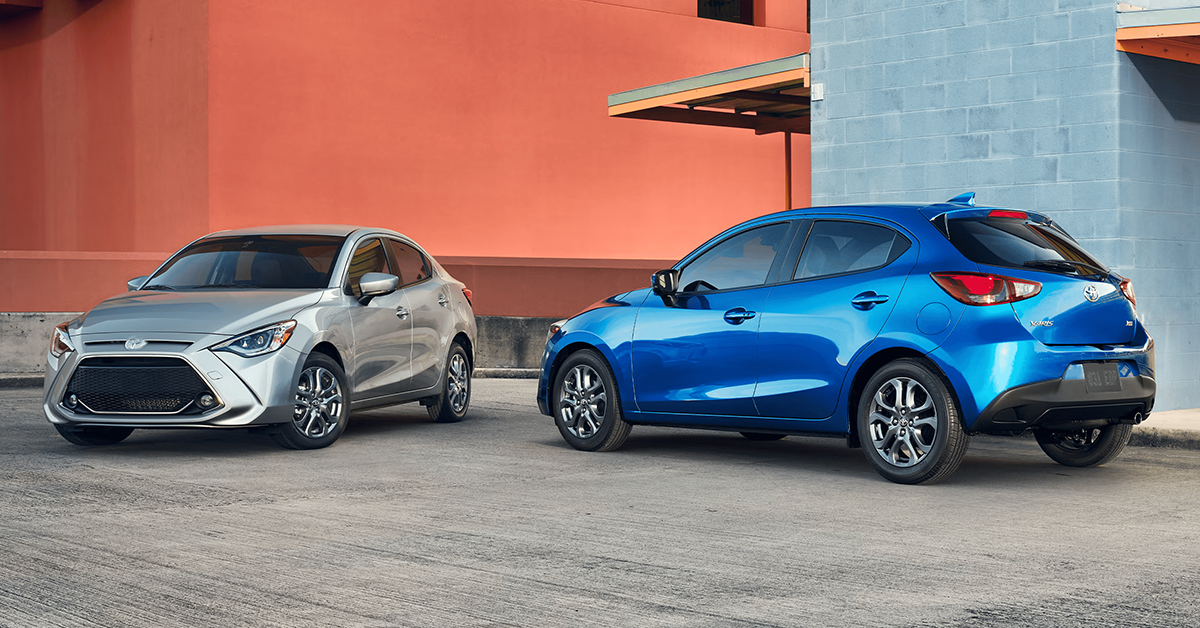
Official press image of the Toyota Yaris. | © Toyota Motor Corporation
Few nameplates in Toyota’s range have covered as much ground as the Yaris — literally and figuratively. It began life in 1999 as a simple, efficient city car built to maximise interior space within a genuinely compact footprint. A quarter-century later, one version of it competes in the World Rally Championship, and its road-going counterpart is regarded by enthusiasts as one of the finest hot hatches ever built. The distance between those two identities is the whole story of what the Yaris has become.
The first-generation Yaris, launched in 1999 and known internally as the XP10/XP20, measured a genuinely compact 3.6 to 3.8 metres in length and was offered with simple four-cylinder petrol and diesel engines producing up to 106 horsepower. It was not sold everywhere under the same name — Toyota badged it the Vitz in Japan and the Echo in North America, a common practice for the company at the time before it standardised the Yaris nameplate globally. In three-door and five-door hatchback body styles, the design prioritised maximising interior space for five passengers within that compact exterior footprint. It proved genuinely ideal for tight urban parking and low running costs, and went on to sell over 1.2 million units in Europe alone — capturing roughly a quarter of Toyota’s entire regional sales volume at the time.
The second generation, launched in 2005 and known as the XP90, grew slightly to 3.75 metres, dropped the three-door coupe body style, and brought meaningfully refined interiors, better noise insulation and expanded safety features including multiple airbags and stability control as standard. Engine options ranged from 1.0 to 1.8-litre four-cylinder petrols producing up to 133 horsepower, alongside diesel options returning over 60mpg.
The current, fourth-generation Yaris (XP210) launched in 2020, built on Toyota’s TNGA GA-B platform — sharing underlying architecture elements with the Corolla and C-HR. At 3.94 metres, it uses a 1.5-litre three-cylinder hybrid petrol engine delivering a combined 114 horsepower and up to 70mpg, with two motor-generators — one powering the front wheels, one starting the engine and charging the battery. A longer wheelbase and wider track than its predecessor improved both interior space and handling stability, while the driver now sits lower and further back in the car for a more engaging driving position. UK prices at launch started from approximately £19,910.
For 2026, Toyota has continued refining this generation rather than replacing it. The Mid+ grade — chosen by around 40 percent of European customers — gains new matte black 17-inch alloy wheels (up from 16-inch), dark chrome wheel nuts, and sportier-shaped seats with upgraded fabric and a three-tone grey stitching pattern. The lineup now offers a dual-hybrid approach: Hybrid 115 for maximum efficiency, and Hybrid 130 for sharper acceleration and a more engaging drive. In 2024, the Yaris and its crossover sibling, the Yaris Cross, were Europe’s two most popular full hybrid cars, with the standard Yaris ranking as the continent’s 10th best-selling vehicle at 174,000 sales.
Did you know that the Yaris GR almost didn’t happen? Akio Toyoda insisted on it despite internal resistance, wanting a true sports car, not just a badge-engineered model.
The GR Yaris exists because of a regulatory requirement and one executive’s personal insistence. Toyota Gazoo Racing needed a road-legal, homologated version of its World Rally Championship car to satisfy competition regulations — but rather than accept a minimally modified standard Yaris, Toyota CEO Akio Toyoda personally pushed for a genuine, standalone performance car, reportedly against internal resistance from parts of the organisation who favoured a simpler, cheaper approach. The result, developed by Toyota Gazoo Racing, uses a turbocharged 1.6-litre three-cylinder engine producing up to 268 horsepower, paired with standard all-wheel drive and a genuine six-speed manual transmission — genuinely startling output from a three-cylinder unit, and a specification that shares remarkably little beyond its silhouette with the standard hybrid Yaris sold alongside it.
2026 pricing for the GR Yaris in Australia ranges from approximately AU$55,490 for the GT trim to AU$67,490 for the top GTS Aero Performance Package. The car has earned consistently strong reviews from the enthusiast press, and used examples in the UK now command genuine collector premiums — average condition examples trading around £33,232, with well-specified Circuit Pack cars reaching over £40,000, reflecting the GR Yaris’s status as a modern homologation special in the tradition of legendary rally-bred road cars from decades past.
Sitting alongside the standard hatchback, the Yaris Cross has become Toyota’s best-selling product in Europe. Built at Toyota Motor Manufacturing France, it shares its underlying Yaris platform but adds a higher ride height, available all-wheel drive, and a more rugged visual stance. The 2026 update brought a redesigned front end around a body-coloured honeycomb grille, new LED headlamps with integrated daytime running lights, and a new GR Sport variant specified with the Hybrid 130 powertrain. Higher trims introduce SakuraTouch upholstery — a part-leather material incorporating plant-derived PVC and recycled content that Toyota states reduces production CO2 emissions by 95 percent compared to genuine leather.