 Brands
Toyota Prius — 25 Years of Redefining What a Hybrid Can Be
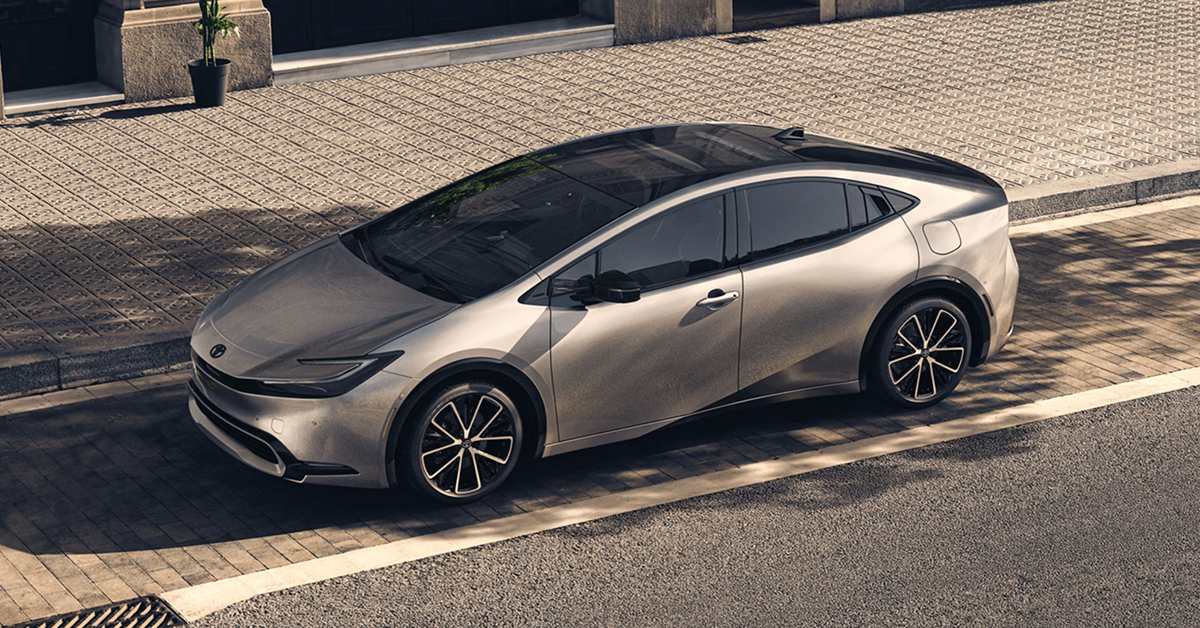
Official press image of the Toyota Prius. | © Toyota Motor Corporation
Twenty-five years ago, the idea of a car powered by both a petrol engine and an electric motor sounded like a science experiment rather than a genuine consumer product. Toyota proved otherwise. The Prius reached the United States in 2000, following its 1997 Japanese debut, and it became the car that made hybrid technology a mainstream, commercially viable proposition rather than a curiosity. In 2026 — marking the nameplate’s 25th anniversary in America — the Prius no longer needs to apologise for existing. It has become genuinely desirable, and it still delivers the efficiency the name has always promised.
The original Prius launched in Japan in 1997 as the world’s first mass-produced hybrid car — not the first hybrid concept ever built, but the first one Toyota committed to genuine assembly-line production rather than a limited engineering showcase. When it reached the United States in 2000, most competing manufacturers viewed hybrid powertrains as a niche curiosity unlikely to matter commercially. Twenty-five years later, that assessment looks almost comically wrong. Every hybrid vehicle sold by any manufacturer today, and much of the industry’s broader shift toward electrification, traces its commercial viability directly back to what the Prius proved: that a mainstream buyer would genuinely choose a hybrid, not out of environmental obligation, but because the running costs and reliability made obvious financial sense.
The nameplate’s early generations leaned heavily into function over form — a distinctively upright, aerodynamic but unapologetically utilitarian silhouette that became instantly recognisable, if rarely described as beautiful. That reputation for prioritising efficiency above all else, including style, followed the Prius for nearly two decades.
The current, fifth-generation Prius represents the most significant image shift in the nameplate’s history. Toyota kept the sleek, low-slung shape introduced with this generation’s redesign, and paired it with genuinely stronger performance than any previous Prius delivered — without sacrificing the fuel economy numbers the name is built on. In front-wheel-drive form, the hybrid system produces 194 horsepower; adding available all-wheel drive bumps that slightly to 196 horsepower. Both configurations feel genuinely quick in modern traffic and confident on a twisty road — a description that would have been unthinkable for any Prius built before this generation.
The efficiency case remains extraordinary. The 2026 Prius is EPA-rated at up to 57 mpg combined, with the all-wheel-drive Limited trim returning 53 mpg city and 54 mpg highway — figures that place it among the most efficient non-plug-in vehicles sold anywhere in the United States, a quarter-century after the nameplate first made that claim relevant.
Sitting above the standard hybrid, the Prius Plug-In Hybrid adds a larger battery and genuine electric-only driving capability. On a full charge, it delivers up to 44 miles of all-electric range — enough for the overwhelming majority of daily American commutes to be completed without the petrol engine ever engaging. The 13.6 kWh battery charges in approximately four hours on a 240-volt outlet, or around 11 hours on a standard 120-volt household outlet for owners without dedicated charging equipment installed. Once the battery depletes, the car transitions seamlessly into standard hybrid operation, and reviewers consistently note that the changeover is close to imperceptible — most drivers would not notice the switch unless specifically told to look for it.
The Plug-In Hybrid also gains a genuine power increase, producing 220 horsepower — making it noticeably quicker than the standard hybrid, and a considerable distance removed from the sedate character of earlier Prius generations. Real-world testing over 100 miles of routine driving with one full charge has recorded averages around 90.9 mpg, genuine proof the plug-in system delivers real-world results when owners actually plug it in. Toyota currently positions the Prius Plug-In as the only non-luxury plug-in hybrid car on the American market, with its closest rival, the Kia Niro Plug-In Hybrid, sitting in the small SUV segment rather than competing directly as a sedan.
The 2026 model year carries over the same core package, trim walk and mechanical setup as the previous year, with four trims continuing on the standard hybrid: LE, XLE, Nightshade and Limited. The most notable update is that the Nightshade appearance package now extends to the Prius PHEV for the first time, transforming what some critics have called a “bland-looking commuter vehicle” into a considerably more aggressive one. The signature Nightshade colour is Karashi, a metallic yellow shade unique to the grade and notably unavailable on the range-topping Limited trim, alongside Midnight Black Metallic and Wind Chill Pearl as the other two Nightshade colour options.