 Brands
Toyota Avalon — The Full-Size Flagship America Let Go
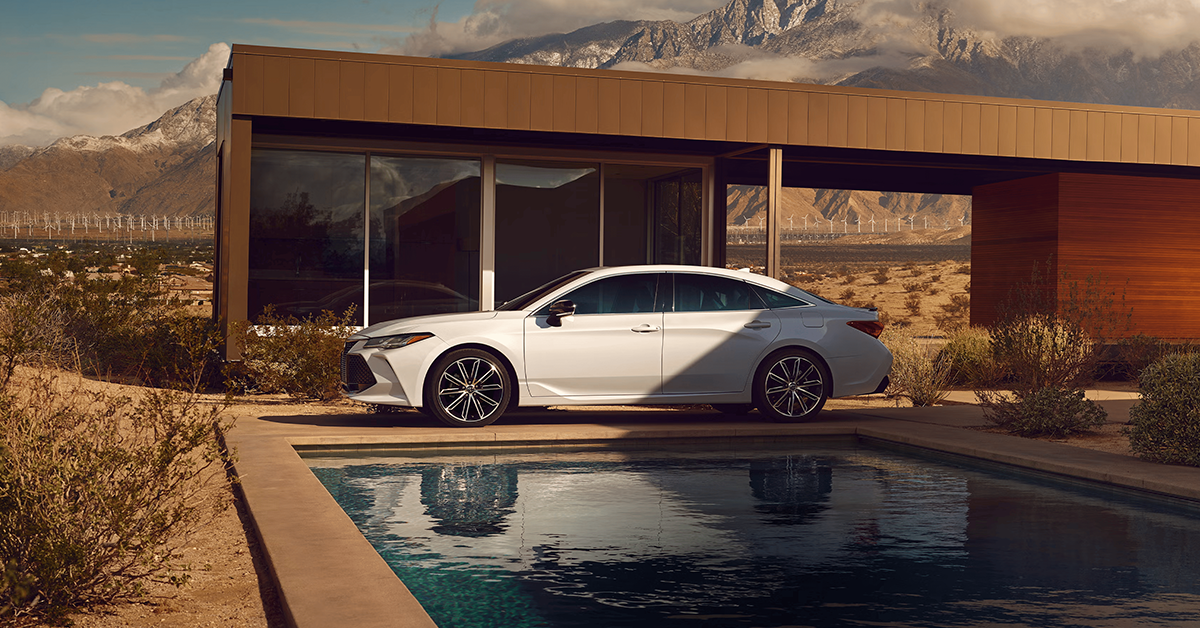
Official press image of the Toyota Avalon. | © Toyota Motor Corporation
For 28 years, the Toyota Avalon occupied a specific and genuinely valuable position in the American car market: the full-size sedan for buyers who wanted something roomier, more comfortable and more upscale than a Camry, without paying Lexus prices to get it. In August 2022, that position quietly closed. Production ended, and with it went a nameplate that had spanned five generations, earned a reputation for near-unkillable reliability, and consistently delivered more genuine value than its badge or its price tag suggested. This is the story of why it existed, what made each generation distinct, and why Toyota ultimately let it go.
The Avalon’s origin story begins with the car it was built to replace. Throughout the 1980s, Toyota sold the Cressida in the United States — a rear-wheel-drive luxury sedan that had built a genuine following among buyers who wanted something more substantial and premium than the Camry, but weren’t ready to commit to the newly launched Lexus brand. By the early 1990s, Toyota decided the Cressida’s formula needed reinvention rather than continuation, and the result, launched for the 1994 model year, was an entirely new nameplate: the Avalon.
Where the Cressida had been rear-wheel drive and imported, the Avalon was front-wheel drive and built specifically for the American market at Toyota’s plant in Georgetown, Kentucky. It was, from the very beginning, a genuinely American-market car — larger, softer-riding and more overtly comfort-focused than anything Toyota’s domestic Japanese lineup offered at the time, designed around the specific preferences of American full-size sedan buyers who had spent decades choosing Buicks, Oldsmobiles and Mercury Grand Marquis. Toyota’s pitch was straightforward: all the traditional American full-size sedan comfort, with none of the traditional American full-size sedan reliability problems.
Across its 28-year run, the Avalon evolved considerably in styling and technology while staying remarkably faithful to its founding premise. The third generation, launched in the early 2010s, introduced a genuinely important structural change: an extended-length chassis that gave the Avalon meaningfully more rear legroom than its Camry sibling — a distinction that became one of the car’s defining practical advantages. That same extended platform proved valuable enough that Toyota adopted it for the Lexus ES starting in 2013, meaning the humble Avalon effectively donated its underpinnings to Toyota’s own luxury division.
The 2013 redesign brought considerably more exciting styling and a more genuinely luxurious cabin, and the changes clearly resonated with buyers — Avalon sales jumped 140 percent in 2013 following the overhaul. That generation retained Toyota’s familiar 268-horsepower, 3.5-litre V6 paired with a six-speed automatic, and introduced the Avalon’s first-ever hybrid variant, expanding the car’s appeal to buyers who wanted full-size comfort without full-size fuel bills.
The Avalon’s fifth and final generation launched at the North American International Auto Show in Detroit in January 2018, arriving as a 2019 model. It represented the most dramatic visual departure in the nameplate’s history — despite sharing Toyota’s TNGA platform with the Camry underneath, Toyota deliberately pushed the Avalon’s exterior styling in a considerably sportier, more aggressive direction. A massive, broad grille dominated the front end, with chrome horizontal slats on standard trims or a fully blacked-out treatment on sportier variants. The V6 engine carried over at 301 horsepower, now paired with a genuinely modern eight-speed automatic transmission with steering wheel paddle shifters — a meaningful step up from the previous six-speed unit.
This final generation also brought the Avalon’s most performance-focused variant ever built: the Avalon TRD, introduced for 2020. Toyota’s TRD engineers stiffened the chassis with additional underbody bracing, fitted revised coil springs and dampers for flatter cornering and sharper steering response, and installed larger front brakes — 12.9-inch rotors with dual-piston calipers — for genuinely improved stopping distances and pedal feel. Cosmetically, the TRD added a specially designed body kit, unique alloy wheels, an upgraded exhaust system, red interior stitching and red seatbelts. It was, by any reasonable measure, the most engaging Avalon Toyota ever built — and also one of the shortest-lived variants, discontinued after just two model years when Toyota trimmed the lineup for the car’s final season.
For 2021, Toyota briefly offered all-wheel drive on the Avalon for the first time in the nameplate’s history — though notably only paired with a new non-hybrid four-cylinder engine, not the V6 most buyers actually wanted. That configuration proved short-lived. By the Avalon’s final 2022 model year, Toyota had pared the lineup back to its essential core: the V6-powered Avalon at 301 horsepower, and the Avalon Hybrid using a 2.5-litre four-cylinder hybrid powertrain producing a combined 215 horsepower. The four-cylinder non-hybrid engine, the AWD option and the TRD trim were all discontinued simultaneously, leaving just XLE, Touring and Limited trim levels — with a gloss-black Nightshade appearance package available on both the standard V6 and the Hybrid.
Toyota announced the Avalon’s discontinuation before the 2022 model year even went on sale, giving buyers and dealers a full year of advance notice rather than an abrupt cancellation. The reasoning Toyota gave publicly was straightforward and, frankly, difficult to argue with: American demand for full-size sedans had been declining for years, steadily and consistently, as buyers migrated toward SUVs and crossovers in numbers that showed no sign of reversing. Rather than continue investing engineering and manufacturing resources into a shrinking segment, Toyota chose to redirect that capacity toward its rapidly growing SUV and crossover lineup — the same market-wide shift that had already claimed numerous full-size sedan nameplates across the industry, including the Avalon’s longtime rival, the Nissan Maxima, which Nissan discontinued the following year in 2023.
There is a certain symmetry to how the Avalon’s story both began and ended. It was created specifically to replace the Cressida when that nameplate’s moment had passed. Three decades later, its own moment passed in much the same way — not because the car itself had failed to deliver, but because the market it served had fundamentally moved on. Production formally ended in August 2022 at the Kentucky plant that had built every single Avalon since 1994.
Toyota did not leave the full-size sedan segment entirely empty after the Avalon’s exit. The Toyota Crown, introduced shortly after, is generally regarded as the Avalon’s spiritual successor in the American market — offering a similarly upscale, comfort-focused sedan experience, now with standard hybrid power across the range. The Crown occupies a slightly different design position, however, borrowing more visual and functional cues from crossovers than the traditionally proportioned Avalon ever did — a compromise that reflects exactly the market shift that ended the Avalon’s run in the first place. For buyers specifically drawn to the Avalon’s traditional sedan proportions, low, wide stance and unapologetically old-school comfort priorities, the Crown answers a similar need without being a direct replacement in feel.
What makes the Avalon’s story worth revisiting isn’t just nostalgia — it is that discontinued Toyotas with this reputation for reliability tend to make genuinely excellent used-car purchases years after production ends. Across all five generations, the Avalon earned Toyota’s characteristic reputation for mechanical durability, and that consistency held right through to the final cars built in 2022. The Avalon received a five-star overall safety rating from the National Highway Traffic Safety Administration in its final generation, and average listing prices for late-model examples remain genuinely reasonable relative to the space, comfort and features on offer — often significantly less than comparably sized and equipped competitors from the same era, precisely because the badge lacks the premium cachet of a Lexus while offering much of the same underlying engineering.
For a buyer today weighing a used Avalon against a new full-size sedan or a comparably priced SUV, the honest case is this: nothing currently on sale replicates the specific combination the Avalon offered — genuine Camry-adjacent reliability, meaningfully more interior space than a Camry, a comfort-first ride tuned specifically for American highway cruising, and a purchase price that never asked buyers to pay a true luxury-brand premium for any of it. That combination is now, permanently, a used-car-only proposition. Whether that makes the Avalon a genuine bargain or simply a reminder of what the sedan segment has lost depends entirely on how much a buyer values what SUVs, for all their practicality, still don’t quite replicate.