 Brands
Toyota Grand Highlander — The SUV Quietly Eating Its Own Sibling
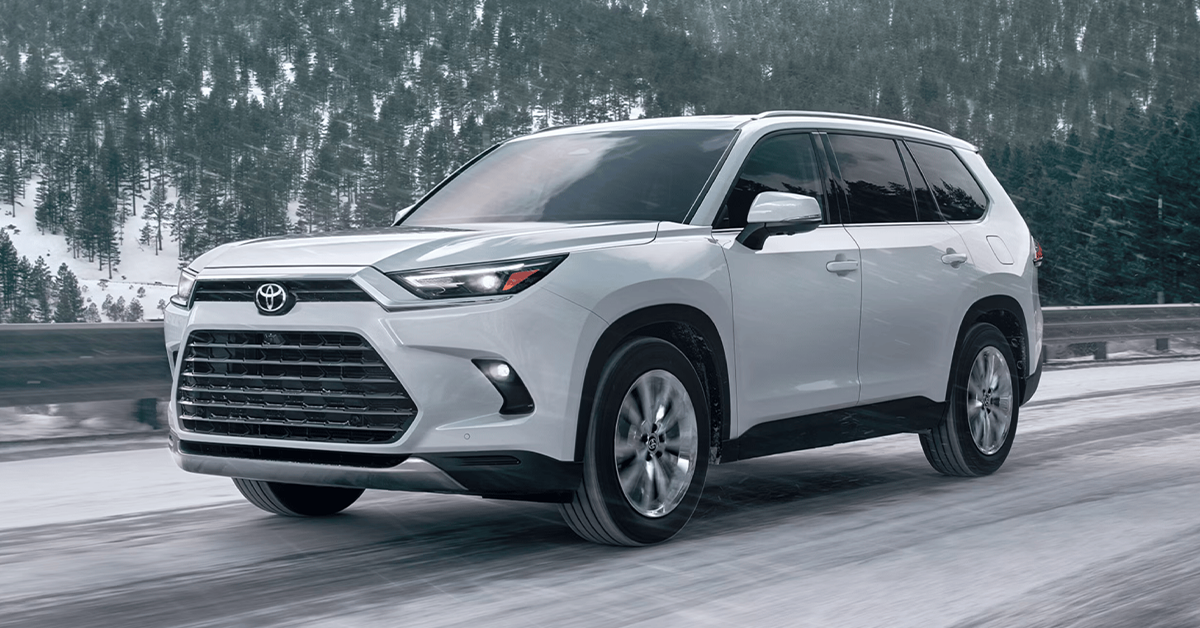
Official press image of the Toyota Grand Highlander. | © Toyota Motor Corporation
Toyota rarely launches a genuinely new model expecting it to cannibalise one of its own established nameplates — but that is precisely what appears to be happening with the Grand Highlander. Introduced in 2023 to fill a gap between the standard Highlander and the full-size Sequoia, it has proven so popular that the standard Highlander’s sales have fallen by roughly half since the Grand arrived, prompting industry reports that Toyota may be forced to fundamentally reinvent the smaller model just to justify keeping it around.
The Grand Highlander made its world premiere at the Chicago Auto Show on 8 February 2023, arriving as a 2024 model. Toyota’s own announcement framed the reasoning plainly: Lisa Materazzo, then group vice president of Toyota Marketing, stated that “there is definitely a need in the market for a midsize-SUV that prioritizes interior comfort in all three rows,” positioning the Grand Highlander to take “the Highlander legacy to an entirely new space while also keeping on our promise to deliver on electrification.” The strategic logic was straightforward: Toyota had sold nearly 487,000 standard Highlanders over the preceding two years — its second-best-selling SUV behind only the RAV4 — and identified genuine demand for something roomier without pushing buyers all the way up to the considerably larger, pricier Sequoia.
Dimensionally, the Grand Highlander splits that gap almost exactly. At 201.4 inches front to back, it runs 6.5 inches longer, 2 to 2.3 inches wider, and 2 inches taller than the standard Highlander, on a wheelbase roughly 4 inches longer — while remaining approximately 7 inches shorter than the full-size Sequoia. Designed by Calty Design Studios and manufactured exclusively at Toyota Motor Manufacturing in Princeton, Indiana, it was built on Toyota’s TNGA-K platform — the same underlying architecture shared with vehicles including the Toyota Crown and Lexus RX — with a specifically redesigned rear suspension aimed at improving both interior packaging and ride comfort compared to the standard Highlander.
Toyota was explicit from launch that the Grand Highlander was never intended as a simple stretched version of the existing model. The added length translates directly into genuinely usable space: five more cubic feet of cargo behind the third row compared to the standard Highlander, or a full 14 additional cubic feet with the rear two rows folded flat, totalling approximately 97.5 cubic feet maximum. Toyota specifically designed the space to fit seven carry-on suitcases behind a genuinely adult-sized third row — a detail aimed squarely at family road-trip buyers rather than simple headline cargo figures.
Exterior styling also diverges meaningfully from its smaller sibling. Where the standard Highlander uses a more slicked-back front end, the Grand Highlander adopts a considerably more upright, boxier design dominated by straight lines and sharp angles — a wide, hammerhead-shaped nose with a broad trapezoidal grille, LED headlights with integrated eyebrow-style daytime running lights, and flared fenders paired with available 20-inch alloy wheels. Inside, upper trims share the same 12.3-inch digital gauge cluster and 12.3-inch central touchscreen found on the standard Highlander’s equivalent trims.
The Grand Highlander launched with a genuinely broader powertrain spread than the standard Highlander offers. The base engine is the shared turbocharged 2.4-litre four-cylinder producing 265 horsepower, joined by a standard Hybrid option, and topped by the range-topping Hybrid MAX — a powertrain first developed for the Toyota Crown, pairing the same turbocharged 2.4-litre engine with two electric motors, one powering the rear axle and one sandwiched between the engine and a six-speed automatic transmission. In Grand Highlander tune, this system has been further strengthened to deliver a combined 362 horsepower — up from 340 horsepower in its original Crown application, and the most power ever offered across any Highlander-family vehicle.
For 2026, the Grand Highlander carries over largely unchanged, joined by a new Hybrid Nightshade edition featuring blacked-out exterior accents across the wheels, grille trim, mirror caps, door handles, roof rails and badging, while Hybrid MAX models gain distinct gunmetal grille finishes. 2026 pricing spans approximately $42,855 for the base gas LE and $46,205 for the standard Hybrid, rising to approximately $59,575 for the fully-loaded Hybrid MAX Platinum — all figures including Toyota’s $1,495 destination charge. Notably, even the range-topping Grand Highlander remains more than $20,000 cheaper than the full-size Sequoia, reinforcing exactly the market gap Toyota designed it to fill.
The Grand Highlander’s reception has been strong enough to create a genuine strategic problem for Toyota: buyers who might once have chosen a standard Highlander are increasingly choosing the Grand instead, for what amounts to a relatively modest price difference given the added space on offer. Reported sales data through 2025 showed the standard Highlander selling at roughly half the monthly volume it achieved the year before, even as overall three-row Highlander-family demand remained healthy — the customers simply migrated to the larger, newer sibling rather than leaving the Toyota badge entirely.
Industry trade publication Automotive News has reported that Toyota’s response may be genuinely dramatic: reengineering the standard Highlander as a battery electric SUV while retaining the nameplate, potentially arriving as a 2027 model. Toyota has not officially confirmed this specific plan, though the company has publicly stated its intention to “produce two all-new, three-row battery electric SUVs in the U.S.,” with analysts widely expecting the smaller of the two to carry the Highlander name. If accurate, it would represent a genuinely unusual outcome for an automaker’s own internal product strategy: one model succeeding so completely that it forces its sibling to become an entirely different kind of vehicle just to remain relevant.