 Brands
Toyota Highlander — The SUV Hyundai Forced Toyota to Rename Overseas
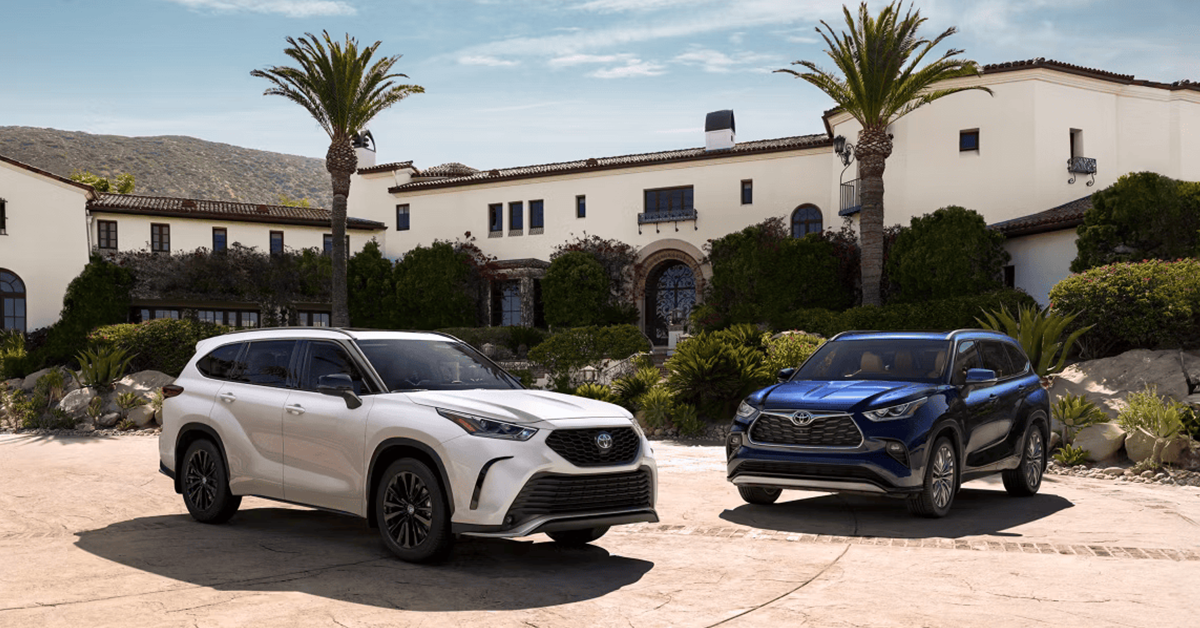
Official press image of the Toyota Highlander. | © Toyota Motor Corporation
Here is a fact most American Highlander owners have genuinely never heard: in Japan and Australia, the exact same vehicle is sold under an entirely different name — the Kluger. The reason is refreshingly petty and entirely legal: “Highlander” is a trademarked trim name in those markets, owned not by another SUV maker but by Hyundai. Toyota simply couldn’t use it. It is the same kind of forced-rename story that gave the Tundra its name after Ford objected to “T150,” and it is a genuinely fitting footnote for a nameplate that has spent 25 years quietly becoming one of the best-selling three-row SUVs in America.
The Highlander was revealed at the New York International Auto Show in April 2000, arriving in showrooms as a 2001 model. What made it genuinely notable at launch was not styling or power — it was architecture. While the overwhelming majority of SUVs on sale at the time, including Toyota’s own 4Runner, used heavy-duty body-on-frame construction borrowed from truck platforms, the Highlander instead used a modified version of the Toyota Camry’s unibody platform. This was a deliberate bet that buyers wanted SUV proportions and versatility without the truck-like ride quality and fuel economy penalty that came with it.
The bet paid off quickly. The original Highlander sold as a five-passenger, four-door SUV, with the spare tyre stored inside the cabin — relocated underneath the vehicle from 2004, the same year a genuine seven-passenger, three-row configuration was introduced. Engine choices spanned a 2.4-litre four-cylinder producing 155 horsepower up to an optional 3.0-litre V6, and the Highlander sold over one million units in its first seven years — genuinely rapid validation of Toyota’s unibody bet. It briefly held the title of Toyota’s best-selling SUV in the US, before being overtaken by the smaller RAV4 in 2006.
The Highlander name itself hides a genuinely interesting international footnote. In Japan, where the first generation was sold exclusively through Toyota’s Netz dealership network as a larger companion to the RAV4, and in Australia, Toyota has never used the Highlander name at all — instead badging the exact same vehicle the Kluger. The reason is straightforward trademark law: “Highlander” is a registered trim line name owned by Hyundai in those specific markets, leaving Toyota legally unable to use it there. Toyota instead reached for the German word “klug,” meaning smart or clever — “Kluger” translates roughly to “more clever.” The naming split has persisted across every generation since, including the current one, with China separately adopting “Crown Kluger” for its own market since 2021.
The second generation, unveiled in 2007, grew in every dimension while retaining the same fundamental Camry-derived approach, and introduced a genuine hybrid variant for 2006 — a meaningfully early move into three-row hybrid SUVs. The third generation, launched in 2014, brought sharper, more aggressive styling aligned with Toyota’s broader design language of the era, expanded seating to eight in some configurations, and moved V6 models to a genuine eight-speed automatic transmission. The current, fourth generation continues refining that formula with a turbocharged four-cylinder as the standard engine, a hybrid option, and Toyota Safety Sense 2.5+ as standard equipment across the range.
To mark the nameplate’s 25th anniversary in 2024, Toyota released a Highlander 25th Edition Hybrid — built off the Highlander Hybrid Limited AWD grade, with a genuinely new exclusive exterior colour, unique interior trim and premium specification, marking exactly how far the nameplate had travelled since its unibody gamble in 2000.
Toyota’s current three-row SUV strategy runs two genuinely distinct nameplates in parallel. The standard 2026 Highlander is available in four trims — XLE, XSE, Limited and Platinum — with the previous LE trim dropped for this model year, and every 2026 Highlander now comes with standard all-wheel drive. It uses a turbocharged 2.4-litre four-cylinder engine producing 265 horsepower and 310 lb-ft of torque, paired with an eight-speed automatic transmission. 2026 pricing spans approximately $47,240 to $54,895.
Sitting alongside it is the genuinely larger Grand Highlander, introduced for the 2024 model year as a dedicated, stretched three-row SUV built on a 116.1-inch wheelbase — delivering meaningfully more third-row and cargo space than the standard Highlander, up to 97.5 cubic feet with the rear seats folded. The Grand Highlander offers three distinct powertrains: the same 265-horsepower turbo gas engine, a standard Hybrid, and a range-topping Hybrid MAX producing 362 horsepower — the most power ever offered in a Highlander-family vehicle. 2026 pricing spans from approximately $42,855 for the base gas LE to $59,575 for the loaded Hybrid MAX Platinum, with a new Hybrid Nightshade edition joining the lineup for 2026, adding blacked-out exterior accents across the wheels, grille trim, mirror caps and roof rails.