 Brands
Toyota's CEO Test-Drove Every Single One of These Himself
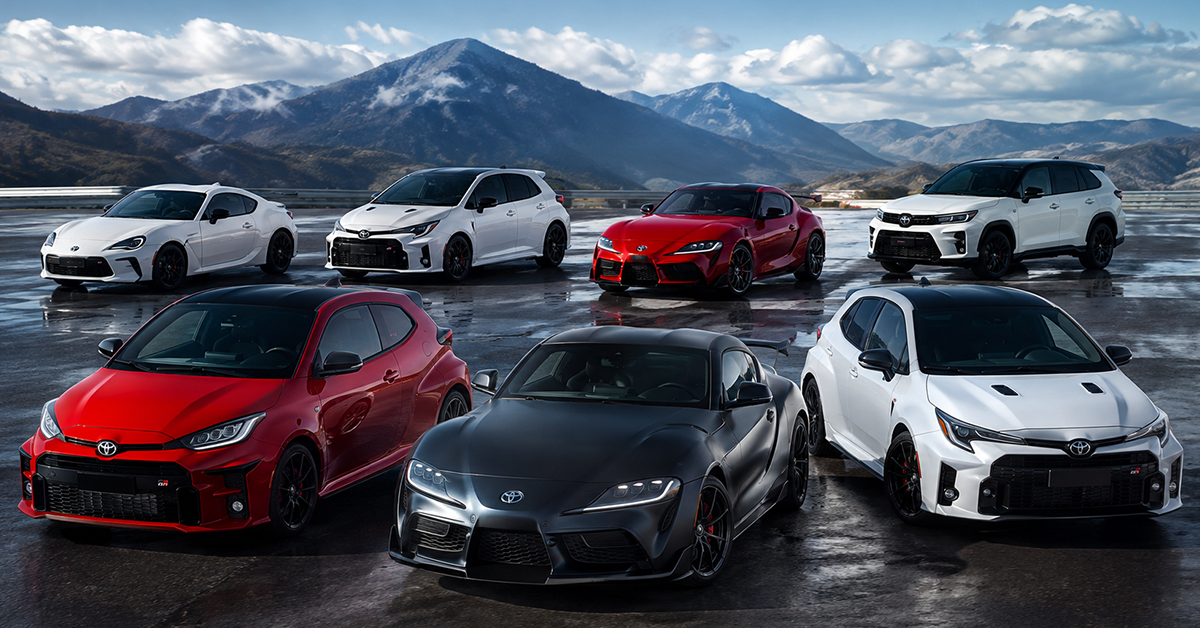
AI-generated concept illustration — Toyota's GR performance lineup. | Rev N Rise
Every GR badge on a modern Toyota traces back to one deceptively simple mission statement from former company president Akio Toyoda: “no more boring cars.” He meant it literally enough to personally test-drive every single GR-badged vehicle himself before it reached showrooms, racing amateur endurance events under the pseudonym Morizo along the way. Here's the full GR lineup his obsession built, from the entry-level GR86 to the hypercar still on the way.
GR stands for Gazoo Racing, Toyota's global motorsport division, and the name traces back to a genuinely unusual origin story for a company as historically conservative as Toyota. Gazoo Racing began as little more than a small, scrappy amateur outfit, with Akio Toyoda — grandson of Toyota's founder, and later the company's president — racing under the pseudonym Morizo to keep his corporate identity separate from his genuine personal passion for competitive driving. Once Toyoda became Toyota's president, that passion project became genuine company strategy: push harder into top-level motorsport, then feed everything learned there directly back into road cars wearing the GR badge.
The results have been genuinely difficult to argue with. Toyota's Gazoo Racing programme won five consecutive 24 Hours of Le Mans titles from 2018 through 2022, alongside sustained competitiveness in the World Rally Championship, World Endurance Championship and Dakar Rally. Toyota has stated that Akio Toyoda personally test-drove every GR-badged production vehicle before launch during his tenure as president, a genuinely unusual level of direct executive involvement for a company Toyota's size, and one the brand has leaned into heavily in its own marketing under the tagline “no more boring cars.”
Crucially, GR is not the same thing as TRD (Toyota Racing Development), even though both badges signal genuine performance intent. TRD focuses specifically on off-road and truck capability, tuning suspension and drivetrain hardware for trail use on models like the Tacoma and 4Runner. GR focuses on on-road and track performance, applying road-racing and rally-derived engineering to dedicated sports cars and, increasingly, sportier trim levels of Toyota's mainstream lineup. The two badges rarely overlap, reflecting genuinely distinct engineering philosophies rather than simply different marketing labels for the same underlying idea.
Toyota's own GR marketing materials describe every GR-badged vehicle as having been “meticulously designed, race-tuned and tooled for performance,” delivering “thrill behind the wheel, from every day to track day.” That framing matters genuinely because it positions GR not as a single product line but as a genuine engineering standard applied wherever Toyota believes a real performance case exists, whether that's a dedicated sports car, a rally homologation special, or, increasingly, a sportier trim of an otherwise ordinary SUV. The badge itself has become a genuine signal to enthusiast buyers that meaningful engineering resources, not just marketing budget, went into a specific model or trim.
Gazoo Racing's motorsport programme extends considerably beyond Le Mans and rallying into Japan's Super GT series, the Dakar Rally, and increasingly Formula 1 through a technical partnership with Haas Racing, whose cars will carry the “Toyota GAZOO Racing” name starting in 2026. This breadth of motorsport involvement gives Toyota genuinely diverse engineering data to draw from when developing road-going GR products, distinguishing the brand from rivals whose performance divisions typically focus on a single racing discipline rather than competing broadly across circuit racing, rallying and off-road endurance events simultaneously.
Toyota Australia has expanded GR-badged options considerably beyond the core sports car trio, offering GR-grade trims across a genuinely wider slice of its local lineup than the United States currently receives, illustrating how differently the badge's rollout strategy varies by region depending on local buyer appetite and regulatory considerations. This international precedent gives a genuine preview of where American GR expansion might eventually head, following the same broader pattern that first brought GR Sport specifically to the RAV4 for 2026 after years of availability in other global markets.
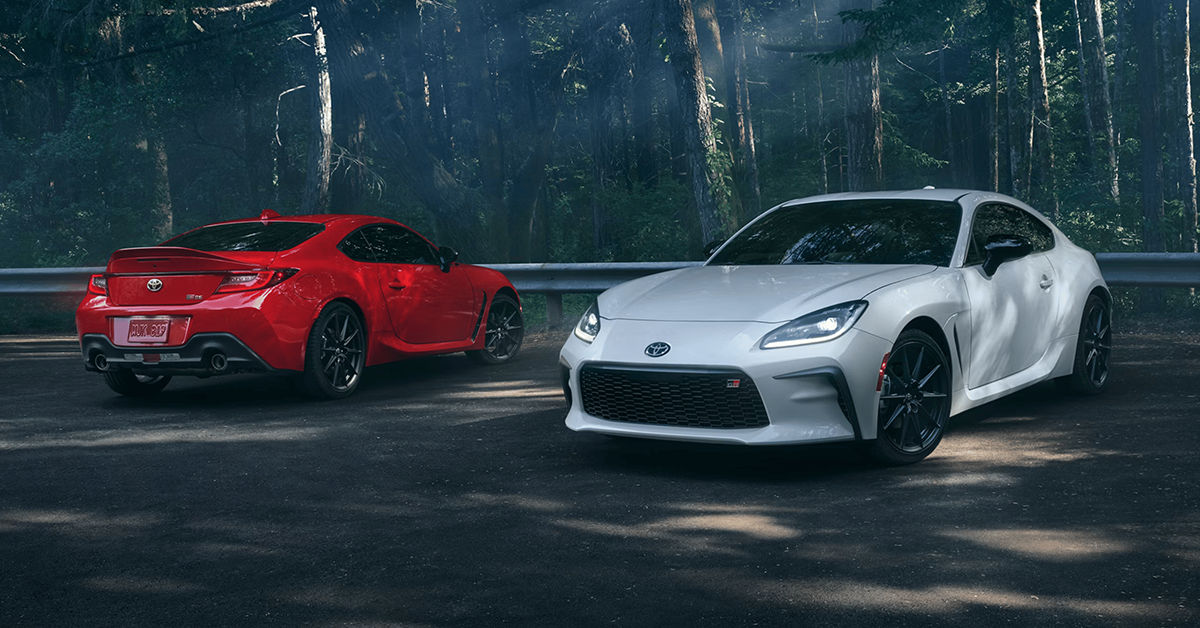
Official press image of the Toyota GR86. | © Toyota Motor Corporation
The entry point into Toyota's GR family, and deliberately the lightest, purest and cheapest car wearing the badge. Developed jointly with Subaru and sharing its underlying mechanicals with the Subaru BRZ, the GR86 uses a naturally aspirated boxer engine producing 228 horsepower, starting at approximately $30,800. Toyota's own philosophy for the GR86 prioritises genuine handling balance and driver feedback over outright straight-line speed, reflecting Gazoo Racing's broader belief that a genuinely engaging sports car doesn't require enormous horsepower figures to be worth building.
A genuinely limited-run Yuzu Edition, restricted to 860 units, has become a real collector's item specifically among enthusiasts drawn to the car's deliberately old-school, analogue driving character. Toyota Gazoo Racing has also supported a dedicated GR86 One-Make Championship racing series, using the road car largely unmodified to develop grassroots racing talent, a genuinely direct illustration of Gazoo Racing's broader philosophy that meaningful engineering lessons flow in both directions between the racetrack and the showroom floor rather than purely one way.
Trim levels span Base, Premium and the limited Trueno Edition, with pricing running from approximately $31,200 to $36,500 depending on configuration, and every trim shares the same fundamental engine and chassis tuning rather than reserving genuine performance credentials purely for the most expensive option. Reviewers have consistently praised the GR86 as one of the purest, most genuinely rewarding driver's cars still sold new at anywhere near its price point, with the naturally aspirated boxer engine's power delivery rewarding smooth, deliberate inputs rather than simply chasing outright acceleration numbers the way many rivals do.
Within Toyota's broader GR family specifically, the GR86 occupies a genuinely important role as the accessible entry point — the car most likely to introduce a first-time enthusiast buyer to the Gazoo Racing philosophy before they eventually consider stepping up to the considerably more powerful GR Corolla or GR Supra later in their ownership journey.
Cargo and passenger practicality were never genuine priorities for the GR86's engineering brief, and the car makes no real attempt to compete with more practical sports coupes on those specific terms — a deliberate trade-off Toyota's own product planners have defended repeatedly, arguing that diluting the car's low weight and compact dimensions in pursuit of marginally more usable space would fundamentally compromise the driving experience the entire model exists to deliver in the first place.
Toyota Safety Sense comes standard across the GR86 regardless of trim, ensuring the car's genuine performance focus doesn't come at the expense of modern active safety technology buyers increasingly expect even from dedicated sports cars. Resale value has also held up considerably well, reflecting sustained demand from a genuinely dedicated buyer base that continues seeking out affordable, naturally aspirated rear-wheel-drive coupes even as the broader market moves decisively toward turbocharging and all-wheel drive. Toyota's continued investment here signals genuine confidence the platform still has meaningful commercial life left within its enthusiast niche.
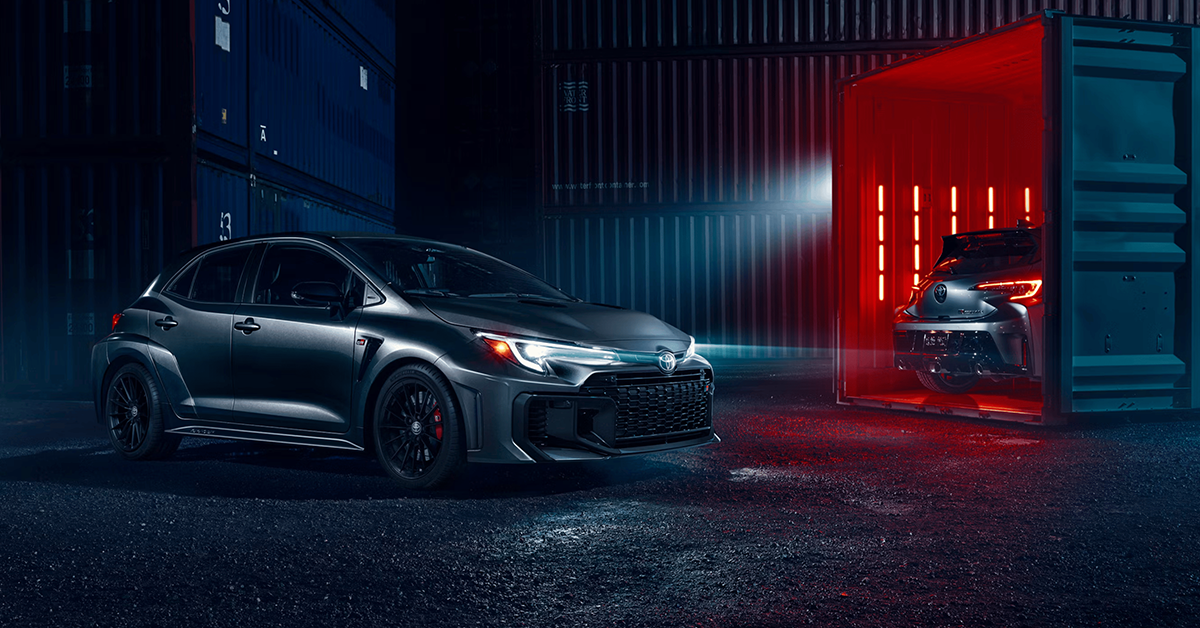
Official press image of the Toyota GR Corolla. | © Toyota Motor Corporation
Genuinely one of the last true hot hatches still on sale, producing 300 horsepower and 295 lb-ft of torque from a turbocharged 1.6-litre three-cylinder engine paired with standard GR-FOUR all-wheel drive, with a driver-adjustable torque split ranging from front-biased daily driving to a genuinely rear-biased track setting. Pricing starts at $41,115, and the GR Corolla was built explicitly to give American enthusiasts a taste of the considerably more famous GR Yaris, transplanting that car's rally-derived engine and drivetrain into a Corolla body Toyota already sold domestically.
A genuinely limited-run GRMN Corolla variant, developed with direct input from Gazoo Racing test drivers at the Nürburgring, pushes torque even higher, paired with a race-inspired interior featuring semi-bucket seats and a rear-seat delete for genuine weight reduction — the kind of uncompromising, low-volume halo product that rarely reaches American shores, but exists specifically to demonstrate what Gazoo Racing engineering can achieve without commercial compromise holding it back.
The GR Corolla's standard GR-FOUR all-wheel-drive system represents genuine rally-derived engineering rather than a conventional AWD setup borrowed from a mainstream crossover, allowing drivers to manually select torque distribution depending on conditions and intent — a genuinely rare degree of driver control at this price point, and a direct byproduct of the system's origins in actual World Rally Championship competition rather than simple all-weather traction assistance. Toyota's own product planners have described the GR Corolla as central to the company's broader strategy of keeping genuine driving enjoyment alive within an increasingly efficiency-focused mainstream lineup, positioning it alongside the GR86 and GR Supra as proof that Gazoo Racing's enthusiast credentials extend well beyond the company's Le Mans and WRC motorsport programmes into genuinely attainable, everyday-usable performance cars.
Interior details reinforce the car's genuine performance intent without sacrificing daily usability entirely: dedicated sports seats, a grippy steering wheel, push-button start and aluminium pedals all feature standard, while cargo capacity of 17.8 cubic feet remains genuinely competitive for the hatchback segment despite the extensive mechanical changes underneath. Toyota Safety Sense comes standard as well, ensuring the GR Corolla doesn't sacrifice modern active safety technology purely in pursuit of outright performance credentials the way some rival hot hatches historically have.
Owner satisfaction data consistently rates the GR Corolla among Toyota's most beloved current models, with genuinely strong predicted reliability despite its performance focus, a rare combination that reflects Gazoo Racing's broader insistence that genuine driving excitement and Toyota's traditional durability reputation don't need to be mutually exclusive. Five-year cost-to-own figures remain genuinely competitive within the performance hatchback segment specifically, reinforcing that message with real ownership data rather than marketing claims alone. For buyers specifically weighing the GR Corolla against rivals like the Honda Civic Type R, the deciding factor often comes down to character rather than raw specification-sheet comparisons. The three-cylinder engine's distinctive soundtrack and power delivery remain unlike anything else currently sold in the segment, a direct byproduct of its genuine rally-derived engineering lineage.
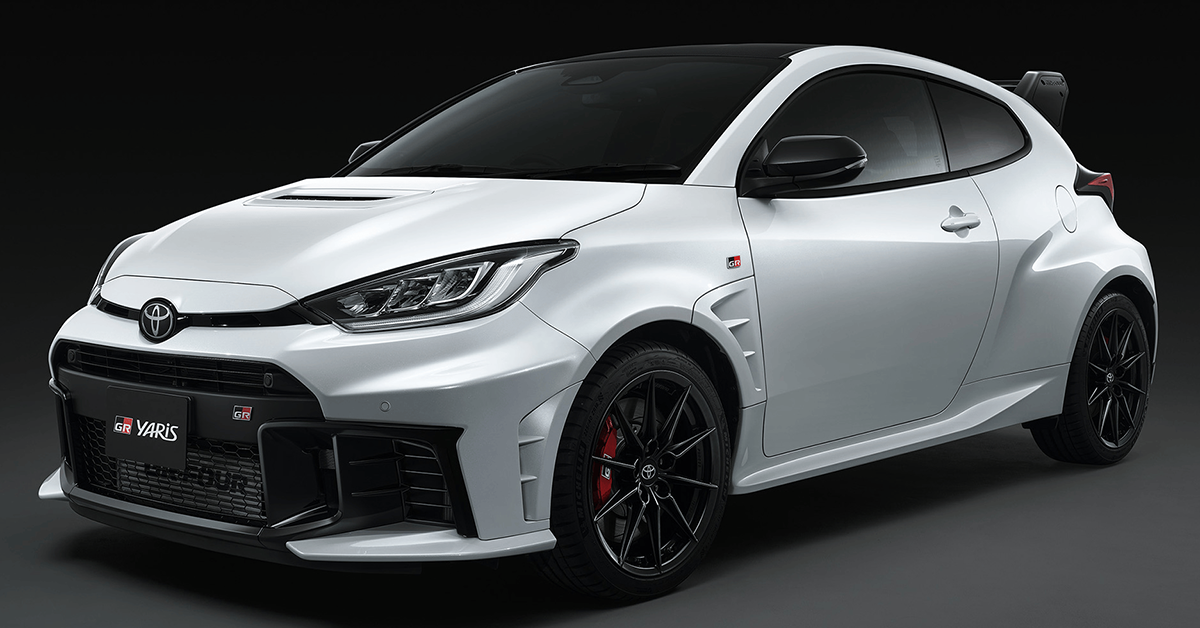
Official press image of the Toyota GR Yaris. | © Toyota Motor Corporation
The car the GR Corolla exists to apologise for, and arguably the single purest expression of Gazoo Racing's entire philosophy. Built as a genuine World Rally Championship homologation special, the GR Yaris shares essentially nothing structurally with the mainstream hatchback it's named after, producing 280 horsepower from the same turbocharged 1.6-litre three-cylinder engine later transplanted into the GR Corolla, an output figure that remains genuinely exceptional for such small displacement, and among the highest specific outputs of any production three-cylinder engine ever built by any manufacturer, a genuine engineering achievement Toyota's own engineers have cited repeatedly in interviews discussing the car's development and the genuine technical challenge of extracting this much power reliably. Toyota Gazoo Racing has confirmed four consecutive WRC constructors' titles won with cars directly descended from the GR Yaris's road-going platform, a genuinely rare marketing asset most rival hot hatches simply cannot claim with equal authenticity.
Toyota has never officially sold the GR Yaris in the United States, and industry analysts consistently point to insufficient projected American sales volume for a small, expensive, largely manual-only hot hatch as the underlying commercial logic. The GR Corolla effectively solved that problem by reusing the GR Yaris's engine and drivetrain inside a body Toyota already builds domestically, giving American Gazoo Racing fans genuine access to the same core engineering without the cost of federalising an entirely separate model.
The updated 2026 “Type 26” GR Yaris retains its 280-horsepower engine essentially untouched, instead focusing refinements on a smaller-diameter steering wheel, recalibrated electric power steering and retuned suspension — genuine improvements drawn directly from five seasons of accumulated World Rally Championship and Japanese Rally Championship competition data. That continued refinement cycle illustrates exactly how Gazoo Racing intends the GR badge to function across its entire lineup: not a one-time performance package applied at launch and left unchanged, but an ongoing engineering relationship between motorsport competition and the production car that carries its lessons forward year after year.
European pricing for the current-generation GR Yaris spans four trims, extending to the genuinely limited-run Morizo RR variant developed with direct input from Akio Toyoda himself, named after his own racing pseudonym — a genuinely personal touch from a company executive rarely seen at this level of direct product involvement anywhere else in the mainstream automotive industry. For American enthusiasts specifically, the GR Yaris has become genuine forbidden fruit, with grey-market interest building steadily as the car edges toward eventual US import eligibility under the 25-year rule. Secondhand examples occasionally surface through specialist collector channels at genuinely striking prices, reflecting just how much premium American buyers are willing to pay for a car Toyota has never let them purchase through official channels. A 2024 Ogier Edition reportedly sold for $82,000 at auction, a genuinely striking figure for what began life as a humble subcompact hatchback platform before Gazoo Racing engineering transformed it entirely.
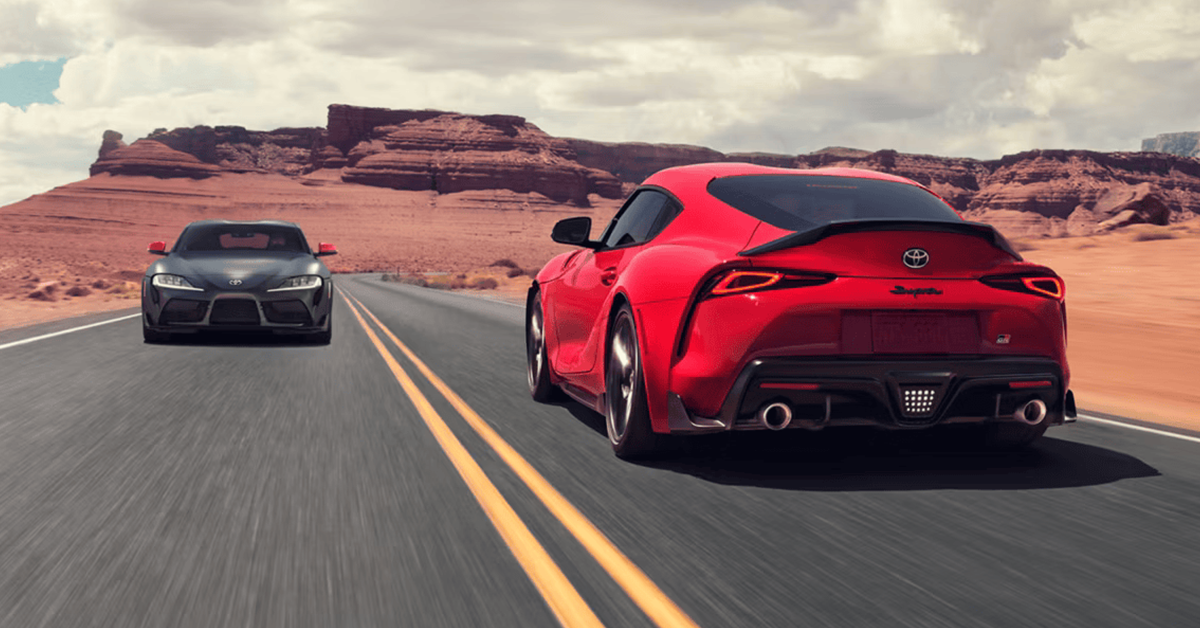
Official press image of the Toyota GR Supra. | © Toyota Motor Corporation
Gazoo Racing's flagship road car, co-developed with BMW and sharing its underlying platform and several engine options with the BMW Z4 — a genuinely unusual partnership between two companies that compete directly in most other segments, undertaken specifically because sports car sales volumes had declined too far industry-wide for either manufacturer to justify developing a bespoke platform alone. Despite the shared engineering foundation, Toyota's own suspension tuning and driving character remain genuinely distinct from BMW's roadster, and Toyota has continued making meaningful running changes across the car's production, including adding a manual transmission option that wasn't available at launch.
Beyond the road car, Gazoo Racing has extended the Supra name into a genuine Gen3 Supra Supercars Championship racer for the 2026 Australian Supercars season, running a 5.2-litre naturally aspirated V8 to compete directly against Ford and Chevrolet on track — a genuinely different specification from the road car's turbocharged inline-six, but proof that Gazoo Racing continues actively extending the Supra name into top-level motorsport competition well beyond the showroom.
The Supra name carries genuine historical weight within Toyota's performance lineage, with the fourth-generation Mk4, built through the 1990s, achieving considerable enthusiast reverence thanks to its twin-turbocharged 2JZ engine's now-legendary reputation for handling vastly increased power well beyond factory specifications. The current fifth generation's revival, after a considerable production gap, represented a genuine gamble that Toyota's enthusiast base still cared enough about the nameplate to justify reviving it through a shared-platform partnership rather than developing an entirely bespoke replacement independently — a bet that has paid off well enough that Toyota has continued the model through multiple special editions and running updates. Owner satisfaction surveys have grown increasingly positive as Toyota addressed early criticisms through running production changes, suggesting the company genuinely listened to enthusiast feedback rather than treating the Supra's revival as a one-time product launch. Toyota Safety Sense comes standard across the entire range, and the interior, while genuinely sharing meaningful architecture with the BMW Z4, carries distinct Toyota styling cues and infotainment software that give the cabin a genuinely different character from its German platform-mate despite the shared underlying mechanicals. Owner satisfaction surveys have grown increasingly positive across the model's production run as Toyota continued making meaningful running changes, reflecting genuine responsiveness to enthusiast feedback rather than treating the launch configuration as final and demonstrating Toyota's willingness to keep iterating on a car long after its original launch.
Trim levels for the current Supra span 2.0, 3.0 and 3.0 Premium configurations, with the entry-level four-cylinder version offering a genuinely more affordable path into Supra ownership while the inline-six models deliver the outright performance most enthusiasts specifically associate with the nameplate's history. The 2026 model year introduces a Final Edition variant marking the conclusion of this generation's production run, adding unique badging, aerodynamic upgrades and exclusive colour options that have already attracted genuine collector interest ahead of an eventual successor.
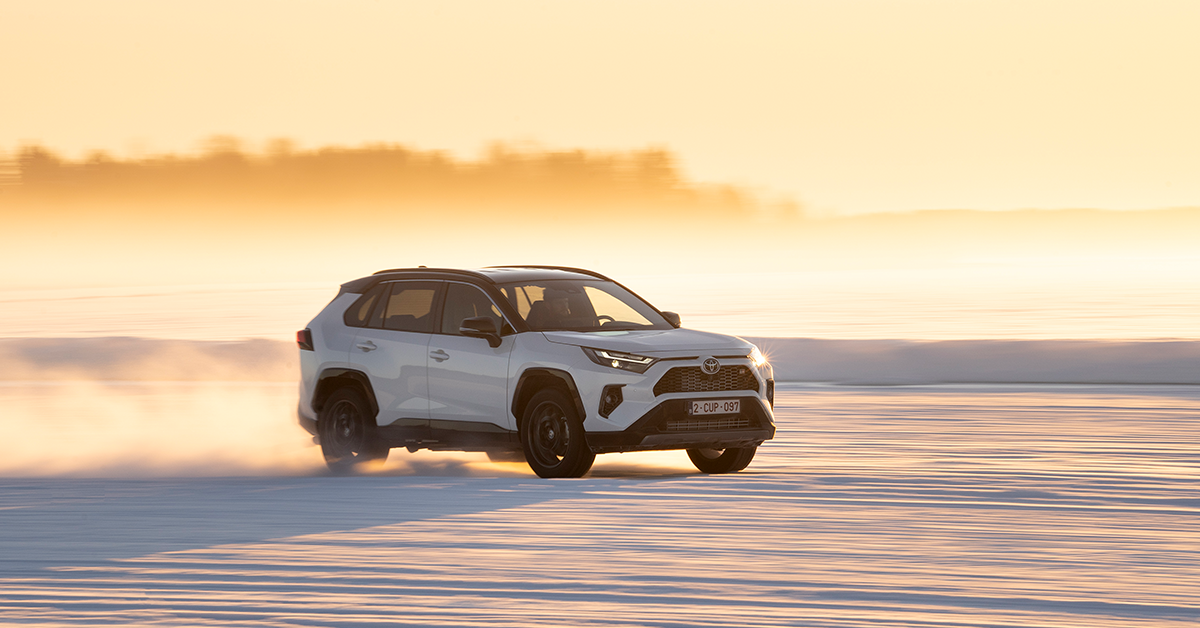
Official press image of the Toyota RAV4 GR Sport. | © Toyota Motor Corporation
Genuinely the newest and, in a symbolic sense, the most significant expansion of the GR badge in years: the first GR Sport trim ever offered on an American-market Toyota, launching alongside the redesigned sixth-generation RAV4 for 2026. Available exclusively on the plug-in hybrid RAV4, the GR Sport combines the PHEV powertrain's 324 horsepower with genuine suspension retuning developed with direct input from Toyota's Gazoo Racing engineering division — a real mechanical difference rather than a purely cosmetic badge exercise, distinguishing it from many rival manufacturers' “sport” trim levels that amount to little more than blacked-out styling.
The GR Sport badge has existed on Toyota models sold outside America for years, appearing on everything from the Hilux and Fortuner to various Japan-market models, but had never previously reached a US-spec vehicle before the RAV4. Its arrival signals a genuinely deliberate strategy shift: rather than confining Gazoo Racing's influence purely to dedicated sports cars, Toyota is beginning to spread real GR-tuned driving dynamics across its mainstream American SUV lineup, starting with the vehicle that happens to be the best-selling model in the entire country.
Toyota's decision to debut the American GR Sport badge on the RAV4 specifically, rather than a lower-volume niche model, reflects genuine confidence that meaningful numbers of mainstream SUV buyers genuinely want sharper driving dynamics without sacrificing the practicality and efficiency the RAV4 nameplate has built its reputation on. Early reviewer reception has been cautiously positive, with outlets noting the GR-tuned suspension delivers genuinely noticeable handling improvements over the standard RAV4 without meaningfully compromising ride comfort, a difficult balance many rival “sport” SUV trims fail to strike convincingly. If the RAV4 GR Sport proves commercially successful, industry observers widely expect Toyota to extend the same treatment to other high-volume American models in future model years.
Mechanically, the GR Sport treatment goes beyond suspension alone, incorporating genuine chassis bracing and retuned steering response specifically calibrated by Gazoo Racing engineers rather than simply borrowed wholesale from an existing sportier Toyota model. The exterior styling changes remain relatively restrained compared with some rival manufacturers' performance trim packages, favouring genuinely functional details like a unique front fascia and specific wheel design over purely decorative badging, reflecting Gazoo Racing's stated preference for substance over surface-level visual drama wherever possible.
Toyota has not confirmed whether GR Sport treatment will extend to other US-market hybrid or plug-in hybrid models beyond the RAV4, though the badge's decades-long international presence across markets including Australia and Japan suggests genuine room for future American expansion should the RAV4 GR Sport prove commercially successful during its initial launch period. Dealer feedback during the model's early launch window has reportedly been genuinely encouraging, with test-drive conversion rates matching or exceeding Toyota's own internal projections for the trim, suggesting genuine mainstream buyer appetite for meaningfully sharper handling within an otherwise ordinary family SUV. Toyota Safety Sense remains standard equipment even on the GR Sport trim, ensuring genuine performance credentials never come at the expense of the active safety technology buyers rightfully expect from every modern Toyota.
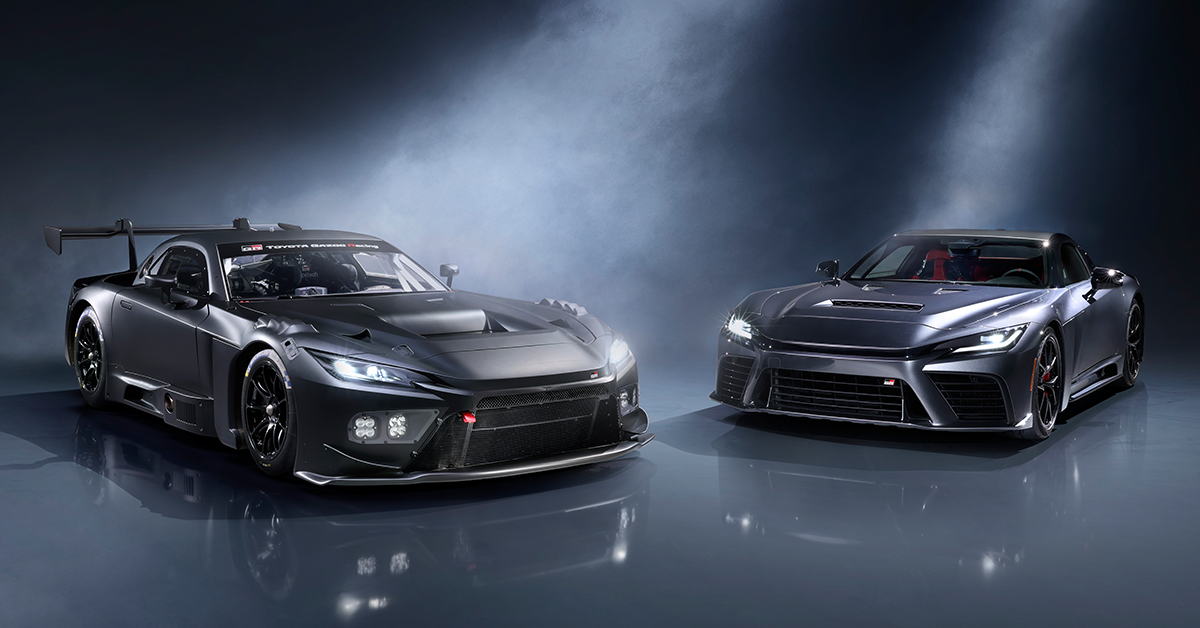
Official press image of the Toyota GR GT and GR GT3. | © Toyota Motor Corporation
Gazoo Racing's most ambitious project yet, targeted for roughly 2027 and genuinely positioned above every current GR model in both price and performance. The GR GT combines a twin-turbocharged 4.0-litre V8 with an electric motor inside a lightweight aluminium chassis, using a front-mid-engine, rear-wheel-drive layout that places it firmly in genuine supercar territory rather than simply an upgraded sports car. Toyota has confirmed a parallel GR GT3 racing variant developed alongside the road car, intended for global GT3 competition — the same simultaneous road-and-track development philosophy that has defined every previous Gazoo Racing product, applied here at a genuinely unprecedented scale for the brand.
Some industry reporting has even questioned whether the GR GT will technically be sold under the Toyota badge at all, given how far removed a genuine hypercar sits from the company's mainstream identity, though Toyota has continued developing it publicly under the Gazoo Racing name regardless. If it reaches production roughly as described, the GR GT would represent Gazoo Racing's clearest statement yet that the “no more boring cars” philosophy extends all the way to the absolute top of what the brand is willing to build. Whether the GR GT ultimately reaches American showrooms at all remains genuinely uncertain this far ahead of any confirmed launch, though Toyota's continued public development suggests real commercial intent rather than a purely symbolic engineering exercise. Whatever form the finished car ultimately takes, its mere existence signals genuine confidence within Gazoo Racing that the appetite for halo-level performance products has only grown stronger across the brand's enthusiast base in recent years, even as the broader industry increasingly questions whether traditional supercars have a genuine long-term future at all. Toyota's willingness to pursue this project regardless suggests genuine institutional confidence that Gazoo Racing's core philosophy still resonates powerfully with enthusiast buyers, even at the considerably higher stakes a genuine flagship hypercar programme demands of the company's own considerable engineering and financial resources.
Details remain genuinely limited this far ahead of any confirmed launch, and Toyota has not released official performance figures, pricing or a firm production timeline beyond the general 2027 target window. What the company has confirmed is the underlying engineering philosophy: aggressive aerodynamics, motorsport-inspired bodywork and a genuinely driver-centric cockpit layout, developed using the same simultaneous road-and-race methodology that produced every previous Gazoo Racing product. For a division that began as little more than one executive's amateur racing hobby, a genuine flagship hypercar competing at the top of global GT3 racing represents a remarkable, if still unproven, final destination.
Some industry commentary has drawn direct comparisons between the GR GT's ambitions and established hypercar programmes from Ferrari, Porsche and McLaren, though Toyota's own messaging has consistently emphasised genuine motorsport pedigree over outright prestige positioning, aligning with the same “test it in competition first” philosophy that has defined Gazoo Racing since its earliest days as Akio Toyoda's personal amateur racing project rather than an official corporate initiative.