 Brands
Toyota Already Showed You Its Next Decade — You Just Weren't Watching
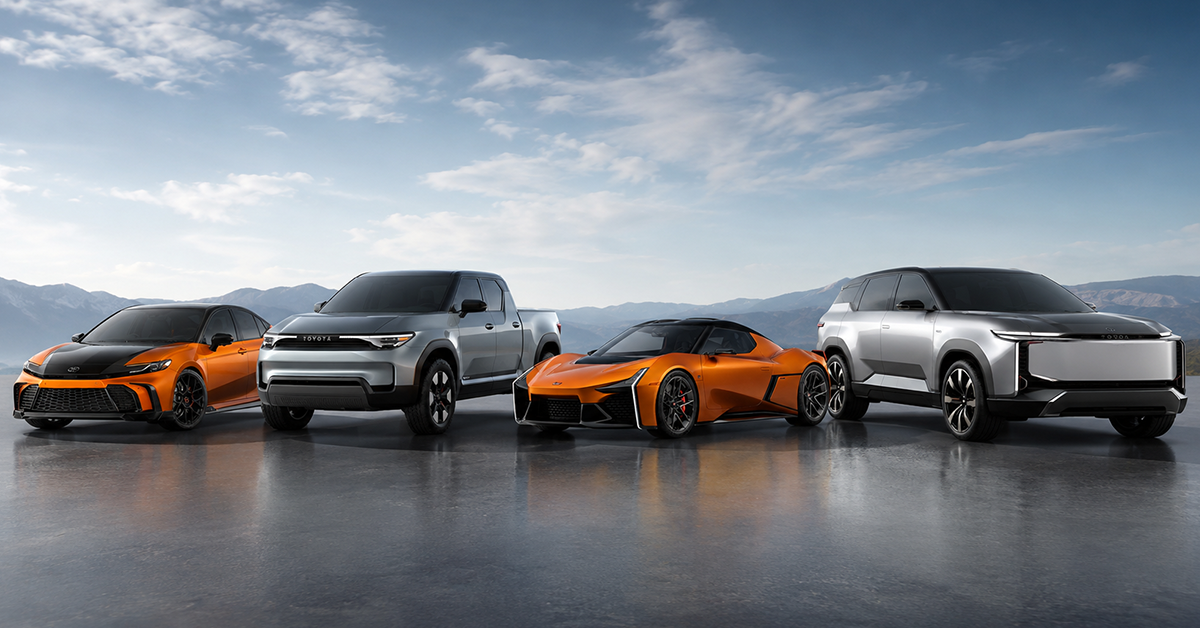
AI-generated concept illustration — Toyota's recent concept car lineup. | Rev N Rise
Every production Toyota you can actually buy today started somewhere less finished. Concept cars are where the company tests ideas it isn't ready to commit to yet — a genuinely useful public preview, if you know where to look. Here's what Toyota has been quietly showing the world at recent motor shows, and what it might mean for the next decade of showrooms.
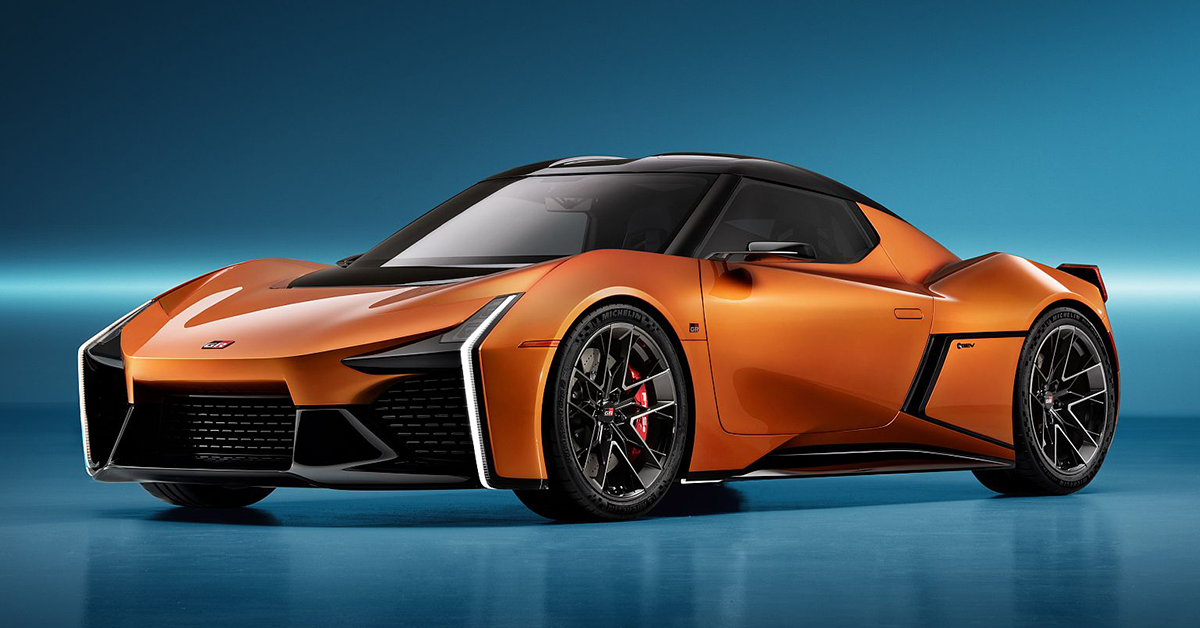
Official press image of the Toyota FT-Se concept. | © Toyota Motor Corporation
Genuinely one of the most striking concepts Toyota has shown in years, the FT-Se debuted at the 2023 Tokyo Auto Salon as a low-slung, mid-engine-styled electric sports car with a profile reviewers have consistently compared to the now-defunct Lotus Evora, blended with distinctly Lexus-influenced front fascia details. Toyota kept specific performance figures deliberately vague, but confirmed the FT-Se exists primarily as a genuine showcase for the company's next-generation battery technology — an ultra-compact cell design measuring no more than 3.9 inches in height, intended to eventually reach production across multiple future Toyota models rather than remaining exclusive to this one concept.
The FT-Se shares a considerable number of major underlying components with the FT-3e crossover concept revealed alongside it, including the battery pack and electric motors, reflecting Toyota's genuine strategy of developing shared EV architecture across dramatically different body styles simultaneously rather than engineering each concept in isolation. Toyota has not confirmed a production version of the FT-Se specifically, and the company's own messaging has consistently framed the car as a technology demonstrator first and a genuine product proposal second. Even so, the FT-Se's existence matters considerably beyond its own uncertain production prospects — it represents a genuine public statement that Toyota, a company whose electric vehicle strategy has often been criticised as overly cautious, is still willing to design something genuinely exciting when circumstances allow.
For enthusiasts specifically hoping Toyota might eventually revive a genuine mid-engine sports car halo model in the mould of the long-discontinued MR2, the FT-Se offers real if cautious grounds for optimism. Its proportions, mid-engine-inspired silhouette and genuine performance-focused design language all suggest Toyota's engineers have at least seriously considered what a modern electric successor to that formula might look like, even without any firm commitment yet to bring it to market.
Reviewer reception at the 2023 Tokyo Auto Salon was consistently enthusiastic, with automotive press describing the FT-Se as a genuine departure from Toyota's typically conservative concept car output in recent years, and several outlets specifically noted the styling felt considerably more emotionally driven than the company's usual efficiency-first EV messaging. That reception matters within Toyota's broader product strategy, since concept car reactions genuinely do influence which ideas eventually receive internal green-lighting for production consideration, even if the process takes years to play out publicly.
The FT-Se's battery technology specifically deserves attention beyond the car's styling alone. Toyota's ultra-compact cell design represents a genuinely significant engineering challenge, since packing meaningful energy density into cells under four inches tall requires considerable advances in both chemistry and thermal management compared with conventional EV battery packs. If Toyota successfully brings this technology to production, whether inside a genuine FT-Se successor or an entirely different model, it would represent a meaningful competitive advantage in a segment where battery packaging efficiency increasingly separates class-leading EVs from merely adequate ones. Toyota has confirmed this same battery architecture underpins the FT-3e crossover concept as well, suggesting the underlying technology is genuinely being developed for broad platform use rather than a single halo model alone.
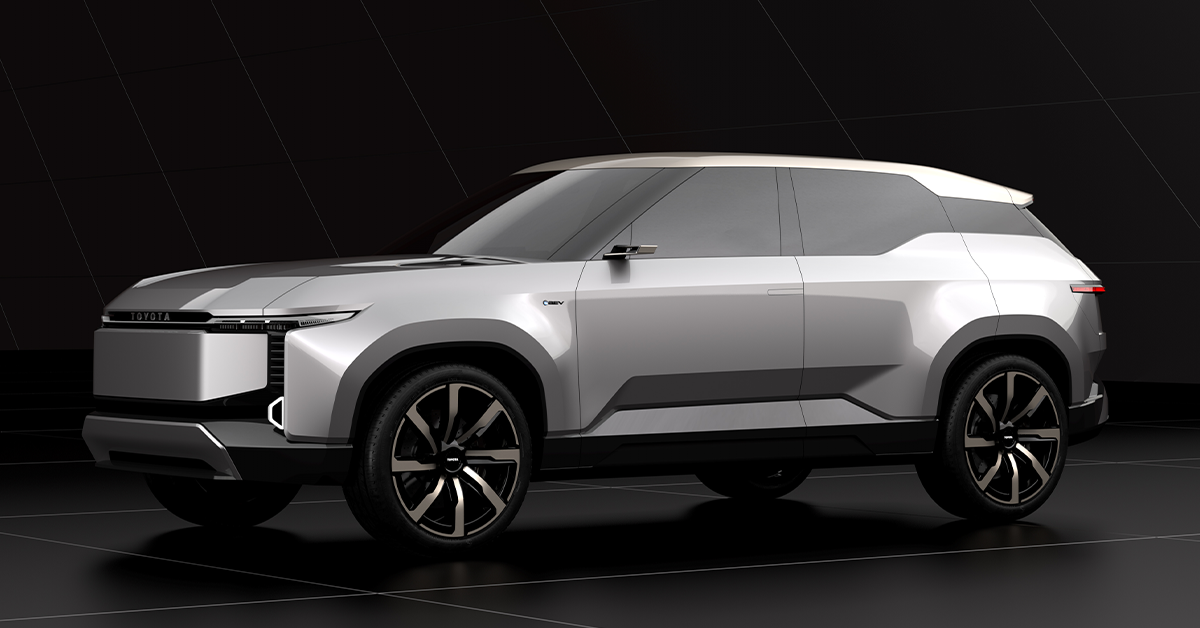
Official press image of the Toyota Land Cruiser Se concept. | © Toyota Motor Corporation
Revealed alongside the FT-Se at the 2023 Japan Mobility Show, the Land Cruiser Se offers a genuinely significant preview of what an all-electric Land Cruiser might eventually look like — and the answer is considerably more “luxury urban SUV” than the rugged, body-on-frame off-roader the Land Cruiser name has represented for over seven decades. Toyota confirmed the concept measures 202.8 inches long with a 120.1-inch wheelbase, genuinely larger in both dimensions than the current production Land Cruiser sold in America, and built on a considerably more car-like unibody platform rather than the traditional body-on-frame construction every previous Land Cruiser generation has used.
Toyota has been notably light on technical specifics, confirming only that the Land Cruiser Se is a genuine three-row, all-electric SUV, without releasing battery capacity, range or power output figures. Despite the concept's considerably more polished, road-focused design language, Toyota has suggested the eventual production version could retain genuine off-road credibility through adjustable suspension and a high-torque electric powertrain, a real attempt to preserve at least some of the Land Cruiser nameplate's core identity even within a fundamentally different platform architecture.
Industry speculation has grown increasingly confident that a production version is genuinely coming, particularly after Toyota teased silhouettes of three undisclosed EVs launching by 2026 during a European bZ4X presentation, with one shape closely matching the Land Cruiser Se's proportions. What remains genuinely uncertain is branding: Toyota has never sold the combustion Land Cruiser in America under the Toyota badge without complication, given the closely related Lexus LX occupying similar territory, leaving real possibility that any production electric Land Cruiser could arrive wearing a Lexus badge instead, or alongside a Toyota-badged version sold in international markets only.
The design language itself represents a genuinely significant departure from every previous Land Cruiser generation's visual identity, trading the nameplate's traditionally boxy, utilitarian proportions for something considerably more sculpted and aerodynamically refined — a change Toyota's own designers have suggested reflects the fundamentally different priorities an electric powertrain demands, where minimising aerodynamic drag genuinely affects real-world range in a way it never meaningfully impacted a conventional gasoline or diesel Land Cruiser's fuel economy calculations.
Reviewer reaction at the 2023 Japan Mobility Show was notably divided along genuinely predictable lines: traditional off-road enthusiasts expressed real scepticism about whether a unibody electric SUV could ever authentically carry the Land Cruiser name, while a considerable number of urban-focused reviewers praised the concept's genuinely more usable, road-oriented proportions as a sensible evolution for a nameplate increasingly purchased by buyers who rarely venture off-road in the first place, regardless of how capable their Land Cruiser theoretically remains. Toyota has not indicated which perspective will ultimately win out internally, though the company's continued silhouette teasers suggest the design direction shown in Tokyo remains genuinely under active consideration for production. Whatever form the eventual production vehicle takes, the Land Cruiser Se has already succeeded at its core purpose: proving Toyota is genuinely willing to electrify even its most heritage-laden nameplate.
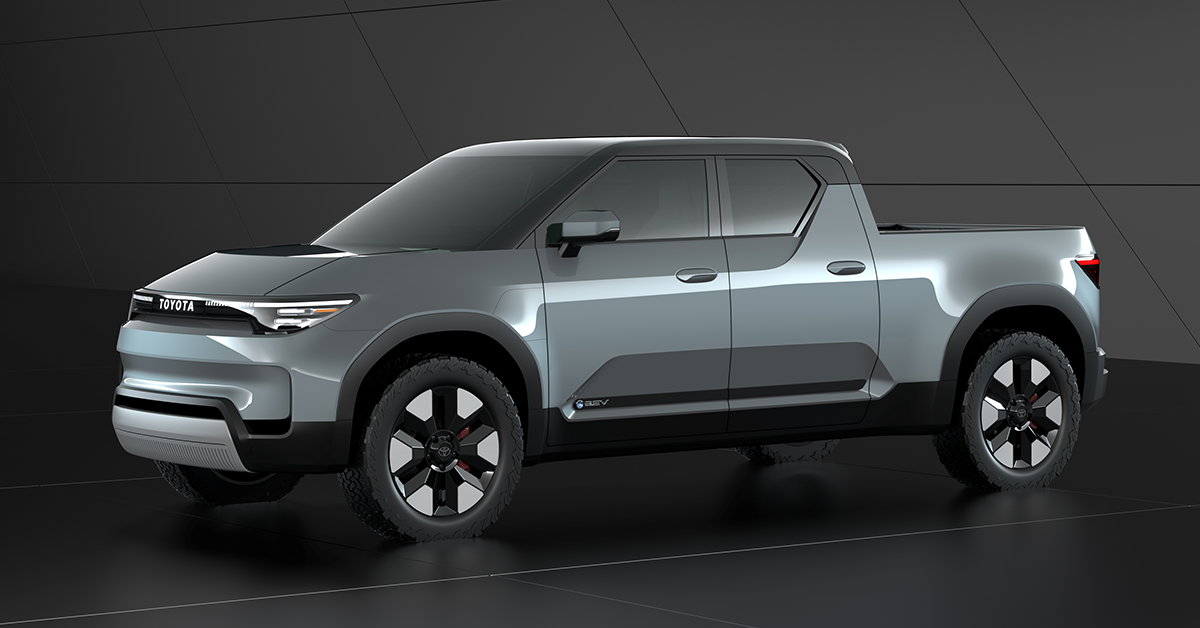
Official press image of the Toyota EPU concept. | © Toyota Motor Corporation
Toyota's electric unibody pickup concept, revealed alongside the Land Cruiser Se at the same 2023 Japan Mobility Show, roughly matching a Ford Maverick in overall size rather than competing with the considerably larger Tacoma or Tundra. The EPU represents a genuinely different engineering philosophy from Toyota's existing body-on-frame trucks, built on a unibody platform more typical of a crossover than a traditional pickup, prioritising efficiency and everyday usability over maximum towing and payload capability the way a genuine work truck would.
Notably, the EPU concept was built left-hand drive with gauges displayed in American units despite debuting at a Japanese motor show, a genuinely deliberate signal that Toyota considered the US market a real potential destination for the concept rather than purely a Japan-focused design exercise. This detail alone has fuelled considerable speculation that Toyota views a genuinely compact, efficient electric pickup as a meaningful gap in its current American truck lineup, positioned well below the Tacoma in both size and price to compete more directly against smaller emerging EV truck offerings from rival manufacturers.
Toyota later reinforced this direction by teasing silhouettes of three undisclosed 2026 EVs, with one shape resembling a genuine pickup body style, suggesting the EPU concept's core ideas may be progressing toward actual production consideration rather than remaining a purely theoretical design exercise. Whether that eventual production truck retains the EPU name, adopts a more traditional Tacoma-adjacent badge, or launches under an entirely new nameplate remains genuinely unconfirmed this far ahead of any official announcement.
Industry analysts have pointed to the EPU's unibody construction specifically as evidence Toyota is willing to break from its traditionally conservative truck engineering philosophy when electrification genuinely demands it, rather than simply electrifying an existing body-on-frame platform the way some rivals have approached their own early electric truck efforts. That willingness to genuinely rethink fundamental architecture, rather than bolt a battery onto proven mechanicals, suggests Toyota views compact electric trucks as requiring meaningfully different engineering priorities than its conventional gasoline and hybrid truck lineup.
Toyota has offered no confirmed timeline for a production EPU, and the concept remains, for now, purely a design and engineering exercise without any committed launch date. Given how directly the concept previewed genuine American market considerations through its left-hand-drive configuration and imperial-unit gauges, however, industry speculation continues building that some version of this compact electric truck concept will eventually reach American dealerships, even if the final production specification differs considerably from what Toyota showed in Tokyo. Pricing and exact market positioning remain entirely unconfirmed, though industry expectations place any eventual production version well below the Tacoma's starting price given the EPU's considerably more compact unibody proportions. Toyota's own product planners have described compact electric trucks broadly as a genuinely underserved segment within the current American market, one the EPU concept was specifically designed to explore rather than immediately commit to producing. Whether the finished truck ultimately carries the EPU name or launches under something entirely different remains one of the more genuinely open questions in Toyota's near-term electric vehicle roadmap.
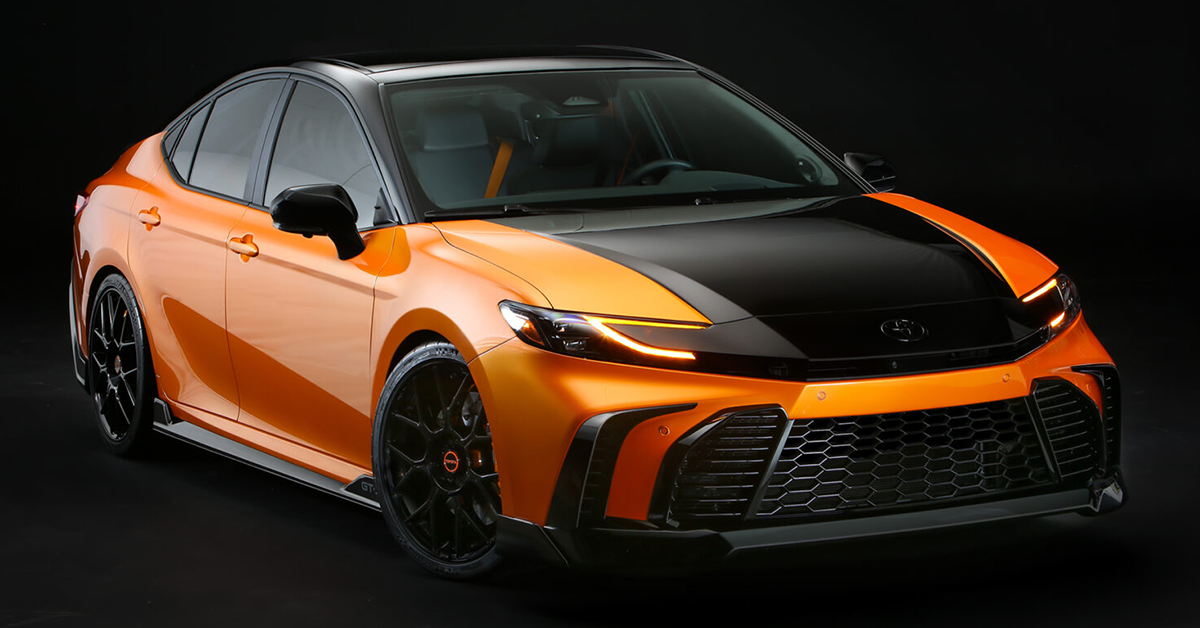
Official press image of the Toyota Camry GT-S Concept. | © Toyota Motor Corporation
A genuinely different kind of concept car, built not for a traditional motor show but specifically for the 2025 SEMA Show in Las Vegas, America's dedicated venue for aftermarket and performance styling. Built on the foundation of a standard Camry XSE AWD Hybrid, the GT-S Concept represents Toyota's own bold design study in what's possible when performance-inspired styling gets applied to the company's hybrid-only mainstream sedan, rather than any genuine production proposal Toyota intends to eventually sell.
The GT-S badge itself carries genuine historical weight within Toyota's American lineup, having previously appeared on sportier Celica and Supra variants decades earlier, and its revival specifically on a Camry signals Toyota's own recognition that meaningful demand still exists for a genuinely sportier take on its best-selling mainstream sedan, even within a segment increasingly defined by pure efficiency and practicality rather than outright driving excitement. Unlike the FT-Se or Land Cruiser Se, the Camry GT-S Concept makes no meaningful claim to previewing genuine future production technology — it exists purely as a styling exercise, built to demonstrate aftermarket possibility rather than signal any confirmed roadmap.
Toyota's decision to bring a genuine SEMA build alongside its more traditional Japan Mobility Show concepts reflects a broader pattern the company has leaned into increasingly in recent years: using American-specific venues to test genuinely different styling directions for its mainstream US-market models, distinct from the considerably more experimental, technology-focused concepts typically reserved for Tokyo. Whether any of the GT-S Concept's specific styling cues eventually reach a genuine production Camry trim remains unconfirmed, though Toyota has a track record of occasionally translating SEMA show-car details into limited special editions further down the line.
Visually, the GT-S Concept leans heavily into genuine motorsport-inspired styling cues rarely seen on a mainstream Camry, including aggressive aerodynamic body addenda, a considerably more purposeful stance achieved through modified suspension, and bespoke wheel and exterior colour combinations unavailable on any standard production trim. Toyota's SEMA build team has historically used these annual showcases specifically to test genuine enthusiast reaction to styling directions considerably bolder than what the company's conservative mainstream design language typically allows, gathering real audience feedback before committing any specific element to an actual production pipeline.
The broader significance of the Camry GT-S Concept lies less in any single styling detail and more in what it signals about Toyota's confidence in the sedan segment generally. At a moment when several rivals have scaled back sedan investment considerably in favour of SUV-focused product development, Toyota's willingness to build a genuine SEMA showcase around its best-selling sedan suggests real institutional confidence that meaningful enthusiast interest in sportier sedans persists, even within a broader market that has moved decisively toward crossovers and SUVs across nearly every other segment. Whether Toyota eventually offers any GT-S-inspired trim or appearance package on the standard production Camry remains genuinely unconfirmed, but the concept's presence at SEMA alone signals real ongoing investment in the sedan's enthusiast appeal.