 Brands
Volkswagen Jetta — 17.5 Million Built Since 1979
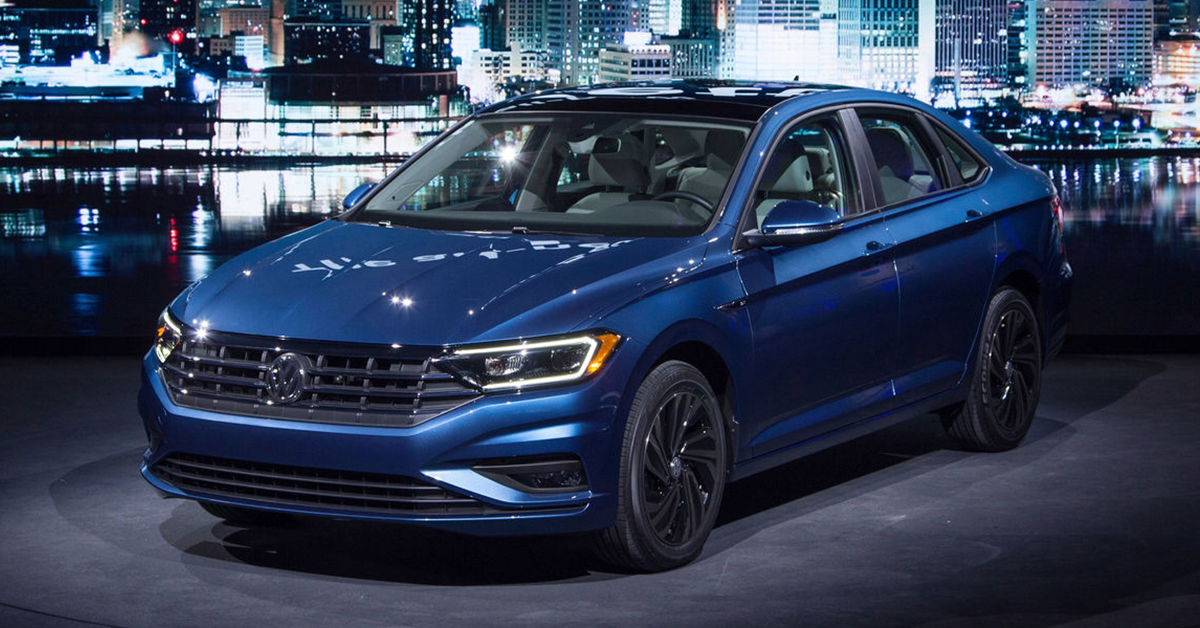
Official press image of the new Volkswagen Jetta (US version) shown at the 2018 Detroit show. | © Volkswagen AG
The Volkswagen Jetta has been built since 1979, with about 17.5 million made across seven generations. Here is the full Jetta story, with history, specs, the GLI, the Hybrid and other discontinued versions, the Mexico and China stories and the current US range.
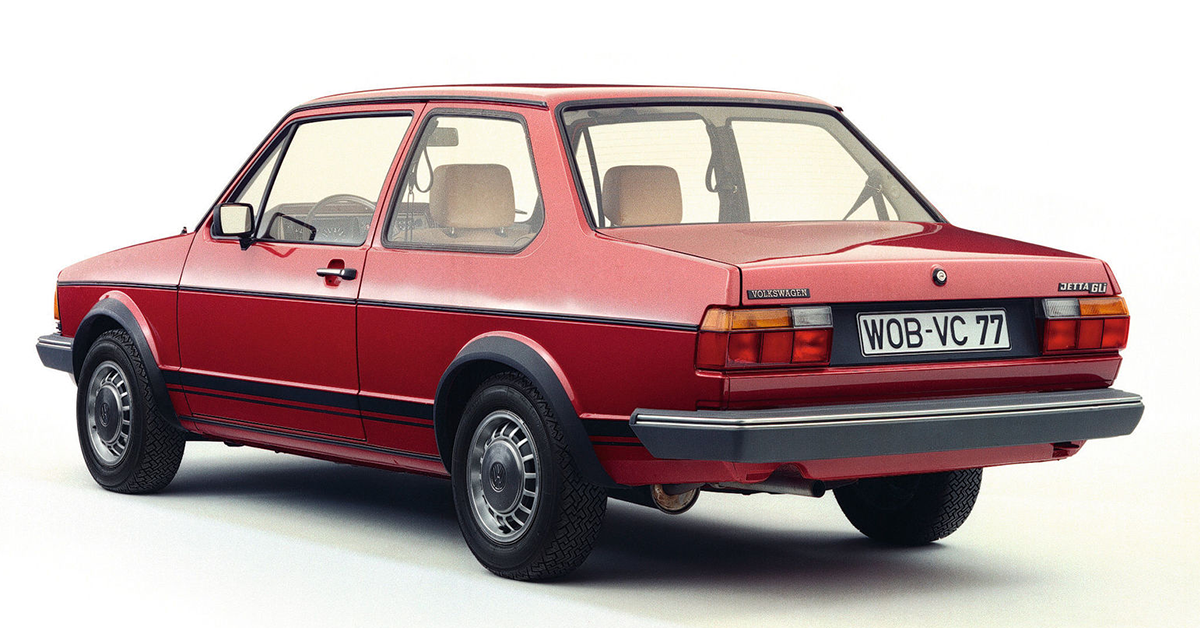
Official press image of the Volkswagen Jetta of 1979. | © Volkswagen AG
The Volkswagen Jetta is the saloon version of the Golf family, and it has been on sale since 1979. Volkswagen unveiled the first Jetta in July 1979 and put it on sale from October 1979. It was a Type 16 notchback saloon offered with two or four doors, and its body was carried over from the Golf I up to the B-pillar. The Jetta was about 40 cm longer than the Golf and had a 520-litre boot, which made it the Golf for buyers who wanted a separate boot. Its kerb weight was 805 kg, and the rear axle had an additional stabiliser so the car could carry its maximum permitted load safely.
| Unveiled / on sale | July 1979 / October 1979 |
| Factory code (Jetta I) | Type 16 notchback saloon |
| Jetta I size | About 40 cm longer than the Golf I, 805 kg, 520-litre boot |
| Jetta I sold in 1979 | 90,000 vehicles delivered |
| Produced by 2018 | About 17.5 million since 1979 |
| Sold in the US by 2018 | More than 3.2 million |
| Best-selling generation | Jetta IV (Bora in Europe), 4.6 million |
| Generations | Seven, from 1979 to the 2018 car |
Volkswagen’s own history describes the first Jetta as the first Volkswagen to use a new wax flooding process, which protects even the smallest cavities in the body against rust. The engines were the same range as the Golf I, up to the GTI engine, and the GTI-engined version was called the Jetta GLI. Volkswagen delivered 90,000 Jettas in 1979, which was the model’s best sales year for the first generation. The Jetta was never a Golf with a different badge. It was a car with a different job, and that job has kept it in production for more than 45 years.
By 2018 Volkswagen reported that about 17.5 million Jettas had been produced since 1979, and that more than 3.2 million had been sold in the United States. In its own words the Jetta is the most successful car of German origin in the US. The generation totals in that release add up to the same figure: 2.3 million for the Jetta I, 2.7 million for the Jetta II, 1.2 million for the Jetta III, 4.6 million for the Jetta IV, 3.0 million for the Jetta V and 3.7 million for the Jetta VI. The seventh generation, which arrived in 2018, was not given a unit figure in that release.
The Jetta has also gone by other names. In Europe the third generation was sold as the Vento and the fourth as the Bora, while the fifth generation was sold as the Sagitar in China. In Mexico the earliest cars built in Puebla were known as the Atlantic. These names show how Volkswagen has adapted the same basic idea to different markets over the years. In each case the car is a saloon built from Golf technology, and in each case it has been slightly longer than the Golf. The Golf guide covers the hatchback it was built from.
The Jetta is now mainly an American-market car. Volkswagen’s January 2018 release said that no European version of the seventh generation was planned, and that a sibling model, the Sagitar, would be sold in China. The sections below cover the generations one by one, the GLI, the variants and discontinued cars, the story in Mexico and the Americas, the Chinese sister models and the current range. The table gives the key figures for the car’s history.
The Jetta I also reflected its time in how it was equipped. Volkswagen notes that the chassis and key components came from the Golf I, the front had rectangular headlights with vertical indicator lights, and the car launched alongside Golf updates that included a new cockpit and plastic-coated bumpers. Because the engines were the same range as the Golf, buyers could choose anything up to the GTI engine, which made the Jetta GLI possible from an early stage.

Official press image of the Volkswagen Jetta of 1984. | © Volkswagen AG
The Jetta I ran from 1979 to 1984 and about 2.3 million were built. It shared the Golf I’s technology and key components, and it launched with the Golf’s updates, including a new cockpit and plastic-coated bumpers. The 1980 model year enlarged the diesel by 100 cc to 1.6 litres with 54 PS. A Formula E version arrived in 1981 with a longer top gear, an economy indicator and a rear spoiler. In 1982 Volkswagen added the GTD with a 1.6-litre turbo diesel of 70 PS, and the GLI used the 1.8-litre 112 PS engine from the Golf GTI. Production of the first generation ended in 1984.
| Jetta I | 1979 to 1984, about 2.3 million, Type 16 |
| Jetta I engines | Golf I range up to the GTI engine, diesel 1.6-litre 54 PS (1980), GTD 70 PS (1982) |
| Jetta II | 1984 to 1992, about 2.7 million, 4,315 mm long, 910 kg |
| Jetta II launch engines | 1.3 (55 PS), 1.6 (75 PS), 1.8 (90 PS), diesel (54 PS), turbo diesel (70 PS) |
| Jetta II GT (1984) | 1.8-litre, 112 PS, just over 190 km/h |
| Jetta II GT 16V (1987) | 139 PS, or 129 PS with catalytic converter |
| Jetta syncro (1987) | All-wheel drive, 1.8-litre, 90 then 98 PS |
| Jetta III (Vento) | 1992 onward, about 1.2 million |
The Jetta II was unveiled in February 1984, one year after the Golf II, and it was developed alongside the Golf from the start. It had rectangular headlights and a notchback rear end with a large boot, and it was 4,315 mm long with a kerb weight of 910 kg. The launch engines were a 1.3-litre with 40 kW (55 PS), a 1.6-litre with 55 kW (75 PS), a 1.8-litre with 66 kW (90 PS), a 1.6-litre diesel with 40 kW (54 PS) and a 1.6-litre turbo diesel with 51 kW (70 PS). The equipment lines were C, CL, GL and Carat, and special models included the Strada, Beach, Coach, Court, Pacific, Flair, TX and Style.
The Jetta II brought several firsts for the model. In October 1984 the GT arrived with the 1.8-litre GTI engine of 112 PS and a top speed just over 190 km/h, with black fender extensions, a small rear spoiler and red trim. ABS was introduced in 1984, at first for versions with 90 PS and above, together with rear disc brakes. In spring 1987 the GT 16V arrived with a 1,781 cc 16-valve engine of 139 PS, or 129 PS with a catalytic converter. The same year brought the Jetta syncro with all-wheel drive and the 1.8-litre engine, at first with 90 PS and later 98 PS, and a folding rear seat.
Later updates kept the car competitive. The 1988 GTX model offered 107 or 112 PS and 129 or 139 PS engines, and in 1989 the GTX name was dropped, so the sporty versions were called GT or GT 16V. The 1989 car also gained a central electrical system from the Passat 35i, power steering as standard on the GL and larger bumpers, which made the GT 7 cm longer. Headlight range control was added in 1990. Production of the Jetta II ended in 1992, when it was replaced by the Vento, and about 2.7 million were built by Volkswagen’s figures.
The Jetta III arrived in 1992 and was sold in Europe as the Vento. About 1.2 million were built, which makes it the lowest-volume Jetta generation. In the United States the car reached the market for 1993, and US-market history notes a 2.8-litre narrow-angle V6 engine of 172 hp in that generation. The next generation, the Bora, was a much bigger commercial success.
By Volkswagen’s figures the first three generations built about 6.2 million cars, from 2.3 million Jetta I, 2.7 million Jetta II and 1.2 million Jetta III. The Jetta II’s 4,315 mm length and 910 kg weight were modest by later standards, yet the car offered ABS, all-wheel drive and a 16-valve engine before its production ended in 1992.
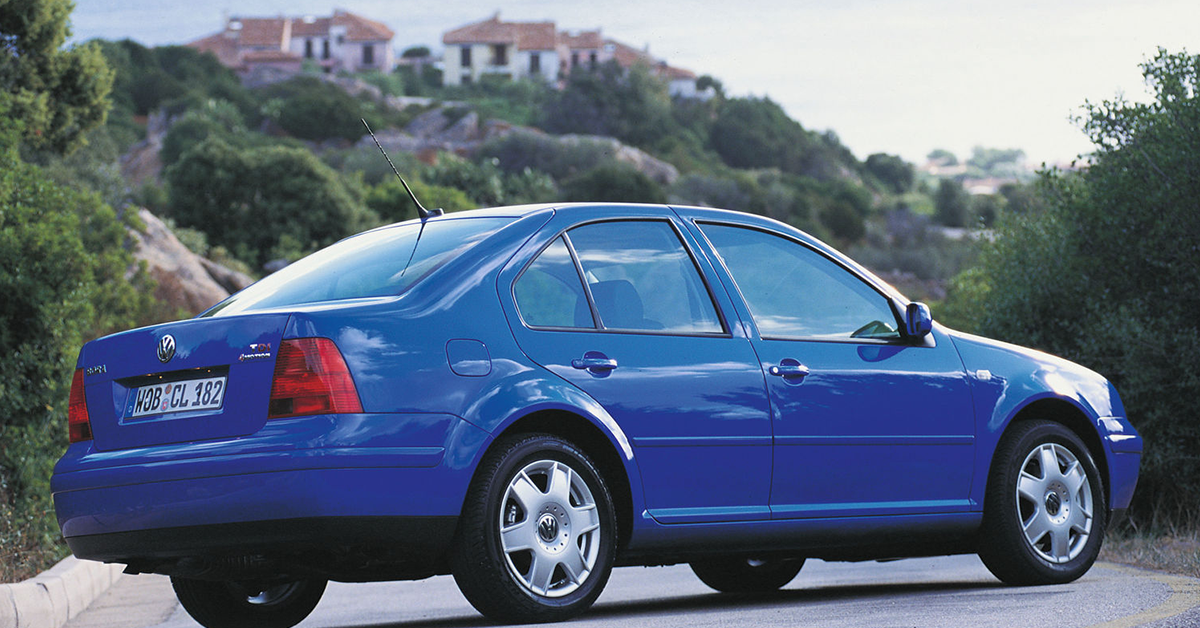
Official press image of the Volkswagen Bora of 1998 (Jetta IV). | © Volkswagen AG
The Jetta IV was launched in July 1998 as the Bora in Europe, based on the Golf IV. It was sold as a four-door saloon, 23 cm longer than the Golf IV, with the extra length used for the boot, which held 455 litres. The launch engines included a 1.6 8V of 74 kW (101 PS), a 2.0 8V of 85 kW (115 PS), a 2.3 VR5 of 110 kW (150 PS) and 1.9 TDI diesels of 66 kW (90 PS) and 81 kW (110 PS). By the end of 1998 a 20-valve engine of 92 kW (125 PS) joined, available with 4MOTION only. The generation was the best seller of the Jetta line, with 4.6 million built.
| Jetta IV (Bora) | 1998 onward, 4.6 million, 455-litre boot, 23 cm longer than Golf IV |
| Jetta IV launch engines | 1.6 8V 101 PS, 2.0 8V 115 PS, 2.3 VR5 150 PS, 1.9 TDI 90 and 110 PS |
| Jetta V | 2004, about 3.0 million, Sagitar in China |
| Jetta VI | 2010, about 3.7 million, 4.64 m long, 510-litre boot |
| Jetta VII | Premiere January 2018, first on MQB, no European version |
| Jetta VII size | 4,702 mm long, 2,686 mm wheelbase, 1,799 mm wide, 1,459 mm high |
| Jetta VII Cd | 0.27 |
| Jetta VII launch engine | 1.4 TSI, 110 kW (150 PS), 250 Nm |
The Bora range grew steadily. A 2.8 V6 of 204 PS with 4MOTION arrived in 1999, and in 2000 Volkswagen added a 1.4 16V of 75 PS, a 1.6 16V of 105 PS, a 1.8 T of 150 PS, a 2.3 V5 20V of 170 PS and a 1.9 TDI of 150 PS. In 2001 the 1.8 T was raised to 180 PS and a 1.9 TDI of 130 PS was added. The trim levels were Trendline, Comfortline and Highline, the body was fully galvanised, and special models included the Edition, Pacific and Sport Edition. The saloon ended in Europe in 2005, though production continued overseas in South America, Mexico, Canada and China, in some cases under other names.
The Jetta V arrived in 2004 and about 3.0 million were built. It was sold as the Sagitar in China. The Jetta VI followed in 2010 with a completely separate design from the Golf. Volkswagen’s international driving presentation described a car 4.64 m long, 9.0 cm longer than its predecessor, with a width of 1.78 m, a height of 1.45 m and a wheelbase of 2,651 mm. The boot held 510 litres, and Volkswagen noted that the Jetta shared no body components with the Golf. About 3.7 million were built.
Volkswagen positioned the Jetta VI between the Golf and the Passat, noting that the Golf is 4.20 m long and the Passat 4.77 m. The European launch engines were a 1.2 TSI of 77 kW (105 PS), a 1.6 TDI of 77 kW (105 PS) and a 2.0 TDI of 103 kW (140 PS), with a 1.4 TSI of 90 kW (122 PS), a twincharged 1.4 TSI of 118 kW (160 PS) and a 2.0 TSI of 147 kW (200 PS) following later in the year. German prices started at 20,900 euros for the 1.2 TSI Trendline. Volkswagen said the Jetta sold up to 110,000 units a year in the United States at that time.
The Jetta VII, sometimes called the A7, had its world premiere at the Detroit show in January 2018 and was the first Jetta on the MQB platform. It is 4,702 mm long, 43 mm more than before, with a wheelbase of 2,686 mm, a width of 1,799 mm and a height of 1,459 mm. Cargo capacity stayed at 510 litres, and the drag coefficient is 0.27, about 10 percent lower than the previous car. The launch engine was a 1.4-litre turbo TSI with 110 kW (150 PS) and 250 Nm of torque. It reached Mexico in the first quarter of 2018 and the United States in the second quarter, and Volkswagen planned no European version.

Official press image of the Volkswagen Jetta GLI (US version, 2011). | © Volkswagen AG
The GLI is the sporty Jetta, and it is often described as a GTI with a boot. Volkswagen’s classic history lists a GTI-engined Jetta GLI as early as the Jetta I, with a more comfort-oriented equipment package, and the 1982 car used the 1.8-litre 112 PS engine from the Golf GTI. US anniversary material, however, counts 1984 as the first GLI year, with a 1.8-litre engine of 90 hp, a close-ratio five-speed manual and sport suspension, and it says that car was built for only one model year. The sources therefore differ on the very first GLI, and this guide treats the early cars as approximate.
| First GLI | Sources differ, classic history lists a GTI-engined GLI in the Jetta I era, US material counts 1984 |
| 1984 US GLI | 1.8-litre, 90 hp, close-ratio five-speed |
| 1990 GLI | 2.0-litre 16-valve |
| 2002 GLI | 2.8-litre narrow-angle VR6 |
| 2004 GLI | 1.8-litre 20-valve turbo |
| Current GLI engine | 2.0 EA888 TSI, 228 hp, 258 lb-ft, front-wheel drive |
| Current GLI gearbox | Six-speed manual or seven-speed DSG to 2026, DSG only from 2027 (reported) |
| GLI 40 (2024) | Limited to 1,984 units for the US |
The GLI name returned through the following generations with growing power. In 1990 the GLI received a 2.0-litre 16-valve engine, and in 2002 a 2.8-litre narrow-angle VR6 was introduced. In 2004 a more efficient 1.8-litre 20-valve turbo arrived, and the fifth-generation GLI received a 2.0-litre TSI engine producing up to 200 hp. In the Jetta II era Volkswagen also built the GT 16V of 1987 with 139 PS, or 129 PS with a catalytic converter. The Jetta III of 1993 offered a 2.8-litre narrow-angle V6 of 172 hp in the US market.
The current GLI uses the 2.0-litre EA888 turbocharged TSI four-cylinder with 228 hp and 258 lb-ft of torque, driving the front wheels. Through the 2026 model year it came with a six-speed manual or an optional seven-speed DSG dual-clutch automatic. The manual was rated at 26 mpg city, 36 highway and 30 combined by the EPA. For the 2027 model year Volkswagen has reportedly dropped the manual, so the GLI will have only the seven-speed DSG. A spokesperson confirmed the change to a US trade site and cited falling demand. The GLI sits 0.6 inch lower than the base Jetta, and it has a multi-link rear suspension, a rear anti-roll bar and sport-tuned gas-filled shock absorbers. The base Jetta uses a torsion-beam rear suspension, so the GLI’s suspension is a genuine step up and not just a trim.
To mark 40 years of the GLI, Volkswagen built the 2024 Jetta GLI 40th Anniversary Edition, limited to 1,984 units for the United States. It uses the same 2.0-litre EA888 with 228 hp and 258 lb-ft, with a six-speed manual or seven-speed DSG. It adds larger brakes, a sport performance monitor, a VAQ electronic limited-slip differential, XDS electronic differential lock, DCC adaptive damping and a sport exhaust. It came in Pure Grey, Pure White or Rising Blue with blackout detailing, 18-inch black ten-spoke wheels and red GLI trim. Inside it has embossed molecular cloth seats that vary across the 1,984 cars, GLI 40 seat tags and door sills and a 1984 engraving in the cupholder.
In the 2025 model year the GLI was listed at a manufacturer’s suggested retail price of $32,715 in the US, according to a September 2024 trade report,, with IQ.DRIVE assistance standard on every 2025 trim. A later 2026 report put the GLI Autobahn at $35,020, though the same report listed a conflicting $29,675 in its price table, so check the current price list before relying on either number.
A note on the gearbox helps. The 2024 GLI 40 uses the same 228 hp and 258 lb-ft figures as the standard GLI, so its upgrades are in the chassis rather than the engine. The GLI did not get the power increase that the Golf GTI received, which is 241 hp in the US. The manual GLI was rated at 26 mpg city, 36 highway and 30 combined, and the car uses a front-wheel-drive layout with no all-wheel drive option. Anyone comparing the GLI with the Golf GTI should note that it is a different body style with a separate boot..
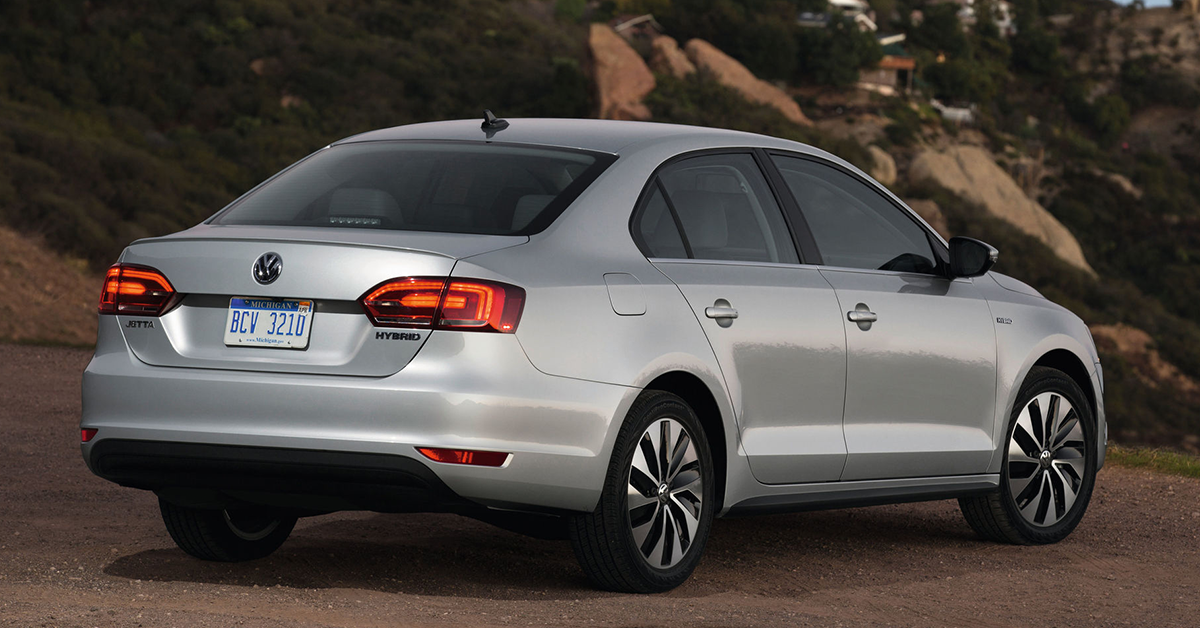
Official press image of the Volkswagen Jetta Hybrid (US version). | © Volkswagen AG
The Jetta has been sold in more versions than most buyers realise. The first generation was a two-door or four-door notchback, the Jetta II had four-door-only versions for the 16V and Carat, and the Bora added an estate in 1999. The Bora Variant was identical to the saloon up to the A-pillar and was positioned as a luxury estate with high-end equipment. In the United States it was called the Jetta Wagon. It was discontinued in 2004, a year before the Bora saloon ended in Europe, and the current line-up has no estate.
| Bora Variant | 1999 to 2004, estate, called Jetta Wagon in the US |
| Jetta syncro | 1987, all-wheel drive, 90 then 98 PS |
| Formula E | 1981, longer top gear, economy indicator |
| GTD | 1982, 1.6 turbo diesel, 70 PS |
| Jetta Hybrid | US 2013 to 2016, 1.4 turbo hybrid, 45 mpg combined |
| Jetta Hybrid sales | 5,655 (2013), 1,939 (2014), 743 (2015) |
| Carat and C | Discontinued in 1987 |
| Current Jetta | Petrol saloon only, no diesel, hybrid or estate |
Several special Jettas are now discontinued. The Jetta syncro of 1987 offered all-wheel drive, the Formula E of 1981 pioneered fuel-saving features, and the GTD of 1982 combined a turbo diesel of 70 PS with sporty looks. The Jetta II range also included special models such as the Strada, Beach, Coach, Court, Pacific, Flair, TX and Style. The Carat, which was available only with the 1.8-litre engine of 66 kW (90 PS) and four doors, and the C were discontinued in 1987. The Bora added special models of its own, including the Edition, Pacific and Sport Edition, and a 4MOTION version with the 2.8 V6 of 204 PS.
The Jetta Hybrid was the most unusual recent variant. It was offered in the United States as a 2013 model, in the compact Jetta saloon that had launched as a 2011 model. It combined a single-motor hybrid system with a small 1.4-litre turbocharged four-cylinder engine, and it was rated at 45 mpg combined, with 42 city and 48 highway, the highest EPA rating of any Jetta. It sold 5,655 units in 2013, which was about 4 percent of 141,259 Jetta saloons, then 1,939 in 2014 and 743 in 2015. Volkswagen withdrew it from the US line-up for 2017, and reports pointed to falling fuel prices and weak sales.
The Jetta TDI diesel always outsold the hybrid, but it was caught up in Volkswagen’s diesel emissions scandal, which was ongoing when the hybrid was withdrawn. The 2025 US range lists petrol engines only, with no hybrid and no estate. The Bora saloon ended in Europe in 2005, and the Jetta name returned there for the sixth generation. Today the Jetta is built for the Americas and sold with a single body style, though the GLI offers a performance alternative.
When shopping for a used Jetta, the variant matters as much as the generation. A 1980s Jetta GT or GT 16V is a collector’s car, a syncro is rare, and a Bora Variant is a niche estate. The Jetta Hybrid sold in small numbers, and the TDI diesels of the 2010s were caught up in the emissions scandal. The standard petrol Jettas are the easiest to find and to maintain. In every case check the exact generation, engine and market, because the Jetta name has covered very different cars in different countries.
A short list of what to look for may help when comparing the discontinued Jettas. The Jetta I and II are classics with their own spare-parts communities, and the GT, GT 16V, GTD and syncro are the sporting models of the Jetta II. The Bora gave buyers six-cylinder power with 4MOTION and the Variant estate, and the Jetta VI had a completely separate design from the Golf, with no shared body components. The Jetta VII is the first Jetta on the MQB platform.

Official press image of the Volkswagen Jetta (US version, 2018). | © Volkswagen AG
The Jetta is closely tied to the Americas. Volkswagen de México built the model at its Puebla plant for about 40 years as of 2019, with production starting in 1981 when the car was known as the Atlantic. In September 2019 the company celebrated six million Jettas built at Puebla, and it said the plant had produced all seven generations of the Jetta saloon. The article specifically mentioned the fifth generation, the sixth generation, including a special Jetta Bicentenario edition, and the seventh generation, which began production in December 2017. These figures make Puebla the centre of Jetta production for the Americas.
| Puebla production start | 1981, as the Atlantic |
| Six million Jettas at Puebla | Celebrated September 2019 |
| Jetta VII production start | December 2017, Puebla |
| US sales by 2018 | More than 3.2 million |
| Jetta VII launch | Mexico Q1 2018, US Q2 2018 |
| US launch trims | S, SE, SEL, SEL Premium |
| Launch engine | 1.4 TSI, 110 kW (150 PS), 6-speed manual or 8-speed automatic |
| 2025 Jetta production | Started in Mexico in July 2024 |
The United States is the biggest market. Volkswagen reported in 2018 that more than 3.2 million Jettas had been sold there, which is about 18 percent of the 17.5 million built worldwide. The seventh generation reached Mexico in the first quarter of 2018 and the United States in the second quarter. The US trims at launch were S, SE, SEL and SEL Premium, with the 1.4-litre turbo of 110 kW (150 PS) and a six-speed manual standard on the S and an eight-speed automatic standard on the SE and optional on the S. LED headlights were standard on every trim, and a panoramic sunroof was standard from the SE.
Equipment in 2018 was well above what the Jetta had offered before. Front Assist with autonomous emergency braking and Blind Spot Monitor were standard from the SE and optional on the S, and the SEL added ambient lighting in ten colours, a 10.2-inch Active Info Display and a 400-watt Beats audio system. Adaptive cruise control, lane assist, a rear camera, rear traffic alert and automatic post-collision braking were available. Volkswagen’s release called the Jetta the most successful German-rooted car in the US.
Production of the refreshed car started in Mexico in July 2024, according to Mexican trade coverage of the 2025 Jetta launch, and Volkswagen’s Mexican press release presented the new Jetta and GLI for 2025. A Mexican industry report also described the Jetta as the star of the Puebla plant, with 8,720 units assembled in January 2025. The Jetta is therefore still a major product for Volkswagen de México. This guide does not give a current plant output figure because the sources available give monthly numbers that change from period to period.
For American buyers the Jetta fills the role that the Golf fills in Europe, as the entry-level Volkswagen car. The GLI offers a performance alternative. Prices rose for 2026, with a September 2025 report citing tariff-related increases, but reports disagree on the exact figures, so check the current price list. The next section covers the Chinese side of the Jetta family, where the same name has been used for a separate brand.
A few numbers put Mexico’s role in context. Six million Jettas at Puebla by 2019 is about a third of the 17.5 million built worldwide by 2018, though the two figures come from different dates. The Mexican plant started with the Atlantic in 1981 and built all seven generations of the saloon by Volkswagen de México’s count, which shows how long the car has been a Mexican product. The 2025 Jetta launch was presented by Volkswagen’s Mexican brand.
The Jetta has also been sold in Mexico with its own trims and special editions, such as the Jetta Bicentenario of the sixth generation. These local editions are one reason that Jetta cars in Mexico and the United States can look and feel different from each other. If you are researching a used Jetta from either country, check the trim names, because Mexican and US lists do not always match, and confirm the plant and build date from the car’s own papers.

Official press image of the FAW-Volkswagen Sagitar. | © Volkswagen AG
China has its own Jetta family. The fifth-generation Jetta was sold in China as the Sagitar, and the same name has continued for later generations. Volkswagen’s 2020 market overview says the Sagitar has been built by FAW-Volkswagen since 2006, now in Changchun and Chengdu, and that the third generation arrived in 2019 as a long-wheelbase car with a wheelbase of 2.73 m, compared with 2.69 m for the US Jetta. It was based on the MQB platform with a 1.2 TSI of 85 kW or a 1.4 TSI of 110 kW. About 310,000 customers bought a Sagitar in 2019, including over 176,000 of the new generation.
| Sagitar | FAW-Volkswagen since 2006, third generation 2019, 2.73 m wheelbase |
| Sagitar sales (2019) | About 310,000 |
| Bora (China, 2019) | 323,400 delivered, MQB, e-Bora electric version |
| Lavida (2019) | 491,000, best-selling model of any maker in China |
| JETTA sub-brand | Launched 2019, VA3 built in Chengdu, 1.5-litre 82 kW |
| Santana (China) | About 245,000 in 2019, 4.48 m long |
| Compact saloons (2019) | Over 1.6 million Volkswagen sold in China |
The Bora name lives on in China too. FAW-Volkswagen delivered 323,400 Boras in 2019, built on MQB with a 1.5-litre naturally aspirated engine of 83 kW or a 1.4 TSI of 110 kW, and an electric version called the e-Bora is also available. It measures 4.66 m long, 1.81 m wide and 1.46 m high with a wheelbase of 2.69 m. The Lavida, built by SAIC-Volkswagen, is another compact saloon on MQB, on sale in its third generation since May 2018 and China only. It was the best-selling model of any manufacturer in China in 2019, with 491,000 units.
In 2019 Volkswagen also created a separate sub-brand named JETTA, the first time a Volkswagen model became an independent sub-brand with its own dealer network. Its first model, the VA3, is built in Chengdu and is about 4.50 m long, with a 1.5-litre naturally aspirated engine of 82 kW, and it targets younger first-time buyers. Volkswagen says it shares only its name with the Jetta sold in the Americas. Combined sales of the previous Jetta and the VA3 exceeded 145,000 units in 2019, a transition year. The JETTA sub-brand and the American Jetta are therefore separate businesses with a shared name.
The Santana is the other long-running China saloon. SAIC-Volkswagen’s first car in China was the Santana in 1983, and an independent China-specific version has been sold since 2013. It is unrelated in design to the original Santana, which was based on the second-generation Passat and left Germany in 1985. It sold about 245,000 units in China in 2019, and it is 4.48 m long, 1.71 m wide and 1.47 m high with a wheelbase of 2.60 m. Together these cars show that the compact saloon is a very important segment in China, where the Volkswagen brand sold over 1.6 million compact saloons in 2019 across six models.
Volkswagen says notchbacks make up almost a third of Volkswagen brand compact deliveries worldwide. That helps to explain why the Jetta has survived as a nameplate while the saloon has disappeared from many European line-ups. The two joint ventures behind these cars are SAIC-Volkswagen, whose first car was the Santana in 1983, and FAW-Volkswagen, whose first car came in 1991. The figures above are from 2019 and have changed since then, so treat them as a snapshot of the market at that time and not as current sales data.
One more number shows the size of the Chinese market. Volkswagen’s brand delivered 3.16 million vehicles in China in 2019, including the JETTA sub-brand, and it describes itself as the most popular car brand in the country. The compact saloons covered here are a large part of that total, and the Lavida, Sagitar, Bora and Santana alone sold about 1.4 million in 2019. These cars use the same MQB platform as the Jetta VII, and they show how one platform can support very different cars for different continents.

Official press image of the Volkswagen Jetta (2027 model year). | © Volkswagen AG
The current Jetta is the refreshed seventh generation, sold in the United States in S, Sport, SE and SEL trims plus the GLI. The figures below are for the 2025 model year, and the 2027 changes follow in a later paragraph. It uses the 1.5-litre EA211 turbocharged four-cylinder with 158 hp and 184 lb-ft of torque, a modified Miller-cycle design, and an eight-speed automatic transmission. The EPA rated the S at 29 mpg city, 39 highway and 33 combined, and the Sport, SE and SEL at 29 city, 40 highway and 33 combined. A September 2024 trade report listed the 2025 Jetta at a starting price of $21,995, which it said was lower than the 2024 automatic.
| Trims (US, 2025) | S, Sport, SE, SEL, GLI |
| Engine | 1.5 EA211 turbo, 158 hp, 184 lb-ft, Miller-cycle |
| Transmission | Eight-speed automatic |
| EPA (S) | 29 city, 39 highway, 33 combined |
| EPA (Sport, SE, SEL) | 29 city, 40 highway, 33 combined |
| GLI engine | 2.0 EA888 TSI, 228 hp, 258 lb-ft |
| 2025 Jetta start price (US) | $21,995 (September 2024 report) |
| 2025 GLI start price (US) | $32,715 (September 2024 report) |
| Assistance | IQ.DRIVE standard on all 2025 trims |
| 2027 model year (reported) | GLI manual dropped, keyless entry and push-button start on S and Sport |
The car sits on the MQB platform with much high-strength, hot-formed steel in the body and chassis. The base Jetta uses a torsion-beam rear suspension, and the Sport, SE and SEL add a suspension 0.6 inch lower. The GLI has the same lower stance with a multi-link rear suspension. The exterior has a coupe-like profile, new upper and lower grilles, LED headlights, an available light bar and a new trunk lid with a light bar connecting the taillights. Braking includes electronic brake-force distribution and hydraulic brake assist, as well as ABS and electronic stability control.
Technology is a strong point. IQ.DRIVE semi-automated driver assistance is standard on every 2025 trim, using front and rear radar, a front camera and ultrasonic sensors. It includes Adaptive Cruise Control, Lane Keeping Assist, Blind Spot Monitoring, Forward Collision Warning, Automatic Emergency Braking and Rear Traffic Alert. Emergency Assist is not available with the manual gearbox, and Light Assist automatic high beams are available on the SEL and GLI. Automatic Post-Collision Braking and Intelligent Crash Response, which shuts off the fuel pump, unlocks the doors and turns on the hazard lights in certain crashes, are standard.
Inside, every model has a digital cockpit, with an 8-inch display on lower trims and a 10.25-inch fully configurable display on higher trims. There is an 8-inch floating touchscreen, dual-zone automatic climate control, App-Connect, Bluetooth and wireless charging. BeatsAudio is available on higher trims, and Volkswagen Car-Net offers remote access, vehicle alerts and a Wi-Fi hotspot through optional paid subscriptions. The seats vary by trim and include perforated leather and new colour combinations. The trade report that listed these features did not say where the cars are built, so this guide relies on the Mexican release for the Puebla production link.
For buyers the choice is simple. The base Jetta offers 158 hp with an eight-speed automatic and standard IQ.DRIVE assistance, and the GLI offers 228 hp for those who want performance, with a manual through the 2026 model year. Prices rose for 2026 and reports differ on the exact figures, so check the current list. If you are outside the Americas, the Jetta name may refer to a different car, such as the Sagitar or the JETTA sub-brand in China. The Volkswagen models guide covers the rest of the line-up, and the Golf guide covers the hatchback the Jetta was built from.
A few specification details round out the picture. The 2025 Jetta’s EPA ratings are the same on the Sport, SE and SEL at 29 mpg city, 40 highway and 33 combined, while the S is one mpg lower on the highway at 39. The GLI’s water-cooled exhaust gas routing and the Jetta’s Miller-cycle design are both credited with helping efficiency and reducing full-load fuel consumption. The trade report also said the 2025 starting price was lower than that of the 2024 automatic Jetta.
The 2027 model year brings a few changes, according to US trade reports from May 2026. The Jetta GLI loses its manual gearbox and will come only with the seven-speed DSG, which a Volkswagen spokesperson confirmed, saying that global demand had narrowed to a point where the market could no longer sustain it. The 2026 GLI is therefore the last model year with a manual, and reports say it leaves Volkswagen with no manual gearbox in the United States. The Jetta S and Sport reportedly gain keyless access and push-button ignition and a six-speaker audio system with the Composition Media infotainment system, and every Jetta gets an enhanced rear seatbelt reminder. Reports on 2027 prices were inconsistent when this guide was written, so no 2027 price is given.