 Brands
Volkswagen Virtus — Polo Sedan for Brazil and India
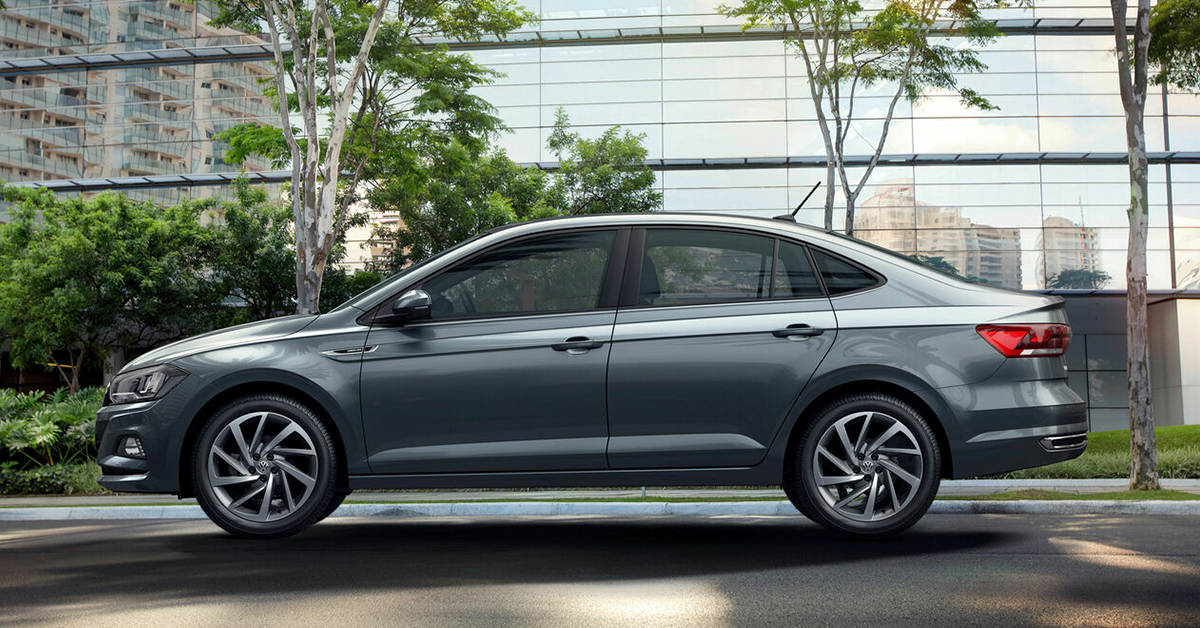
Official press image of the Volkswagen Virtus. | © Volkswagen AG
The Volkswagen Virtus is the compact sedan built on the MQB platform for Brazil, India and other markets, with its world premiere in 2017. Here is the full Virtus story, with history, specs, engines, the GT versions, safety ratings, sister models and the facelift due in India in December 2026.
Official press image of the Volkswagen Virtus (2017 premiere). | © Volkswagen AG
The Volkswagen Virtus is a compact sedan built on the MQB platform for the markets outside Europe and North America. Volkswagen gave it its world premiere in São Paulo on 16 November 2017, and sales in Brazil began in January 2018. The company described it as an entirely new compact fastback sedan developed for South America, with a length of 4.48 m, a wheelbase of 2.65 m and room for five adults. It was part of the largest model offensive Volkswagen had ever launched in Brazil, with 20 new models planned by 2020, 13 of them built in the country, and the Virtus was the third MQB-based model in that plan after the Golf and the new Polo.
| World premiere | São Paulo, 16 November 2017 |
| Sales start (Brazil) | January 2018 |
| Body style | Compact fastback sedan |
| Length / wheelbase | 4.48 m / 2.65 m (Brazilian car, 2017) |
| Boot | 521 litres |
| Platform | MQB (MQB A0 IN in India) |
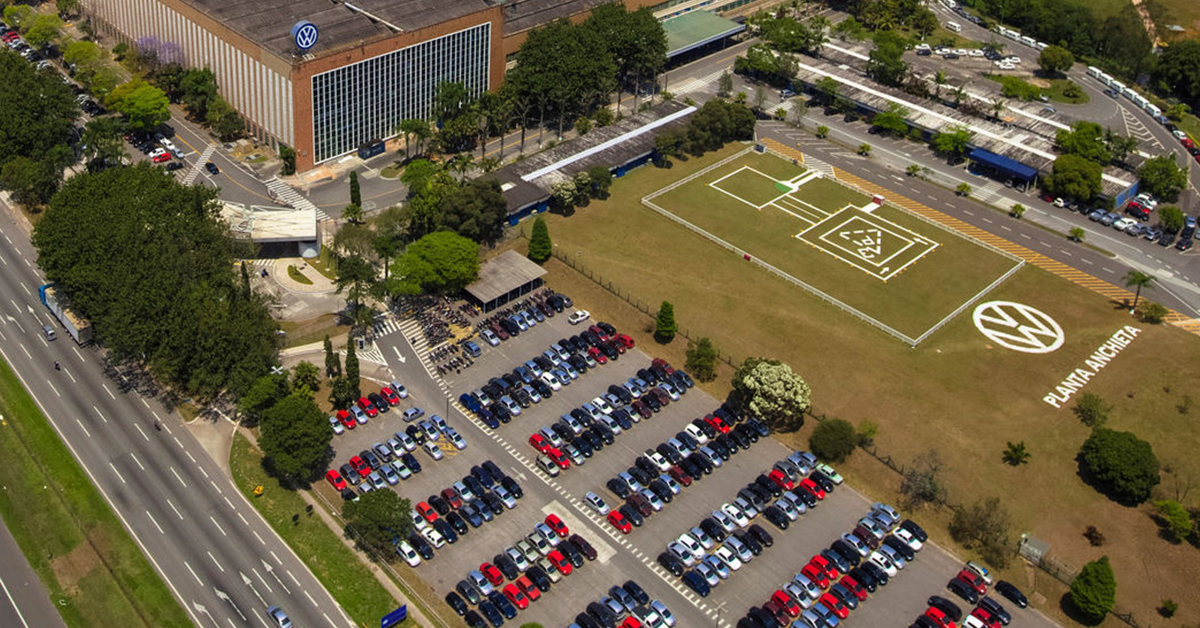
| Brazil plant | Anchieta, about 20 km south of São Paulo |
| Investment at Anchieta | About 660 million euros for the Virtus and the Polo |
| 100,000 built | Reported in September 2019 |
The Virtus is the sedan version of the Polo. Its boot holds 521 litres, which Volkswagen called among the largest in its class, and a reference source gives its wheelbase as 103 mm longer than the Polo’s. The Polo guide covers the hatchback it was built from, and the Jetta guide covers the larger saloon that sits above it in many markets. In Brazil the Virtus was built at the Anchieta plant near São Paulo, where Volkswagen invested about 660 million euros to modernise the factory for the Virtus and the Polo.
The launch also carried a technology claim. Volkswagen said the Virtus was its first model, and the first car in South America, with AI-based driver assistance, a web-based function developed with IBM. The car was presented as part of the Transform 2025+ strategy, which gave more responsibility to regional teams, and as a way to retake the lead in the largest South American car market. Volkswagen invested about 1.8 billion euros in Brazil in total as part of the plan. These figures show how much the company staked on a compact sedan at a time when it was losing market share to rivals in the segment.
The car quickly found buyers. Volkswagen do Brasil reported that the Virtus had reached 100,000 units produced in September 2019, less than two years after sales began, with the milestone car a Highline in dark blue. The car was already exported to Argentina, Chile, Colombia, Ecuador, Peru, Paraguay, Uruguay, Curaçao and Costa Rica, and Mexico had just been added with the 1.6 MSI Comfortline offered with an automatic or a manual gearbox. The Brazilian versions at that time were the 1.6 MSI, the Comfortline 200 TSI and the Highline 200 TSI.
The Virtus then became a second car in a second market. In 2022 Volkswagen introduced a new version in India, built on the MQB A0 IN platform and made at the Chakan plant near Pune, where it replaced the Vento. Later it reached Mexico, South Africa, China and several other markets under different names. The sections below cover Brazil and South America, the Indian launch, the engines and specifications, the sporting versions, the safety ratings, the other markets and the current range with the facelift due in India in December 2026. The table gives the key facts for the car’s origins.
Volkswagen also tied the Virtus to its wider plans. The November 2017 release said the Virtus and the Polo were both produced at Anchieta, that Volkswagen was investing about 560 million euros in a new SUV for Argentina with production from 2020, and that the aim was to retake the lead in the largest South American car market. The car is therefore best understood as one piece of a broader push to rebuild Volkswagen’s position in Brazil.
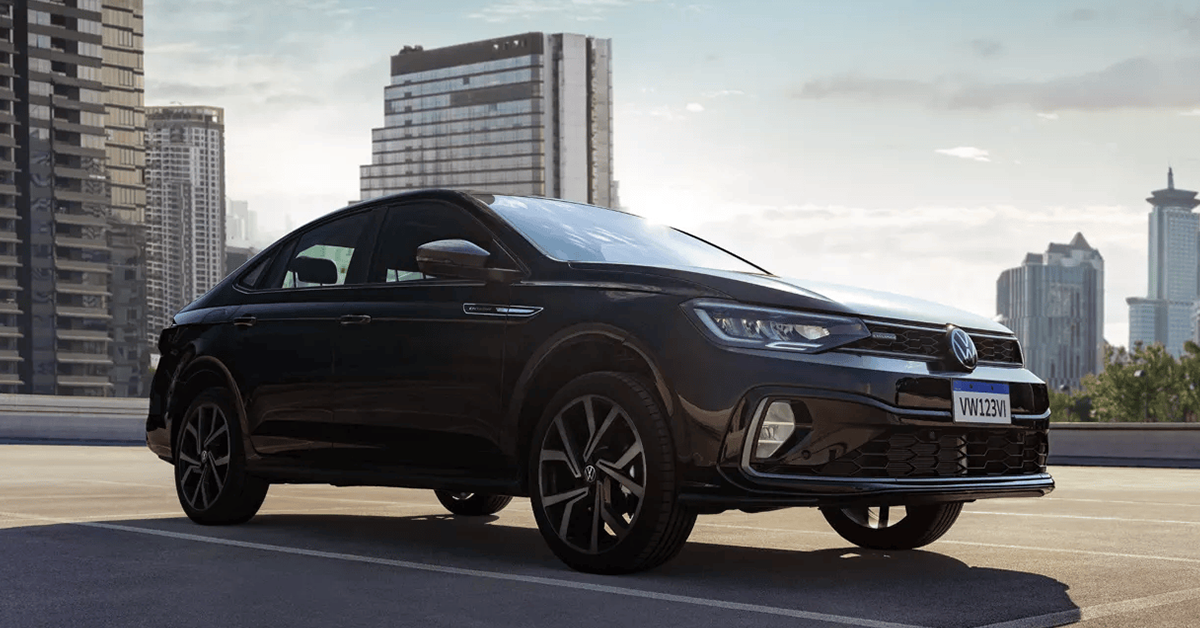
Official press image of the Volkswagen Virtus (Brazil). | © Volkswagen AG
Brazil is the Virtus’s home market, and the car was built at the Anchieta plant in São Bernardo do Campo from 2018. In April 2025 Volkswagen added a second Brazilian plant, São José dos Pinhais in Paraná, which freed space at Anchieta for the Polo Track. In November 2025 Volkswagen do Brasil marked 300,000 Virtus sedans built in Brazil across both plants. The company also said the Virtus is the only car in its segment with three engine options, and the line now has five configurations. These are Brazilian figures and describe the Brazilian car only.
| Brazil plants | Anchieta (from 2018), São José dos Pinhais (from April 2025) |
| Built in Brazil | 300,000 by November 2025 |
| Engines (from February 2023) | 1.0 170 TSI, 1.0 200 TSI, 1.4 250 TSI (Exclusive) |
| Restyling | February 2023, 100 percent LED lighting |
| GTS | 1.4 TSI, discontinued with the 2023 restyling |
| Argentina launch | February 2018, 1.6 MSI with six-speed automatic |
| Brazil sales (reported) | 41,640 (2018), 46,883 (2019), 27,096 (2023), 32,359 (2024), 36,980 (2025) |
| Trims (2025) | Comfortline, Highline, Exclusive |
The first Brazilian Virtus came with flex-fuel engines that run on petrol or ethanol. Reference sources list a 1.6 MSI four-cylinder, a 1.0 TSI turbo three-cylinder known as the 200 TSI and, in the sporty GTS, a 1.4 TSI with about 150 PS. The outputs given for the 1.6 MSI differ between sources, so this guide does not quote one figure for it. The 1.0 200 TSI is usually listed at about 116 PS on petrol and 128 PS on ethanol. The Argentine car went on sale in February 2018 with only the 1.6 MSI and a six-speed automatic, and Argentina was one of the car’s first export markets.
The Virtus was restyled in Brazil in February 2023, with a new design and 100 percent LED lighting. The 1.0 170 TSI engine replaced the 1.6 MSI as the entry engine, available with a manual or automatic gearbox, and the 1.0 200 TSI stayed for the Comfortline and Highline. The 1.4 TSI, now called the 250 TSI, moved to a new Exclusive trim, and the GTS was discontinued. Reference sources give the 170 TSI at about 109 PS on petrol and 116 PS on ethanol and the 250 TSI at about 150 PS, though the figures should be checked against the current Brazilian price list.
The sales record shows how the car has fared. A reference source lists Brazilian sales of about 41,640 in 2018 and 46,883 in 2019, falling to 30,886 in 2020, 20,571 in 2021 and 5,621 in 2022. Sales then recovered to 27,096 in 2023, 32,359 in 2024 and 36,980 in 2025. These figures come from a secondary source and may be incomplete, particularly for the most recent year. They show a car that has had a hard period and a strong recovery after the 2023 restyling.
The Virtus also sits at the centre of Volkswagen’s South American plans for the future. Volkswagen do Brasil says that from 2026 every new Volkswagen developed and built in South America will have electrified versions, and that the first vehicle on the MQB37 platform will be built at Anchieta with a flex-fuel hybrid drive. The company has not said that this model will be the next Virtus, so this guide does not treat the next-generation Virtus as confirmed.
The Brazilian line-up also shows how the car is positioned. In the 2025 range Volkswagen do Brasil offers the Comfortline, Highline and Exclusive trims, with the 170 TSI as the entry engine and a choice of a manual or an automatic gearbox. The 200 TSI is paired with the Comfortline and Highline, and the 250 TSI with the Exclusive. The company argues that three engine options make the Virtus unusual in its segment, and the sales recovery after 2022 suggests that buyers have responded to the restyled car.
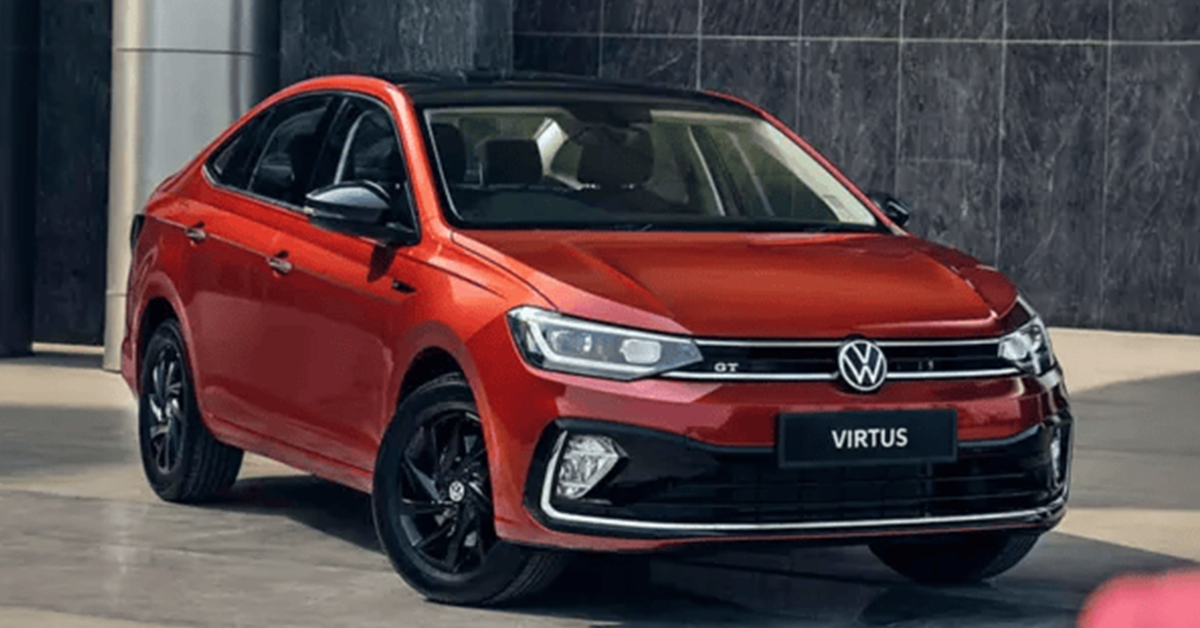
Official press image of the Volkswagen Virtus (India). | © Volkswagen AG
In India the Virtus is the car that replaced the Vento. Volkswagen showed it in March 2022, put it on sale at an introductory price of 11.21 lakh rupees ex-showroom on 9 June 2022, and began deliveries the same day across 152 sales touchpoints. It is the second product of the Group’s India 2.0 project, after the Taigun, and it is built at the Chakan plant near Pune on the MQB A0 IN platform with up to 95 percent localisation. At 4,561 mm long it was described as the longest car in the premium mid-size sedan segment, with a 521-litre boot and a 60:40 split-folding rear seat.
| India launch | 9 June 2022, deliveries began the same day |
| Introductory price | From 11,21,900 rupees ex-showroom (1.0 TSI Comfortline) |
| Plant | Chakan, near Pune |
| Platform / localisation | MQB A0 IN, up to 95 percent |
| Length / boot | 4,561 mm / 521 litres |
| 1.0 TSI | 85 kW (115 PS), 178 Nm, six-speed manual or automatic |
| 1.5 TSI EVO | 110 kW (150 PS), 250 Nm, seven-speed DSG |
| Record month | 2,453 units in October 2025 (manufacturer figure) |
There are two engines. The 1.0-litre TSI produces 85 kW (115 PS) at 5,000 to 5,500 rpm and 178 Nm from 1,750 to 4,500 rpm, with a six-speed manual or a six-speed torque-converter automatic. The 1.5-litre TSI EVO with Active Cylinder Technology produces 110 kW (150 PS) at 5,000 to 6,000 rpm and 250 Nm from 1,600 to 3,500 rpm, with a seven-speed DSG. Volkswagen’s ARAI-certified figures were 19.40 km/l for the 1.0 manual, 18.12 km/l for the 1.0 automatic and 18.67 km/l for the 1.5 DSG. The fuel economy figures are lab figures and real-world results are lower.
The introductory prices show the range. The 1.0 TSI manual cost 11,21,900 rupees in the Comfortline, 12,97,900 in the Highline and 14,41,900 in the Topline, with the automatic at 14,27,900 in the Highline and 15,71,900 in the Topline. The 1.5 TSI DSG GT Plus cost 17,91,900 rupees. All prices were ex-showroom and have changed since then. Volkswagen offered a 4EVER Care package with a four-year, 100,000 km warranty extendable to seven years, roadside assistance for four years extendable to ten and three labour-free services, with a four-year service value package from 20,338 rupees plus GST.
Equipment at launch included a 20.32 cm digital cockpit, a 25.65 cm touchscreen with wireless Apple CarPlay and Android Auto, eight speakers, wireless mobile charging, KESSY keyless entry and engine start, an electric sunroof, ventilated front seats, a multifunction steering wheel, cruise control and rear air-conditioning vents. LED headlights were standard on every trim, and the standard wheels were 16-inch Razor alloys. The GT Plus added black alloys, a GT badge, red front brake calipers, a carbon steel grey roof and mirror caps, a black spoiler and aluminium pedals. The six colours were Wild Cherry Red, Carbon Steel Grey, Reflex Silver, Curcuma Yellow, Candy White and Rising Blue.
The Virtus quickly became a leader in its segment. Volkswagen India reported on 5 November 2025 that the Virtus had sold 2,453 units in October 2025, its highest ever monthly figure, and that it held over 40 percent of the premium sedan segment over the previous two months. The company said it had led the segment for nearly 20 consecutive months, and that the Taigun and Virtus together had sold over 160,000 units in India. These are manufacturer claims and are not independently verified. A reference source also says Volkswagen planned to export the Indian-built car to 25 countries.
Production at Chakan matters for more than India. A reference source says the Mexican car was imported from India for the 2023 model year and that exports from the plant to 25 countries were planned. Volkswagen India also launched the Virtus after the Taigun, so the two cars together form the India 2.0 range. By November 2025 Volkswagen India said the pair had sold more than 160,000 units in the country, and that the Virtus had been on sale for 40 months.
Official press image of the Volkswagen Virtus. | © Volkswagen AG
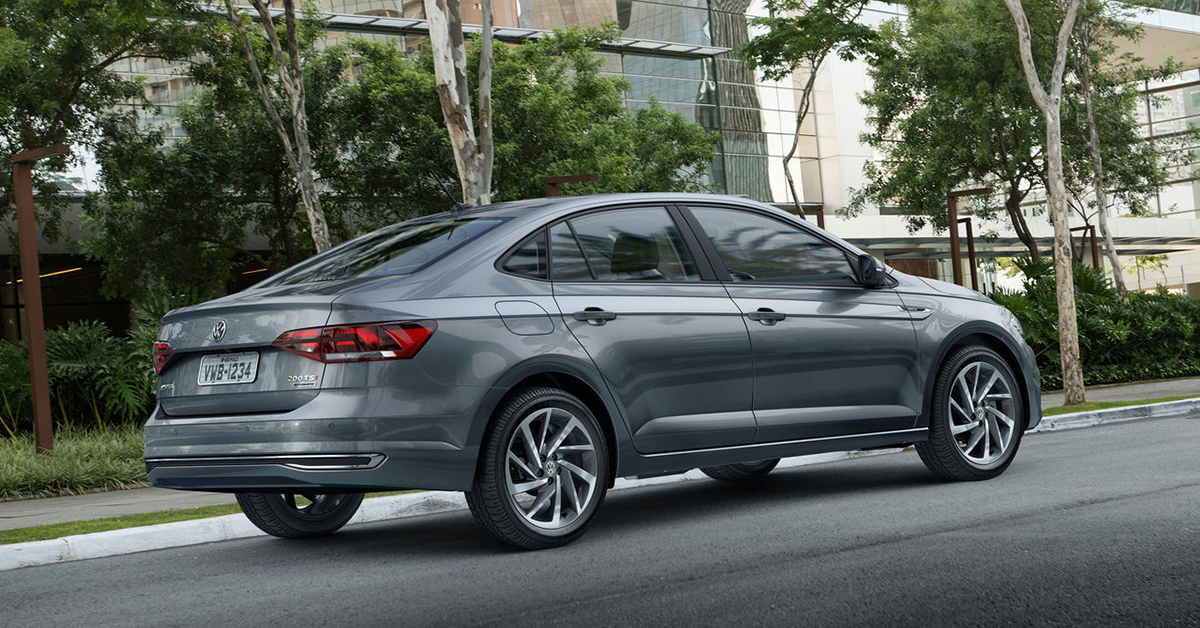
The Virtus is built to a simple formula. It uses the MQB platform with a transverse engine and front-wheel drive, a wheelbase of 2,651 mm and a width of about 1,751 mm. The length differs by market, from about 4,482 mm for the Brazilian car to 4,561 mm for the Indian car, and the height from about 1,461 to 1,487 mm. The boot holds 521 litres in every version. These figures come from Volkswagen’s releases and a reference source and vary slightly by market and trim.
| Platform | MQB, front-wheel drive, transverse engine |
| Wheelbase | 2,651 mm |
| Width | About 1,751 mm |
| Length | About 4,482 mm (Brazil) to 4,561 mm (India) |
| Boot | 521 litres |
| India engines | 1.0 TSI 85 kW (115 PS), 1.5 TSI EVO 110 kW (150 PS) |
| Brazil engines (2023) | 1.0 170 TSI, 1.0 200 TSI, 1.4 250 TSI, flex-fuel |
| China (Lavida XR) | 1.5 MPI, about 108 PS, 141 Nm, six-speed automatic |
| Mexico | 1.6 MSI about 110 PS, 1.0 TSI added from 2023 |
The engines depend on the country. In India the Virtus has a 1.0 TSI of 85 kW (115 PS) and 178 Nm and a 1.5 TSI of 110 kW (150 PS) and 250 Nm, with a six-speed manual, a six-speed automatic or a seven-speed DSG depending on the engine. In Brazil the 2023 range uses the 1.0 170 TSI, the 1.0 200 TSI and the 1.4 250 TSI, all of them flex-fuel. In Mexico the early car used a 1.6 MSI of about 110 PS, and a 1.0 TSI was added from 2023. In China the Lavida XR uses a 1.5 MPI of about 108 PS and 141 Nm with a six-speed automatic.
None of these engines is large, and none is built for outright speed. The 1.0 TSI is the volume engine in most markets. The 1.5 TSI EVO with Active Cylinder Technology, which switches off two cylinders under light load, is the performance engine in India. Volkswagen India quoted ARAI fuel economy of 19.40 km/l for the 1.0 manual, 18.12 km/l for the 1.0 automatic and 18.67 km/l for the 1.5 DSG. The Brazilian cars can run on ethanol, which raises the quoted power slightly, so the Brazilian figures are usually higher on ethanol than on petrol.
The standard wheels are 16-inch alloys in India, and the GT versions have black alloys and red brake calipers. The seats fold 60:40, and the boot is one of the biggest in the class. In India the car has rear air-conditioning vents, a cooled glove box and three rear headrests. For buyers the main practical difference between the markets is the engine range and the equipment level, because the platform and the body are shared.
When reading specifications, check which market the figures belong to. The Brazilian, Indian, Mexican, South African and Chinese Virtus differ in length, engines and equipment, even though they share a name and a platform. Reference tables for the car sometimes conflict with one another and with Volkswagen’s own releases, so this guide quotes Volkswagen’s figures where they exist and marks other figures as reported. The next section covers the sporty versions, which are the most variable of all across the markets.
A comparison of the engines helps. The Indian 1.0 TSI gives 85 kW (115 PS) from a turbo three-cylinder, the Indian 1.5 TSI EVO gives 110 kW (150 PS), and the Brazilian 250 TSI is listed at about 150 PS as well, so the two top engines are close in output. The Mexican 1.6 MSI of about 110 PS and the Chinese 1.5 MPI of about 108 PS are naturally aspirated engines with lower torque, and the Chinese car lists 141 Nm. These differences explain why a Virtus feels very different from one country to another even though the body is the same.
Official press image of the Volkswagen Virtus GT. | © Volkswagen AG
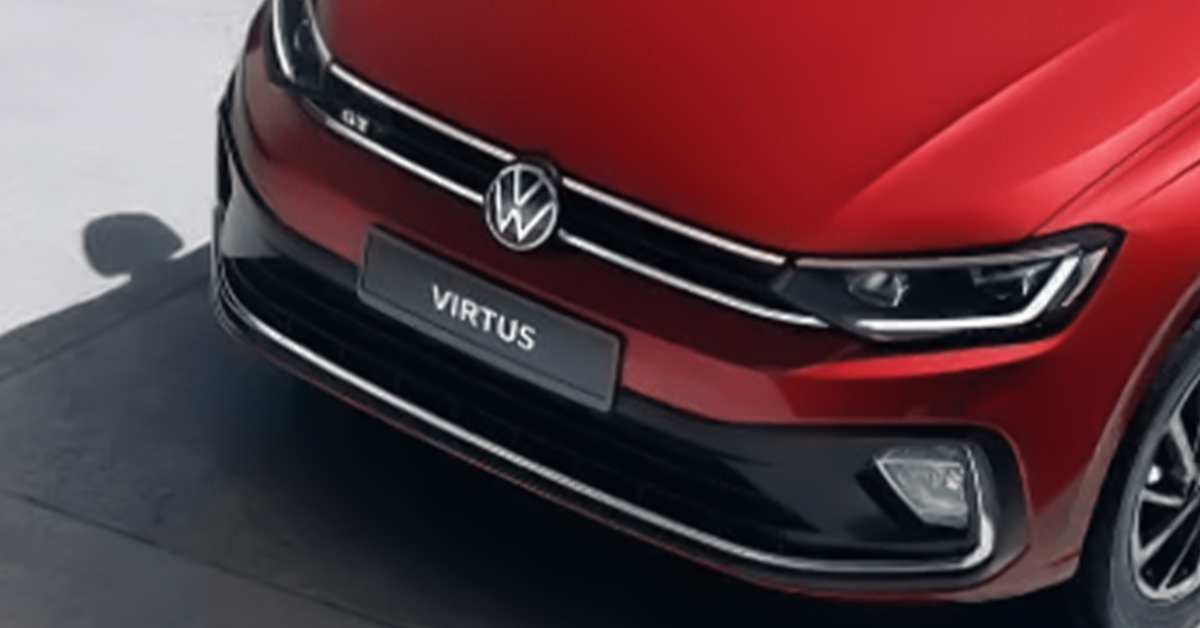
The sporty Virtus has had different forms in different markets. In Brazil there was a Virtus GTS with a 1.4 TSI of about 150 PS, which a reference source says was discontinued when the car was restyled in 2023. The same 1.4 TSI engine, now called the 250 TSI, moved to the Exclusive trim. A Virtus GTS concept was also shown. In India the sporty car is the GT, and it is built around the 1.5 TSI EVO engine with 110 kW (150 PS) and 250 Nm and a seven-speed DSG. Sales of the GT began in June 2022, shortly after the standard car.
| Brazil GTS | 1.4 TSI, about 150 PS, discontinued with the 2023 restyling |
| India GT Plus (2022) | 1.5 TSI EVO, 110 kW (150 PS), 250 Nm, DSG, from 17,91,900 rupees |
| GT Line (2024) | 1.0 TSI, from 14.07 lakh rupees (manual) |
| GT Plus Sport (2024) | 1.5 TSI EVO, from 17.84 lakh rupees (manual), aero kit, ventilated seats |
| Offers (October 2024) | Chrome and Sport |
| Anniversary Edition | Announced 5 August 2026, GT Plus Sport only, 19,19,900 rupees |
| Airbags | Six as standard (India) |
| Global NCAP | Five stars |
The Indian GT Plus has become the flagship. At launch it cost 17,91,900 rupees ex-showroom, and it had black Razor alloys, a GT badge, red front brake calipers, a carbon steel grey roof and mirror caps, a black spoiler and aluminium pedals. In October 2024 Volkswagen India introduced a refreshed line structure with two offers, Chrome and Sport, with the GT Plus appearing in both. The new GT Plus Sport, with the 1.5 TSI EVO and a six-speed manual or seven-speed DSG, started from 17.84 lakh rupees with a six-speed manual and added an aero kit, red GT badges and brake calipers and a dual-tone roof.
The GT Plus Sport also added features. It had a 25.65 cm touchscreen with an amplifier and subwoofer, a 20.32 cm digital cockpit, electric driver and co-driver seats that Volkswagen described as a segment first, ventilated front seats, auto headlights and rain-sensing wipers. Inside, it had a black interior with red stitching on the steering wheel and seat covers, red ambient lighting and a red-accented GT clasp. The 150 PS output is well below that of the Polo GTI covered in the Polo guide.
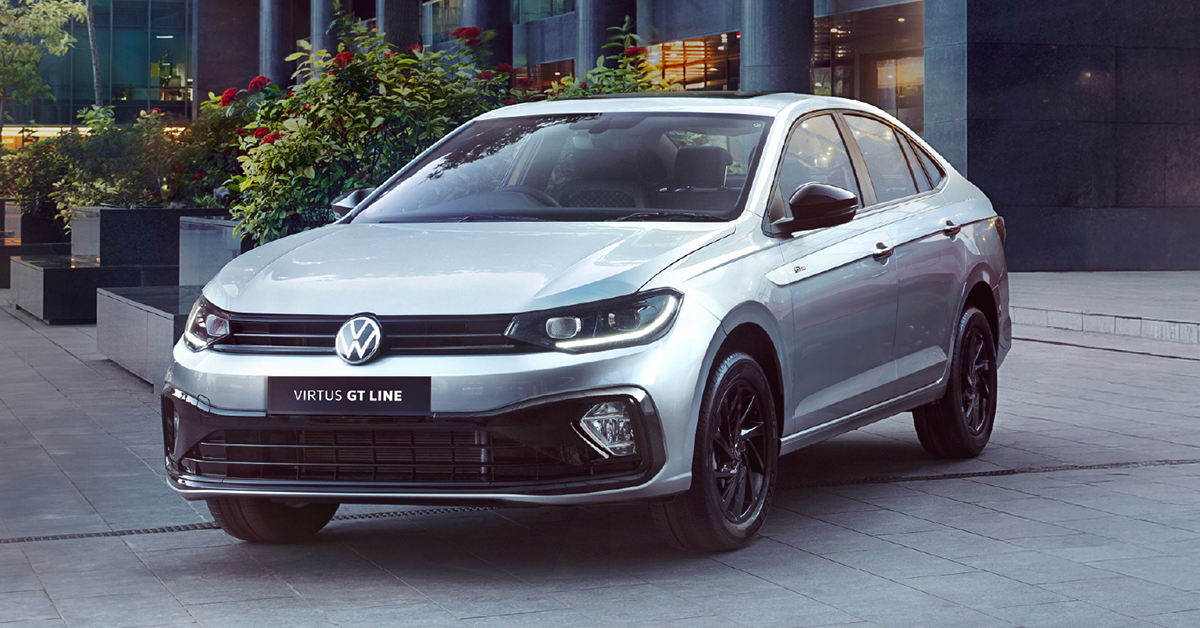
Volkswagen India also added the Virtus GT Line, which uses the 1.0 TSI with a six-speed automatic or manual and carries a sporty look, from 14.07 lakh rupees with the manual. It has blackened LED headlamps and grille, 16-inch black alloy wheels, GT Line badging, a black spoiler, red ambient lighting and aluminium pedals. The features include an electric sunroof, a 20.32 cm digital cockpit, a 25.65 cm touchscreen with wireless Android Auto and Apple CarPlay, push-button start, an auto-dimming interior mirror and rain-sensing wipers. Six airbags are standard, and the car holds the five-star Global NCAP rating.
To mark four years of the Virtus in India, Volkswagen announced an Anniversary Edition on 5 August 2026. It is a limited-volume car based on the GT Plus Sport, offered only in that variant, in a new Avocado Pearl colour with a contrasting black roof and black alloy wheels, and it carries the 1.5 TSI EVO with 150 PS and 250 Nm. The price is listed as 19,19,900 rupees ex-showroom. The edition keeps the six airbags and the five-star Global NCAP rating, and Volkswagen is offering genuine accessories for the Virtus and Taigun, including a 360-degree camera and front parking sensors.
The sporty cars also differ in how they are sold. In India the GT is part of the main range and is offered with a manual or a DSG, while in Brazil the GTS was a separate model that has now gone and the 250 TSI is the performance engine in the Exclusive trim. Volkswagen India’s October 2024 announcement described the new line structure as offering more for less, and it positioned the Sport offer for buyers who want a dark, sporty look. The Anniversary Edition then added a limited-volume top car in August 2026.
Official press image of the Volkswagen Virtus. | © Volkswagen AG
The Virtus has been crash tested twice. In the Latin NCAP programme the Brazilian car earned five stars in a test published in 2018, under the older protocol and with four airbags, with an adult occupant score of 32.56 out of 34 and a child occupant score of 43 out of 49. The restyled car, tested in 2022 under Latin NCAP’s newer protocol and with six airbags, again earned five stars. A reference source lists its adult occupant score as 36.94 points (92 percent), child 45.00 points (92 percent), pedestrian 25.48 points (53 percent) and safety assist 36.54 points (85 percent).
| Latin NCAP (2018) | Five stars, adult 32.56 of 34, child 43 of 49, four airbags |
| Latin NCAP (2022) | Five stars, restyled car, six airbags |
| Global NCAP (5 April 2023) | Five stars adult and child, India, updated protocol from July 2022 |
| Airbags (India) | Up to six |
| Safety features (India) | More than 40, including ESC and multi-collision brakes |
| Awards (India) | More than 12 Indian awards in 2022 and 2023 (manufacturer claim) |
| Driver assistance (2017) | First in South America with AI-based assistance developed with IBM |
The Indian car was tested by Global NCAP and the result was announced on 5 April 2023. Volkswagen India reported five stars for both adult and child occupant protection and called it the best-ever result in the programme’s history, which is a manufacturer claim. The test used Global NCAP’s updated protocol, introduced in July 2022, which includes frontal offset, side mobile barrier and pole side impact tests. For a five-star rating all tested variants must have electronic stability control and pedestrian protection equipment that meets United Nations requirements. A reference source lists point scores that differ slightly from Volkswagen’s own text, so this guide uses only the star rating for the Global NCAP test.
Volkswagen lists more than 40 active and passive safety features for the Indian car. These include up to six airbags, electronic stability control, multi-collision brakes, hill-hold control, park distance control, a rear-view camera, a rear fog lamp, a tyre pressure deflation warning, ISOFIX child seat anchorage, three rear headrests and brake disc wiping. LED headlamps and LED daytime running lights are standard. Six airbags are standard on the GT Line and GT Plus Sport in the October 2024 line-up, and the Anniversary Edition also has six as standard. Volkswagen India says the Virtus has won more than 12 Indian automotive awards in 2022 and 2023.
The Virtus also carries the technology that Volkswagen introduced with the car in Brazil. At the 2017 world premiere, Volkswagen said it was the first Volkswagen and the first car in South America with AI-based driver assistance, a web-based function developed with IBM. In India the connectivity package is called My Volkswagen Connect, and the infotainment has wireless Apple CarPlay and Android Auto. These features show that the car was designed to bring modern equipment to a segment where buyers were used to simpler cars.
When comparing the ratings, remember that Latin NCAP and Global NCAP use different protocols and different test years, so the numbers are not directly comparable. A five-star rating under an older protocol is not the same as a five-star rating under a newer protocol, and both ratings apply to the cars as tested, with the airbags and equipment named in the test. If you are buying a used Virtus, check the market, the model year and the airbag count, because the cars sold in different countries do not all have the same safety equipment.
One more point is worth making about the Latin NCAP results. The first test in 2018 was done on a car with four airbags, and the 2022 test on the restyled car with six airbags, so the later car was tested with more standard equipment. Global NCAP also notes that for a five-star rating all tested variants must have electronic stability control, which is a useful reminder that the rating covers the car as equipped and not every possible version. Buyers should check the airbag count on the specific car they are considering.
Official press image of the Volkswagen Virtus. | © Volkswagen AG
The Virtus is sold in several markets under different arrangements. In Mexico it launched in August 2019 with the 1.6 MSI engine of about 110 PS, after Brazil began exporting it there. For the 2023 model year, announced in September 2022, the Mexican car was updated and imported from India instead, and the Vento was discontinued. A 1.0 TSI engine was added from 2023. A reference source lists Mexican sales of 4,898 in 2019, 6,769 in 2020, 8,552 in 2021, 7,255 in 2022, 18,808 in 2023, 30,945 in 2024 and 25,040 in 2025, though these figures may be incomplete.
| Mexico launch | August 2019, 1.6 MSI about 110 PS |
| Mexico 2023 model year | Updated, imported from India, Vento discontinued |
| South Africa | Sold as the Polo Sedan from September 2022 |
| China | Sold as the Lavida XR from June 2023, built at Yizheng |
| Sister model | Škoda Slavia, same MQB A0 IN platform |
| Argentina | Released February 2018 |
| Export markets (2019) | Argentina, Chile, Colombia, Ecuador, Peru, Paraguay, Uruguay, Curaçao, Costa Rica |
In South Africa the car is sold as the Polo Sedan, from September 2022, and in China it is sold as the Lavida XR, from June 2023, built at Yizheng in Jiangsu with a 1.5 MPI engine and a six-speed automatic. These names make the car easy to confuse with other Volkswagens. The Lavida is also the name of a larger compact sedan built by SAIC-Volkswagen, which was China’s best-selling car in 2019 according to Volkswagen’s own market overview. The Virtus therefore appears under three different names in the markets where it is sold as a Polo-based sedan.
The Virtus has a close relative in Škoda. The Škoda Slavia is a sister model built on the same MQB A0 IN platform and sold in India, Vietnam and the Middle East, and Volkswagen India launched it alongside the Virtus. The Slavia and the Virtus have been tested together by Global NCAP, which is one reason their ratings are often reported side by side. A reference source says Volkswagen planned to export the Indian-built car to 25 countries.
The history of the Virtus is part of Volkswagen’s regional strategy. Volkswagen’s November 2017 release described the car as part of the Transform 2025+ strategy, which transferred responsibilities to the regions, namely South America, North America, China and sub-Saharan Africa. The goal was to make Volkswagen the most attractive volume brand in key regions. The Virtus, the Taigun and the Polo Sedan are examples of cars developed in and for emerging markets, using shared global platforms but adapted to local prices and conditions.
Because of these differences, anyone researching a Virtus should always name the market. A Brazilian Virtus with a flex-fuel 1.0 TSI is a different car from an Indian Virtus with a 1.5 TSI EVO, and both differ from a Chinese Lavida XR with a 1.5 MPI. The platform and the body are shared, but the engines, the equipment, the safety fitment and the prices all vary. The Volkswagen models guide covers the global range, and the Polo and Jetta guides cover the two other small sedans and hatchbacks that sit closest to the Virtus.
A few more points on the sister models are useful. The Taigun is the compact SUV that Volkswagen India launched before the Virtus, and it shares the MQB A0 IN platform. The Global NCAP release described the Taigun as Volkswagen’s first India 2.0 project vehicle to earn five stars, with the Virtus following. These links show how Volkswagen has used one platform for several body styles and several brands in the emerging markets.
The Mexican story is a good example of how the supply chain has changed. The car launched there in 2019 as a Brazilian import with the 1.6 MSI, and from the 2023 model year it came from India, with the Vento dropped and a 1.0 TSI added. The reference sales figures show Mexican sales of 18,808 in 2023 and 30,945 in 2024, and the 1.0 TSI arrived in the same period. The 2025 figure of 25,040 is lower, though it may be incomplete.
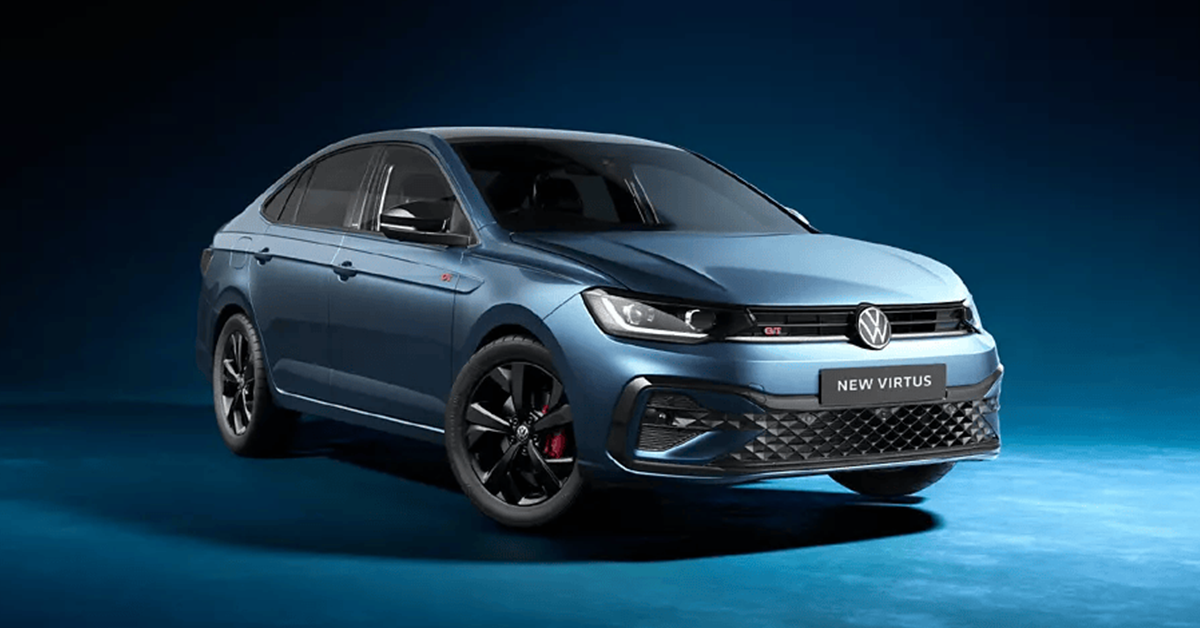
Official press image of the Volkswagen Virtus (facelift). | © Volkswagen AG
The current Virtus in India follows the line structure that Volkswagen introduced in October 2024. There are two offers, Chrome and Sport. The Chrome offer covers the 1.0 TSI in the Comfortline, Highline, Highline Plus and Topline trims with a manual or an automatic, and the 1.5 TSI in the GT Plus with a DSG or a manual. The Sport offer covers the 1.0 TSI in the GT Line and the 1.5 TSI in the GT Plus. Volkswagen described the Chrome offer as more sophisticated and elegant and the Sport offer as a dark theme for buyers who want a sporty look.
| Offers (India, October 2024) | Chrome and Sport |
| Highline Plus (1.0 TSI manual) | From 13.87 lakh rupees |
| GT Line (1.0 TSI manual) | From 14.07 lakh rupees |
| GT Plus Sport (1.5 TSI manual) | From 17.84 lakh rupees |
| Facelift images | 6 November 2026, Volkswagen India |
| Facelift launch | December 2026, 11 December reported |
| Facelift engines | 1.0 and 1.5 TSI expected, not confirmed |
| Brazil built | 300,000 by November 2025 |
Prices in that October 2024 line-up started from 13.87 lakh rupees ex-showroom for the Highline Plus with the 1.0 TSI manual, 14.07 lakh for the GT Line and 17.84 lakh for the GT Plus Sport. The Highline Plus has a 20.32 cm digital cockpit, an auto-dimming interior mirror, KESSY, an electric sunroof, auto headlights, a rain sensor and auto coming-home and leaving-home lights. The Topline trims gained a digital sound package with an amplifier and subwoofer as standard. Prices change with every update and with taxes, so check the current Volkswagen India price list before buying.
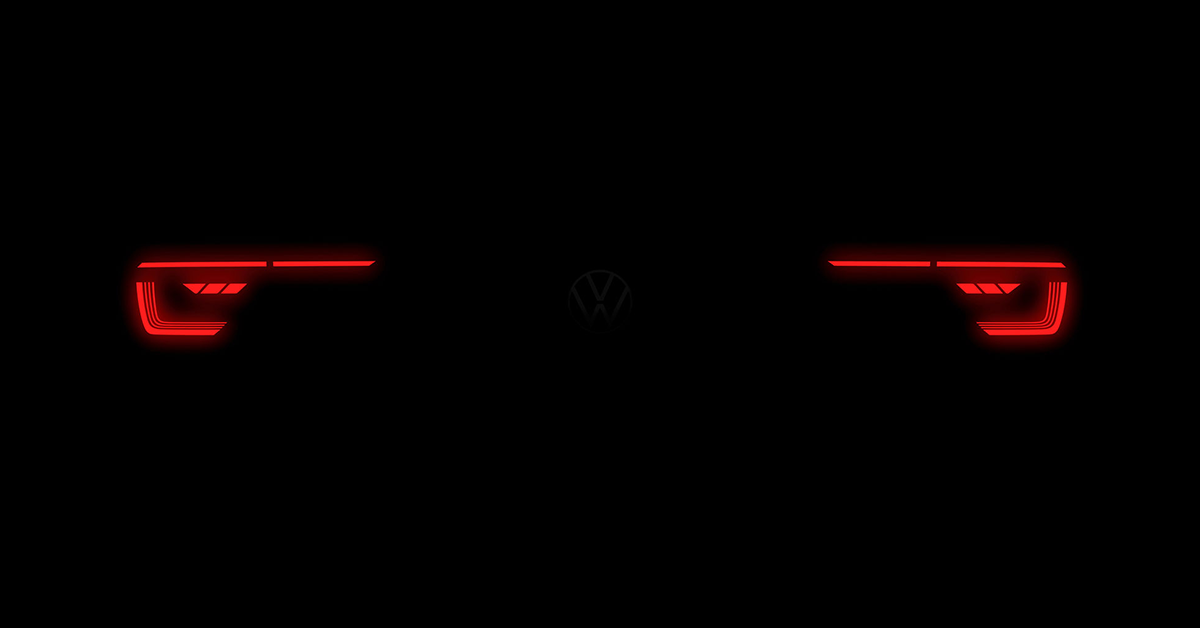
A facelift is now on the way for India. On 6 November 2026 Volkswagen India released the first official images of the facelifted Virtus, ahead of a launch in December 2026, and trade reports give 11 December as the date. The confirmed exterior changes include a revised front bumper with a new mesh pattern and smaller fog lamp housings, new black alloy wheels, red front brake calipers and GT badges on the grille and front doors on the GT, a new blue colour, a dual-tone finish with a black roof and a boot-mounted lip spoiler. The GT in the images has a 360-degree camera.
Several things are not yet confirmed. Volkswagen had not shown the interior, the infotainment or the updated feature list when the first images were released, and price details are expected closer to the launch. The engines are expected to stay the existing 1.0-litre TSI and 1.5-litre TSI. The 1.0 TSI may get an eight-speed automatic similar to the updated Škoda Slavia, and the 1.5 TSI is expected to keep the seven-speed DSG, but these are expectations and not confirmed facts. This guide will need a check once Volkswagen publishes the full specification.
For buyers the choice is simple. In India the 1.0 TSI is the sensible choice for most drivers, with the choice of a manual or an automatic, while the 1.5 TSI GT Plus is for those who want the 150 PS and the DSG. In Brazil the choice is between the 170 TSI, the 200 TSI and the 250 TSI in the Comfortline, Highline and Exclusive trims. In both markets the Virtus has become a major seller, with 300,000 built in Brazil and a segment lead claimed in India. The Polo guide covers the hatchback it is based on, and the Volkswagen models guide covers the rest of the range.
Readers outside India and Brazil should treat the facelift as a market-specific update. Volkswagen India has shown the new car, but it has not said when or whether the same changes will reach Brazil, Mexico or other markets. The Brazilian car was restyled in 2023, so it is on a different timeline. When the full facelift specification is published, this guide will need an update to the engine, gearbox and equipment lists, and until then the confirmed changes are limited to the exterior items and the 360-degree camera on the GT.