 Brands
Hyundai Tucson — 2027 Redesign, Hybrid, XRT Pro and Prices
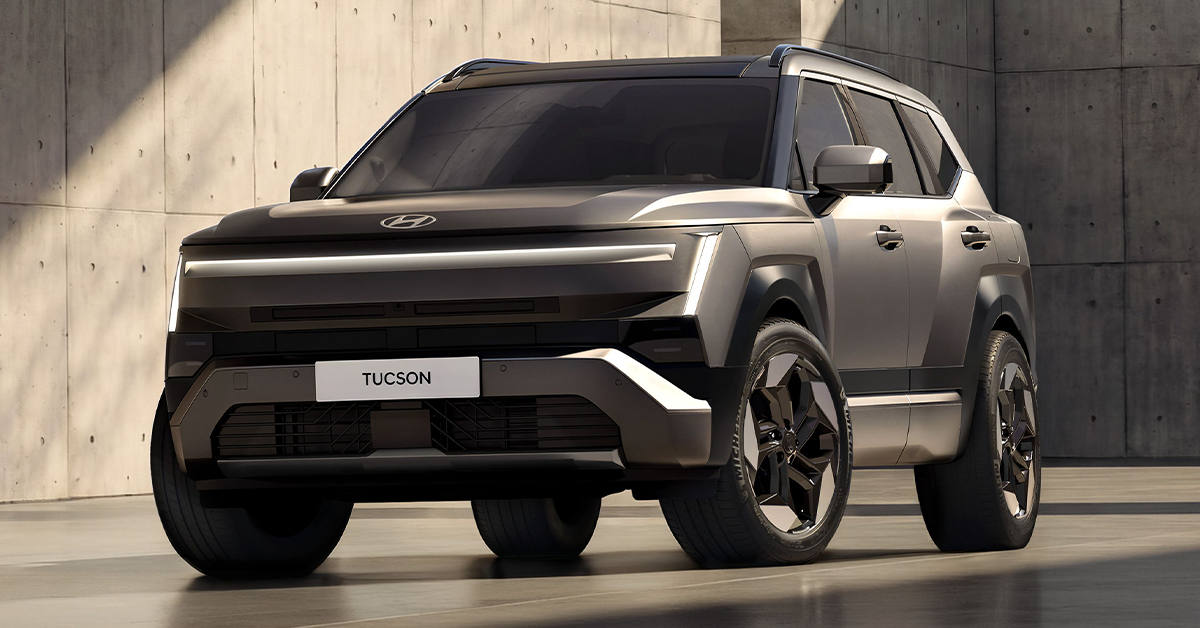
Official image of the Hyundai Tucson. | © Hyundai Motor Company
Hyundai Tucson. The 2004 compact SUV, the all-new fifth generation of 2026, its 233 hp hybrid, 2026 U.S. prices, sales since 2004 and crash ratings.
The Tucson is Hyundai’s compact SUV and, in Hyundai’s words, its best-selling SUV worldwide (Hyundai). Hyundai’s worldwide history page lists the launch of its first compact SUV, the Tucson, in 2004 (Hyundai). The fifth generation had its world premiere in New York on October 1, 2026, and Hyundai calls it its boldest SUV (Hyundai). The nameplate has now lasted 22 years, since 2026 minus 2004 is 22 (Hyundai, our calculation).
| First generation launch | 2004 (Hyundai) |
| Second generation | 2009, ix35 in many markets (Hyundai) |
| Third generation | 2015, first N Line (Hyundai) |
| Fourth generation | 2020 (Hyundai) |
| Fifth generation premiere | October 1, 2026, New York (Hyundai) |
| Cumulative global sales, per Hyundai | More than 11.1 million (Hyundai) |
| Share of global sales from U.S. | About 20 percent (Hyundai) |
| 2025 U.S. sales | 234,230 (reported) |
| 2026 U.S. gas SE price | 29,450 dollars (Hyundai) |
| 2027 cargo space | 41.7 cubic feet (Hyundai) |
We read Hyundai’s own pages first. They were the Hyundai worldwide newsroom release on the all-new Tucson, the Hyundai worldwide vehicle-history and awards pages, the Hyundai Newsroom Europe story on the Tucson’s 20-year history and the Hyundai USA model page. Reports supply prices for the current U.S. cars, sales tables and independent ratings, and carry the reported tag. Prices and availability may have changed since publication, and exchange rates are not applied.
Hyundai’s release lists three powertrains for the new car, gasoline, hybrid and plug-in hybrid, with launch in Korea later in 2026 and in North America, Europe and other markets in 2027 (Hyundai). It gives the long-wheelbase body as 4,700 mm long, 1,905 mm wide and 1,685 mm high on a 2,785 mm wheelbase (Hyundai). Cargo space is 41.7 cubic feet, which Hyundai gives in its domestic SAE measure as 1,067 liters (Hyundai).
The outgoing car is still on sale. Hyundai’s U.S. page lists 2026 prices from 29,450 dollars for the SE to 39,425 dollars for the Limited, before destination (Hyundai). Reports say the 2026 hybrid starts lower, with a front-wheel-drive SE at 32,550 dollars including destination, and that the plug-in hybrid costs more (reported). The top-to-bottom spread for gas trims is 9,975 dollars, since 39,425 minus 29,450 is 9,975 (Hyundai, our calculation). A Korean report says one in four Hyundai cars sold in the United States is a Tucson, which agrees with the 26.0 percent figure above (reported, our calculation). Hyundai’s 2025 global retail sales were 4,108,605 units, up 2 percent, and it plans more than 100 new and refreshed vehicles by 2030, including 58 in North America (Hyundai). The new car’s 41.7 cubic feet of cargo space is 3.9 above the 37.8 reported for the Toyota RAV4, since 41.7 minus 37.8 is 3.9 (Hyundai, reported, our calculation). The XRT PRO stands 210 mm off the ground, which is 30 mm above the standard 180 mm (Hyundai).
Sales explain why the car matters. Hyundai says cumulative global sales passed 11.1 million units since 2004, including China-only models, and that the United States accounts for about 20 percent (Hyundai). A sales table shows 234,230 U.S. Tucsons in 2025, which is about 26.0 percent of Hyundai’s 901,686 U.S. total, since 234,230 divided by 901,686 is 0.260 (reported, our calculation). Our Hyundai Models article lists the whole range.
This guide covers the first four generations, the 2026 U.S. line-up, the fifth-generation redesign, powertrains, technology, sales and crash ratings, and the items we could not confirm. Our Hyundai history article covers the company, our Hyundai Elantra article the sedan that supplied the first Tucson’s platform, and our Hyundai Sonata article the other big U.S. nameplate.
Hyundai Newsroom Europe says the first-generation Tucson debuted in 2004 as a compact SUV inspired by the city of Tucson, Arizona, with a rugged, off-road-inspired look, a wealth of safety features and a user-friendly dashboard (Hyundai). It calls the car a refreshing departure from the boxy SUVs of the past (Hyundai). Hyundai’s worldwide history page lists the 2004 launch as the company’s first compact SUV, with the Tucson also named ix35 in the page’s wording (Hyundai). Hyundai Newsroom Europe says the first Tucson quickly earned a reputation for style, comfort and reliability, and that the model marked its 20th anniversary in 2024, which is 20 years after 2004 (Hyundai, our calculation). The same 2004 entry lists the Delta engine passing 1 million units, and the 2005 entry lists a U.S. proving ground (Hyundai).
| First generation | 2004 (Hyundai) |
| Name origin | City of Tucson, Arizona (Hyundai) |
| Reported platform | Elantra-based (reported) |
| Reported name announced | November 2003 (reported) |
| Second generation | 2009 (Hyundai) |
| Second generation name abroad | ix35 (Hyundai) |
| Design language | Fluidic Sculpture (Hyundai) |
| Second generation awards | Canadian crossover and Japan Good Design (Hyundai) |
| Gap, first to second generation | 5 years (Hyundai, our calculation) |
| First generation Euro NCAP adult | 4 stars (reported) |
Reports add detail. One says the name was announced in November 2003 and the car launched in 2004, positioned as a smaller alternative to the Santa Fe and sharing an Elantra-based platform with the second-generation Kia Sportage (reported). Another puts the launch in March 2004 (reported). A third says the first model was released in 2005, with GL, GLS and GLX trims, so the start date differs between sources (reported). Hyundai gives only 2004 (Hyundai).
The second generation arrived in 2009, according to Hyundai Newsroom Europe, with sharper, bolder styling and improved performance, fuel efficiency and safety, and it was renamed ix35 in many markets outside South Korea and North America (Hyundai). Hyundai’s worldwide Tucson history page says the second generation redefined the Fluidic Sculpture design language, and that it won the Best Crossover Vehicle award from the Automobile Journalist Association of Canada and Japan’s Good Design Award in its release year (Hyundai).
That history page contains a dating oddity. It heads the entry 2004 and says the second-generation Tucson was revealed in 2004, while Hyundai Newsroom Europe dates the second generation to 2009 (Hyundai). The two Hyundai pages therefore conflict, and we use the European story for the generation dates because it also gives the first generation as 2004 (Hyundai). The gap between generations was 5 years, since 2009 minus 2004 is 5 (Hyundai, our calculation).
A hydrogen version also appeared. A report says the Tucson ix Fuel Cell entered mass production in 2013, making Hyundai the first automaker to mass-produce a hydrogen-powered electric vehicle (reported). That claim comes from a reported article and Hyundai’s pages we read do not repeat it (Hyundai). A reference listing also says the car was called the Hyundai JM in Japan from 2004 to 2009 and the ix35 from 2009 to 2015 (reported).
Early crash results are reported. The first-generation Tucson in its standard European configuration received four stars for adult occupants, three stars for toddlers and one star for pedestrians from Euro NCAP, according to a reference listing (reported). Hyundai’s pages we read give no first-generation ratings (Hyundai). From the 2009 second generation to the 2015 third generation is 6 years, since 2015 minus 2009 is 6 (Hyundai, our calculation).
Hyundai Newsroom Europe says the third generation of 2015 had larger dimensions, optional 19-inch alloy wheels and expanded infotainment and driver assistance, and that it was the first Tucson offered with a sporty N Line version (Hyundai). Hyundai’s awards page lists a Top Safety Pick from the Insurance Institute for Highway Safety and a five-star overall rating from the U.S. government in earlier years (Hyundai). The page does not tie each award to a generation (Hyundai).
| Third generation | 2015, first N Line (Hyundai) |
| Fourth generation unveiled | September 2020 (Hyundai) |
| Fourth generation design theme | Sensuous Sportiness (Hyundai) |
| Fourth generation Euro NCAP | 5 stars, 2021 (Hyundai) |
| Czech build, 2023 | 244,495 (Hyundai) |
| Registered in Europe, 2023 | 158,056 (Hyundai) |
| Fourth generation production by January 2024 | More than 727,344 (Hyundai) |
| Two-millionth Czech Tucson | June 17, 2024 (Hyundai) |
| Europe hybrid output | 215 PS (Hyundai) |
| Europe plug-in hybrid output | 252 PS (Hyundai) |
The fourth generation arrived in 2020. Hyundai’s worldwide history page says it was unveiled in September 2020 and follows the Sensuous Sportiness philosophy (Hyundai). Hyundai Newsroom Europe says it has a progressive design with sharp lines and dynamic angles and was offered with petrol and diesel engines, with or without mild hybrid, plus hybrid and plug-in hybrid powertrains, and that Euro NCAP gave it five stars in 2021 (Hyundai). From 2015 to 2020 is 5 years (Hyundai, our calculation).
Hyundai Newsroom Europe publishes European fuel and CO2 figures. The 1.6 T-GDI hybrid of 215 PS uses 6.0 to 5.6 liters per 100 km with front-wheel drive, while the 1.6 T-GDI plug-in hybrid of 252 PS uses 1.2 to 1.0 liters on the two-wheel-drive version, with CO2 of 26 to 22 grams per kilometer (Hyundai). The plug-in has 37 PS more than the hybrid, since 252 minus 215 is 37 (Hyundai, our calculation). Hyundai notes ranges reflect trims. Hyundai says plug-in hybrids have a second-generation Green Zone Driving Mode that uses geofencing to switch to pure-electric operation in low-emission zones, and that hybrids have a Paddle Regenerative Braking Mode with three deceleration levels (Hyundai).
The same Hyundai story gives production data. In 2023 Hyundai Motor Manufacturing Czech built 244,495 Tucsons, exported to 70 countries, and 158,056 units were registered in Europe (Hyundai). The difference is 86,439 cars, or 35.4 percent of the Czech output, which went elsewhere or was registered outside Europe, since 244,495 minus 158,056 is 86,439 (Hyundai, our calculation). Fourth-generation production exceeded 727,344 units by January 2024 (Hyundai).
Hyundai says its Czech plant celebrated the two-millionth Tucson on June 17, 2024, built at Nosovice, and that the Tucson has sold more than two million units in Europe since 2004 (Hyundai). A 20th Anniversary Edition was due in autumn 2024, and a two-wheel-drive plug-in hybrid was due later in 2024 (Hyundai). Fourth-generation output averages roughly 181,836 cars a year over the 4 years from 2020 to January 2024, since 727,344 divided by 4 is 181,836, which is only a rough figure (Hyundai, our calculation).
The U.S. cars changed in 2026. A report says the 2026 hybrid gets a new Blue SE entry trim, the former Blue trim is renamed SEL, and the sporty hybrid N Line is discontinued (reported). Late in the model year Hyundai added front-wheel-drive hybrid SE and SEL trims and a Night trim built on the Limited, according to a report (reported). Hyundai’s U.S. page lists gas trims only as SE, SEL, SEL Plus, XRT, SEL Premium and Limited, so we treat hybrid names as reported (Hyundai, reported).
Hyundai’s U.S. page lists 2026 base prices of 29,450 dollars for the SE, 30,800 dollars for the SEL, 31,300 dollars for the SEL Plus, 33,475 dollars for the XRT, 33,800 dollars for the SEL Premium and 39,425 dollars for the Limited (Hyundai). The XRT costs 4,025 dollars more than the SE, which is 13.7 percent, since 33,475 minus 29,450 is 4,025 (Hyundai, our calculation). Another listing gives the SE at 29,200 dollars, which is 250 dollars lower, so an earlier price may have applied (reported, our calculation).
| 2026 SE gas price | 29,450 dollars (Hyundai) |
| 2026 SEL gas price | 30,800 dollars (Hyundai) |
| 2026 SEL Plus gas price | 31,300 dollars (Hyundai) |
| 2026 XRT gas price | 33,475 dollars (Hyundai) |
| 2026 SEL Premium gas price | 33,800 dollars (Hyundai) |
| 2026 Limited gas price | 39,425 dollars (Hyundai) |
| Destination charge | 1,600 dollars (reported) |
| 2026 hybrid SE front-wheel drive | 32,550 dollars (reported) |
| 2026 hybrid Limited | 43,675 dollars (reported) |
| 2026 gas mpg, combined | 28 front-wheel drive, 26 all-wheel drive (reported) |
A report lists 31,050 dollars as the starting price including destination, which equals 29,450 plus a 1,600 dollar charge (reported, our calculation). All-wheel-drive prices are listed as 30,950 dollars for the SE, 32,300 for the SEL and 40,925 for the Limited (reported). All-wheel drive therefore adds 1,500 dollars on the SE and on the Limited, since 30,950 minus 29,450 and 40,925 minus 39,425 are each 1,500 (reported, our calculation). The base gas car makes 187 horsepower (reported).
Hybrid prices are reported. A report lists the front-wheel-drive SE at 32,550 dollars, the SEL at 34,000, the Blue SE at 34,050, the SEL at 35,500, the SEL Convenience at 36,500, the Limited at 43,675 and the Night at 44,175, all including destination (reported). The Limited costs 9,625 dollars more than the Blue SE, since 43,675 minus 34,050 is 9,625 (reported, our calculation). Another list shows the Blue SE at 33,695 dollars and the Limited at 43,320, so the figures conflict (reported). The late hybrid Night trim costs 500 dollars more than the Limited, since 44,175 minus 43,675 is 500, and the front-wheel-drive SE is 1,500 below the all-wheel-drive Blue SE, since 34,050 minus 32,550 is 1,500 (reported, our calculation).
The plug-in hybrid costs more. One report lists a plug-in SEL at 41,675 dollars and a Limited at 49,900 dollars, and says it has 32 miles of electric range (reported). Another gives 268 horsepower and prices of 40,075 and 48,300 dollars (reported). The plug-in Limited costs 8,225 dollars more than the plug-in SEL, since 49,900 minus 41,675 is 8,225 (reported, our calculation).
Fuel economy is reported by the U.S. government. A report says the 2026 gas Tucson is rated 28 mpg combined with front-wheel drive and 26 with all-wheel drive, and that the 2026 hybrid reaches up to 38 mpg combined (reported). That is 10 mpg more than the 28 mpg gas car, since 38 minus 28 is 10 (reported, our calculation). A buying guide lists 36 mpg for the standard hybrid and 35 mpg on gas for the plug-in (reported).
Warranty and equipment are reported. A listing gives a five-year or 60,000-mile basic warranty (reported). It also lists a 2.5-liter four-cylinder of 187 horsepower and 178 lb-ft, an eight-speed automatic and front- or all-wheel drive for the SE, with Bose audio available on the Limited (reported). Dual 12.3-inch screens are available (reported). A buying guide gives the Blue hybrid up to 521 miles of range and the standard hybrid about 493, which is 28 miles less, since 521 minus 493 is 28 (reported, our calculation). Prices and availability may have changed since publication, and exchange rates are not applied.
Hyundai’s release says the all-new Tucson made its world premiere against the Manhattan skyline on October 1, 2026 and embodies a boldest SUV vision through its Art of Steel design, enhanced hybrid performance and the Pleos Connect infotainment system (Hyundai). Reports say the car was first shown to the Korean press at a media day in Paju, with the first official images released a month earlier (reported). The model code NX5 is reported, and Hyundai’s release does not state it (reported).
| Premiere | October 1, 2026, New York (Hyundai) |
| Design language | Art of Steel (Hyundai) |
| Length | 4,700 mm, +60 mm (Hyundai) |
| Width | 1,905 mm, +40 mm (Hyundai) |
| Height | 1,685 mm, +20 mm (Hyundai) |
| Wheelbase | 2,785 mm, +30 mm (Hyundai) |
| Ground clearance | 180 mm, 210 mm XRT PRO (Hyundai) |
| Rear door opening | 83 degrees (Hyundai) |
| Cargo space | 41.7 cubic feet (Hyundai) |
| Seats | 5 (Hyundai) |
Hyundai gives the long-wheelbase dimensions as 4,700 mm in length, 1,905 mm in width, 1,685 mm in height, with 1,700 mm including roof rails, and a 2,785 mm wheelbase (Hyundai). It says that is 60 mm longer, 40 mm wider, 20 mm taller and 30 mm longer in wheelbase than before, so the outgoing car was 4,640, 1,865, 1,665 and 2,755 mm, since each figure minus its increase gives those values (Hyundai, our calculation). Width has the largest growth in the segment, Hyundai says (Hyundai).
Ground clearance is 180 mm in standard form and 210 mm on the XRT PRO, which is 30 mm more, according to Hyundai (Hyundai). The front and rear overhangs are 915 mm and 1,000 mm, and the wheels are 17, 18, 19 or 20 inches, with tires up to 235/50R20 (Hyundai). The rear door opening angle is 83 degrees, 10 degrees wider than before, Hyundai says (Hyundai). A report puts the old angle at 73 degrees, which agrees with that figure (reported, our calculation). The rear overhang is 85 mm longer than the front, since 1,000 minus 915 is 85 (Hyundai, our calculation). Wheels run from 17 to 20 inches, a 3-inch span (Hyundai, our calculation).
Inside, Hyundai lists seating for five and 41.7 cubic feet of cargo space, or 1,067 liters in the domestic SAE measure (Hyundai). First-row headroom is 1,036 mm, or 990 mm with a sunroof, and second-row headroom is 1,031 mm, or 1,003 mm with a sunroof, according to Hyundai (Hyundai). Legroom is 1,052 mm in front and 1,064 mm in the rear, so the rear seat has 12 mm more, since 1,064 minus 1,052 is 12 (Hyundai, our calculation).
Reports compare the cargo figure with rivals. One says the 41.7 cubic feet beats the Toyota RAV4 at 37.8 and the upcoming Nissan Rogue Hybrid at 31.1 (reported). The RAV4 gap is 3.9 cubic feet, or 10.3 percent, since 41.7 minus 37.8 is 3.9 and 3.9 divided by 37.8 is 0.103 (reported, our calculation). Hyundai also lists dual 15 watt wireless charging pads as standard and 100 watt USB-C ports on the seat backs, with 6:4 split-folding rear seats in North America and Korea (Hyundai).
Hyundai says the cabin uses a 17-inch or 12.9-inch main screen and a 9.9-inch slim display, with physical controls retained, and reports say climate buttons sit below the screen (Hyundai, reported). The fifth generation premiered 6 years after the fourth was unveiled, since 2026 minus 2020 is 6 (Hyundai, our calculation). Reports describe the redesign as the first in about six years, though one says approximately five (reported).
Hyundai’s release gives the new gasoline Tucson as 184 horsepower in the United States, and 150 to 193 PS in Korea, with 19.6 to 27.0 kgf-m of torque, the hybrid as 233 horsepower in the United States and 236 to 245 PS in Korea, and the plug-in hybrid as 292 PS (Hyundai). The U.S. hybrid is 49 horsepower above the gas engine, since 233 minus 184 is 49, which is 26.6 percent (Hyundai, our calculation). Hybrid torque is 38.7 kgf-m, or 279.9 lb-ft (Hyundai).
| U.S. gas power | 184 hp (Hyundai) |
| Korea gas power | 150 to 193 PS (Hyundai) |
| U.S. hybrid power | 233 hp (Hyundai) |
| Korea hybrid power | 236 to 245 PS (Hyundai) |
| Plug-in hybrid power | 292 PS (Hyundai) |
| Hybrid torque | 38.7 kgf-m, 279.9 lb-ft (Hyundai) |
| Hybrid 0 to 60 mph | 8.5 seconds (Hyundai) |
| Hybrid mpg target | Up to 42 mpg (Hyundai) |
| Plug-in electric range | 81 km, 50 miles (Hyundai) |
| XRT PRO ground clearance | 210 mm (Hyundai) |
The hybrid uses a 13 kW P1 motor and a 47.7 kW P2 drive motor with a 1.49 kWh battery and a six-speed automatic, and Hyundai lists 0 to 60 mph in 8.5 seconds (Hyundai). The plug-in hybrid uses a 79 kW drive motor, a 17.1 kWh battery, a 7.2 kW onboard charger and a 7.9 second 0 to 60 mph time with four-wheel drive, with 81 km or 50 miles of electric range (Hyundai). The gas engines take 9.5 to 12.4 seconds (Hyundai). The plug-in is 0.6 seconds quicker than the hybrid, since 8.5 minus 7.9 is 0.6 (Hyundai, our calculation).
Fuel economy is where Hyundai leads. It says the hybrid targets up to 42 mpg, which is the two-wheel-drive car on 17-inch wheels, with 40 mpg for two-wheel drive on other wheels, 40 mpg for four-wheel drive on 17-inch wheels and 38 mpg for four-wheel drive otherwise (Hyundai). The gas car is 28 mpg with two-wheel drive and 26 with four-wheel drive (Hyundai). In Korea the hybrid is 17.4 km per liter against 12.2 for the gas car, which is 5.2 km per liter more, or 42.6 percent (Hyundai, our calculation). The 2026 hybrid reached up to 38 mpg, so 42 is 4 mpg higher (reported, our calculation).
Technology centers on Pleos Connect, an Android Automotive OS system with over-the-air updates, and Gleo AI, an in-vehicle assistant, according to Hyundai (Hyundai). Hyundai also lists Smart Terrain Assist, which shows a green, orange or red stuck score and is available on the XRT PRO in North America only, and Target Speed Control from 2 to 25 km per hour (Hyundai). It lists Memory Reversing Assist up to 30 km per hour and Ground View Monitor (Hyundai). Several features are short-wheelbase only, and some are not offered in North America (Hyundai).
The XRT and XRT PRO are the off-road trims. Hyundai says the XRT has wide front cladding and extended black wheel-arch cladding, and the XRT PRO adds all-wheel drive, all-terrain tires, aggressive approach and departure angles, front recovery hooks and 210 mm of ground clearance in select markets (Hyundai). A report says the XRT PRO rides more than an inch taller and is hybrid only in the United States, and that towing is up to 3,000 pounds (reported). Hyundai lists 3,000 pounds for the U.S. hybrid with all-wheel drive, which is about 1,361 kg (Hyundai, our calculation).
Availability needs care. Hyundai says Korea gets the car later in 2026 and North America and Europe in 2027 (Hyundai). A report says the United States gets the gasoline car first and then the hybrid, and that a company spokesperson confirmed the plug-in hybrid is not coming to the United States, while another report lists the plug-in among the U.S. powertrains (reported). Hyundai’s release says the plug-in is available in select markets (Hyundai). U.S. pricing for the 2027 car was not announced in the sources we read (reported).
Hyundai’s release says the Tucson is its best-selling SUV worldwide with cumulative global sales above 11.1 million units since 2004, including China-only models, and that the U.S. share is about 20 percent (Hyundai). A Korean report says cumulative sales were 10,616,102 units through August 2026, excluding China-only models, which is 483,898 below 11.1 million, or 4.4 percent, since 11,100,000 minus 10,616,102 is 483,898 (reported, our calculation). A Chinese report gives 10.77 million at the end of 2025 (reported).
| Cumulative global sales, per Hyundai | More than 11.1 million (Hyundai) |
| Cumulative, Korean report, to August 2026 | 10,616,102 (reported) |
| Cumulative, Chinese report, end of 2025 | 10.77 million (reported) |
| 2025 U.S. sales | 234,230 (reported) |
| 2024 U.S. sales | 206,126 (reported) |
| 2025 U.S. change | Up 13.6 percent (reported, our calculation) |
| 2025 Canada sales | 41,840 (reported) |
| U.S. hybrid share, 2025 | 31 percent (Hyundai) |
| 2026 Institute award | Top Safety Pick Plus (reported) |
| Fifth generation ratings | Targets only (Hyundai) |
The two reported totals conflict, since 10.77 million at the end of 2025 is 153,898 above 10,616,102 through August 2026 (reported, our calculation). The difference is consistent with China-only models being counted in one figure and not the other, though no report says so. Hyundai says hybrids made up 31 percent of U.S. Tucson sales in 2025, which is about 72,611 cars on the reported 234,230 total, since 0.31 times 234,230 is 72,611 (Hyundai, reported, our calculation).
A U.S. sales table shows Tucson sales of 234,230 in 2025 against 206,126 in 2024, an increase of 28,104, or 13.6 percent (reported, our calculation). December 2025 was 22,193 against 20,172, up 2,021 or 10.0 percent, and the fourth quarter was 68,991 against 60,179, up 8,812 or 14.6 percent (reported, our calculation). The 2025 average is about 19,519 a month, since 234,230 divided by 12 is 19,519 (reported, our calculation). Hyundai’s U.S. totals count 2025 as a record year for the Tucson (reported).
Other markets are reported. Hyundai Canada’s Tucson sold 41,840 units in 2025, up 40 percent, making it the brand’s top seller there (reported). That implies about 29,886 units the year before, since 41,840 divided by 1.4 is 29,886 (reported, our calculation). A Beijing Hyundai report says the Tucson sold 780,000 units worldwide in 2025, ranking seventh on the global single-model chart (reported). Hyundai’s own Europe story says the Tucson has sold more than two million units in Europe (Hyundai). A Beijing Hyundai figure of 780,000 would be 19.0 percent of Hyundai’s 4,108,605 global retail sales in 2025, since 780,000 divided by 4,108,605 is 0.190 (Hyundai, reported, our calculation).
Crash ratings are a mix of Hyundai and independent data. Hyundai’s awards page lists a Top Safety Pick Plus from the Insurance Institute for Highway Safety and a five-star overall rating from the U.S. government among past awards (Hyundai). A Hyundai release of March 24, 2026 says the 2026 Tucson earned a Top Safety Pick Plus, and that it is among Hyundai models rated five stars overall by the government (reported). The Institute lists the 2025 and 2026 Tucson as Top Safety Pick Plus winners (reported).
There are caveats. A report says the 2026 Tucson scored Poor in the Institute’s latest whiplash prevention test, even though it still meets the Top Safety Pick Plus requirements (reported). Hyundai’s release on the all-new car lists the NHTSA five-star, Institute Top Safety Pick Plus and Euro NCAP five-star ratings as targets, not confirmed results (Hyundai). The fourth generation received five Euro NCAP stars in 2021 (Hyundai). We found no rating yet for the fifth generation. Hyundai’s fourth-generation Euro NCAP result is from 2021, which is 5 years before the fifth generation’s premiere, since 2026 minus 2021 is 5 (Hyundai, our calculation).
Several figures conflict across sources. The first Tucson’s launch is 2004 in Hyundai’s pages, March 2004 in one report and 2005 in another, and the second generation is dated 2004 on one Hyundai page and 2009 on another (Hyundai, reported). Cumulative sales are 11.1 million in Hyundai’s release, 10,616,102 in a Korean report and 10.77 million in a Chinese one (Hyundai, reported). The 2026 SE gas price is 29,450 dollars on Hyundai’s U.S. page and 29,200 in a listing (Hyundai, reported).
| First launch, per Hyundai | 2004 (Hyundai) |
| First launch, other reports | March 2004 or 2005 (reported) |
| Second generation date, Hyundai pages | 2004 or 2009 (Hyundai) |
| Cumulative sales | 11.1M, 10.62M or 10.77M (Hyundai, reported) |
| 2026 SE price | 29,450 or 29,200 dollars (Hyundai, reported) |
| U.S. hybrid power | 233 hp (Hyundai) |
| Gas power, 2026 and 2027 | 187 hp or 184 hp (Hyundai, reported) |
| Plug-in in the U.S. | Disputed (Hyundai, reported) |
| 2027 U.S. pricing | Not announced (reported) |
| Fifth generation ratings | Targets only (Hyundai) |
Hybrid power also differs. Hyundai’s release gives 233 horsepower for the U.S. hybrid and 236 to 245 PS for Korea, while a report says output varies from 233 to 242 horsepower by market and another says 245 PS (Hyundai, reported). The U.S. gas engine is 184 horsepower in Hyundai’s release, while the 2026 gas engine is listed at 187 (Hyundai, reported). We do not convert PS to horsepower (Hyundai). Hyundai’s release says availability of nearly every feature varies by market, model and trim, and that several features apply to the short-wheelbase body only, so a Tucson in one market can differ from one in another (Hyundai).
Plug-in availability conflicts. A company spokesperson reportedly said the plug-in hybrid is not coming to the United States, while a report lists it among U.S. powertrains and Hyundai’s release calls it available in select markets (Hyundai, reported). Canada is also reported as not getting the plug-in (reported). We could not confirm which markets receive it, and the answer may change when Hyundai publishes U.S. specifications.
Several items are not confirmed. We found no 2027 U.S. prices, no final U.S. trim list and no on-sale date beyond 2027. We found no confirmed fifth-generation crash rating, since Hyundai lists targets only. We did not verify India, Middle East, Southeast Asian or Australian prices, although a report says Australia gets a hybrid-only range in mid-2027 and Hyundai Newsroom Europe says the new Tucson N Line was presented at the Paris Motor Show on October 12, 2026 (reported, Hyundai).
We also did not confirm production sites for each market. Hyundai’s release names Ulsan only for two paint colors, and Hyundai Newsroom Europe names Nosovice in the Czech Republic for European cars (Hyundai). A report says Canada will likely see the new car as a 2028 model, which is later than the 2027 U.S. model year (reported). Hyundai says it plans more than 100 new and refreshed vehicles by 2030, including 58 in North America (Hyundai). The 2025 U.S. total is 984,017 in Hyundai’s global release, which counts Hyundai plus Genesis, against 901,686 for the Hyundai brand alone in the U.S. sales table, a gap of 82,331, since 984,017 minus 901,686 is 82,331 (Hyundai, reported, our calculation).
To check this guide, begin with Hyundai’s worldwide newsroom release on the all-new Tucson and Hyundai Newsroom Europe’s 20-year story, then compare model years before comparing numbers. Our Hyundai Models article shows where the Tucson sits in the range. We will refresh prices when Hyundai announces them. Prices and availability may have changed since publication, and exchange rates are not applied.
