 Brands
Hyundai Kona Electric — Range, Prices, Specs and Awards
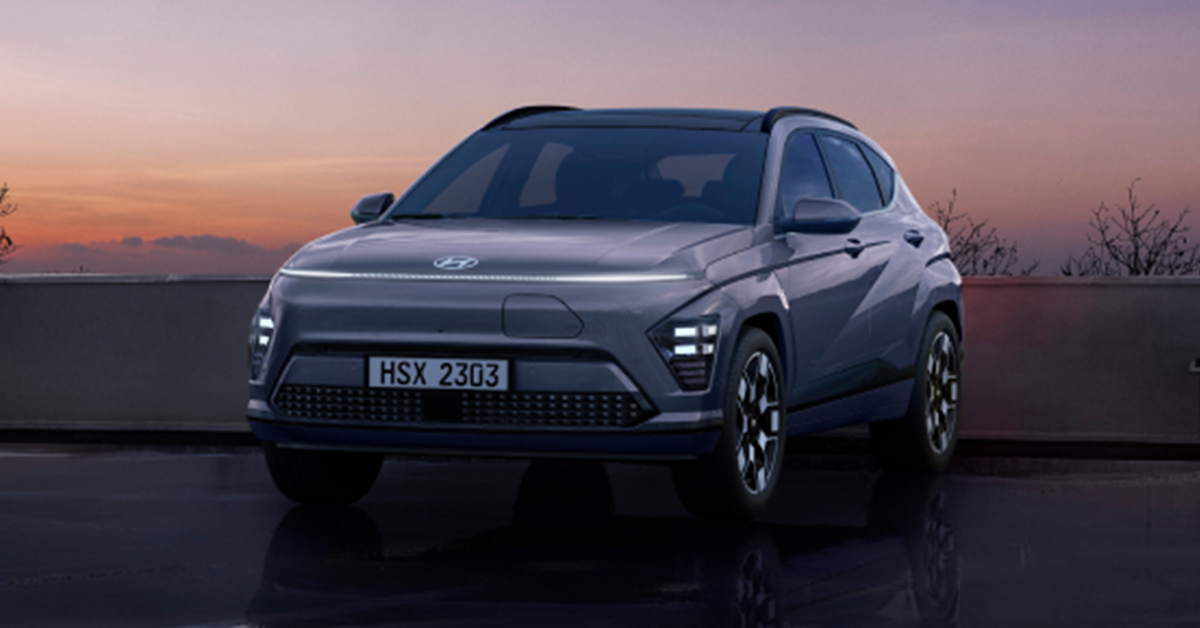
Official image of the Hyundai Kona Electric. | © Hyundai Motor Company
The Hyundai Kona Electric is the battery-electric version of Hyundai’s small SUV, first shown at the Geneva Motor Show in March 2018 and redesigned in 2023. Hyundai’s own pages give its batteries, power, range and charging, plus prices in the U.S., U.K., Europe and Korea. This guide reads those pages first, shows where they differ, and covers safety and awards.
The Hyundai Kona Electric is the battery-electric version of Hyundai’s small SUV, and it has been sold in two generations. Hyundai’s release datelined Geneva on March 6, 2018 celebrates the world premiere of the first Kona Electric at the Geneva International Motor Show (Hyundai). A second-generation Kona Electric followed in 2023, and Hyundai’s U.S. media center dates its North American debut to the New York International Auto Show on April 5, 2023 (Hyundai).
| Body | Electric small SUV (Hyundai) |
| First premiere | Geneva, March 6, 2018 (Hyundai) |
| Second-generation debut | New York, April 5, 2023 (Hyundai) |
| First-gen batteries | 39.2 and 64 kWh (Hyundai) |
| Second-gen batteries, Europe | 48.4 and 65.4 kWh (Hyundai) |
| Second-gen range, Europe | 377 and 514 km WLTP (Hyundai) |
| U.S. EPA range, SEL | 261 miles (Hyundai) |
| U.S. price, 2025 page | 32,975 dollars (Hyundai) |
| U.K. price, Advance | 35,000 pounds (Hyundai) |
| European plant | Hyundai Motor Manufacturing Czech (Hyundai) |
This guide uses Hyundai’s own pages: the worldwide, European, U.K., U.S., Australian, Indian, Indonesian and Korean sites, the press sites on hyundai.news and hyundainews.com, and Hyundai’s price sheets and technical data documents. Where two Hyundai pages differ we show both values. Prices and availability may have changed since publication, and we do not convert currencies. The standard Kona has its own article, so this one covers the electric model only. Hyundai U.K. says the second-generation Kona Electric completes a line-up of electric, hybrid and combustion versions, each with a sporty N Line option (Hyundai).
The first generation came with two batteries, 39.2 kWh and 64 kWh, and Hyundai’s Korean page gives the larger one 204 PS (150 kW), 395 Nm and a certified range of 406 km (Hyundai). The second generation uses 48.4 and 65.4 kWh batteries in Europe, with 156 PS and 218 PS and 255 Nm of torque on both, and Hyundai Europe gives 377 km and 514 km of WLTP range (Hyundai). Hyundai U.K. converts the larger battery’s range to up to 319 miles, which is about 513 km by our conversion (Hyundai, our calculation). Hyundai’s U.S. pages list 48.6 and 64.8 kWh batteries and an EPA-estimated 261 miles for the SEL (Hyundai).
Prices differ by market. Hyundai’s U.S. page lists the 2025 Kona Electric from 32,975 dollars, Hyundai U.K. lists the Advance from 35,000 pounds, and Hyundai Korea lists a starting price of 41,520,000 won in its price table dated November 1, 2026 (Hyundai). Hyundai’s Dutch price list of July 1, 2026 starts at 36,995 euros for the 48.6 kWh Comfort (Hyundai). The U.K. press site says the car is eligible for the full 3,750 pound Electric Car Grant (Hyundai). The 35,000 pound, 32,975 dollar and 36,995 euro figures are in three currencies, so they are not directly comparable.
Production is split by region. Hyundai says the European cars are built at Hyundai Motor Manufacturing Czech, with series production of the second generation beginning on August 11, 2023 (Hyundai). Hyundai’s 2018 U.S. introduction said the first U.S.-market cars would be produced in Ulsan, Korea (Hyundai). Hyundai’s Indian site called the first generation India’s first all-electric SUV, with an ARAI-certified range of 452 km (Hyundai).
Later sections cover the 2018 launch, the first-generation specifications, the 2023 redesign, the batteries and charging, the technology features, prices in each market, and safety and awards with the points where Hyundai’s pages conflict. Our Hyundai Models article lists the range, our Hyundai history article covers the company, and our Hyundai Kona and Tucson articles cover the other small and compact SUVs.
Hyundai Europe released the first teaser image of its first fully electric SUV ahead of an official unveiling on February 27, 2018 (Hyundai). The release said Hyundai would be the first automotive brand across Europe to make an all-electric compact SUV available to everyone, coming to the market in summer 2018 (Hyundai). It also said the car combined the two fastest growing trends, the SUV and electrification, and offered two powertrain versions (Hyundai). Hyundai also called the car one that extends its eco line-up with class-leading range (Hyundai).
| Teaser release | Unveiling set for February 27, 2018 (Hyundai) |
| World premiere | Geneva, March 6, 2018 (Hyundai) |
| Korea first showing | EV Trend Korea 2018 (Hyundai) |
| U.S. media introduction | October 12, 2018 (Hyundai) |
| First U.S. production site | Ulsan, Korea (Hyundai) |
| Czech production start | March 2020 (Hyundai) |
| Global sales by 2020 | Over 120,000 (Hyundai) |
| European sales by 2020 | Over 53,000 (Hyundai) |
| 2021 U.K. headline price | 30,125 pounds (Hyundai) |
| 2021 U.K. other column | 33,125 pounds (Hyundai) |
Hyundai’s release datelined Geneva on March 6, 2018 says Hyundai celebrated the world premieres of the fourth-generation Santa Fe, the All-New Kona Electric and the concept car Le Fil Rouge at the Geneva International Motor Show (Hyundai). Hyundai’s European press site describes the Kona Electric as the first fully electric subcompact SUV on the European market (Hyundai). The same show carried the European debut of the second-generation fuel cell NEXO (Hyundai).
Hyundai Korea’s page says the Kona Electric was first shown in Asia at EV Trend Korea in 2018 and that Hyundai finally certified a range of 406 km on a full charge, and that it launched with a Light package model for drivers whose patterns suit a smaller battery (Hyundai). Hyundai Korea lists the larger 64 kWh version at 48,900,000 won after tax benefits for the Premium trim in its 2020 model-year specification page (Hyundai).
Hyundai’s U.S. release of October 12, 2018, datelined Hollywood, California, says Hyundai introduced the Kona Electric to U.S. media at a driving introduction in Southern California (Hyundai). The release says the car rides on an all-new crossover platform and is Hyundai’s first compact electric crossover for the U.S. market, with 2019 models produced in Ulsan, Korea (Hyundai). The release also says the battery was covered by Hyundai’s Lifetime Battery warranty (Hyundai).
Hyundai’s 2020 European update release says demand had exceeded all expectations since the 2018 launch, with over 120,000 units sold globally in two years, including more than 53,000 in Europe (Hyundai). Hyundai U.K. also said in April 2020 that the car was named best small family car in a magazine’s inaugural electric awards, after a 1,000 mile road trip across nine European countries in under 24 hours (Hyundai). It says Hyundai started producing the Kona Electric at its Czech plant in March of that year to reduce waiting times (Hyundai). Hyundai Europe’s marketing vice president is quoted calling the 2018 car the world’s first fully electric subcompact SUV (Hyundai). The 2018 European wording was first in Europe, and the 2020 quote says world’s first, so Hyundai’s own wording differs by release (Hyundai).
Hyundai U.K.’s 2021 pricing release introduced a facelifted car with exterior design upgrades, new SE Connect and Ultimate trims and a revised Premium specification (Hyundai). It gave 300 miles from the 64 kWh battery and 189 miles from the 39.2 kWh battery, with prices from 30,125 pounds for the SE Connect 39 kWh (Hyundai). The attached price table also lists 33,125 pounds for that car in another column, and we did not confirm what the 3,000 pound difference represents (Hyundai).
Hyundai’s Korean specification page lists two first-generation versions. The standard battery is 64 kWh with 204 PS (150 kW), and the low-capacity battery is 39.2 kWh with 136 PS (100 kW) (Hyundai). The page gives the larger car a maximum torque of 395 Nm and a curb weight of 1,685 kg, and the smaller car a curb weight of 1,540 kg, which is 145 kg lighter by our subtraction (Hyundai, our calculation). The wheelbase is 2,600 mm (Hyundai).
| Large battery | 64 kWh (Hyundai) |
| Small battery | 39.2 kWh (Hyundai) |
| Large motor | 204 PS, 150 kW (Hyundai) |
| Small motor | 136 PS, 100 kW (Hyundai) |
| Torque, large battery | 395 Nm (Hyundai) |
| Korea range, large | 406 km (Hyundai) |
| Korea range, small | 254 km (Hyundai) |
| WLTP range, 2020, large | 484 km (Hyundai) |
| WLTP range, 2020, small | 305 km (Hyundai) |
| India range, ARAI | 452 km (Hyundai) |
Hyundai Korea certified 406 km of combined range for the 64 kWh car and 254 km for the 39.2 kWh car, with an efficiency of 5.6 km per kWh and 5.8 km per kWh (Hyundai). Hyundai’s Australian specification sheet gives 100 kW and 150 kW motors, 395 Nm on both, battery capacities of 39.2 and 64.0 kWh, voltages of 327 V and 356 V and an on-board AC charger of 7.2 kW (Hyundai). The same sheet gives about 6 hours and 9 hours 15 minutes for a standard 240 V charge from 10 to 100 percent (Hyundai).
Hyundai Australia’s 2018 launch release said the two versions offered an outstanding range of up to 470 km, and that the 39.2 kWh version drove up to 300 km with a 99 kW motor (Hyundai). The release also described a closed grille, a dedicated centre console with shift-by-wire gear control, and a wide range of Hyundai SmartSense safety features (Hyundai). Hyundai Australia later said the updated car kept the 64 kWh battery, a maximum power of 150 kW and a maximum speed of 167 km/h (Hyundai).
The European figures use the WLTP cycle. Hyundai’s 2020 update release says that after tyre improvements the 64 kWh version offered a class-leading range of 484 km, while the 39.2 kWh version offered up to 305 km (Hyundai). Hyundai’s Central and South America page, for the original car, gave up to 312 km of WLTP range for the 39.2 kWh version with a top speed of 155 km/h (Hyundai). The 305 km and 312 km figures differ, and we show both. Hyundai does not explain the difference on the pages we read.
Hyundai U.K. said in 2021 that the 39.2 kWh car made 136 PS and 189 miles, and the 64 kWh car made 204 PS and 300 miles (Hyundai). The 300 miles is about 483 km by our conversion, which is close to the 484 km in the 2020 release, and 189 miles is about 304 km, close to the 305 km figure (Hyundai, our calculation). We did not confirm that Hyundai used the same test basis for both releases.
Hyundai Motor India said the first-generation Kona Electric covers 452 km per full charge as certified by ARAI, and 0 to 100 km/h in 9.7 seconds according to Hyundai internal testing (Hyundai). Hyundai’s Indian page listed a starting price of 23.84 lakh rupees (Hyundai). Hyundai India said the car was the first fully Made-in-India electric SUV driven to 5,731 meters at Sawula Pass in Tibet, beating a previous record of 5,715.28 meters (Hyundai).
Hyundai’s U.S. release datelined New York, April 5, 2023 says the all-new 2024 Kona Electric, Limited and N Line models were revealed in the Kona’s North American debut at the New York International Auto Show (Hyundai). The release says the Kona Electric with the 64.8 kWh battery was estimated to deliver 260 miles based on preliminary internal Hyundai tests, and that it offered Vehicle-to-Load capability, an i-PEDAL driving mode, a smart regenerative system and active grille shutters (Hyundai). The same release gave the 2024 car one of the most comprehensive packages in the small SUV segment, including the widest range of powertrains (Hyundai).
| North American debut | New York, April 5, 2023 (Hyundai) |
| U.S. media drive | Baltimore, September 12, 2023 (Hyundai) |
| Length, U.K. | 4,350 mm (Hyundai) |
| Length, Korea | 4,355 mm (Hyundai) |
| Wheelbase | 2,660 mm (Hyundai) |
| Width | 1,825 mm (Hyundai) |
| Height | 1,575 mm (Hyundai) |
| Platform | K3 (Hyundai) |
| Czech series production | August 11, 2023 (Hyundai) |
| Planned first-year output | 21,000 units (Hyundai) |
Hyundai unveiled the 2024 Kona to U.S. media in Baltimore on September 12, 2023, and said the Kona Electric would be available in late fall (Hyundai). The U.S. overview describes the car as an upscaled multiplayer in the small SUV segment, led by an all-electric variant (Hyundai). Hyundai’s U.S. page describes the redesigned 2024 Kona Electric as a small electric SUV with elevated style, advanced features and an EPA-estimated range of 261 miles (Hyundai).
Hyundai’s European press information says the second-generation model was designed as an EV first, and that its design departs from traditional typology and was made for dynamic urban lifestyles (Hyundai). Hyundai Europe’s model page says that in an unconventional move Hyundai developed the electric version of the Kona first (Hyundai). The EU press kit says the car sits between the Bayon and the Tucson and is bigger than the previous generation, thanks to its K3 platform (Hyundai).
Hyundai U.K. gives the new Kona Electric’s exterior proportions as a length of 4,350 mm (145 mm more than before), a wheelbase of 2,660 mm (60 mm more), a width of 1,825 mm (25 mm more) and a height of 1,575 mm (20 mm more) (Hyundai). Those changes imply earlier figures of 4,205 mm, 2,600 mm, 1,800 mm and 1,555 mm, by our subtraction, and the 2,600 mm wheelbase matches the first-generation Korean page (Hyundai, our calculation).
Hyundai Korea’s catalog gives a length of 4,355 mm, which is 5 mm longer than the U.K. figure, with 4,385 mm for the N Line, a width of 1,825 mm, a height of 1,575 mm (1,580 mm for the N Line) and a wheelbase of 2,660 mm (Hyundai). The EV-specific details Hyundai lists include extra storage under the front hood, active air flaps and V2L sockets (Hyundai). We show both length figures and do not choose one.
Hyundai Europe says series production of the second-generation Kona Electric began on August 11, 2023 at Hyundai Motor Manufacturing Czech, and that the plant planned to produce 21,000 units in the first year (Hyundai). The Czech plant builds a right-hand-drive version for the U.K., Ireland and Cyprus, with new destinations including Turkey, Israel, Reunion and Guadeloupe (Hyundai). Hyundai Europe lists the combustion engines as 120 PS and 198 PS, with 48 V and all-wheel-drive versions, plus a 141 PS hybrid and the two electric batteries (Hyundai). Hyundai’s 2025 press kit repeats that the European EV is made in Europe, for Europe (Hyundai).
Hyundai Europe’s technical data gives the standard-range car a 48.4 kWh battery and a 156 PS (114.6 kW) motor, and the long-range car a 65.4 kWh battery and a 218 PS (160 kW) motor (Hyundai). Torque is 255 Nm on both, 0 to 100 km/h takes 8.8 and 7.8 seconds, and top speeds are 162 and 172 km/h (Hyundai). The long-range car is therefore 1.0 second quicker to 100 km/h, by our subtraction (Hyundai, our calculation).
| Europe, small battery | 48.4 kWh, 156 PS (Hyundai) |
| Europe, large battery | 65.4 kWh, 218 PS (Hyundai) |
| Torque, Europe | 255 Nm on both (Hyundai) |
| 0 to 100 km/h, Europe | 8.8 and 7.8 seconds (Hyundai) |
| WLTP range, Europe | 377 and 514 km (Hyundai) |
| U.S. batteries | 48.6 and 64.8 kWh (Hyundai) |
| U.S. power | 133 hp and 201 hp (Hyundai) |
| U.S. EPA range | 200, 230, 261 miles by trim (Hyundai) |
| U.S. 10 to 80 percent | As little as 43 minutes (Hyundai) |
| Charge, 15 minutes, Europe | Up to 162 km (Hyundai) |
The same document gives WLTP ranges of 377 km and 514 km and consumption of 14.6 kWh per 100 km for the smaller battery, with 16.6 to 14.7 kWh per 100 km for the larger one (Hyundai). The larger battery adds 17 kWh, or about 35 percent, by our calculation, and Hyundai’s range rises from 377 km to 514 km, which is about 36 percent (Hyundai, our calculation). Hyundai’s European page now says up to 517 km on one version of its page and 514 km on another (Hyundai).
For U.S. cars, Hyundai lists a 48.6 kWh battery with a 99 kW (133 hp) motor and a 64.8 kWh battery with a 150 kW (201 hp) motor (Hyundai). The U.S. specification sheet gives torque of 188 lb-ft, which is about 255 Nm by our conversion, a governed top speed of 101 mph and 107 mph, and a battery voltage of 269 V and 358 V (Hyundai, our calculation). Hyundai lists a battery heating system as standard (Hyundai).
Hyundai’s U.S. specification sheet gives 197 miles and 260 miles for the 2024 car, which were preliminary Hyundai estimates (Hyundai). The current U.S. page gives EPA estimates of 261 miles for the SEL, 230 miles for the N Line and 200 miles for the SE (Hyundai). The page says 10 to 80 percent takes as little as 43 minutes on a 400 V DC fast charger (Hyundai). Hyundai’s 2023 estimate of 260 miles and the EPA figure of 261 miles differ by one mile.
Hyundai’s European press kit says the long-range version with 17-inch wheels can add up to 162 km in 15 minutes, the 19-inch version up to 139 km and the standard-range version up to 114 km on the WLTP combined cycle (Hyundai). That is about 10.8 km of range per minute for the best case, by our division (Hyundai, our calculation). Hyundai says the 48.4 kWh car charges in 4 hours with 11 kW AC (Hyundai). Hyundai U.K. says the car can add 100 miles in 15 minutes at a 102 kW DC point (Hyundai).
Battery names differ by market. Hyundai Europe uses 48.4 and 65.4 kWh, its July 2025 press kit also lists 65.4 and 64.8 kWh and 218 PS and 204 PS, and its French brochure gives 48.6 and 64.8 kWh with 380 km and 510 km (Hyundai). Hyundai Indonesia lists capacities from 48.9 to 66 kWh and a WLTP range of over 600 km, and its 10 to 80 percent time is 47 minutes on a 100 kW charger (Hyundai). We treat the differences as regional specifications and do not merge them.
Hyundai’s European press kit lists bespoke EV features such as Vehicle-to-Load, an i-PEDAL driving mode, e-Active Sound Design and a Projection Head-up Display, together with one of the best all-electric ranges in the segment (Hyundai). Hyundai Europe’s model page says the Kona Electric is the first Hyundai with the new Connected Car Navigation Cockpit and over-the-air software updates, and that the Hyundai Digital Key launched with the Kona in Europe (Hyundai).
| Vehicle-to-Load | Yes (Hyundai) |
| i-PEDAL | Yes (Hyundai) |
| Active sound | e-Active Sound Design (Hyundai) |
| Head-up display | Projection type (Hyundai) |
| Navigation cockpit | Connected Car Navigation Cockpit (Hyundai) |
| Software updates | Over the air (Hyundai) |
| Digital key | Launched with Kona in Europe (Hyundai) |
| Battery conditioning | Preconditioning (Hyundai) |
| U.K. trims | Advance, N Line, N Line S, Ultimate (Hyundai) |
| Korea heat pump | Listed on price sheet (Hyundai) |
Hyundai’s worldwide technology page for the 2023 car describes battery preconditioning that warms the pack to a suitable temperature so it can be charged quickly and safely (Hyundai). The page gives a 43 minute 10 to 80 percent charge at a 100 kW DC charger and notes that the all-electric range figure was not yet finalized when written (Hyundai). The page lists a 7.9 second 0 to 100 km/h time and a 172 km/h top speed for the 65.4 kWh car (Hyundai). The European data sheet gives 7.8 seconds for the same battery, so Hyundai’s own pages differ by 0.1 seconds (Hyundai, our calculation).
Hyundai Korea’s 2026 price sheet lists battery conditioning, a heat pump system, an electronic shift column and an outdoor V2L connector among the equipment items on the electric trims (Hyundai). The Korean sheet also lists a rear multi-link suspension and a regenerative braking system for the 48.6 kWh and 64.8 kWh cars (Hyundai). We list only the items that Hyundai names on its own sheet and do not describe how the systems behave on the road.
In the U.K. Hyundai lists four trims. The Advance has 17-inch alloy wheels, a cloth interior, dual-zone climate control and LED headlamps, and the N Line has 19-inch wheels, heated front seats, an N Line exterior design pack and privacy glass (Hyundai). The N Line S adds a suede-style and leather interior, full projection LED headlights and a head-up display, and the Ultimate has an eco suede and leather interior and an electric opening sunroof (Hyundai). Hyundai U.K.’s 2023 technical document gives the gross train weight as 2,410 kg for the 48.4 kWh car and 2,970 kg for the 65.4 kWh car, with 215/60 R17 tyres on the Advance (Hyundai). The same document gives battery power of 128 kW and 182 kW and battery voltage of 295 V and 398.5 V (Hyundai).
Hyundai U.K.’s 2023 pricing release applied to the same four trims, and its 2026 grant release says a 0 percent APR finance offer was maintained alongside the grant (Hyundai). The trims page we read lists the long-range battery on every trim, while the 2023 release listed a 48 kWh Advance (Hyundai).
Hyundai U.K. also launched an in-car streaming feature for music with the all-new Kona, and ran a Rest Drives campaign on the electric model for families seeking calmer nap-time journeys (Hyundai). These are marketing and feature items rather than specifications, and we found no Hyundai page listing the complete SmartSense safety equipment for the second-generation electric car. We therefore do not list individual driver-assistance functions here.
Hyundai’s January 3, 2024 U.S. price sheet lists the 2024 Kona Electric SE at 32,675 dollars, the SEL at 36,675 dollars and the Limited at 41,045 dollars (Hyundai). A sheet effective February 13, 2025 lists the 2025 SE at 32,975 dollars, the SEL at 36,975 dollars, the N Line at 38,375 dollars and the Limited at 41,150 dollars (Hyundai). The 2025 gap between SE and Limited is 8,175 dollars, by our subtraction (Hyundai, our calculation).
| U.S. 2024 SE | 32,675 dollars (Hyundai) |
| U.S. 2024 Limited | 41,045 dollars (Hyundai) |
| U.S. 2025 SE | 32,975 dollars (Hyundai) |
| U.S. 2025 N Line | 38,375 dollars (Hyundai) |
| U.S. 2025 Limited | 41,150 dollars (Hyundai) |
| U.K. Advance | 35,000 pounds (Hyundai) |
| U.K. N Line S | 39,400 pounds (Hyundai) |
| Netherlands 48.6 kWh Comfort | 36,995 euros (Hyundai) |
| Korea starting price | 41,520,000 won (Hyundai) |
| U.S. 2026 model year | None announced (Hyundai) |
Hyundai’s sheet effective December 20, 2024 lists lower 2025 prices, with the SE at 32,875 dollars and the Limited at 41,050 dollars, and a sheet labeled July 12, 2025 repeats those lower figures (Hyundai). We therefore show the February 13, 2025 sheet and the 32,975 dollar figure on Hyundai’s U.S. page as the latest we saw, and we note the conflict. U.S. prices exclude freight, tax, title and license fees (Hyundai).
Hyundai’s U.S. 2026 model-year summary says there will not be a 2026 model year Kona Electric, because there is adequate stock of the 2025 model year to manage demand (Hyundai). The U.S. 2025 page still lists the car, and a separate offers page lists electric Kona deals for 2026 and 2027 model years without an unambiguous price we could use (Hyundai). We therefore give no 2026 or 2027 U.S. price for the electric model.
Hyundai U.K. announced the second-generation range in July 2023 with prices starting from 34,995 pounds for the Advance 48 kWh (Hyundai). Its current trims page lists the Advance from 35,000 pounds, the N Line from 37,000 pounds and the N Line S and Ultimate from 39,400 pounds (Hyundai). The N Line S costs 4,400 pounds more than the Advance, by our subtraction (Hyundai, our calculation). Hyundai U.K. says the car is eligible for the full 3,750 pound Electric Car Grant, announced on July 28, 2026 (Hyundai).
Hyundai’s Dutch price list for model year 2027, dated July 1, 2026, lists the 48.6 kWh Comfort at 36,995 euros, the 64.8 kWh Comfort Smart at 41,895 euros and the 64.8 kWh N Line at 45,995 euros, each including a 995 euro delivery charge (Hyundai). The list gives ranges of 380 km, 510 km and 440 km (Hyundai). The N Line costs 4,100 euros more than the Comfort Smart, by our subtraction (Hyundai, our calculation).
Hyundai Korea’s price table dated November 1, 2026 lists the Kona Electric from 41,520,000 won, including N Line trims (Hyundai). Its price sheet lists the e-Value Plus at 43,680,000 won before tax benefits and 41,520,000 won after them, the Premium at 48,990,000 and 46,570,000 won, and the N Line at 53,510,000 and 50,860,000 won, with a current-model release date of June 17, 2026 (Hyundai). Hyundai Indonesia listed the Kona Electric from 516,000,000 rupiah in March 2025 (Hyundai). Its Indonesian list also gave 579,000,000 rupiah for the Prime Long Range, 610,200,000 for the Signature Long Range and 629,400,000 for the N Line (Hyundai). Hyundai U.K.’s model year 27 technical guide lists 319 miles (513 km) at 14.7 kWh per 100 km for one version and 282 miles (453 km) at 16.6 kWh per 100 km for others (Hyundai).
Hyundai Australia said in October 2019 that the Kona Electric became the first battery electric vehicle crash tested in Australia, achieving ANCAP’s maximum five stars, with a frontal offset audit score of 14.97 out of 16.00 (Hyundai). Hyundai Spain said Green NCAP gave the Kona Electric five stars, its highest score, and called it Hyundai’s second electric car to do so after the IONIQ Electric in 2019 (Hyundai).
| ANCAP result, 2019 | Five stars (Hyundai) |
| ANCAP frontal audit score | 14.97 out of 16.00 (Hyundai) |
| Green NCAP | Five stars (Hyundai) |
| First-gen Kona Euro NCAP, 2017 | Five stars, combustion model (Hyundai) |
| IIHS 2026 Kona award | Excludes Kona Electric (Hyundai) |
| Battery, sources | 65.4 or 64.8 kWh (Hyundai) |
| Range, Europe, sources | 514 or 517 km (Hyundai) |
| Length, sources | 4,350 or 4,355 mm (Hyundai) |
| U.S. price, 2026 or 2027 | Not found |
| Second-gen Euro NCAP | Not found |
Hyundai Europe announced a five-star Euro NCAP rating for the first Kona in December 2017, which tested the combustion model and not the electric car (Hyundai). We found no separate Euro NCAP result for the second-generation Kona Electric, so we do not extend that one to it. Hyundai’s U.S. 2026 safety release names the 2026 Kona among its Top Safety Pick+ awards, and Hyundai’s awards page adds that the award does not include the Kona Electric (Hyundai). The IIHS list for 2025 names the 2025-26 Kona without that exclusion, and we do not apply either result to the electric car (Hyundai).
Hyundai’s worldwide awards page for the Kona electric lists recognition for 2023 and 2024 from outlets and bodies in the U.S., the U.K. and Japan, including a Japan electric vehicle award of excellence, a small electric SUV for families prize and a best compact SUV prize in business-car awards (Hyundai). We do not name the organizers, and we treat these as Hyundai’s own listing of the recognition rather than something we checked independently. Hyundai U.K. also records that the first-generation car was recognized in 2020 in a magazine’s electric awards, which our first-generation section covers (Hyundai).
Several Hyundai pages conflict. The European battery is 65.4 kWh on most pages and 64.8 kWh on others, the smaller battery is 48.4, 48.6 or 48.9 kWh by market, and Hyundai Europe lists 514 km and 517 km on different versions of its page (Hyundai). The U.K. length is 4,350 mm and the Korean length 4,355 mm, the U.S. price sheets of December 2024 and July 2025 show lower prices than February 2025, and the 10 to 80 percent charge is 43 minutes in some places and 39 minutes in the French brochure (Hyundai).
Not confirmed: we found no 2026 or 2027 U.S. price for the Kona Electric, no Euro NCAP result for the second-generation electric car, no complete SmartSense equipment list for it, no global sales total for either generation after 2020, and no date for the second generation’s global premiere. We did not read Hyundai’s Chinese pages. The first-generation Indian price and range are from Hyundai India’s older pages and may have changed. Treat them as dated.
Things to watch are U.S. model-year 2027 pricing for the electric model, any U.K. or European refresh, changes to the Electric Car Grant, new Korean price sheets and any updated Euro NCAP result. To check this guide, start with Hyundai’s worldwide newsroom and the national press sites and compare dates before numbers. Our Hyundai Models article lists the range and our Hyundai history article covers the company.
