 Brands
Hyundai NEXO — Hydrogen Range, Prices, Specs and Awards
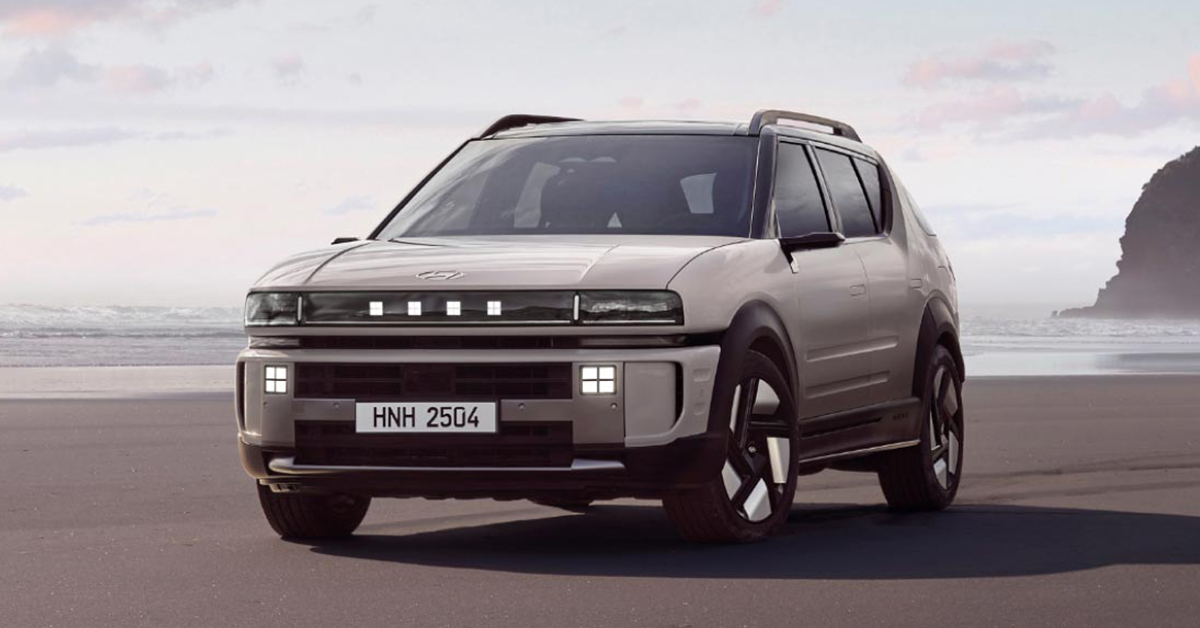
Official image of the Hyundai NEXO. | © Hyundai Motor Company
The Hyundai NEXO is the company’s hydrogen fuel cell SUV. It was named at CES in January 2018, and a fully redesigned version arrived in April 2025. This guide covers both cars, from the fuel cell and hydrogen tank to range, safety and prices, using Hyundai’s own pages and flagging where they disagree.
The NEXO is Hyundai’s hydrogen fuel cell SUV, and it has run to two generations. The name was announced at CES in Las Vegas on January 8, 2018, when Hyundai called it the technological flagship of its eco-vehicle line-up (Hyundai). The redesigned car, billed as the all-new NEXO, was introduced at the Seoul Mobility Show on April 2, 2025 as a mid-size SUV (Hyundai).
| Body | Hydrogen fuel cell SUV (Hyundai) |
| Name announced | CES, January 8, 2018 (Hyundai) |
| All-new NEXO unveiled | Seoul, April 2, 2025 (Hyundai) |
| Fuel cell stack, new | 110 kW gross (Hyundai) |
| Total system output, new | 190 kW (Hyundai) |
| Hydrogen tank, new | 6.69 kg (Hyundai) |
| WLTP range, Europe, new | 826 km (Hyundai) |
| Length, new | 4,750 mm (Hyundai) |
| Euro NCAP, new | Five stars (Hyundai) |
| Price, Netherlands, 2026 | 72,495 euros (Hyundai) |
Everything here comes from Hyundai’s own pages, including its worldwide, European, U.K., U.S., Australian, Dutch and Korean sites, its press sites on hyundai.news and hyundainews.com, and its price lists. Where two pages disagree we show both numbers, and we do not convert currencies. Prices and availability may have changed since publication. The IONIQ and Kona electric models have their own articles, so this one sticks to the NEXO. Hydrogen is not new to Hyundai. Its HTWO site dates dedicated hydrogen research to 1998, its own fuel cell stack to 2004 and the Tucson ix35 Fuel Cell to 2013, which it calls the world’s first mass-produced hydrogen fuel cell electric vehicle (Hyundai). It launched NEXO in 2018 as a dedicated fuel cell passenger vehicle (Hyundai).
Hyundai gives the all-new NEXO a fuel cell stack of 110 kW gross, a battery of 80 kW and a total system output of 190 kW, up from 135 kW (Hyundai). The hydrogen tank holds 6.69 kg, up from 6.33 kg, and Hyundai’s European release gives a projected WLTP range of 826 km from a five-minute refill with 18-inch wheels (Hyundai). Hyundai’s earlier targets were over 700 km on Korea’s test standard (Hyundai). Hyundai’s November 2025 release says 28 years of fuel cell experience, while its April 2025 release says 27 years, so the wording differs by release (Hyundai).
The all-new NEXO is 4,750 mm long, 1,865 mm wide and 1,640 mm tall, with a 2,790 mm wheelbase (Hyundai). Hyundai says it achieved the maximum five-star Euro NCAP rating in all four assessed categories, and its European page says the car launched globally in early 2026 (Hyundai). Hyundai’s Dutch price list of January 1, 2026 gives 72,495 euros including a 1,000 euro delivery charge (Hyundai).
The first-generation NEXO was sold from 2018. Hyundai’s HTWO hydrogen site says NEXO recorded cumulative sales of over 40,000 units across more than 25 countries, which it calls by far the best-selling hydrogen fuel cell passenger vehicle in the world (Hyundai). Hyundai’s U.S. owner pages said sales and leasing of the first car were exclusive to California because most hydrogen fueling was there (Hyundai).
Later sections cover the 2018 launch, the first-generation specifications, the 2025 debut and design, the fuel cell powertrain, safety and technology, prices by market, and sales, awards and production with the points where Hyundai’s pages conflict. Our Hyundai Models article lists the range, our Hyundai history article covers the company, and our Tucson and Santa Fe articles cover the combustion and hybrid SUVs. If you only want the headline numbers, the table below has them, and the sections that follow explain where each figure comes from and which pages disagree.
Hyundai’s release datelined Las Vegas on January 8, 2018 says Hyundai announced the name NEXO at its CES press conference and disclosed advanced driver assistance systems that expand its autonomous driving potential (Hyundai). The release calls NEXO Hyundai’s second generation of commercialized fuel cell electric vehicle, after the ix35 Fuel Cell, available in select markets from early 2018 (Hyundai).
| Name announced | CES, January 8, 2018 (Hyundai) |
| Hyundai generation wording | Second-generation FCEV (Hyundai) |
| Korea launch | Planned March 2018 (Hyundai) |
| Korea pre-orders | 1,061 (Hyundai) |
| Korea launch price, Modern | 68,900,000 won (Hyundai) |
| Korea launch price, Premium | 72,200,000 won (Hyundai) |
| Europe on sale | From mid-2018 (Hyundai) |
| U.S. availability | California only (Hyundai) |
| U.K. pricing announced | March 20, 2019 (Hyundai) |
| European sales milestone | Over 1,000 by Q3 2021 (Hyundai) |
Hyundai’s European story says NEXO was the latest step in a plan to introduce 18 eco-friendly models to global markets by 2025, and that it was the first Hyundai fuel cell vehicle built on a dedicated vehicle architecture (Hyundai). It says that architecture makes the car lighter, with an improved power-to-weight ratio and faster acceleration than the ix35 Fuel Cell (Hyundai). Hyundai’s European press kit says NEXO was available across Europe from mid-2018 (Hyundai).
Hyundai’s Seoul release of February 19, 2018 says NEXO was scheduled to be released in Korea the next month, and that it travelled 609 kilometers on a single charge taking less than five minutes (Hyundai). The release adds that Hyundai offered Level 4 autonomous driving experiences in NEXO vehicles and operated fuel cell-powered buses in PyeongChang in February (Hyundai).
Hyundai’s later Korean sales release says public sales began with delivery ceremonies in Ulsan and Gwangju, with 1,061 pre-orders recorded (Hyundai). It gives prices of 68,900,000 won for the Modern trim and 72,200,000 won for the Premium trim, which could be as low as 33,900,000 won with government subsidies (Hyundai). Hyundai Korea’s price page later lists a Premium price of 73,200,000 won before tax benefits and 69,500,000 won after them as of January 1, 2024 (Hyundai).
For the U.S., Hyundai’s owner pages said NEXO sales and leasing were exclusive to California because most hydrogen fueling infrastructure was there (Hyundai). Hyundai’s 2020 release said NEXO could be leased for 379 dollars a month for the Blue model or 449 dollars for the Limited model over 36 months, with free first-year maintenance (Hyundai). A 2021 release instead says 379 dollars for 36 months with complimentary hydrogen for three years worth up to 15,000 dollars and free maintenance for three years or 36,000 miles (Hyundai). A 2021 release said Hyundai Escondido was the first NEXO dealer in San Diego County and the fifth in California (Hyundai). The same release gave 45 hydrogen stations in California at that time (Hyundai).
Hyundai Australia said NEXO was the first hydrogen-powered vehicle certified for sale in Australia and was available by special order for private customers and fleets (Hyundai). Hyundai U.K. announced pricing for NEXO on March 20, 2019, with orders taken directly from Hyundai Motor UK (Hyundai). Hyundai Europe said in 2021 that European sales had passed 1,000 units since production began in 2018 (Hyundai). The same release said Hyundai was developing a third-generation fuel cell stack (Hyundai). Hyundai’s European model page describes the 2018 car as Hyundai’s second-generation mass production fuel cell electric vehicle (Hyundai). Hyundai’s hydrogen site says Hyundai also built the world’s first mass-produced hydrogen fuel cell passenger car, heavy-duty truck, and city and coach buses (Hyundai).
Hyundai’s January 2018 comparison gave the first NEXO a fuel cell of 95 kW and a total system output of 135 kW, against 100 kW and 124 kW for the ix35 Fuel Cell (Hyundai). The comparison also gave a height of 64.2 inches against 65.2 inches for the ix35 Fuel Cell (Hyundai). The same comparison gave a wheelbase of 109.8 inches, against 103.9 inches, which is about 2,789 mm by our conversion (Hyundai, our calculation). Hyundai Australia said the 95 kW fuel cell system, with the battery, could deliver a sustained 135 kW to the motor (Hyundai). Hyundai Australia said the powertrain was the product of more than 20 years of research and development by Hyundai Motor Group (Hyundai). Hyundai Europe says the first car’s fuel cell powertrain was lighter, with improved packaging and a higher rate of hydrogen utilization and component efficiency (Hyundai).
| Fuel cell, first generation | 95 kW (Hyundai) |
| System output, first generation | 135 kW (Hyundai) |
| Battery, U.K. text | 1.56 kWh (Hyundai) |
| Motor, U.S. | 161 hp, 291 lb-ft (Hyundai) |
| Motor, Korea | 154 PS, 395 Nm (Hyundai) |
| System efficiency | 60 percent (Hyundai) |
| Consumption | 0.84 kg per 100 km (Hyundai) |
| Range, WLTP, Europe | 666 km (Hyundai) |
| Range, EPA, U.S. | 380 and 354 miles (Hyundai) |
| Range, Korea | 609 km (Hyundai) |
Hyundai’s U.K. release says the fuel cell system charges a 1.56 kWh high voltage battery (Hyundai). Hyundai’s U.S. owner guide says the electric motor produces 161 horsepower and 291 lb-ft of torque from a standing start, and the U.S. page lists 161 hp and 120 kW (Hyundai). Hyundai Korea lists 154 PS (113 kW) and 395 Nm for the Premium trim (Hyundai). The 161 hp is about 120 kW and the 291 lb-ft about 395 Nm, by our conversion (Hyundai, our calculation).
Hyundai’s European press information says the fuel cell powertrain achieves a system efficiency of 60 percent with a fuel consumption of 0.84 kg per 100 km, and a driving range of 666 km under WLTP testing and 756 km under NEDC (Hyundai). Another Hyundai European page gives an estimated range of 800 km, and Hyundai’s CES-era release gave an estimated 800 km on the NEDC cycle (Hyundai). The 756 km and 800 km figures differ, and we show both.
Hyundai’s U.S. pages give an EPA-estimated range of 380 miles for the Blue model and 354 miles for the Limited model, with a five-minute refueling time (Hyundai). That is 26 miles apart, by our subtraction, and the 380 miles is about 612 km by our conversion (Hyundai, our calculation). Hyundai’s U.S. 2020 release called NEXO the world’s first and only hydrogen-powered production SUV, with 380 miles of EPA-estimated range (Hyundai).
Hyundai U.K. gave 413 miles in its 2019 pricing release, which also says 414 miles in its attached release text, and the 2021 award release gives 413 miles on the WLTP cycle (Hyundai). Those figures are about 665 km and 666 km by our conversion, which matches Hyundai Europe’s 666 km (Hyundai, our calculation). Hyundai’s Korean certification gave 609 km, and a Hyundai China exhibit release repeats the 609 km figure for the 2019 NEXO (Hyundai).
Hyundai Europe says NEXO is produced in Ulsan, South Korea, with more than 6,000 units manufactured annually in 2019 and 2020 (Hyundai). Hyundai U.K.’s 2019 pricing release lists a five-year unlimited-mileage warranty for the car (Hyundai). Hyundai Europe’s press kit lists Remote Parking and a Blind Spot View Monitor among the first car’s convenience features (Hyundai).
Hyundai’s release datelined Seoul on April 2, 2025 says Hyundai introduced the all-new NEXO at its global launch event at the Seoul Mobility Show, describing a mid-size SUV and a significant milestone in hydrogen mobility (Hyundai). It says the car would come to global markets later that year, and Hyundai’s later releases moved the global launch to early 2026 (Hyundai).
| Global launch event | Seoul, April 2, 2025 (Hyundai) |
| Planned global launch | Early 2026 (Hyundai) |
| Design language | Art of Steel (Hyundai) |
| Length | 4,750 mm (Hyundai) |
| Wheelbase | 2,790 mm (Hyundai) |
| Width | 1,865 mm (Hyundai) |
| Height | 1,640 mm (Hyundai) |
| Height with roof rack | 1,675 or 1,673 mm (Hyundai) |
| Cargo, maximum, release | 993 liters (Hyundai) |
| Cargo, journal | 510 and 1,630 liters (Hyundai) |
Hyundai says the all-new NEXO targets more than 700 km of range from a five-minute charge, and that the second-generation NEXO has a spacious interior with first-row Relaxation Seats and increased luggage capacity (Hyundai). The release names the exterior design language Art of Steel, and Hyundai says the vehicle carries signature HTWO lamps (Hyundai). Hyundai says the design language is meant to enhance the NEXO’s competitiveness in the mid-size SUV segment (Hyundai). Hyundai’s worldwide page says the car reflects 27 years of fuel cell experience (Hyundai). Hyundai U.K. says the car was one of three highlights unveiled at the Seoul show, alongside the new IONIQ 6 N Line and the INSTEROID design concept (Hyundai).
Hyundai gives the dimensions as a length of 4,750 mm, a wheelbase of 2,790 mm, a width of 1,865 mm and a height of 1,640 mm, or 1,675 mm with a roof rack in the European release and 1,673 mm in the U.K. release (Hyundai). Hyundai’s catalog shows a wheel tread of 1,614 mm in front and 1,625 mm at the rear with 18-inch wheels (Hyundai). The roof-rack height therefore differs by 2 mm between pages, by our subtraction (Hyundai, our calculation).
Hyundai says the all-new NEXO is longer, wider and taller than its predecessor, giving improved passenger comfort and a maximum rear cargo capacity of 993 liters, enough for four golf bags (Hyundai). Hyundai’s worldwide brand journal of April 3, 2025 gives a storage volume of 510 liters, or 1,630 liters with the second row folded (Hyundai). The 993 liter and 1,630 liter figures are different measures, and we do not reconcile them. Hyundai’s U.K. site states that five minutes of hydrogen filling gives a 700 km range (Hyundai).
On the wheelbase, the first-generation figure of 109.8 inches converts to about 2,789 mm, which is within 1 mm of the all-new 2,790 mm by our conversion (Hyundai, our calculation). Hyundai’s releases say the new car is longer, wider and taller, and we did not find a first-generation length, width or height figure to compare, so we give no growth figures (Hyundai).
Hyundai held a global media drive in Korea in the week of November 11, 2025 ahead of the early 2026 global launch, and said it brought 28 years of fuel cell experience to the car (Hyundai). Hyundai also showed the car at the 13th World Congress of the Econometric Society in Seoul on August 20, 2025 as part of its hydrogen vision, with a targeted range of over 700 km and a system output of 190 kW (Hyundai). Hyundai said the all-new NEXO was a centerpiece of the exhibition, shown under its HTWO brand and its hydrogen role in the global energy transition (Hyundai).
Hyundai says the hydrogen fuel cell stack now delivers a maximum gross power of 110 kW, a 16 percent increase over the previous 95 kW, and the new electric motor provides up to 150 kW (Hyundai). Hyundai’s U.S. release adds a net system output of 94 kW, up 11 percent from 85 kW (Hyundai). Our division gives 15.8 percent and 10.6 percent, which match Hyundai’s rounding (Hyundai, our calculation).
| Fuel cell stack, gross | 110 kW (Hyundai) |
| Fuel cell, net system | 94 kW (Hyundai) |
| Battery power | 80 kW (Hyundai) |
| Battery energy | 2.64 kWh (Hyundai) |
| Total system output | 190 kW (Hyundai) |
| Motor power | 150 kW (Hyundai) |
| Motor torque | 350 Nm (Hyundai) |
| Hydrogen tank | 6.69 kg (Hyundai) |
| WLTP range, Europe | 826 km (Hyundai) |
| Korea target range | Over 700 km (Hyundai) |
Hyundai says a newly developed power electronics system doubles the battery output from 40 kW to 80 kW, with a battery energy of 2.64 kWh, and that total output rises from 135 kW to 190 kW (Hyundai). That is 55 kW, or about 41 percent, more total output, by our calculation (Hyundai, our calculation). The 2.64 kWh battery is about 1.7 times the 1.56 kWh figure in Hyundai’s first-generation U.K. text, by our division (Hyundai, our calculation).
Hyundai’s worldwide catalog gives a maximum power of 150 kW and a maximum torque of 350 Nm for the motor (Hyundai). The 350 Nm is about 258 lb-ft by our conversion, and Hyundai’s first-generation Korean page lists 395 Nm, so the torque figure is lower than before even though the system output is higher (Hyundai, our calculation). Hyundai does not explain the difference in the pages we read.
The hydrogen tank capacity rises from 6.33 kg to 6.69 kg, which is about 5.7 percent more, by our division (Hyundai, our calculation). Hyundai’s catalog gives combined consumption of 0.81 kg per 100 km and says that with the 6.69 kg tank this gives 826 km on 18-inch wheels in the Standard trim (Hyundai). Our division gives about 826 km, which matches (Hyundai, our calculation). Hyundai says 5 minutes charges over 95 percent (Hyundai). Hyundai’s European page says the stack has improved low-temperature operability and durability, which it says helps winter drivability and startability (Hyundai).
Hyundai’s European release gives the 826 km as a projected WLTP figure from a five-minute hydrogen refill, 24 percent above the 666 km first-generation WLTP figure by our division (Hyundai, our calculation). Hyundai’s Korean projections give a target of over 700 km, with a maximum fuel economy of 97.8 km per kg on the Korean test standard for the GL trim on 18-inch wheels (Hyundai). Multiplying 97.8 km per kg by the 6.69 kg tank gives about 654 km, by our calculation, which is below that 700 km target (Hyundai, our calculation).
Hyundai’s HTWO site gives a maximum driving range of up to 720 km, and Hyundai’s European page now gives up to 826 km with a separate FAQ that says up to 700 km (Hyundai). We show all of these as different test bases and do not choose one. Hyundai’s HTWO site also says its waste-to-hydrogen process turns 60 tons of food waste a day into 500 kg of hydrogen, enough for about 100 NEXO vehicles at 5 kg each (Hyundai). Hyundai also lists a Wake Up stack anti-freezing function and improved low-temperature operation for winter starts, and European models can tow up to 1,000 kg (Hyundai).
Hyundai’s release from Seoul dated December 14, 2025 says the all-new NEXO achieved the highest possible five-star rating in the latest Euro NCAP assessment, with top scores across all major safety categories (Hyundai). Hyundai’s European press release is dated December 10, 2025 and says the car was rated highly in all four assessed categories (Hyundai). The two pages give different dates for the same announcement. Hyundai’s European features page says the car carries a Euro NCAP 5-star safety rating for 2025 (Hyundai).
| Euro NCAP, new NEXO | Five stars (Hyundai) |
| Announcement date, Seoul | December 14, 2025 (Hyundai) |
| Announcement date, Europe | December 10, 2025 (Hyundai) |
| Driver assistance | Hyundai SmartSense (Hyundai) |
| Collision assist | Forward Collision-Avoidance Assist 2 (Hyundai) |
| Handling feature | e-Handling (Hyundai) |
| Braking feature | Smart Regenerative System (Hyundai) |
| Towing, Europe | Up to 1,000 kg (Hyundai) |
| Korea digital side mirrors | 1,380,000 won (Hyundai) |
| Netherlands digital pack | 1,500 euros (Hyundai) |
Hyundai says the all-new NEXO continues its five-star streak after the IONIQ 5, IONIQ 6 and IONIQ 9, with maximum points for adult whiplash protection in rear impacts and for six- and ten-year-old child dummies in frontal and side impact tests (Hyundai). Hyundai’s Singapore newsroom adds that whiplash protection for both front and rear seats was rated good in rear-impact evaluations (Hyundai). Euro NCAP is the independent body that does the testing. Hyundai says the passenger compartment remained stable in the frontal offset test, which is part of the adult occupant assessment (Hyundai). Hyundai’s earlier first-generation release said that car was the first fuel cell electric vehicle to get a five-star overall Euro NCAP rating (Hyundai).
Hyundai’s European features page says the all-new NEXO has Hyundai SmartSense driver assistance, and lists Forward Collision-Avoidance Assist 2, which warns of a sudden slowdown or a risk of collision with a vehicle, a pedestrian or a cyclist and can apply the brakes automatically (Hyundai). We did not read the rest of the list, so we name only that function here. Hyundai’s European model page also says the car is engineered to achieve a five-star NCAP rating (Hyundai).
Hyundai’s European release names e-Handling, a Smart Regenerative System and aerodynamic optimizations among the technologies that enhance the driving experience (Hyundai). It also says European models offer towing capability of up to 1,000 kg and that safety features and ADAS technologies position NEXO to achieve top-tier ratings across major assessment programs (Hyundai). Those ratings were targets at the time of the release, and the Euro NCAP result followed. Hyundai’s April 2025 release also said Hyundai was targeting top-tier safety ratings because of the comprehensive safety features (Hyundai).
Hyundai’s Korean price page lists the all-new NEXO’s fuel cell system with a 150 kW drive motor, a lithium-ion battery, a reduction gear, a regenerative braking system and an electronic shift column with vibration warning, among the standard items (Hyundai). It lists digital side mirrors at 1,380,000 won, a camera package at 750,000 won and a rear smart entertainment system at 2,770,000 won as options (Hyundai).
Hyundai’s Dutch list says the NEXO is offered in two trims with 18-inch alloy wheels and lists options including driver and passenger seats with a relaxation function and a panoramic roof, plus a digital pack with a digital interior mirror and digital exterior mirrors at 1,500 euros (Hyundai). We found no full standard equipment list that we could compare across markets, so we do not claim one. Each market lists its own options, so we do not merge them.
Hyundai Korea’s Korean-language price page lists the all-new NEXO from 76,470,000 won after tax benefits, with the Modern trim at 80,447,000 won before tax benefits and 76,470,000 won after, and the Exclusive trim at 83,497,000 won before and 79,370,000 won after (Hyundai). The page says the benefit applies to a consumption tax and education tax reduction capped at 5.2 million won (Hyundai).
| Korea, Modern, after benefits | 76,470,000 won (Hyundai) |
| Korea, Modern, before benefits | 80,447,000 won (Hyundai) |
| Korea, Exclusive, after benefits | 79,370,000 won (Hyundai) |
| Korea English file, Modern | 80,509,000 won before (Hyundai) |
| Netherlands, January 2026 | 72,495 euros (Hyundai) |
| U.K., 2019 first generation | 65,995 pounds (Hyundai) |
| U.K., 2021 first generation | 69,495 pounds (Hyundai) |
| U.S., 2022 first generation | 58,785 dollars, lease only (Hyundai) |
| U.S., all-new NEXO price | Not found |
| U.K., all-new NEXO price | Not found |
Hyundai’s English price file for Korea gives different numbers, with 80,509,000 won before and 76,435,000 won after tax benefits for the base trim and 87,893,000 won before and 83,445,000 won after for the Prestige trim (Hyundai). It is described as an unofficial translation for foreign residents, and the trim names differ from the Korean page (Hyundai). The tax benefit on the Korean page is 3,977,000 won for the Modern trim, by our subtraction (Hyundai, our calculation).
Hyundai’s Dutch price list of January 1, 2026 gives the NEXO at 72,495 euros, made up of a retail price of 71,495 euros plus 1,000 euros of delivery charges (Hyundai). The list shows a base price of 58,519 euros before 12,289 euros of VAT and 687 euros of a further charge, and a further figure of 403 euros whose column label we did not confirm (Hyundai). The Dutch list offers two trims. Hyundai Netherlands says the car is richly equipped as standard, with 18-inch alloy wheels (Hyundai). Hyundai’s 2020 U.S. page example showed 2,499 dollars due at lease signing, a net capitalized cost of 47,367 dollars, total monthly payments of 13,644 dollars and a purchase option at lease end of 34,728 dollars (Hyundai). The page said NEXO was then available only in California (Hyundai).
Hyundai’s U.K. pages priced the first-generation NEXO at 65,995 pounds including the Plug-In Car Grant in March 2019, and the 2021 award release gives 69,495 pounds (Hyundai). The 3,500 pound gap is by our subtraction, and the pages do not say whether the grant treatment changed (Hyundai, our calculation). We found no current Hyundai U.K. price for the all-new NEXO, and we do not give one.
For the U.S., Hyundai’s 2020 page listed a lease example with an MSRP of 59,875 dollars, and its 2022 page listed 58,785 dollars, lease only (Hyundai). Hyundai’s electrified page listed 59,435 dollars for the 2022 car and a hydrogen fueling card with a maximum value of 14,800 dollars, which expires on the third anniversary of purchase or lease (Hyundai). Other Hyundai pages describe the fuel benefit as 15,000 dollars, 14,800 dollars and 13,000 dollars, so we show the differing figures. Hyundai’s owner pages also give a California rebate of 5,000 dollars in one place and up to 4,500 dollars in another, and a count of 42 California stations in 2020 against 45 in 2021 (Hyundai).
Hyundai’s 2026 model-year summary lists a 2026 NEXO Hydrogen Fuel Cell Electric Vehicle as an all-new model and says U.S. market plans would be announced at the Los Angeles show in November (Hyundai). We found no Hyundai U.S. price or on-sale date for the all-new NEXO, and no U.S. EPA range for it, so the article gives none. Hyundai’s U.S. pages still list dealers certified for NEXO Fuel Cell sales, service and maintenance (Hyundai).
Hyundai’s third-quarter 2025 results say global fuel cell sales were 3,828 units, up 161 percent, and that fuel cell sales in Korea were 3,723 units, up 200 percent, which Hyundai attributes to the all-new NEXO launch there (Hyundai). Hyundai’s 2026 sustainability report says it recorded steady sales growth after the 2025 launch of the upgraded second-generation NEXO (Hyundai). The same report says fuel cell vehicles account for a relatively limited share of Hyundai’s electrified vehicle portfolio (Hyundai). Hyundai’s HTWO site gives cumulative NEXO sales of over 40,000 units across more than 25 countries (Hyundai). Hyundai Europe said European sales passed 1,000 units by the third quarter of 2021 and that more than 6,000 units were produced a year in 2019 and 2020 (Hyundai).
| Global fuel cell sales, Q3 2025 | 3,828 units (Hyundai) |
| Korea fuel cell sales, Q3 2025 | 3,723 units (Hyundai) |
| Cumulative NEXO sales | Over 40,000 (Hyundai) |
| Countries sold | More than 25 (Hyundai) |
| Ulsan fuel cell plant | Groundbreaking October 30, 2025 (Hyundai) |
| Plant investment | 930 billion won (Hyundai) |
| First-gen NEDC range, sources | 756 or 800 km (Hyundai) |
| New range, sources | 700, 720 or 826 km (Hyundai) |
| U.S. price, new NEXO | Not found |
| Assembly site, new NEXO | Not found |
Hyundai says it held a groundbreaking ceremony on October 30, 2025 for a new hydrogen fuel cell production plant in Ulsan, an investment of 930 billion won (Hyundai). The plant will make next-generation fuel cells and electrolyzers, not NEXO vehicles, and we found no Hyundai statement of where the all-new NEXO is assembled. Hyundai said the first-generation car was produced in Ulsan (Hyundai).
Hyundai lists first-generation recognition including a trade-show editors’ award at CES 2018 for its potential to grow the hydrogen vehicle space and its estimated 800 km NEDC range, and an alternative energy car of the year award from a British magazine in 2021 (Hyundai). We do not name the organizers, and these are Hyundai’s own reports of the recognition rather than something we checked independently. Hyundai Europe also said the first car won a CES editors’ award from one publication and a technology award from another (Hyundai).
Several Hyundai pages conflict. The first-generation NEDC range is 756 km in the press kit and 800 km elsewhere, the U.K. range is 413 or 414 miles, and the new car’s range is over 700 km, up to 720 km or up to 826 km depending on the page (Hyundai). The new car’s roof-rack height is 1,675 mm or 1,673 mm, its cargo is 993 liters or 510 liters, and the Euro NCAP announcement is dated December 10 or December 14, 2025 (Hyundai).
Hyundai also calls both cars second-generation. The 2018 release says NEXO is Hyundai’s second generation of commercialized fuel cell vehicle after the ix35 Fuel Cell, while the 2025 release says the second-generation NEXO reflects 27 years of fuel cell experience (Hyundai). We call the 2018 car the first NEXO and the 2025 car the all-new NEXO, and note Hyundai’s wording differs.
Not confirmed: we found no U.S. price, on-sale date or EPA range for the all-new NEXO, no current U.K. price, no stated assembly site for the all-new car, no global sales total for it and no curb weight. Things to watch are U.S. availability, any U.K. launch, Korean price sheets, hydrogen station growth and further range figures. Things to watch are U.S. availability, any U.K. launch, Korean price sheets, hydrogen station growth and any new range figures from Hyundai. Our Hyundai Models article lists the range and our Hyundai history article covers the company.