 Brands
Alfa Romeo — History, Models and Everything You Need to Know
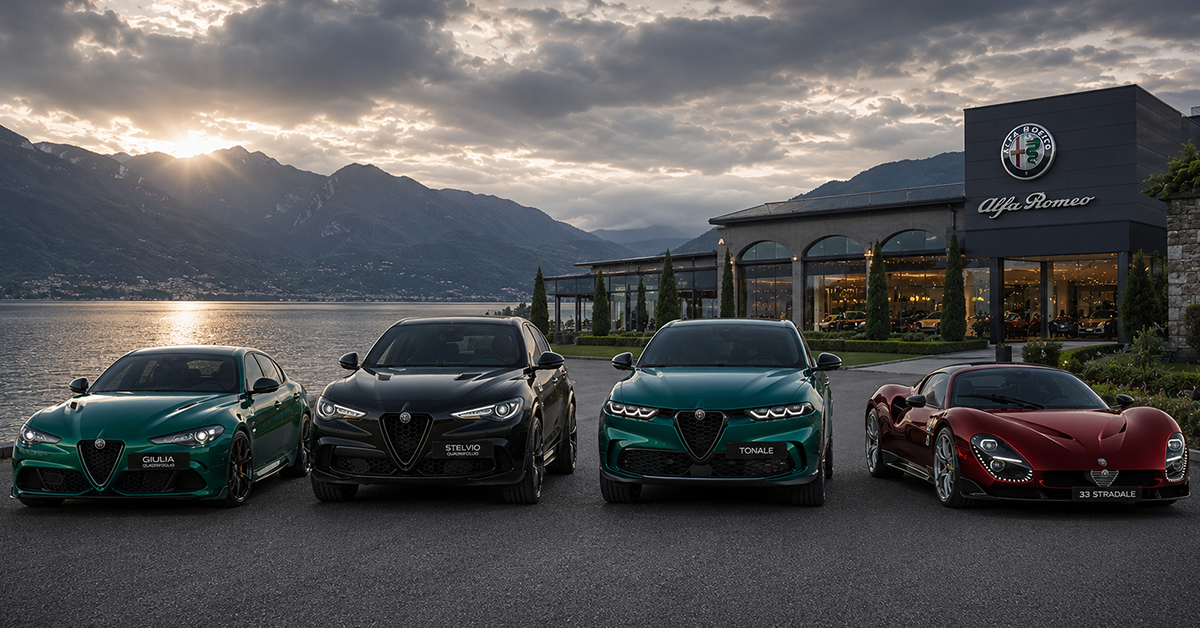
AI-generated concept illustration — Alfa Romeo brand overview. | Rev N Rise
Alfa Romeo is the most romantically Italian car brand in existence — a manufacturer with motorsport heritage dating back over a century, the first two Formula 1 World Championships and a passionate devotion to the pure joy of driving that defines every car it has ever built. Founded in Milan in 1910, Alfa Romeo's combination of beautiful design, race-bred engineering and emotional character has made it one of the most beloved car brands among genuine enthusiasts worldwide.
ALFA — Anonima Lombarda Fabbrica Automobili — was founded on June 24 1910 in Milan as a successor to the Italian branch of the French Darracq car company. Engineer Nicola Romeo acquired the company in 1915, initially converting production to military equipment for World War I, and the Romeo name was added to create Alfa Romeo in 1920. The brand's racing programme began almost immediately and never stopped — Alfa Romeo's 20th-century racing record is among the most decorated in motorsport history, with victories at the Mille Miglia, Targa Florio and Le Mans.
The most significant period in Alfa Romeo's racing history came at the dawn of Formula 1. The Alfa Romeo 158/159 Alfetta won the inaugural World Championship in 1950 with Giuseppe Farina and the second in 1951 with Juan Manuel Fangio — making Alfa Romeo the first two World Championship-winning constructor in Formula 1 history. Enzo Ferrari himself managed Alfa Romeo's racing department, Scuderia Ferrari, before founding his own company — meaning that Ferrari's entire racing pedigree was built on Alfa Romeo's foundations before the two brands became fierce competitors.
Alfa Romeo's road cars of the postwar decades — the Giulietta, Giulia, Spider and Alfetta — established the brand's identity as the maker of cars that prioritised the pure pleasure of driving above all else. The brand became part of Fiat in 1986 and has remained part of the same corporate family through Fiat Chrysler Automobiles and now Stellantis, formed in 2021.
The current-generation Alfa Romeo Giulia, launched in 2016, represented the most significant engineering investment Alfa Romeo had made in decades. Built on a new rear-wheel-drive platform with a near-perfect 50:50 weight distribution, the Giulia was developed with explicit ambitions to challenge the BMW 3 Series on driving dynamics — and largely succeeded. Automotive journalists across the world consistently praised the Giulia's steering feel, chassis balance and overall driving engagement as superior to its German rivals, even when the Giulia's interior quality and technology lagged slightly behind.
The Giulia Quadrifoglio — Alfa Romeo's performance flagship — uses a twin-turbocharged 2.9-litre V6 developed with input from Ferrari engineers (during the period when Ferrari was still part of the same corporate group) producing 510 horsepower. It set the production saloon car lap record at the Nürburgring Nordschleife on its launch — a remarkable achievement for a brand that had been absent from genuine performance competition for years. The Quadrifoglio badge — a four-leaf clover — has been Alfa Romeo's symbol of racing success since 1923, when it first appeared on a winning Alfa at the Targa Florio.
Alfa Romeo's competitive identity is built on emotional engagement — the brand believes, with conviction that runs through every product decision, that a car should be exciting to drive even at modest speeds. The Giulia and Stelvio's steering feel, chassis communication and exhaust note are deliberately engineered to be more engaging than rivals that might match or exceed them on objective performance metrics. The brand's racing heritage — two Formula 1 World Championships before the championship was even one year old, decades of sports car racing success — gives Alfa Romeo a motorsport credibility that few mainstream manufacturers can claim. The 33 Stradale — a hand-built, limited-edition halo car reviving a legendary 1967 nameplate — demonstrates that Alfa Romeo's ambitions extend beyond volume production into genuine automotive artistry. For buyers who prioritise the emotional experience of driving over rational specification comparisons, Alfa Romeo remains one of the most compelling choices in its segment.