 Brands
Changan — History, Models and Everything You Need to Know
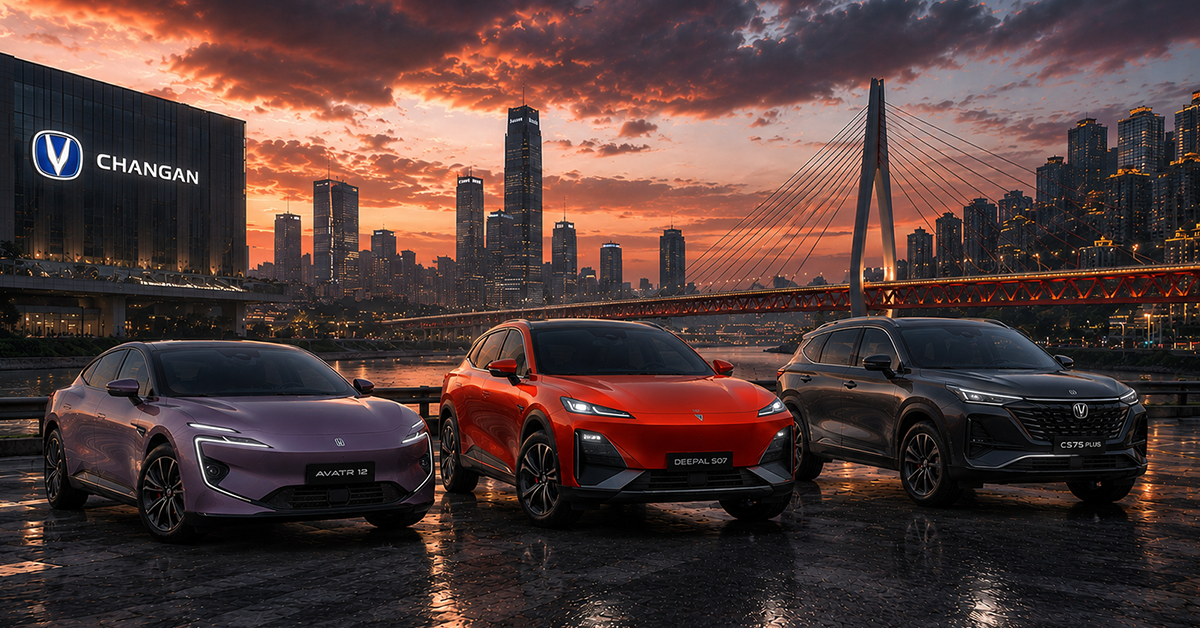
AI-generated concept illustration — Changan brand overview. | Rev N Rise
Changan carries one of the most remarkable corporate histories of any automaker on earth — a company whose origins trace back to 1862 as a Qing dynasty weapons arsenal, making it one of the oldest continuously operating industrial enterprises anywhere in the world. Today, that same lineage has produced one of China's major state-backed automakers, with long-standing joint ventures with Ford and Mazda alongside an increasingly ambitious independent electric vehicle strategy through its Deepal and Avatr sub-brands.
Changan's origins are genuinely extraordinary among automotive companies worldwide — the enterprise traces its roots to 1862, when it was established as a weapons and ammunition arsenal during the late Qing dynasty, making it one of the oldest continuously operating industrial enterprises anywhere on earth, predating even the earliest internal combustion automobiles by several decades. The company's name, Changan, references the historic name for the ancient Chinese capital now known as Xi'an, reflecting deep historical and cultural roots within Chinese industrial history.
Changan transitioned into automobile manufacturing in 1957, beginning with military vehicle production before gradually expanding into civilian automotive manufacturing as China's domestic automotive industry began developing through subsequent decades. The company has operated as a major state-owned enterprise under the broader China South Industries Group, one of China's significant state-owned industrial conglomerates, giving Changan substantial government backing, capital resources and strategic importance within China's broader industrial planning that distinguishes it from more purely commercially-driven private automotive companies.
Changan built substantial automotive manufacturing capability and market presence through long-standing international joint venture partnerships, most notably with Ford Motor Company and Mazda, both producing vehicles specifically for the Chinese domestic market under these partnership arrangements over many years. These joint ventures provided Changan with valuable technology transfer, engineering expertise and manufacturing process knowledge, which the company progressively applied to developing its own independently branded vehicle range, sold both domestically within China and increasingly through export to international markets.
Changan's most significant recent strategic investment has been the development of dedicated electric vehicle sub-brands designed to compete in China's increasingly crowded and sophisticated new energy vehicle market. Deepal represents Changan's mainstream electric and hybrid vehicle offering, targeting broad market appeal with competitive pricing and increasingly sophisticated technology. Avatr, launched as a more premium positioning, represents a particularly notable three-way technology partnership between Changan's manufacturing scale, Huawei's software, sensor and autonomous driving technology expertise, and CATL's battery technology leadership, CATL being one of the world's largest and most technically advanced battery manufacturers. This collaborative approach, combining manufacturing scale with specialised technology partners rather than attempting to develop every capability entirely in-house, reflects an increasingly common strategic pattern among Chinese automakers seeking to accelerate their electric vehicle technology development.
Changan's defining characteristic among major Chinese automakers is the extraordinary depth of its institutional history, stretching back over 160 years to a Qing dynasty arsenal, combined with its substantial state-backing through the China South Industries Group, giving it a level of institutional stability and government-aligned strategic importance that distinguishes it from more purely commercially-driven private Chinese EV startups. The Avatr partnership's combination of Changan's manufacturing scale with Huawei's technology expertise and CATL's battery leadership exemplifies a broader, increasingly sophisticated pattern in Chinese automotive industrial strategy, in which manufacturers deliberately combine complementary specialised partners rather than attempting comprehensive vertical integration independently. As Changan continues balancing its substantial legacy joint venture business with Ford and Mazda alongside its increasingly ambitious independent electric vehicle strategy through Deepal and Avatr, the company represents one of the more institutionally significant, if internationally less recognised, forces shaping China's continuing automotive industry transformation.